Ahmad Massoud. Photo: Hamid Mohammadi

Ahmad Massoud: 'decentralisation is the solution', son of Afghan national hero says


  • English
  • Arabic

If he was given the choice, Ahmad Massoud says he would have liked to work in astrophysics, pursue a doctorate degree and travel the world, occasionally finding a television screen to watch his favourite football team, Real Madrid.

Instead, the 30-year-old dove into politics, admitting that he actually doesn't like it. "It's something I have to do; something that needs to be done," he told The National.

Last year Mr Massoud was officially declared successor to his father Ahmad Shah Massoud – a politician and mujaheddin leader celebrated as Afghanistan’s national hero, or the ‘Lion of Panjshir'. Among the achievements of the elder Massoud was the creation of the Northern Alliance, a multi-ethnic force fighting the Taliban, after his initial efforts to include them in a peace process failed.

Assassinated just two days before September 11, 2001 by a suicide bomber posing as a journalist with explosives hidden in his camera,  Massoud had been resisting Soviet attempts to enter his native Panjshir province, fighting for a free and independent Afghanistan.

The country has since seen almost two decades of US invasion and is now on the brink of a new era with US troops leaving and growing uncertainty over the country's future and security.

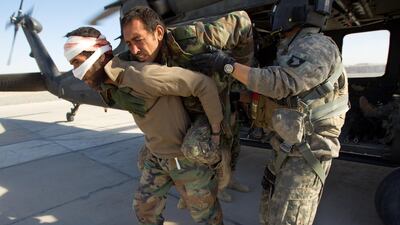
  • Sergeant Jay Kenney, 26, with the 101st Airborne Division, Task Force Destiny, assists wounded Afghan National Army (ANA) soldiers off the Blackhawk UH-60A helicopter after they were rescued in an air mission in Kandahar on December 12, 2010 in Kandahar province, Afghanistan. Getty Images
    Sergeant Jay Kenney, 26, with the 101st Airborne Division, Task Force Destiny, assists wounded Afghan National Army (ANA) soldiers off the Blackhawk UH-60A helicopter after they were rescued in an air mission in Kandahar on December 12, 2010 in Kandahar province, Afghanistan. Getty Images
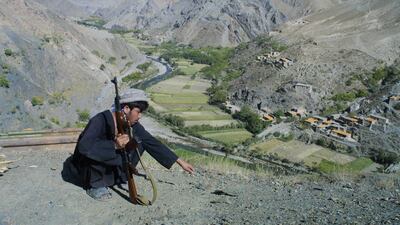
  • An Afghan Northern Alliance fighter mans the front line against the Taliban on October 2, 2001 near Jabul os Sarache, 30 miles north of Kabul. Getty Images
    An Afghan Northern Alliance fighter mans the front line against the Taliban on October 2, 2001 near Jabul os Sarache, 30 miles north of Kabul. Getty Images
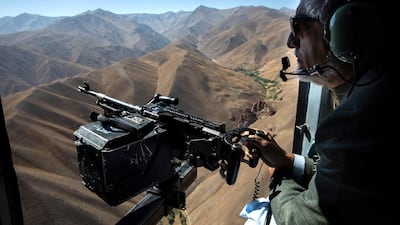
  • Abdullah Abdullah, chief executive of Afghanistan travelling via helicopter for the final campaign rally in Bamiyan, Afghanistan on September 25, 2019. Afghans will head to the polls on Saturday, September 28th. Getty Images
    Abdullah Abdullah, chief executive of Afghanistan travelling via helicopter for the final campaign rally in Bamiyan, Afghanistan on September 25, 2019. Afghans will head to the polls on Saturday, September 28th. Getty Images
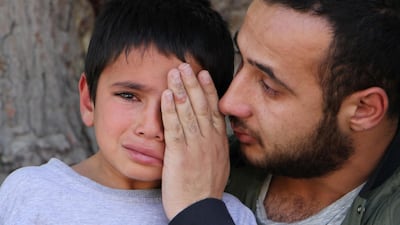
  • Mustafa Tamanna, 10, son of Afghan reporter Zabihullah Tamanna, weeps during the funeral ceremony in Kabul, Afghanistan on June 7, 2016. Tamanna was killed by a rocket-propelled grenade fired by the Taliban. Getty Images
    Mustafa Tamanna, 10, son of Afghan reporter Zabihullah Tamanna, weeps during the funeral ceremony in Kabul, Afghanistan on June 7, 2016. Tamanna was killed by a rocket-propelled grenade fired by the Taliban. Getty Images
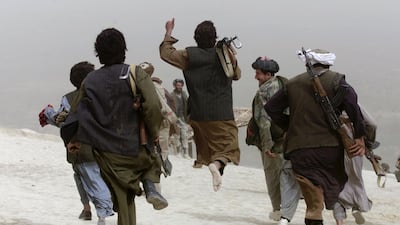
  • Northern Alliance soldiers come back from the front line after a battle near Charatoy town in the north of Afghanistan on October 10, 2001. REUTERS
    Northern Alliance soldiers come back from the front line after a battle near Charatoy town in the north of Afghanistan on October 10, 2001. REUTERS
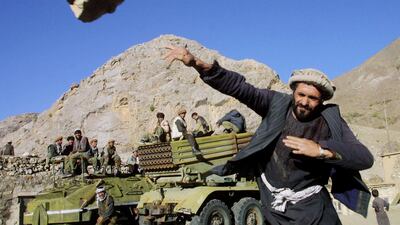
  • A Northern Alliance fighter throwing rocks as part of a popular national game yards away from a multiple Grad missile launcher in October 12, 2001 in the Salang Gorge in Northern Afghanistan. Getty Images
    A Northern Alliance fighter throwing rocks as part of a popular national game yards away from a multiple Grad missile launcher in October 12, 2001 in the Salang Gorge in Northern Afghanistan. Getty Images
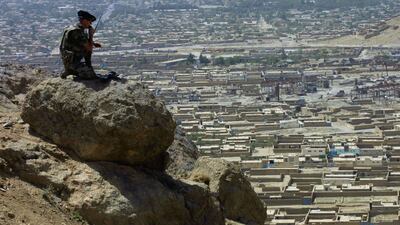
  • A French soldier from the 7th Mountain Regiment, part of the International Security and Assistance Force (ISAF) stands on a boulder overlooking Kabul during a patrol August 3, 2002 in Afghanistan. The ISAF has been patrolling Kabul since January 2002, working with the government and a new police force to prevent the violence and lawlessness that threatened to engulf the city after a U.S.-led coalition forced the Taliban from power. Getty Images
    A French soldier from the 7th Mountain Regiment, part of the International Security and Assistance Force (ISAF) stands on a boulder overlooking Kabul during a patrol August 3, 2002 in Afghanistan. The ISAF has been patrolling Kabul since January 2002, working with the government and a new police force to prevent the violence and lawlessness that threatened to engulf the city after a U.S.-led coalition forced the Taliban from power. Getty Images
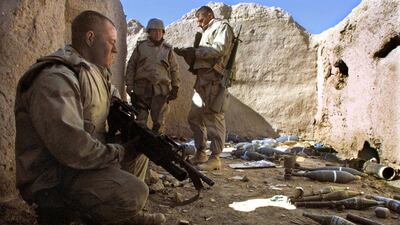
  • US Marine Sgt. Jerry Brown (L) of Jacksonville, North Carolina watches over a weapons cache found during a patrol near the American military compound at Kandahar Airport in January 16, 2002 in Kandahar, Afghanistan. The Marines recovered mortars, rockets, rocket-propelled grenades and artillery rounds discovered in various caches near the base while on the patrol. Getty Images)
    US Marine Sgt. Jerry Brown (L) of Jacksonville, North Carolina watches over a weapons cache found during a patrol near the American military compound at Kandahar Airport in January 16, 2002 in Kandahar, Afghanistan. The Marines recovered mortars, rockets, rocket-propelled grenades and artillery rounds discovered in various caches near the base while on the patrol. Getty Images)
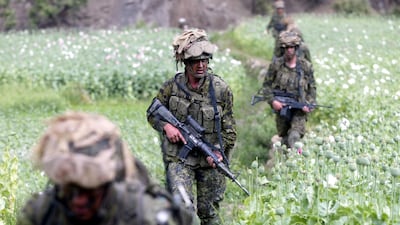
  • Members of the Princess Patricia's Canadian Light Infantry patrol through poppy fields in the village of Markhanai in May 6, 2002 in the Tora Bora valley region of Afghanistan. Getty Images
    Members of the Princess Patricia's Canadian Light Infantry patrol through poppy fields in the village of Markhanai in May 6, 2002 in the Tora Bora valley region of Afghanistan. Getty Images
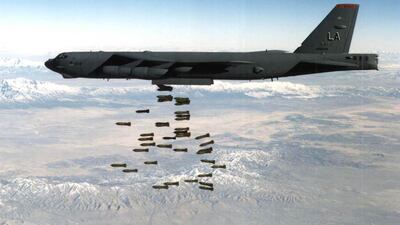
  • The United States and Britain on October 7, 2001 launched a first wave of air strikes against Afghanistan. President George W. Bush said the action heralded a "sustained, comprehensive and relentless" campaign against terrorism. REUTERS
    The United States and Britain on October 7, 2001 launched a first wave of air strikes against Afghanistan. President George W. Bush said the action heralded a "sustained, comprehensive and relentless" campaign against terrorism. REUTERS
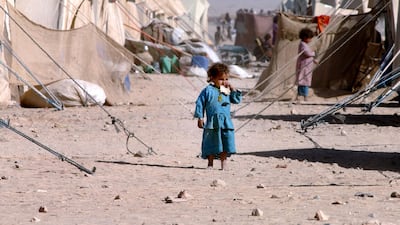
  • A young Afghan girl eats a piece of bread at the Chaman refugee camp on November 8, 2001 on the Pakistan border with Afghanistan. The UNHCR has estimated that since September 11, 2001 over 135,000 Afghans have crossed the border into Pakistan, adding to the already millions of refugees living in the country. Getty Images
    A young Afghan girl eats a piece of bread at the Chaman refugee camp on November 8, 2001 on the Pakistan border with Afghanistan. The UNHCR has estimated that since September 11, 2001 over 135,000 Afghans have crossed the border into Pakistan, adding to the already millions of refugees living in the country. Getty Images
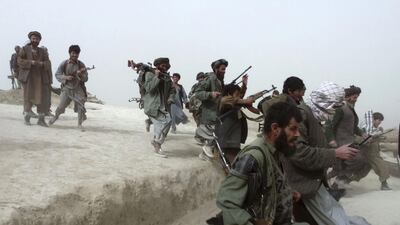
  • Afghan opposition Northern Alliance soldiers leap over a trench as they return from front line positions after battle near the town of Charatoy in the north of Afghanistan October 10, 2001. REUTERS
    Afghan opposition Northern Alliance soldiers leap over a trench as they return from front line positions after battle near the town of Charatoy in the north of Afghanistan October 10, 2001. REUTERS
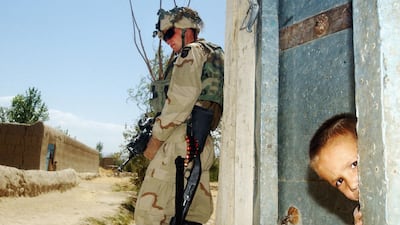
  • An Afghan child peeks out from the doorway of his family's home as a US Army soldier from the 101st Airborne stands guard in the eastern Afghan village of Hesarak on July 16, 2002 during what the Army refers to as a 'sensitive site exploitation' mission or 'SSE'. Getty Images
    An Afghan child peeks out from the doorway of his family's home as a US Army soldier from the 101st Airborne stands guard in the eastern Afghan village of Hesarak on July 16, 2002 during what the Army refers to as a 'sensitive site exploitation' mission or 'SSE'. Getty Images
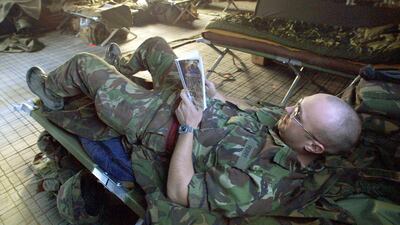
  • Fred Perry, a British Royal Engineer soldier, reads the book "Black Hawk Down" inside his tent after a day of work on January 29, 2002 at the International Security Assistance Force (ISAF) barracks at the Kabul airport in Kabul, Afghanistan. Getty Images
    Fred Perry, a British Royal Engineer soldier, reads the book "Black Hawk Down" inside his tent after a day of work on January 29, 2002 at the International Security Assistance Force (ISAF) barracks at the Kabul airport in Kabul, Afghanistan. Getty Images
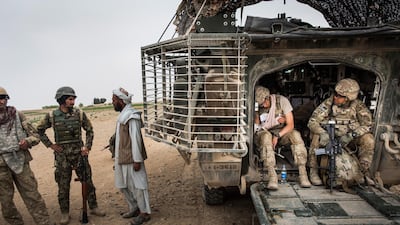
  • Afghan soldiers (L) speak to a local Afghan, while a medic in the U.S. Army's 1st Battalion, 36th Infantry Regiment, Charlie Company (R) monitors a soldier who has just survived a blast from an improvised explosive device (IED) while driving a vehicle during a mission near Command Outpost Pa'in Kalay, on March 19, 2013 in Kandahar Province, Maiwand District, Afghanistan. Getty Images
    Afghan soldiers (L) speak to a local Afghan, while a medic in the U.S. Army's 1st Battalion, 36th Infantry Regiment, Charlie Company (R) monitors a soldier who has just survived a blast from an improvised explosive device (IED) while driving a vehicle during a mission near Command Outpost Pa'in Kalay, on March 19, 2013 in Kandahar Province, Maiwand District, Afghanistan. Getty Images
  • Marines on a light armored vehicle prepare for patrol as an AH1W "Super Cobra" helicopter flies by on December 28, 2001 at the U.S. Marine Corps Base in Kandahar, Afghanistan. Getty Images
    Marines on a light armored vehicle prepare for patrol as an AH1W "Super Cobra" helicopter flies by on December 28, 2001 at the U.S. Marine Corps Base in Kandahar, Afghanistan. Getty Images
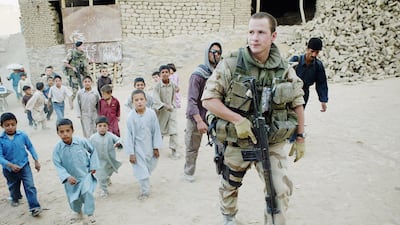
  • A Norwegian ISAF (International Security Assistance Force)soldier from Recce Squadron 3 patrols on October 4, 2004 in Kabul, Afghanistan as election officials get ready for the Presidential elections. Getty Images
    A Norwegian ISAF (International Security Assistance Force)soldier from Recce Squadron 3 patrols on October 4, 2004 in Kabul, Afghanistan as election officials get ready for the Presidential elections. Getty Images
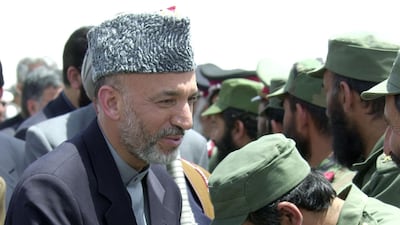
  • Interim Afghan leader Hamid Karzai (L) is greeted by a group of Afghan military officers on his arrival to Kandahar airbase on May 04, 2002 in Southern Afghanistan. Getty Images
    Interim Afghan leader Hamid Karzai (L) is greeted by a group of Afghan military officers on his arrival to Kandahar airbase on May 04, 2002 in Southern Afghanistan. Getty Images
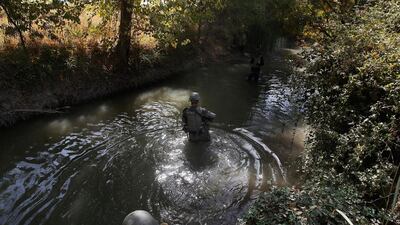
  • Soldiers in the U.S. Army's 101st Airborne Division wade though a creek to avoid buried insurgent bombs while on patrol October 16, 2010 in Zhari district west of Kandahar, Afghanistan. Getty Images
    Soldiers in the U.S. Army's 101st Airborne Division wade though a creek to avoid buried insurgent bombs while on patrol October 16, 2010 in Zhari district west of Kandahar, Afghanistan. Getty Images
  • British commandos descend from a mountain observation post overlooking the beginning of the Helmand River at the Kajaki hydroelectric dam on March 13, 2007 in Afghanistan's southern Helmand province. Getty Images
    British commandos descend from a mountain observation post overlooking the beginning of the Helmand River at the Kajaki hydroelectric dam on March 13, 2007 in Afghanistan's southern Helmand province. Getty Images
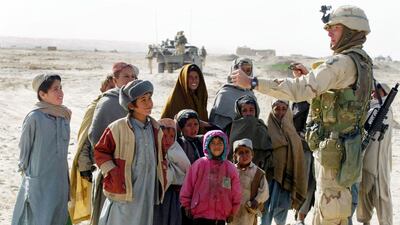
  • 101st Airbornes 1st Sgt. Kerry Black from Westmoreland, Tennessee uses an Afghan child's sling shot on February 6, 2002 as children crowd around him while he patrols on the outskirts of Kandahar, Afghanistan. Getty Images
    101st Airbornes 1st Sgt. Kerry Black from Westmoreland, Tennessee uses an Afghan child's sling shot on February 6, 2002 as children crowd around him while he patrols on the outskirts of Kandahar, Afghanistan. Getty Images
  • Marine Cpl. Jonathan Eckert of Oak Lawn, IL attached to India Battery, 3rd Battalion, 12th Marine Regiment works his improvised explosive device (IED) sniffing dog Bee as they secure a compound during a patrol near Forward Operating Base (FOB) Zeebrugge on October 11, 2010 in Kajaki, Afghanistan. Getty Images
    Marine Cpl. Jonathan Eckert of Oak Lawn, IL attached to India Battery, 3rd Battalion, 12th Marine Regiment works his improvised explosive device (IED) sniffing dog Bee as they secure a compound during a patrol near Forward Operating Base (FOB) Zeebrugge on October 11, 2010 in Kajaki, Afghanistan. Getty Images
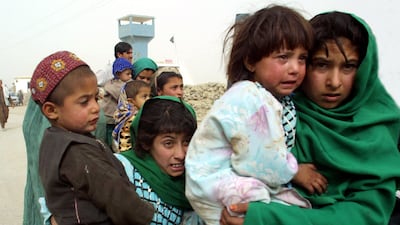
  • Afghan refugees walk across the border into Pakistan on October 11, 2001 as they leave Afghanistan at the Chaman crossing point on the 4th day of U.S.-led air strikes against the ruling Taliban and terrorist networks in the country. Getty Images
    Afghan refugees walk across the border into Pakistan on October 11, 2001 as they leave Afghanistan at the Chaman crossing point on the 4th day of U.S.-led air strikes against the ruling Taliban and terrorist networks in the country. Getty Images
  • Anti-Taliban Afghan fighters watch several explosions from U.S. bombings in the Tora Bora mountains in Afghanistan on December 16, 2001.
    Anti-Taliban Afghan fighters watch several explosions from U.S. bombings in the Tora Bora mountains in Afghanistan on December 16, 2001.
  • British Marines run under fire from the Taliban during a morning operation on March 18, 2007 near Kajaki in the Afghan province of Helmand. Getty Images
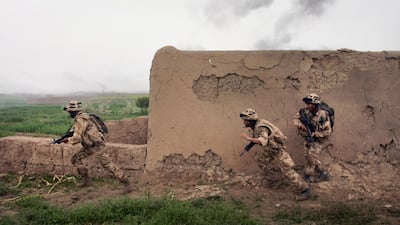
    British Marines run under fire from the Taliban during a morning operation on March 18, 2007 near Kajaki in the Afghan province of Helmand. Getty Images
  • Afghan Army troops prepare to board a British chinook helicopter from their base at Shorabak on March 12, 2007 in Southern Helmand province, Afghanistan. Getty Images
    Afghan Army troops prepare to board a British chinook helicopter from their base at Shorabak on March 12, 2007 in Southern Helmand province, Afghanistan. Getty Images
  • British Marine Joe Harvey from Stafford, England (R), watches as British forces come under fire by Taliban insurgents on March 18, 2007 near Kajaki in the Afghan province of Helmand. Getty Images
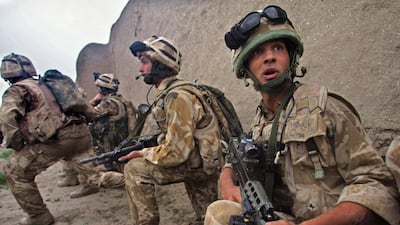
    British Marine Joe Harvey from Stafford, England (R), watches as British forces come under fire by Taliban insurgents on March 18, 2007 near Kajaki in the Afghan province of Helmand. Getty Images
  • U.S. Army 101st Airborne 3-187 "Bravo" company soliders pass through a corn field while conducting a sensitive site exploitation (SSE) mission July 23, 2002 near the town of Narizah in Southeastern Afghanistan. Getty Images
    U.S. Army 101st Airborne 3-187 "Bravo" company soliders pass through a corn field while conducting a sensitive site exploitation (SSE) mission July 23, 2002 near the town of Narizah in Southeastern Afghanistan. Getty Images
  • Scouts from 2nd Battalion, 503rd Infantry Regiment (Airborne), pull overwatch during Operation Destined Strike while 2nd Platoon, Able Company searches a village below the Chowkay Valley in Kunar Province, Afghanistan on August 22, 2006. US Army
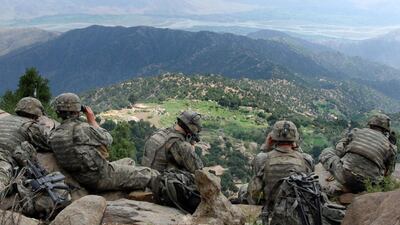
    Scouts from 2nd Battalion, 503rd Infantry Regiment (Airborne), pull overwatch during Operation Destined Strike while 2nd Platoon, Able Company searches a village below the Chowkay Valley in Kunar Province, Afghanistan on August 22, 2006. US Army

Previously the CEO of the Massoud Foundation, his son had been juggling the idea of entering politics for a while, saying he was disappointed in both the Afghan government and the elite after returning home from his studies in London.

Ahmad Massoud's political approach is summarised in one word: decentralisation; focusing on the division of power between the country’s 34 provinces, instead of a Kabul-based government stronghold; something his father already supported.

“Currently, the political system itself is the problem. There is no accountability, no one can question the president” he says, sitting on a sofa in his Kabul home. Wearing a light-coloured shalwar kameez, Afghanistan’s traditional dress and a pakol, a round-topped woollen hat, he closely resembles his father as a younger man.

Given the choice, Ahmad Massoud says he would have liked to work in astrophysics, pursue a doctorate degree and travel the world but felt it was his duty to follow his father into politics. Photo: Hamid Mohammadi

“To me, decentralisation is the solution to the peace process. With it, I hope we can solve structural issues that allow foreign countries to abuse Afghanistan,” he explains confidently.

His voice still carries the hint of a British accent from eight years in London – the city where his wife, who he met through family members – is still living to complete her PhD in politics.

After delayed election results that had President Ashraf Ghani take up another five years in office, and hurdles in the prisoner exchange that’s a forerunner to peace negotiations between the Afghan government and the Taliban, talks are due to begin, though a date hasn’t yet been determined.

Afghanistan has in the meantime been hit by a wave of violence amidst the coronavirus pandemic with increased fighting reported in provinces throughout the country as well as the attacks in the capital.

Mr Massoud caught and recovered from the virus himself in May.

During the same month, the United Nations warned that rising civilian casualty numbers were highlighting the urgent need to halve fighting and re-focus on peace negotiations.

Deborah Lyons, the Secretary-General’s Special Representative for Afghanistan called for “a halt to the fighting and for parties to respect humanitarian law that is there to protect civilians.”

“To me, decentralisation is the solution to the peace process. With it, I hope we can solve structural issues that allow foreign countries to abuse Afghanistan,” Ahmad Massoud said. Photo: Hamid Mohammadi

Mr Massoud said that after the US invasion, Afghanistan had several “good years in harmony with the support of the international community.”

“We managed to reduce the amount of violence,” he said, adding that things took a turn for the worse after 2005.

The mujaheddin leader’s son wants to see the Taliban driven out and power restored to the Afghan people; a “multiethnic society”, as he describes it.

He now divides his time between Kabul and Panjshir – a mountainous northern province about two-hours by car from the capital – spending his time walking, hiking, sometimes tending to his vegetable plot and reading about politics.

He admitted that the perception of Afghanistan in the press saddened him: a “strict and dogmatic place,” but, “Afghanistan is nothing like it.”

Mr Massoud was 12 years old when his father was assassinated, but he remembers growing up with him vividly.

“He was busy 24/7. There was no weekend and no vacation for him, but I considered him my best friend. I remember once he came home sick with malaria and he stayed at home for a week. Somehow I wished the recovery would last longer. I’ve never seen anyone more devoted. He sacrificed everything: his family, his safety, his security, his life.”

At times, the younger Mr Massoud would sit with his father, looking at the stars and reciting poetry – mostly verses by Hafez and Maulana Rumi. When the older man was killed, Mr Massoud admitted that he lost his sense of purpose for a time, but has since rekindled his life’s direction.

After the assassination and the collapse of the Taliban, the family of seven, including Mr Massoud’s mother and five sisters went to live with relatives in Iran’s Mashhad, where he attended high school.

Today, he says, the positions and power of the mujaheddin leaders – many of whom still make up part of the Afghan government – can’t be ignored. They are “defenders of our country,” he says, adding that people currently find identity in religion or ethnic groups, not in governmental structures, as there is little trust and accountability.

“There have been so many sacrifices made in Afghanistan, but what I don’t see in this peace agreement is a democratic and free country. The solution lies with the Afghan people and a decentralised system,” he argues – an opinion that other politicians dispute.

The decision to succeed his father came amidst an increasingly tense situation, with US troops withdrawing and the future for both the Afghan government and the Taliban unclear.

“If it wasn’t [for] the current situation in Afghanistan, I think I’d be an astrophysicist,” Mr Massoud laughed.

Turkish Ladies

Various artists, Sony Music Turkey 

Citizenship-by-investment programmes

United Kingdom

The UK offers three programmes for residency. The UK Overseas Business Representative Visa lets you open an overseas branch office of your existing company in the country at no extra investment. For the UK Tier 1 Innovator Visa, you are required to invest £50,000 (Dh238,000) into a business. You can also get a UK Tier 1 Investor Visa if you invest £2 million, £5m or £10m (the higher the investment, the sooner you obtain your permanent residency).

All UK residency visas get approved in 90 to 120 days and are valid for 3 years. After 3 years, the applicant can apply for extension of another 2 years. Once they have lived in the UK for a minimum of 6 months every year, they are eligible to apply for permanent residency (called Indefinite Leave to Remain). After one year of ILR, the applicant can apply for UK passport.

The Caribbean

Depending on the country, the investment amount starts from $100,000 (Dh367,250) and can go up to $400,000 in real estate. From the date of purchase, it will take between four to five months to receive a passport. 

Portugal

The investment amount ranges from €350,000 to €500,000 (Dh1.5m to Dh2.16m) in real estate. From the date of purchase, it will take a maximum of six months to receive a Golden Visa. Applicants can apply for permanent residency after five years and Portuguese citizenship after six years.

“Among European countries with residency programmes, Portugal has been the most popular because it offers the most cost-effective programme to eventually acquire citizenship of the European Union without ever residing in Portugal,” states Veronica Cotdemiey of Citizenship Invest.

Greece

The real estate investment threshold to acquire residency for Greece is €250,000, making it the cheapest real estate residency visa scheme in Europe. You can apply for residency in four months and citizenship after seven years.

Spain

The real estate investment threshold to acquire residency for Spain is €500,000. You can apply for permanent residency after five years and citizenship after 10 years. It is not necessary to live in Spain to retain and renew the residency visa permit.

Cyprus

Cyprus offers the quickest route to citizenship of a European country in only six months. An investment of €2m in real estate is required, making it the highest priced programme in Europe.

Malta

The Malta citizenship by investment programme is lengthy and investors are required to contribute sums as donations to the Maltese government. The applicant must either contribute at least €650,000 to the National Development & Social Fund. Spouses and children are required to contribute €25,000; unmarried children between 18 and 25 and dependent parents must contribute €50,000 each.

The second step is to make an investment in property of at least €350,000 or enter a property rental contract for at least €16,000 per annum for five years. The third step is to invest at least €150,000 in bonds or shares approved by the Maltese government to be kept for at least five years.

Candidates must commit to a minimum physical presence in Malta before citizenship is granted. While you get residency in two months, you can apply for citizenship after a year.

Egypt 

A one-year residency permit can be bought if you purchase property in Egypt worth $100,000. A three-year residency is available for those who invest $200,000 in property, and five years for those who purchase property worth $400,000.

Source: Citizenship Invest and Aqua Properties

Who's who in Yemen conflict

Houthis: Iran-backed rebels who occupy Sanaa and run unrecognised government

Yemeni government: Exiled government in Aden led by eight-member Presidential Leadership Council

Southern Transitional Council: Faction in Yemeni government that seeks autonomy for the south

Habrish 'rebels': Tribal-backed forces feuding with STC over control of oil in government territory

GAC GS8 Specs

Engine: 2.0-litre 4cyl turbo

Power: 248hp at 5,200rpm

Torque: 400Nm at 1,750-4,000rpm

Transmission: 8-speed auto

Fuel consumption: 9.1L/100km

On sale: Now

Price: From Dh149,900

Company%20Profile
%3Cp%3E%3Cstrong%3ECompany%20name%3A%3C%2Fstrong%3E%20myZoi%3Cbr%3E%3Cstrong%3EStarted%3A%3C%2Fstrong%3E%202021%3Cbr%3E%3Cstrong%3EFounders%3A%3C%2Fstrong%3E%20Syed%20Ali%2C%20Christian%20Buchholz%2C%20Shanawaz%20Rouf%2C%20Arsalan%20Siddiqui%2C%20Nabid%20Hassan%3Cbr%3E%3Cstrong%3EBased%3A%3C%2Fstrong%3E%20UAE%3Cbr%3E%3Cstrong%3ENumber%20of%20staff%3A%3C%2Fstrong%3E%2037%3Cbr%3E%3Cstrong%3EInvestment%3A%3C%2Fstrong%3E%20Initial%20undisclosed%20funding%20from%20SC%20Ventures%3B%20second%20round%20of%20funding%20totalling%20%2414%20million%20from%20a%20consortium%20of%20SBI%2C%20a%20Japanese%20VC%20firm%2C%20and%20SC%20Venture%3C%2Fp%3E%0A
Central%20Bank's%20push%20for%20a%20robust%20financial%20infrastructure
%3Cul%3E%0A%3Cli%3ECBDC%20real-value%20pilot%20held%20with%20three%20partner%20institutions%26nbsp%3B%3C%2Fli%3E%0A%3Cli%3EPreparing%20buy%20now%2C%20pay%20later%20regulations%26nbsp%3B%3C%2Fli%3E%0A%3Cli%3EPreparing%20for%20the%202023%20launch%20of%20the%20domestic%20card%20initiative%26nbsp%3B%3C%2Fli%3E%0A%3Cli%3EPhase%20one%20of%20the%20Financial%20Infrastructure%20Transformation%20(FiT)%20completed%3C%2Fli%3E%0A%3C%2Ful%3E%0A
How Filipinos in the UAE invest

A recent survey of 10,000 Filipino expatriates in the UAE found that 82 per cent have plans to invest, primarily in property. This is significantly higher than the 2014 poll showing only two out of 10 Filipinos planned to invest.

Fifty-five percent said they plan to invest in property, according to the poll conducted by the New Perspective Media Group, organiser of the Philippine Property and Investment Exhibition. Acquiring a franchised business or starting up a small business was preferred by 25 per cent and 15 per cent said they will invest in mutual funds. The rest said they are keen to invest in insurance (3 per cent) and gold (2 per cent).

Of the 5,500 respondents who preferred property as their primary investment, 54 per cent said they plan to make the purchase within the next year. Manila was the top location, preferred by 53 per cent.