


The crew of the abandoned merchant tanker Mt Iba are set to fly home to their families after four years stranded in the Gulf.
Sailing into Dubai Maritime City (DMC) port marked an end to a ordeal that made headlines around the world.
The Mt Iba, a 5,000-tonne Panama-flagged shipping vessel, washed ashore in Umm Al Quwain in January after breaking free from its anchorage in rough weather.
The ship had sat anchored off the UAE coast since 2017 after owners Alco Shipping hit financial problems.
It was finally sold in March, so the crew could be paid 80 per cent of what they were owed, amounting to about $170,000.
Now the five crew members – three from India, one from Pakistan and another from Myanmar – can finally return home on flights after arriving in Dubai.
First engineer Nay Win, 53, said all crew members hope to get on repatriation flights over the next week.
"I have spoken to my family in Myanmar, there is a lot of trouble there, but I just want to go home," he told The National, seated in the ship's cramped mess hall.
“I am looking forward to cooking some vegetables with my family.
“I have been told there is a repatriation flight to Myanmar on May 11.
“I am tired, and have no energy left to work onboard this ship. When I go home, I will retire from the sea,” he said.
The coronavirus pandemic has put the spotlight on the plight on seafarers and merchant ship sailors, their vulnerability and the shortcomings in international shipping laws and standards.
The physical affects of living in such a harsh environment for so long are beginning to show.
Second engineer Vinay Kumar, 31, and the ship’s cook Monchand Sheikh, 26, have complained of skin rashes and painful blisters caused by the heat, sea air and salt that covered the ship.
Mr Sheikh, who wanted to earn enough money to build his parents a home, gets persistent headaches and has difficulty sleeping.
“Pain in the back of my head comes and goes, I want to see a doctor when I [get] onto land,” he said.
“Our bodies are damaged and our minds are damaged.
“We look like stone, but we are not angry anymore, we just want this to end.”
-

Second engineer Vinay Kumar was among the crew stranded aboard the Mt Iba vessel, which washed up in Umm Al Quwain. All photos: Nick Webster -
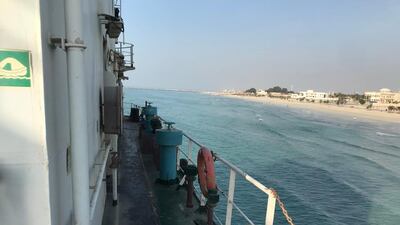
The Mt Iba, owned by Alco Shipping Services, grounded on Umm Al Quwain public beach during rough weather and strong winds on Friday, Janaury 22. -

Chief engineer Nay Win kept in regular contact with the Federal Transport Authority during his four years on board the Mt Iba. -
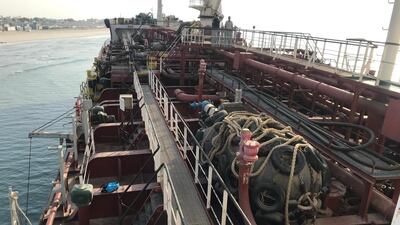
The deck of the 5,000-tonne Mt Iba that was grounded on Umm Al Quwain public beach on Friday, January 22. -
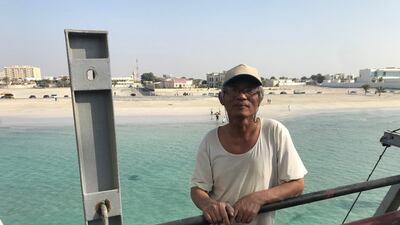
Chief engineer of the Mt Iba, Nay Win, had been waiting 43 months to return home. Trouble in Myanmar has further delayed his plans to go home from Umm Al Quwain where his ship has run aground. -

On board Mt Iba that ran aground in Umm Al Quwain in Dubai on January 22. -

On board Mt Iba that ran aground in Umm Al Quwain on January 22.


The men will get a health check as per maritime protocols once they end their contracts.
Each member has also had to deal with heartbreaking family issues, thousands of miles from home.
While second engineer Riasect Ali’s wife needed cancer treatment, Mr Kumar lost his grandmother last month to Covid-19 in India.
The tanker washed ashore in Umm Al Quwain on January 21, but its new owners took weeks to recover the vessel and refloat it so it could return to sea.
Counselling for sailors
It spent several more weeks at anchorage while the crew’s paperwork was completed.
All of the crew members are returning to an uncertain world and without UAE residency papers they are not eligible for a vaccine before they fly.
Psychological counselling will be offered from the Mission to Seafarers charity to help them reintegrate into their families.
“It took a lot longer to remove from the beach than we thought,” said Mr Kumar, who is looking forward to playing cricket with his son Mukund, three, and daughter Nabia, six.
“They used one tug boat at first and when that didn’t work they brought in a second boat that also became stuck.
“We thought we would never leave. When we could finally return to sea it was a huge relief for us all.
“I was sleeping and I felt the ship shaking. It woke me up and when we started to move it was an incredible feeling.
“When we sailed into Dubai this week, it was like seeing the gates of heaven. We know now that we will be home soon," he said.
“Hopefully, nothing else will go wrong and we can sign off.”
The youngest of the crew, Nirmal Singh Bora, is just 22 and had taken his first job at sea on board the Mt Iba.
An international document to support seafarers when owners abandon a ship has been created by UK lawyers supported by international charity Human Rights at Sea.
The 24-page charter is designed to help sailors resolve their legal status, but does not recommend any amendments to current maritime laws.
“For too long seafarers have been treated like commodities, rather than human beings,” said Andy Bowerman, regional director for the Mission to Seafarers in Dubai.
“There are international maritime laws and some of these common issues can be resolved under existing legislation.
“There are conversations going on about how to change the maritime legislation in the Gulf to ensure seafarers are given priority over other creditors."

