Abu Dhabi launches free bus service for healthcare workers


Nilanjana Gupta
  • English
  • Arabic

Abu Dhabi has launched a free bus service for healthcare workers in the capital.

The bus-on-demand service from the Integrated Transport Centre, a company that manages public transport in Abu Dhabi, is free to medics making their journey to and from work.

The buses operate daily from 6pm to 8am but authorities said they may extend those hours.

Each bus can accommodate a maximum of seven passengers, with six regular seats and a place for a wheelchair user.

The number of passengers has been kept low to maintain a safe distance between travellers and respect coronavirus prevention measures.

Princess Estabaya, who works as a coordinator at Cleveland Clinic Abu Dhabi, takes the bus at 7pm with her colleagues.

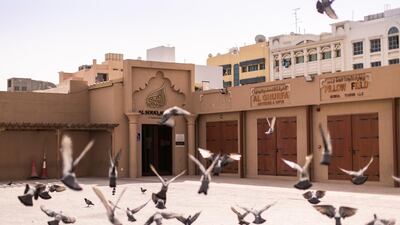
  • The closed Traditional Souq in Naif. Reem Mohammed / The National
    The closed Traditional Souq in Naif. Reem Mohammed / The National
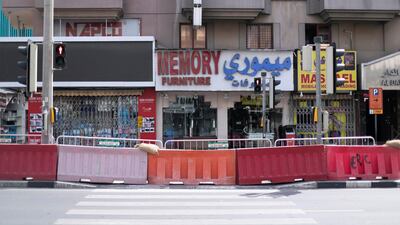
  • Barriers set outside Naif. Once vibrant, Deira's streets are now more quiet after the movement restrictions were enforced by Dubai Police. Reem Mohammed / The National
    Barriers set outside Naif. Once vibrant, Deira's streets are now more quiet after the movement restrictions were enforced by Dubai Police. Reem Mohammed / The National
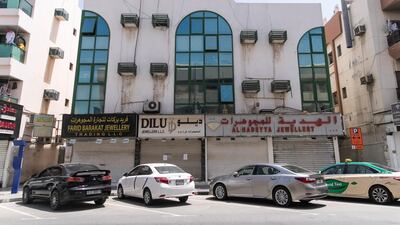
  • Satwa’s shops have closed temporarily to help UAE’s plan to prevent the spread of the coronavirus. Reem Mohammed / The National
    Satwa’s shops have closed temporarily to help UAE’s plan to prevent the spread of the coronavirus. Reem Mohammed / The National
  • Empty roads outside Dubai International academy school. Chris Whiteoak / The National
    Empty roads outside Dubai International academy school. Chris Whiteoak / The National
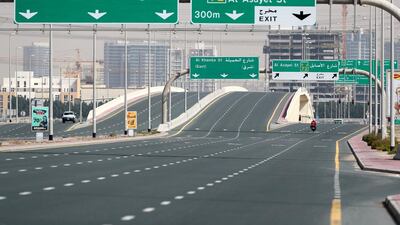
  • A very quiet Al Khamila Street in Dubai. Chris Whiteoak / The National
    A very quiet Al Khamila Street in Dubai. Chris Whiteoak / The National
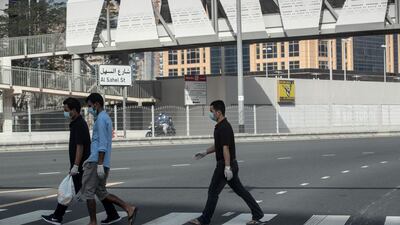
  • Three men wearing face masks and gloves as per Government order walk across a street in Jumeirah Lake Towers. Antonie Robertson / The National
    Three men wearing face masks and gloves as per Government order walk across a street in Jumeirah Lake Towers. Antonie Robertson / The National
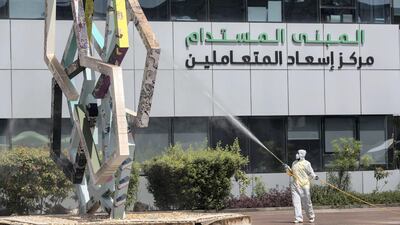
  • A man sprays down the outside of the Dubai Municipality building in Al Quoz. Antonie Robertson / The National
    A man sprays down the outside of the Dubai Municipality building in Al Quoz. Antonie Robertson / The National
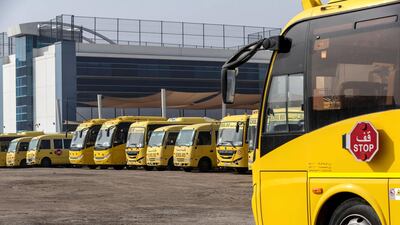
  • School busses parked at the GEMS Wellington International School in Al Sufouh. Antonie Robertson / The National
    School busses parked at the GEMS Wellington International School in Al Sufouh. Antonie Robertson / The National
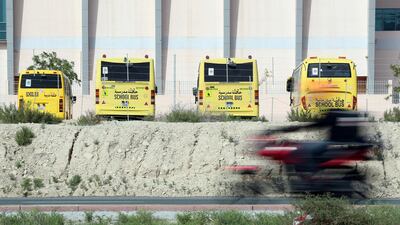
  • School busses parked up while a delivery scooter zooms passed on Hessa Street as Dubai goes into lockdown for 2 weeks due to the corona virus. Chris Whiteoak / The National
    School busses parked up while a delivery scooter zooms passed on Hessa Street as Dubai goes into lockdown for 2 weeks due to the corona virus. Chris Whiteoak / The National
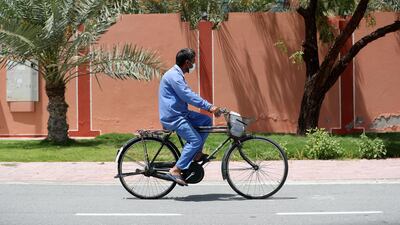
  • A man wears a facemark as he goes about his duties. Chris Whiteoak / The National
    A man wears a facemark as he goes about his duties. Chris Whiteoak / The National
  • Satwa’s shops have closed temporarily to help UAE’s plan to prevent the spread of the coronavirus. Reem Mohammed / The National
    Satwa’s shops have closed temporarily to help UAE’s plan to prevent the spread of the coronavirus. Reem Mohammed / The National
  • A quiet petrol station in Dubai. Reem Mohammed / The National
    A quiet petrol station in Dubai. Reem Mohammed / The National
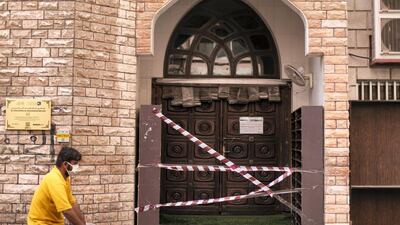
  • A closed mosque in Naif. Reem Mohammed / The National
    A closed mosque in Naif. Reem Mohammed / The National
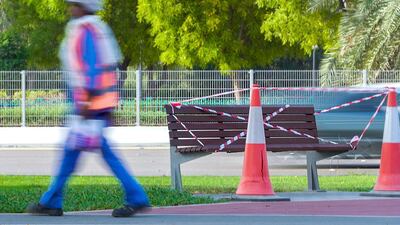
  • A worker with his packed lunch walks by a cordoned off public bench in Abu Dhabi. Victor Besa / The National
    A worker with his packed lunch walks by a cordoned off public bench in Abu Dhabi. Victor Besa / The National
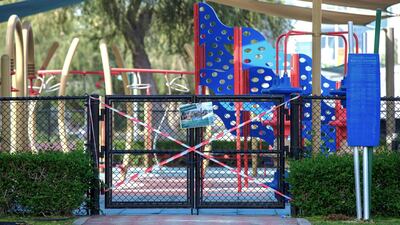
  • A cordoned off park to keep residents safe from the coronavirus at Al Falah Street, Abu Dhabi. Victor Besa / The National
    A cordoned off park to keep residents safe from the coronavirus at Al Falah Street, Abu Dhabi. Victor Besa / The National

“Before this service, I would walk home for 20 to 25 minutes. It’s tiring to work for 12 hours and then walk all the way home. By taking this bus, I can reach home before the restricted hours in the night come into force,” she said.

Larraine Ocampo works as a nurse at the same hospital and lives four kilometres away on Hamdan bin Mohammed Street.

“I used to commute daily using a public bus, but there were fewer seats available as they limited the number of passengers. It’s great that they are taking the necessary steps to keep a safe distance but it makes it difficult for me to find a ride back home,” she said.

“Now with this new service for healthcare workers, it’s easier getting back home.”

To request a bus seat, users can download the Abu Dhabi Healthcare Link app on Apple Store or Google Play Store.

Healthcare workers need to register, enter the name of the hospital where they work and their staff identification details.

Once the registration is complete, they can specify their pick-up and drop-off locations to request a bus.

The app then provides details such as waiting time, estimated time of arrival and the duration of the trip.


UAE rugby in numbers

5 - Year sponsorship deal between Hesco and Jebel Ali Dragons

700 - Dubai Hurricanes had more than 700 playing members last season between their mini and youth, men's and women's teams

Dh600,000 - Dubai Exiles' budget for pitch and court hire next season, for their rugby, netball and cricket teams

Dh1.8m - Dubai Hurricanes' overall budget for next season

Dh2.8m - Dubai Exiles’ overall budget for next season


MATCH INFO

Manchester United 1 (Rashford 36')

Liverpool 1 (Lallana 84')

Man of the match: Marcus Rashford (Manchester United)

Benefits of first-time home buyers' scheme
  • Priority access to new homes from participating developers
  • Discounts on sales price of off-plan units
  • Flexible payment plans from developers
  • Mortgages with better interest rates, faster approval times and reduced fees
  • DLD registration fee can be paid through banks or credit cards at zero interest rates

Banthology: Stories from Unwanted Nations
Edited by Sarah Cleave, Comma Press

Mercer, the investment consulting arm of US services company Marsh & McLennan, expects its wealth division to at least double its assets under management (AUM) in the Middle East as wealth in the region continues to grow despite economic headwinds, a company official said.

Mercer Wealth, which globally has $160 billion in AUM, plans to boost its AUM in the region to $2-$3bn in the next 2-3 years from the present $1bn, said Yasir AbuShaban, a Dubai-based principal with Mercer Wealth.

Within the next two to three years, we are looking at reaching $2 to $3 billion as a conservative estimate and we do see an opportunity to do so,” said Mr AbuShaban.

Mercer does not directly make investments, but allocates clients’ money they have discretion to, to professional asset managers. They also provide advice to clients.

“We have buying power. We can negotiate on their (client’s) behalf with asset managers to provide them lower fees than they otherwise would have to get on their own,” he added.

Mercer Wealth’s clients include sovereign wealth funds, family offices, and insurance companies among others.

From its office in Dubai, Mercer also looks after Africa, India and Turkey, where they also see opportunity for growth.

Wealth creation in Middle East and Africa (MEA) grew 8.5 per cent to $8.1 trillion last year from $7.5tn in 2015, higher than last year’s global average of 6 per cent and the second-highest growth in a region after Asia-Pacific which grew 9.9 per cent, according to consultancy Boston Consulting Group (BCG). In the region, where wealth grew just 1.9 per cent in 2015 compared with 2014, a pickup in oil prices has helped in wealth generation.

BCG is forecasting MEA wealth will rise to $12tn by 2021, growing at an annual average of 8 per cent.

Drivers of wealth generation in the region will be split evenly between new wealth creation and growth of performance of existing assets, according to BCG.

Another general trend in the region is clients’ looking for a comprehensive approach to investing, according to Mr AbuShaban.

“Institutional investors or some of the families are seeing a slowdown in the available capital they have to invest and in that sense they are looking at optimizing the way they manage their portfolios and making sure they are not investing haphazardly and different parts of their investment are working together,” said Mr AbuShaban.

Some clients also have a higher appetite for risk, given the low interest-rate environment that does not provide enough yield for some institutional investors. These clients are keen to invest in illiquid assets, such as private equity and infrastructure.

“What we have seen is a desire for higher returns in what has been a low-return environment specifically in various fixed income or bonds,” he said.

“In this environment, we have seen a de facto increase in the risk that clients are taking in things like illiquid investments, private equity investments, infrastructure and private debt, those kind of investments were higher illiquidity results in incrementally higher returns.”

The Abu Dhabi Investment Authority, one of the largest sovereign wealth funds, said in its 2016 report that has gradually increased its exposure in direct private equity and private credit transactions, mainly in Asian markets and especially in China and India. The authority’s private equity department focused on structured equities owing to “their defensive characteristics.”

What the law says

Micro-retirement is not a recognised concept or employment status under Federal Decree Law No. 33 of 2021 on the Regulation of Labour Relations (as amended) (UAE Labour Law). As such, it reflects a voluntary work-life balance practice, rather than a recognised legal employment category, according to Dilini Loku, senior associate for law firm Gateley Middle East.

“Some companies may offer formal sabbatical policies or career break programmes; however, beyond such arrangements, there is no automatic right or statutory entitlement to extended breaks,” she explains.

“Any leave taken beyond statutory entitlements, such as annual leave, is typically regarded as unpaid leave in accordance with Article 33 of the UAE Labour Law. While employees may legally take unpaid leave, such requests are subject to the employer’s discretion and require approval.”

If an employee resigns to pursue micro-retirement, the employment contract is terminated, and the employer is under no legal obligation to rehire the employee in the future unless specific contractual agreements are in place (such as return-to-work arrangements), which are generally uncommon, Ms Loku adds.

MATCH INFO

Uefa Champioons League semi-final, first leg:

Liverpool 5
Salah (35', 45 1'), Mane (56'), Firmino (61', 68')

Roma 2
Dzeko (81'), Perotti (85' pen)

Second leg: May 2, Stadio Olimpico, Rome

The specs
  • Engine: 3.9-litre twin-turbo V8
  • Power: 640hp
  • Torque: 760nm
  • On sale: 2026
  • Price: Not announced yet
The alternatives

• Founded in 2014, Telr is a payment aggregator and gateway with an office in Silicon Oasis. It’s e-commerce entry plan costs Dh349 monthly (plus VAT). QR codes direct customers to an online payment page and merchants can generate payments through messaging apps.

• Business Bay’s Pallapay claims 40,000-plus active merchants who can invoice customers and receive payment by card. Fees range from 1.99 per cent plus Dh1 per transaction depending on payment method and location, such as online or via UAE mobile.

• Tap started in May 2013 in Kuwait, allowing Middle East businesses to bill, accept, receive and make payments online “easier, faster and smoother” via goSell and goCollect. It supports more than 10,000 merchants. Monthly fees range from US$65-100, plus card charges of 2.75-3.75 per cent and Dh1.2 per sale.

2checkout’s “all-in-one payment gateway and merchant account” accepts payments in 200-plus markets for 2.4-3.9 per cent, plus a Dh1.2-Dh1.8 currency conversion charge. The US provider processes online shop and mobile transactions and has 17,000-plus active digital commerce users.

• PayPal is probably the best-known online goods payment method - usually used for eBay purchases -  but can be used to receive funds, providing everyone’s signed up. Costs from 2.9 per cent plus Dh1.2 per transaction.