• The remaining eight months of 2021 will see several astronomical events. 'The National' lists the top 7 must-see ones that will be visible in UAE's skies. On May 26, a full Moon supermoon will occur. It will be the biggest and brightest of the year. Antonie Robertson / The National
    The remaining eight months of 2021 will see several astronomical events. 'The National' lists the top 7 must-see ones that will be visible in UAE's skies. On May 26, a full Moon supermoon will occur. It will be the biggest and brightest of the year. Antonie Robertson / The National
  • June 24 will be the last chance to spot a supermoon in 2021. The full Moon will not seem as big as the one in May, but it will still be bright enough to spot with the naked eye. Reuters
    June 24 will be the last chance to spot a supermoon in 2021. The full Moon will not seem as big as the one in May, but it will still be bright enough to spot with the naked eye. Reuters
  • This is a colour-enhanced view of Saturn in 1980 and was taken from the Voyager 2 spacecraft. On August 2, the giant gas planet will be at opposition with Earth and will be visible all night long. It will be the best time to photograph the second largest planet in the solar system. Getty Images
    This is a colour-enhanced view of Saturn in 1980 and was taken from the Voyager 2 spacecraft. On August 2, the giant gas planet will be at opposition with Earth and will be visible all night long. It will be the best time to photograph the second largest planet in the solar system. Getty Images
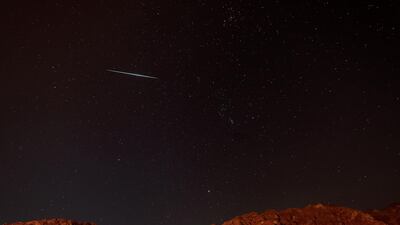
  • The Perseids meteor shower will be visible in the UAE from August 12 to August 13. At its peak, the shower produces up to 60 meteors per hour and can appear as fireballs shooting across the skies. Jeff Topping / The National
    The Perseids meteor shower will be visible in the UAE from August 12 to August 13. At its peak, the shower produces up to 60 meteors per hour and can appear as fireballs shooting across the skies. Jeff Topping / The National
  • Jupiter will be at opposition on August 19, making a close approach to Earth and becoming visible. This will the best time to observe the largest planet of the solar system and its four large Moons, which will appear as dots next to it. Getty Images
    Jupiter will be at opposition on August 19, making a close approach to Earth and becoming visible. This will the best time to observe the largest planet of the solar system and its four large Moons, which will appear as dots next to it. Getty Images
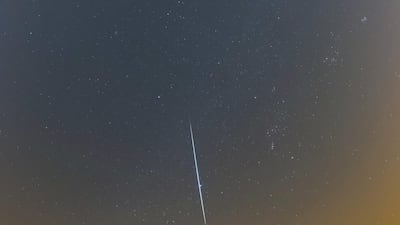
  • The Leonids meteor shower will take place on November 18. While these showers are not as visible in the UAE, they still put on a stellar show if weather conditions are favourable and if they are observed away from light pollution. They are also the fastest travelling meteors, at a speed of 71 kilometres per second. Reuters
    The Leonids meteor shower will take place on November 18. While these showers are not as visible in the UAE, they still put on a stellar show if weather conditions are favourable and if they are observed away from light pollution. They are also the fastest travelling meteors, at a speed of 71 kilometres per second. Reuters
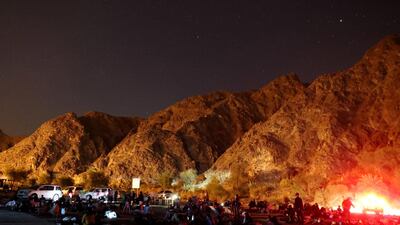
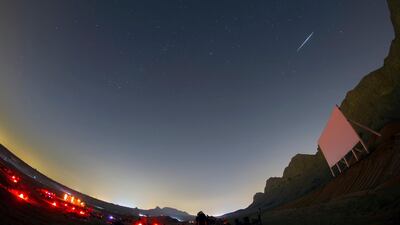
  • On December 14, the Geminids meteor shower will light up the UAE's skies. It is one of the best celestial events of the year in the Emirates and are highly visible. Chris Whiteoak / The National
    On December 14, the Geminids meteor shower will light up the UAE's skies. It is one of the best celestial events of the year in the Emirates and are highly visible. Chris Whiteoak / The National

Shooting stars and supermoons: top 7 celestial events in UAE skies this year


Sarwat Nasir
  • English
  • Arabic

From supermoons to bright meteor showers, there are plenty of astronomical events to light up the UAE’s skies this year.

A pink supermoon this week and the Quadrantids meteor showers in January already wowed stargazers, but the best is yet to come.

While some parts of the world will experience a solar and lunar eclipse, the Emirates’ skies will also host dazzling celestial events.

The National lists the top seven must-see sky shows of 2021.

May 26: a full Moon supermoon

This supermoon will be the biggest and brightest of the year. It will be at its closest approach to the Earth, meaning it will appear larger than a regular full Moon.

The pink supermoon this week was 7 per cent bigger and 14 per cent brighter, but the coming one will be even more striking.

Stargazers in Australia, parts of the US and western South America will experience a total lunar eclipse of the supermoon.

According to the Dubai Astronomy Group, early Native American tribes knew this full Moon as the Full Flower Moon because it was when spring flowers were in abundance.

June 24: the last supermoon of the year

This will be the last chance to spot a supermoon in 2021. It will be a full Moon and will appear in UAE skies.

It will not seem as big as the one in May, but it will still be bright enough to spot with the naked eye.

A photo taken on April 27, 2021 shows the April's full moon, known as the Pink supermoon, behind the Burj Khalifa. AFP

Native American tribes called this event the ‘Full Strawberry Moon’ because it indicated the time to gather ripened fruit and coincides with the peak of the strawberry harvesting season.

August 2: best time to observe Saturn

During the Saturn opposition, the gas giant will be in a straight line with the Sun and the Earth and will be visible all night long. It will make a close approach to Earth and its face will be fully illuminated.

The Dubai Astronomy Group said this would be the best time to photograph Saturn, its rings and a few of its brightest moons.

The planet is the second largest in the solar system and has 82 moons.

Using telescopes to view the planet will enhance the experience.

August 12-13: Perseids meteor shower

This is one of the best meteor showers in the UAE and is visible annually.

At its peak, the shower produces up to 60 meteors an hour and can appear as fireballs shooting across the skies. The event takes place from July 17 to mid-August but is at its most intense from August 12 to August 13 in the Emirates.

  • A meteor streaks through the night sky, past planet Mars (C, left), during the Perseids meteor shower over the lake of Kozjak, Macedonia, in August 2018. Georgi Licovski / EPA
    A meteor streaks through the night sky, past planet Mars (C, left), during the Perseids meteor shower over the lake of Kozjak, Macedonia, in August 2018. Georgi Licovski / EPA
  • A long exposure image shows Stars revolving around the North Star during a 'Night of falling stars' on the Col de la Givrine, near Saint-Cergue, Switzerland, in August 2018. Salvatore Di Nolfi / EPA
    A long exposure image shows Stars revolving around the North Star during a 'Night of falling stars' on the Col de la Givrine, near Saint-Cergue, Switzerland, in August 2018. Salvatore Di Nolfi / EPA
  • The Perseids meteor shower is seen over San Miguel de Aguayo, Spain, in August 2017. Pedro Puente Hoyos / EPA
    The Perseids meteor shower is seen over San Miguel de Aguayo, Spain, in August 2017. Pedro Puente Hoyos / EPA
  • A Perseids meteor illuminates the dark sky near Comillas in northern Spain in August 2017. Cesar Manso / AFP
    A Perseids meteor illuminates the dark sky near Comillas in northern Spain in August 2017. Cesar Manso / AFP
  • A Perseids meteor shower burns up in the atmosphere behind a Catholic church near the village of Rubezhevichi, some 50 km from Minsk, Belarus, in August 2017. Tatyana Zenkovich / EPA
    A Perseids meteor shower burns up in the atmosphere behind a Catholic church near the village of Rubezhevichi, some 50 km from Minsk, Belarus, in August 2017. Tatyana Zenkovich / EPA
  • A girl lies in hammock as she looks at the milky way during the peak of Perseid meteor shower in Kozjak, Macedonia, in August 2018. Ognen Teofilovski / Reuters
    A girl lies in hammock as she looks at the milky way during the peak of Perseid meteor shower in Kozjak, Macedonia, in August 2018. Ognen Teofilovski / Reuters

The shower is caused by Comet Swift-Tuttle, which was discovered in 1862.

It leaves behind a long trail of dust and debris during its 133-year orbit around the sun.

When Earth passes through the comet’s debris each year, it creates the meteor shower.

The debris collides with the atmosphere and disintegrates, causing a colourful show. The comet made its closest fly-by to our planet in 1992; the next one will be in 2126.

It is recommended to watch the meteor shower away from light pollution.

August 19: see Jupiter, largest planet in the solar system

This will the best time to see Jupiter and its four largest moons, which will appear as dots next to the planet.

The event is called Jupiter at opposition takes place when the gas giant is at its closest approach to Earth.

This image of Jupiter was taken by the Outer Planet Atmospheres Legacy programme, a long-term project that uses Hubble telescope to capture global maps of the outer planets every year. The Great Red Spot appears in the lower right. Opal

Like the Saturn opposition, it will be in a straight line with Earth and the Sun, with its face fully illuminated.

A telescope will enhance the viewing experience, while a pair of binoculars would help spot the planet’s moons.

November 18: Leonids meteor shower

The Leonids meteor shower is also known to produce fireballs, which makes the event appear brighter in the skies.

While these showers are not as visible in the UAE, they still put on a stellar show if the weather is favourable and if they are observed away from light pollution.

They are known to be among the fastest meteors, travelling at speeds of 71 kilometres a second.

December 14: Geminids meteor shower

The Geminids are the best meteor showers of the year in the UAE, with about 120 of them shooting across the skies each hour.

They are the most visible meteors in the Emirates and can be spotted without binoculars or telescopes.

Geminids are leftovers of 3200 Phaethon, which is either an asteroid or extinct comet, according to the US space agency Nasa.

The dust left behind by the space rock burns up in the Earth’s atmosphere, making the "shooting stars" visible to sky gazers.

Geminids meteor shower 2020 in the UAE - in pictures 

  • A Geminids meteor shower lit up UAE skies on December 13, 2020. Chris Whiteoak / The National
    A Geminids meteor shower lit up UAE skies on December 13, 2020. Chris Whiteoak / The National
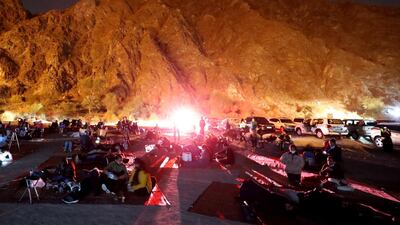
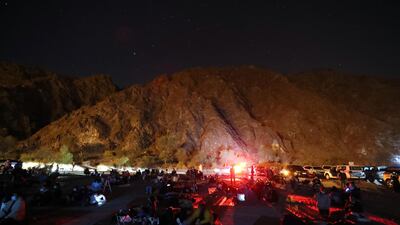
  • About 200 people turned up at Wadi Shawka in Ras Al Khaimah to watch the celestial event as part of a gathering organised by the Dubai Astronomy Group. Chris Whiteoak / The National
    About 200 people turned up at Wadi Shawka in Ras Al Khaimah to watch the celestial event as part of a gathering organised by the Dubai Astronomy Group. Chris Whiteoak / The National
  • The Geminid meteor shower in Mleiha, Sharjah. Prabhu Astrophotography for The National
    The Geminid meteor shower in Mleiha, Sharjah. Prabhu Astrophotography for The National
  • Another shot of the Geminid meteor shower from Mleiha, Sharjah. Prabhu Astrophotography for The National
    Another shot of the Geminid meteor shower from Mleiha, Sharjah. Prabhu Astrophotography for The National
  • The showers were the most visible ones of the year in the UAE and were at their peak from 10pm to 2am. Chris Whiteoak / The National
    The showers were the most visible ones of the year in the UAE and were at their peak from 10pm to 2am. Chris Whiteoak / The National
  • Clear skies and no Moon interference enhanced the experience. Chris Whiteoak / The National
    Clear skies and no Moon interference enhanced the experience. Chris Whiteoak / The National
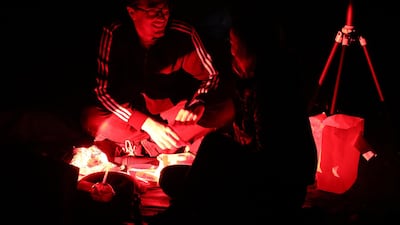
  • Those who watched away from light pollution were wowed by the large number of 'shooting stars'. Chris Whiteoak / The National
    Those who watched away from light pollution were wowed by the large number of 'shooting stars'. Chris Whiteoak / The National
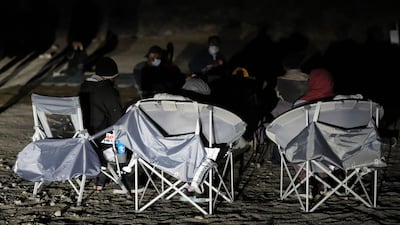
  • People of all ages attended the gathering. Chris Whiteoak / The National
    People of all ages attended the gathering. Chris Whiteoak / The National
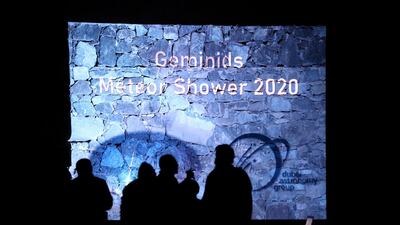
  • Members of the Dubai Astronomy Group gave presentations and educated guests on the celestial event. Chris Whiteoak / The National
    Members of the Dubai Astronomy Group gave presentations and educated guests on the celestial event. Chris Whiteoak / The National
  • Hasan Al Hariri, chief executive of the Dubai Astronomy Group. Chris Whiteoak / The National
    Hasan Al Hariri, chief executive of the Dubai Astronomy Group. Chris Whiteoak / The National
  • The showers were visible to the naked eye, but telescopes were available to see the 'shooting stars' up close and observe other planets. Chris Whiteoak / The National
    The showers were visible to the naked eye, but telescopes were available to see the 'shooting stars' up close and observe other planets. Chris Whiteoak / The National
ANDROID%20VERSION%20NAMES%2C%20IN%20ORDER
%3Cp%3EAndroid%20Alpha%3C%2Fp%3E%0A%3Cp%3EAndroid%20Beta%3C%2Fp%3E%0A%3Cp%3EAndroid%20Cupcake%3C%2Fp%3E%0A%3Cp%3EAndroid%20Donut%3C%2Fp%3E%0A%3Cp%3EAndroid%20Eclair%3C%2Fp%3E%0A%3Cp%3EAndroid%20Froyo%3C%2Fp%3E%0A%3Cp%3EAndroid%20Gingerbread%3C%2Fp%3E%0A%3Cp%3EAndroid%20Honeycomb%3C%2Fp%3E%0A%3Cp%3EAndroid%20Ice%20Cream%20Sandwich%3C%2Fp%3E%0A%3Cp%3EAndroid%20Jelly%20Bean%3C%2Fp%3E%0A%3Cp%3EAndroid%20KitKat%3C%2Fp%3E%0A%3Cp%3EAndroid%20Lollipop%3C%2Fp%3E%0A%3Cp%3EAndroid%20Marshmallow%3C%2Fp%3E%0A%3Cp%3EAndroid%20Nougat%3C%2Fp%3E%0A%3Cp%3EAndroid%20Oreo%3C%2Fp%3E%0A%3Cp%3EAndroid%20Pie%3C%2Fp%3E%0A%3Cp%3EAndroid%2010%20(Quince%20Tart*)%3C%2Fp%3E%0A%3Cp%3EAndroid%2011%20(Red%20Velvet%20Cake*)%3C%2Fp%3E%0A%3Cp%3EAndroid%2012%20(Snow%20Cone*)%3C%2Fp%3E%0A%3Cp%3EAndroid%2013%20(Tiramisu*)%3C%2Fp%3E%0A%3Cp%3EAndroid%2014%20(Upside%20Down%20Cake*)%3C%2Fp%3E%0A%3Cp%3EAndroid%2015%20(Vanilla%20Ice%20Cream*)%3C%2Fp%3E%0A%3Cp%3E%3Cem%3E*%20internal%20codenames%3C%2Fem%3E%3C%2Fp%3E%0A
How the UAE gratuity payment is calculated now

Employees leaving an organisation are entitled to an end-of-service gratuity after completing at least one year of service.

The tenure is calculated on the number of days worked and does not include lengthy leave periods, such as a sabbatical. If you have worked for a company between one and five years, you are paid 21 days of pay based on your final basic salary. After five years, however, you are entitled to 30 days of pay. The total lump sum you receive is based on the duration of your employment.

1. For those who have worked between one and five years, on a basic salary of Dh10,000 (calculation based on 30 days):

a. Dh10,000 ÷ 30 = Dh333.33. Your daily wage is Dh333.33

b. Dh333.33 x 21 = Dh7,000. So 21 days salary equates to Dh7,000 in gratuity entitlement for each year of service. Multiply this figure for every year of service up to five years.

2. For those who have worked more than five years

c. 333.33 x 30 = Dh10,000. So 30 days’ salary is Dh10,000 in gratuity entitlement for each year of service.

Note: The maximum figure cannot exceed two years total salary figure.

The specs

Engine: 3.8-litre twin-turbo flat-six

Power: 650hp at 6,750rpm

Torque: 800Nm from 2,500-4,000rpm

Transmission: 8-speed dual-clutch auto

Fuel consumption: 11.12L/100km

Price: From Dh796,600

On sale: now