

The UAE’s new senior rabbi in residence, Dr Elie Abadie was, you could say, born into the role.
Coming from a family of rabbis who can be traced back to the 15th century in Spain, it was arguably his destiny to fall in line, too.
He was interested in learning about his religion, but he did not seriously consider becoming a rabbi, at least at first.
At the age of 5, he wanted to become a doctor.
"I wanted to be learned as a rabbi, not necessarily function as a rabbi," Rabbi Abadie, 59, told The National.
But medicine ultimately became more of a part-time pursuit as his interest in serving the Jewish community developed.
“Life has its challenges and more than challenges, has its surprises,” he said.
Rabbi Abadie was born in Lebanon in 1960. His parents were from Syria and they belonged to a community of about 40,000 Jewish people who lived in the country in the 1940s.
But like many Jewish people in Syria, they left after the UN General Assembly adopted a partition plan for Palestine in 1947.
“My parents lived right next to the synagogue. They saw people enter the synagogue, pillage it, torched it, took out the Torah scrolls and holy books and burnt them,” he said.
“My parents escaped from their home through the backdoor as people tried to get into my parents’ house. They left and never returned.”
_______________________________
Abraham Accord - in pictures
-
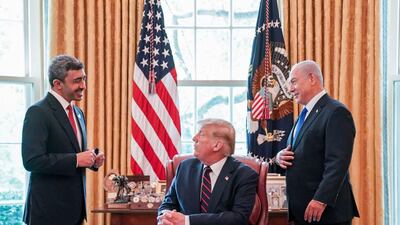
Sheikh Abdullah bin Zayed, UAE Minister of Foreign Affairs and International Co-operation, speaks to Donald Trump, US president at the time, and Israeli Prime Minister Benjamin Netanyahu in the Oval Office in September 2020. Ministry of Foreign Affairs and International Co-operation -
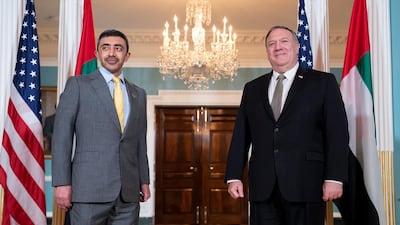
Sheikh Abdullah bin Zayed, UAE Minister of Foreign Affairs and International Co-operation, meets Mike Pompeo, US secretary of state at the time. Wam -
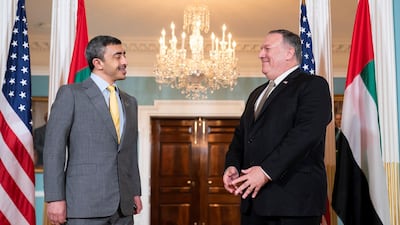
Sheikh Abdullah and Mr Pompeo in Washington. Wam -
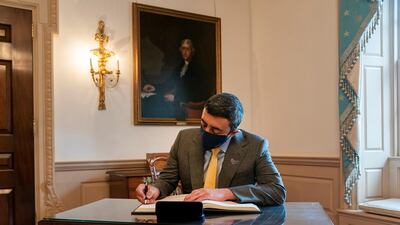
Sheikh Abdullah visits Washington in September last year. Wam -
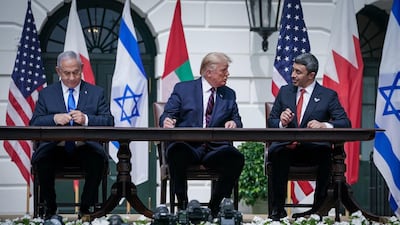
Sheikh Abdullah, UAE Minister of Foreign Affairs and International Co-operation, US President Donald Trump, centre, and Israeli Prime Minister Benjamin Netanyahu sign the Abraham Accord at the White House South Lawn. MOFAIC -
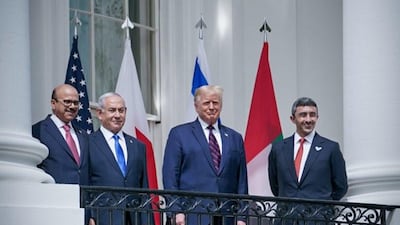
Sheikh Abdullah and, from left, Bahrain's Foreign Minister Abdullatif Al Zayani, Israeli Prime Minister Benjamin Netanyahu and US President Donald Trump at the White House. MOFAIC -
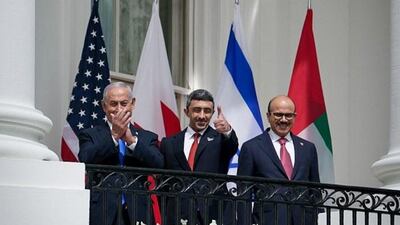
Sheikh Abdullah, Mr Al Zayani and Mr Netanyahu at the White House during the Abraham Accord signing ceremony. MOFAIC -
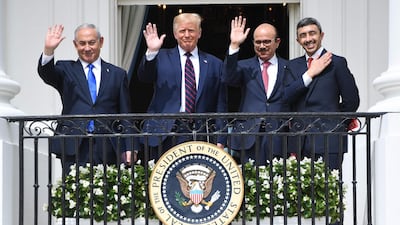
Sheikh Abdullah and, from left, Mr Netanyahu, Mr Trump and Mr Al Zayani wave from the Truman Balcony at the White House. AFP -
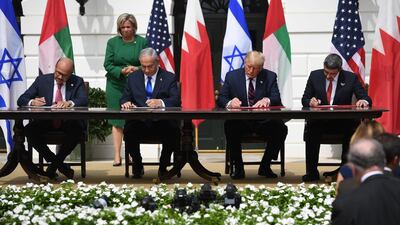
Sheikh Abdullah and, from left, Mr Al Zayani, Mr Netanyahu and Mr Trump sign the Abraham Accord. AFP -
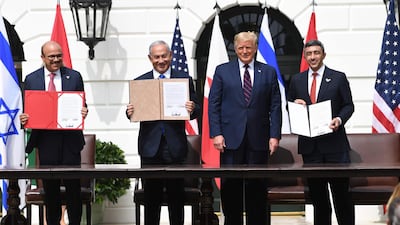
Sheikh Abdullah and, from left, Mr Al Zayani, Mr Netanyahu and Mr Trump after the signing ceremony. AFP -
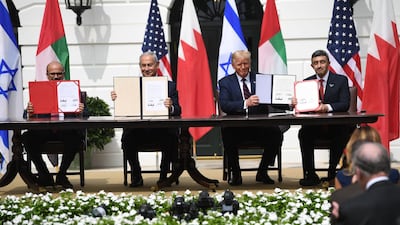
Sheikh Abdullah and, from left, Mr Al Zayani, Mr Netanyahu and Mr Trump after the signing ceremony. AFP -
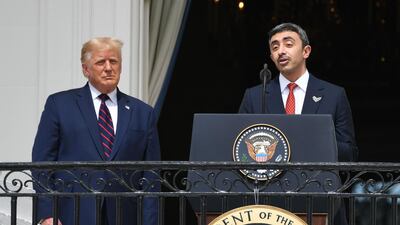
Sheikh Abdullah speaks from the Truman Balcony at the White House during the signing ceremony of the Abraham Accord. AFP -
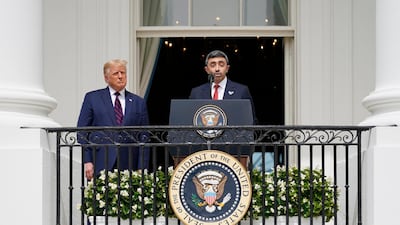
Sheikh Abdullah speaks as Mr Trump looks on before the signing of Abraham Accord on the South Lawn of the White House. AP -
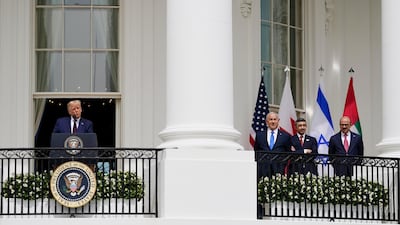
Sheikh Abdullah looks on from the White House as Mr Trump speaks at the Abraham Accord signing ceremony, also attended by Mr Al Zayani and Mr Netanyahu. AP -

Sheikh Abdullah bin Zayed, UAE Minister of Foreign Affairs and International Co-operation, Israeli Prime Minister Benjamin Netanyahu, left, and Bahraini Foreign Minister Abdullatif Al Zayani stand on the Blue Room Balcony during the signing ceremony. AP -
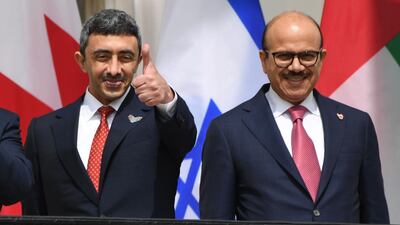
Sheikh Abdullah and Mr Al Zayani shortly before participating in the signing of the Abraham Accord. AFP -
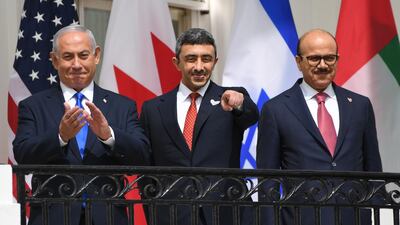
Sheikh Abdullah, with Mr Netanyahu, left, and Mr Al Zayani at the signing of the Abraham Accord on the South Lawn of the White House. AFP -
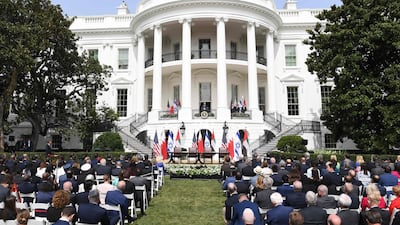
US President Donald Trump speaks from the Truman Balcony at the White House during the signing ceremony of the Abraham Accord. AFP -
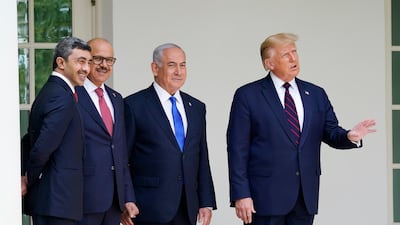
President Donald Trump walks to the Abraham Accord signing ceremony at the White House with Sheikh Abdullah bin Zayed, UAE Minister of Foreign Affairs and International Co-operation, Israeli Prime Minister Benjamin Netanyahu, and Bahrain's Foreign Minister Abdullatif Al Zayani. AP -
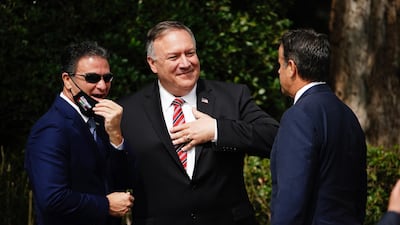
US Secretary of State Mike Pompeo arrives at the White House to attend the Abraham Accord signing ceremony hosted by President Donald Trump. EPA -
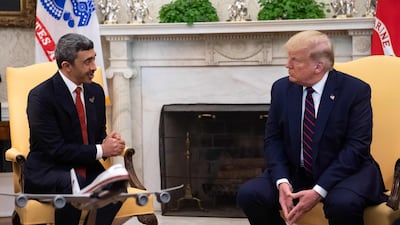
Sheikh Abdullah bin Zayed, UAE Minister of Foreign Affairs and International Co-operation, meets US President Donald Trump in the Oval Office of the White House before the signing of Abraham Accord. AFP -
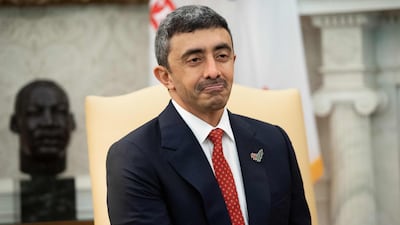
Sheikh Abdullah bin Zayed, UAE Minister of Foreign Affairs and International Co-operation, in the Oval Office. AFP -
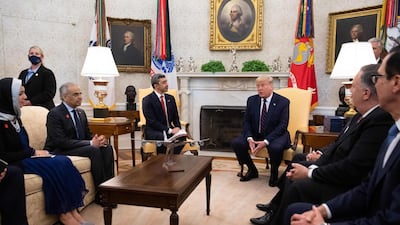
Sheikh Abdullah bin Zayed, UAE Minister of Foreign Affairs and International Co-operation, meets US President Donald Trump in the Oval Office of the White House. AFP -
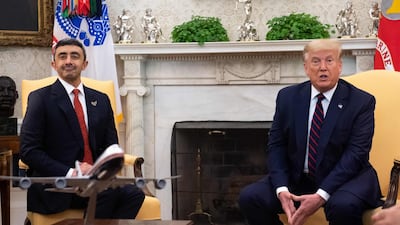
Sheikh Abdullah with Mr Trump in the Oval Office. AFP -
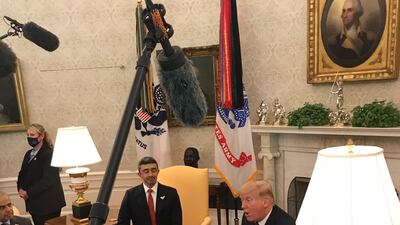
Sheikh Abdullah bin Zayed, UAE Minister of Foreign Affairs and International Co-operation, with by President Donald Trump at the White House. Mustafa Alrawi / The National -
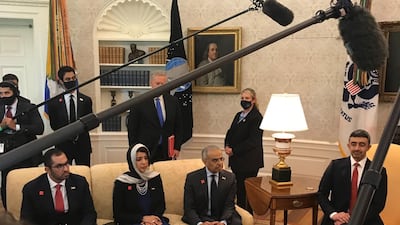
The UAE delegation led by Sheikh Abdullah bin Zayed, Minister of Foreign Affairs and International Co-operation, with US President Donald Trump at the White House. Mustafa Alrawi / The National -
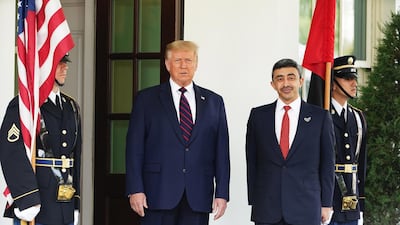
Sheikh Abdullah bin Zayed, UAE Minister of Foreign Affairs and International Co-operation, is welcomed to the White House by US President Donald Trump. EPA -
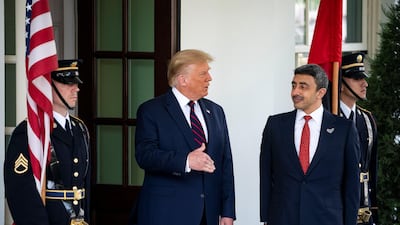
Sheikh Abdullah and Mr Trump outside the White House. AFP -
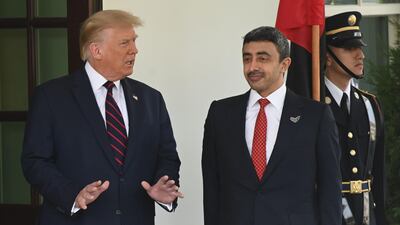
Sheikh Abdullah bin Zayed speaks to Mr Trump after arriving at the White House. Reuters -
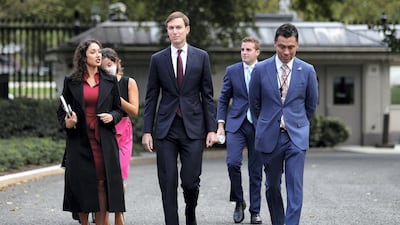
White House Senior Adviser Jared Kushner walks away following a television interview on the North Lawn at the White House in Washington. Reuters -
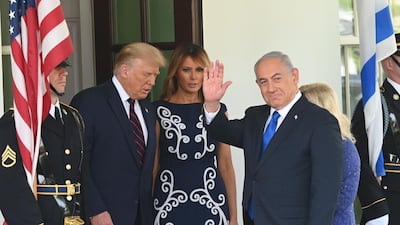
US President Donald Trump and First Lady Melania Trump welcome the arrival of Prime Minister of Israel Benjamin Netanyahu and his wife Sara on the North Lawn of the White House in Washington DC. AFP -
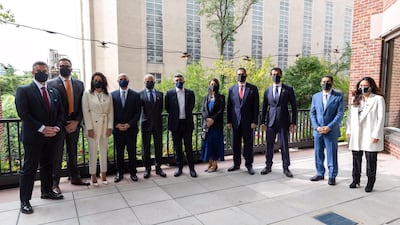
A delegation of senior UAE officials led by Sheikh Abdullah bin Zayed, UAE Minister of Foreign Affairs and International Co-operation, prepares to depart for the White House to sign the Abraham Accord. MOFAIC -
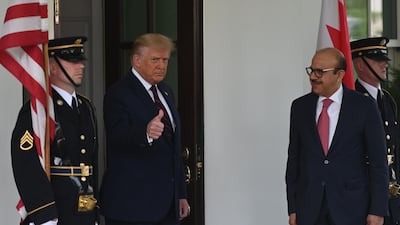
US President Donald Trump welcomes Bahraini Foreign Minister Abdullatif Al Zayani. AFP -

Bahraini Foreign Minister Abdullatif Al Zayani arrives at the White House in Washington DC. AFP -
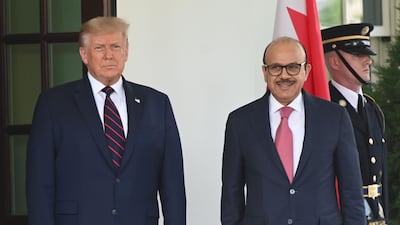
US President Donald Trump welcomes Bahraini Foreign Minister Abdullatif Al Zayani on the North Lawn of the White House in Washington, DC. AFP -
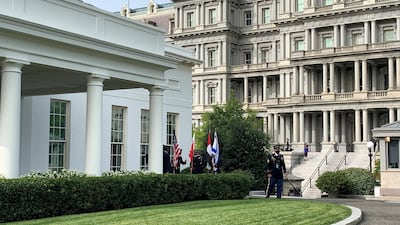
Preparations at the White House for the signing of the Abraham Accord. -
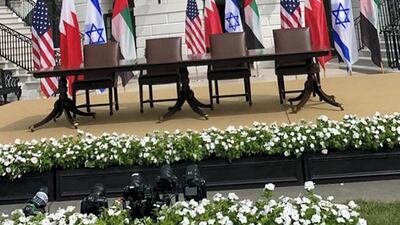
Preparations under way at the White House for the signing of the Abraham Accord. -
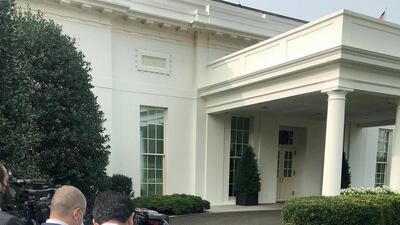
Preparations under way at the White House for the signing of the Abraham Accord. -

Preparation at the White House for the signing of the Abraham Accord. The National


_______________________________
The family sought refuge in Lebanon, where they lived in peace for many years, until tensions increased again in the region, just two years before the 1973 Arab–Israeli War
"We left in 1971 because there was an incident and my family felt like a target," Rabbi Abadie said.
One day, the family learnt that pictures of Rabbi Abadie's father, along with two other rabbis, were plastered on walls in Lebanon and printed in Time magazine.
“On the picture, there was a caption saying these are the Zionist agents and an entire article accusing them of being Zionists, which was not true at all," he said.
“They were just Jewish community members in Lebanon.”
That incident, and the arrival of people from the Palestinian Liberation Organisation from Jordan, shook Lebanon's Jewish community.
Rabbi Abadie said his family had little choice but to leave.
But they first had to find a country to accept them because they were refugees under Lebanese law.

Mexico seemed like the only choice because they had family there.
“At that time, my oldest brother lived in Mexico since 1965. My father had sisters and cousins in Mexico from the 1940s as they escaped Syria,” he said.
“So my parents asked my brother to plead for our lives to the Mexican government, that we were in danger and we need to leave the country.”
The family was eventually granted permission to move to Mexico, where Rabbi Abadie – already fluent in Hebrew, French and Arabic – mastered Spanish, Italian and Portuguese.
He learnt English much later, when he decided to study medicine.
He turned down offers from two prestigious universities in Mexico City.
“I had to do lab practice and take tests and examinations on the Sabbath day. They could not make an exception,” he said.
“Then I found out about Yeshiva University, a Jewish university in New York, where I could become a doctor without having to desecrate the Sabbath for my studies and lab work or examinations. That’s how I came to the US.”
Rabbi Abadie went to New York at the age of 18.
“I did not speak English in my first year in college in the US. I was fortunate to have a teacher who spoke Hebrew, a teacher who spoke French and a teacher who spoke Spanish, so I took the tests in those languages. I even took biology in Hebrew,” he said.
“I took political science in French and I took history in Spanish."
But it only took him an year to become fluent in English.
He became a rabbi at the university, where there was a seminary, and then graduated to become a doctor.
Today, he practises medicine as a part-time gastroenterologist and hopes to continue treating patients once he moves to the UAE next month.
He has been appointed senior rabbi in residence at the Jewish Council of the Emirates and will take up his post on November 1, if the role receives final approval. He first visited the Emirates about two years ago.
“I met the community and toured the beautiful country. It was truly a pleasure to see such a beautiful country and community,” he said.
“I had to come back again to attend a beautiful ceremony. And I have been in constant touch with the community, advising them and helping them.”
He longs to return to Lebanon and visit Syria to see where his family is from.
“I am proud to be the senior rabbi in the UAE,” he said.
“I look forward to being a part and parcel of the fabric of the UAE population. I will send invitations to all officials to come and visit us and live in an environment of tolerance, acceptance, harmony and coexistence.
“It’s something the whole world needs so badly.”

