UAE then and now: how Sharjah's east coast coastal town has transformed


John Dennehy
  • English
  • Arabic

Today, life in the Emirates moves in the fast lane. In a new regular series to mark the 50th anniversary of the UAE we take a little trip back in time and see just how much the country has changed.

This image shows a way of life about to be swept away forever. Khor Fakkan, which loosely translates as Creek of Two Jaws, is a coastal town in Sharjah surrounded by Fujairah and set against the backdrop of the Hajjar Mountains.

The first photograph, taken in 1973 by French photographer Alain Saint-Hilaire, shows a cluster of simple stone buildings around several mosques – a world far removed from the rest of the fledgling UAE.

For centuries life was unchanged. Families survived thanks to date cultivation and fishing sustained by plentiful fresh water wells. But just a few years after this photograph was taken work began on a deepwater port with access to the Indian Ocean. The Oceanic Hotel, seen at the far right of the second photograph taken recently by The National's Antonie Robertson, was part of the building boom.

The hotel is a time capsule, redolent of an era in the late 1970s and early 1980s when a wave of modernist buildings were constructed across the country. Known as the Holiday Inn when it opened in 1979, the hotel was designed by Indian architect Ashok Mody, who was also behind Sharjah’s landmark Al Zahra Hospital.

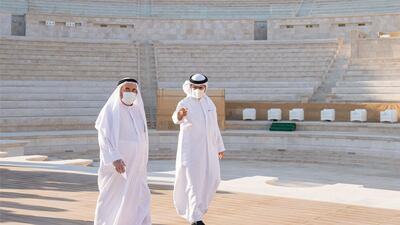
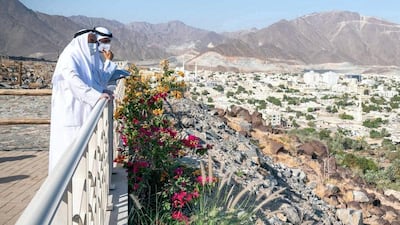
The pace of change has only increased since. The Ruler of Sharjah, Sheikh Dr Sultan bin Muhammad Al Qasimi, has led efforts to restore Khor Fakkan’s heritage buildings and unlock its potential as a tourism destination. The Salem Al Mutawa mosque – featured on the Dh5 note – has been restored, a new heritage area encompassing a canal, hotel and traditional souq has opened, as did the open-air Roman-inspired theatre last year.

Despite these changes, Khor Fakkan remains an area of historical and cultural interest. And, thanks to road improvements, is now only a short drive from Sharjah itself, Dubai and Abu Dhabi.

Sharjah Ruler visits the new theatre - in pictures

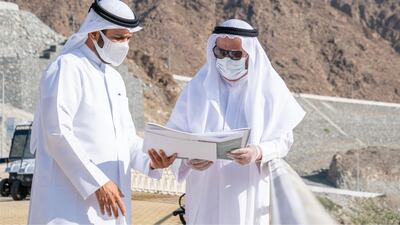
  • Sheikh Dr Sultan bin Muhammad Al Qasimi, Ruler of Sharjah, inspects the new Khor Fakkan amphitheatre. All pictures courtesy Sharjah Government Media Office
    Sheikh Dr Sultan bin Muhammad Al Qasimi, Ruler of Sharjah, inspects the new Khor Fakkan amphitheatre. All pictures courtesy Sharjah Government Media Office
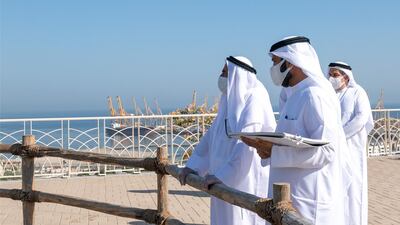
  • The new ampitheatre is part of ongoing regeneration of the town
    The new ampitheatre is part of ongoing regeneration of the town
  • The open-air venue looks set to be a tourist attraction
    The open-air venue looks set to be a tourist attraction
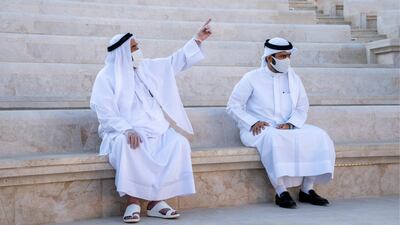
  • The vast venue will open soon with a screening of the film telling the story of Khor Fakkan's intriguing past
    The vast venue will open soon with a screening of the film telling the story of Khor Fakkan's intriguing past
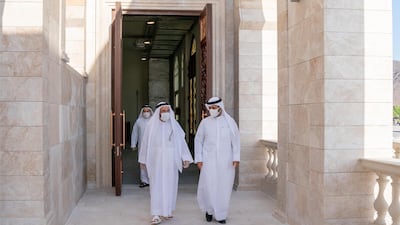
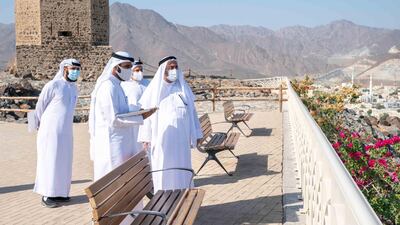
  • The Ruler of Sharjah toured new projects in the area
    The Ruler of Sharjah toured new projects in the area
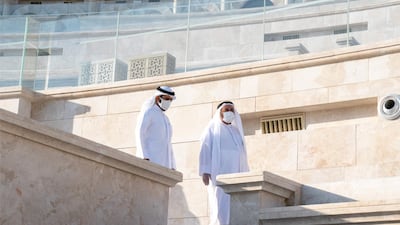
  • The Ruler of Sharjah has championed efforts to rejuvenate Khor Fakkan
    The Ruler of Sharjah has championed efforts to rejuvenate Khor Fakkan
  • The Ruler of Sharjah has paid a number of visits to Khor Fakkan as its redevelopment gathers pace
    The Ruler of Sharjah has paid a number of visits to Khor Fakkan as its redevelopment gathers pace
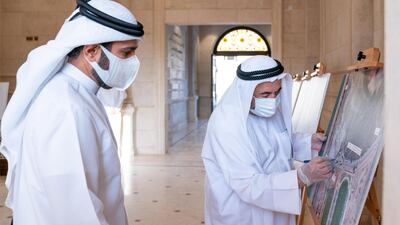
  • Sheikh Dr Sultan inspects plans for a prosperous future in Khor Fakkan
    Sheikh Dr Sultan inspects plans for a prosperous future in Khor Fakkan
  • The Ruler of Sharjah toured new projects in the area.
    The Ruler of Sharjah toured new projects in the area.
Ten tax points to be aware of in 2026

1. Domestic VAT refund amendments: request your refund within five years

If a business does not apply for the refund on time, they lose their credit.

2. E-invoicing in the UAE

Businesses should continue preparing for the implementation of e-invoicing in the UAE, with 2026 a preparation and transition period ahead of phased mandatory adoption. 

3. More tax audits

Tax authorities are increasingly using data already available across multiple filings to identify audit risks. 

4. More beneficial VAT and excise tax penalty regime

Tax disputes are expected to become more frequent and more structured, with clearer administrative objection and appeal processes. The UAE has adopted a new penalty regime for VAT and excise disputes, which now mirrors the penalty regime for corporate tax.

5. Greater emphasis on statutory audit

There is a greater need for the accuracy of financial statements. The International Financial Reporting Standards standards need to be strictly adhered to and, as a result, the quality of the audits will need to increase.

6. Further transfer pricing enforcement

Transfer pricing enforcement, which refers to the practice of establishing prices for internal transactions between related entities, is expected to broaden in scope. The UAE will shortly open the possibility to negotiate advance pricing agreements, or essentially rulings for transfer pricing purposes. 

7. Limited time periods for audits

Recent amendments also introduce a default five-year limitation period for tax audits and assessments, subject to specific statutory exceptions. While the standard audit and assessment period is five years, this may be extended to up to 15 years in cases involving fraud or tax evasion. 

8. Pillar 2 implementation 

Many multinational groups will begin to feel the practical effect of the Domestic Minimum Top-Up Tax (DMTT), the UAE's implementation of the OECD’s global minimum tax under Pillar 2. While the rules apply for financial years starting on or after January 1, 2025, it is 2026 that marks the transition to an operational phase.

9. Reduced compliance obligations for imported goods and services

Businesses that apply the reverse-charge mechanism for VAT purposes in the UAE may benefit from reduced compliance obligations. 

10. Substance and CbC reporting focus

Tax authorities are expected to continue strengthening the enforcement of economic substance and Country-by-Country (CbC) reporting frameworks. In the UAE, these regimes are increasingly being used as risk-assessment tools, providing tax authorities with a comprehensive view of multinational groups’ global footprints and enabling them to assess whether profits are aligned with real economic activity. 

Contributed by Thomas Vanhee and Hend Rashwan, Aurifer

Timeline

2012-2015

The company offers payments/bribes to win key contracts in the Middle East

May 2017

The UK SFO officially opens investigation into Petrofac’s use of agents, corruption, and potential bribery to secure contracts

September 2021

Petrofac pleads guilty to seven counts of failing to prevent bribery under the UK Bribery Act

October 2021

Court fines Petrofac £77 million for bribery. Former executive receives a two-year suspended sentence 

December 2024

Petrofac enters into comprehensive restructuring to strengthen the financial position of the group

May 2025

The High Court of England and Wales approves the company’s restructuring plan

July 2025

The Court of Appeal issues a judgment challenging parts of the restructuring plan

August 2025

Petrofac issues a business update to execute the restructuring and confirms it will appeal the Court of Appeal decision

October 2025

Petrofac loses a major TenneT offshore wind contract worth €13 billion. Holding company files for administration in the UK. Petrofac delisted from the London Stock Exchange

November 2025

180 Petrofac employees laid off in the UAE

COMPANY%20PROFILE
%3Cp%3E%3Cstrong%3EName%3A%20%3C%2Fstrong%3EEjari%3Cbr%3E%3Cstrong%3EBased%3A%20%3C%2Fstrong%3ERiyadh%2C%20Saudi%20Arabia%3Cbr%3E%3Cstrong%3EFounders%3A%20%3C%2Fstrong%3EYazeed%20Al%20Shamsi%2C%20Fahad%20Albedah%2C%20Mohammed%20Alkhelewy%20and%20Khalid%20Almunif%3Cbr%3E%3Cstrong%3ESector%3A%20%3C%2Fstrong%3EPropTech%3Cbr%3E%3Cstrong%3ETotal%20funding%3A%20%3C%2Fstrong%3E%241%20million%3Cbr%3E%3Cstrong%3EInvestors%3A%20%3C%2Fstrong%3ESanabil%20500%20Mena%2C%20Hambro%20Perks'%20Oryx%20Fund%20and%20angel%20investors%3Cbr%3E%3Cstrong%3ENumber%20of%20employees%3A%20%3C%2Fstrong%3E8%3C%2Fp%3E%0A
The specs

Engine: Direct injection 4-cylinder 1.4-litre
Power: 150hp
Torque: 250Nm
Price: From Dh139,000
On sale: Now

How to watch Ireland v Pakistan in UAE

When: The one-off Test starts on Friday, May 11
What time: Each day’s play is scheduled to start at 2pm UAE time.
TV: The match will be broadcast on OSN Sports Cricket HD. Subscribers to the channel can also stream the action live on OSN Play.

Our legal consultant

Name: Hassan Mohsen Elhais

Position: legal consultant with Al Rowaad Advocates and Legal Consultants.

SPECS
%3Cp%3E%3Cstrong%3EEngine%3C%2Fstrong%3E%3A%202-litre%20direct%20injection%20turbo%20%0D%3Cbr%3E%3Cstrong%3ETransmission%3C%2Fstrong%3E%3A%207-speed%20automatic%20%0D%3Cbr%3E%3Cstrong%3EPower%3C%2Fstrong%3E%3A%20261hp%20%0D%3Cbr%3E%3Cstrong%3ETorque%3C%2Fstrong%3E%3A%20400Nm%20%0D%3Cbr%3E%3Cstrong%3EPrice%3C%2Fstrong%3E%3A%20From%20Dh134%2C999%26nbsp%3B%3C%2Fp%3E%0A
The specs

Engine: 1.5-litre, 4-cylinder turbo

Transmission: CVT

Power: 170bhp

Torque: 220Nm

Price: Dh98,900

The National Archives, Abu Dhabi

Founded over 50 years ago, the National Archives collects valuable historical material relating to the UAE, and is the oldest and richest archive relating to the Arabian Gulf.

Much of the material can be viewed on line at the Arabian Gulf Digital Archive - https://www.agda.ae/en

The rules on fostering in the UAE

A foster couple or family must:

  • be Muslim, Emirati and be residing in the UAE
  • not be younger than 25 years old
  • not have been convicted of offences or crimes involving moral turpitude
  • be free of infectious diseases or psychological and mental disorders
  • have the ability to support its members and the foster child financially
  • undertake to treat and raise the child in a proper manner and take care of his or her health and well-being
  • A single, divorced or widowed Muslim Emirati female, residing in the UAE may apply to foster a child if she is at least 30 years old and able to support the child financially
The studios taking part (so far)
  1. Punch
  2. Vogue Fitness 
  3. Sweat
  4. Bodytree Studio
  5. The Hot House
  6. The Room
  7. Inspire Sports (Ladies Only)
  8. Cryo

Mercer, the investment consulting arm of US services company Marsh & McLennan, expects its wealth division to at least double its assets under management (AUM) in the Middle East as wealth in the region continues to grow despite economic headwinds, a company official said.

Mercer Wealth, which globally has $160 billion in AUM, plans to boost its AUM in the region to $2-$3bn in the next 2-3 years from the present $1bn, said Yasir AbuShaban, a Dubai-based principal with Mercer Wealth.

Within the next two to three years, we are looking at reaching $2 to $3 billion as a conservative estimate and we do see an opportunity to do so,” said Mr AbuShaban.

Mercer does not directly make investments, but allocates clients’ money they have discretion to, to professional asset managers. They also provide advice to clients.

“We have buying power. We can negotiate on their (client’s) behalf with asset managers to provide them lower fees than they otherwise would have to get on their own,” he added.

Mercer Wealth’s clients include sovereign wealth funds, family offices, and insurance companies among others.

From its office in Dubai, Mercer also looks after Africa, India and Turkey, where they also see opportunity for growth.

Wealth creation in Middle East and Africa (MEA) grew 8.5 per cent to $8.1 trillion last year from $7.5tn in 2015, higher than last year’s global average of 6 per cent and the second-highest growth in a region after Asia-Pacific which grew 9.9 per cent, according to consultancy Boston Consulting Group (BCG). In the region, where wealth grew just 1.9 per cent in 2015 compared with 2014, a pickup in oil prices has helped in wealth generation.

BCG is forecasting MEA wealth will rise to $12tn by 2021, growing at an annual average of 8 per cent.

Drivers of wealth generation in the region will be split evenly between new wealth creation and growth of performance of existing assets, according to BCG.

Another general trend in the region is clients’ looking for a comprehensive approach to investing, according to Mr AbuShaban.

“Institutional investors or some of the families are seeing a slowdown in the available capital they have to invest and in that sense they are looking at optimizing the way they manage their portfolios and making sure they are not investing haphazardly and different parts of their investment are working together,” said Mr AbuShaban.

Some clients also have a higher appetite for risk, given the low interest-rate environment that does not provide enough yield for some institutional investors. These clients are keen to invest in illiquid assets, such as private equity and infrastructure.

“What we have seen is a desire for higher returns in what has been a low-return environment specifically in various fixed income or bonds,” he said.

“In this environment, we have seen a de facto increase in the risk that clients are taking in things like illiquid investments, private equity investments, infrastructure and private debt, those kind of investments were higher illiquidity results in incrementally higher returns.”

The Abu Dhabi Investment Authority, one of the largest sovereign wealth funds, said in its 2016 report that has gradually increased its exposure in direct private equity and private credit transactions, mainly in Asian markets and especially in China and India. The authority’s private equity department focused on structured equities owing to “their defensive characteristics.”