UAE currency: the disappearing Dh200 note that changed colours many times


James Langton
  • English
  • Arabic

The UAE's currency was introduced on May 20, 1973, a little over two years after the country was formed.

Before the dirham, the rupee, dinar and even the Maria Theresa silver thaler were used.

In this weekly series, The National considers the historical and cultural significance of the designs for each of the dirham denominations.

Dh200

Missing from the original line-up, the Dh200 note arrived in 1989 and then in 1997 promptly disappeared for 10 years.

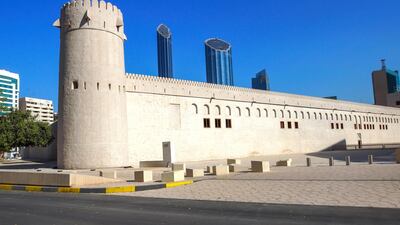
Its comeback in 2007 retained the original design. The Arabic face shows two Abu Dhabi buildings – Zayed Sports City and the Sharia Court of the Judicial Authority.

The other side features another Abu Dhabi building, the UAE Central Bank on Baynunah Street in Al Bateen.

Over the years, the Dh200 used a palate of shifting colours that incorporate shades of brown and yellow, except for the foliage in front of the bank, which in the earliest notes is pale green.

The complex variations of colour in all UAE banknotes are protection against forgery, but the issue of 2016 incorporated a different feature that is easier to feel than see.

The short sides of the note have two pairs of short raised lines, a tactile clue for the blind and visually impaired of the value of the currency they are holding.

The inspiration behind the design of the UAE's currency

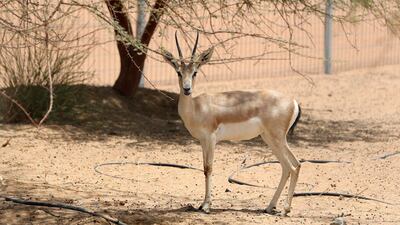
  • An Arabian sand gazelle at the Mleiha Archaeological Centre in Sharjah. The gazelle is native to the region and can be found on the 25 fils coin. Chris Whiteoak / The National
    An Arabian sand gazelle at the Mleiha Archaeological Centre in Sharjah. The gazelle is native to the region and can be found on the 25 fils coin. Chris Whiteoak / The National
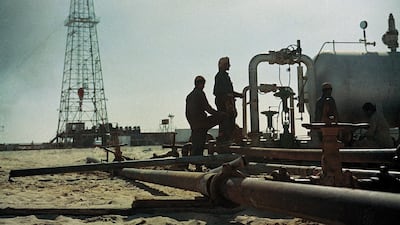
  • The Murban 2 oil well in Abu Dhabi, pictured in 1956. The discovery of oil transformed the emirate and eventually the UAE. Three oil derricks are featured on the 50 fils coin. Adnoc
    The Murban 2 oil well in Abu Dhabi, pictured in 1956. The discovery of oil transformed the emirate and eventually the UAE. Three oil derricks are featured on the 50 fils coin. Adnoc
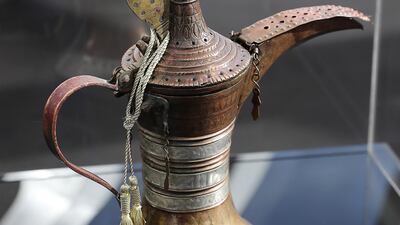
  • A dallah belonging to Sheikh Zayed in the early 20th century on display during the Majlis Zayed Exhibition in Abu Dhabi. The traditional coffee pot, a symbol of Emirati hospitality, appears on the Dh1 coin. Pawan Singh / The National
    A dallah belonging to Sheikh Zayed in the early 20th century on display during the Majlis Zayed Exhibition in Abu Dhabi. The traditional coffee pot, a symbol of Emirati hospitality, appears on the Dh1 coin. Pawan Singh / The National
  • One of the entrances to the Central Market, also known as the Blue Souq, in Sharjah. The market was built in 1979 and is adorned with Islamic designs. It can be seen on the Arabic side of the Dh5. Amy Leang / The National
    One of the entrances to the Central Market, also known as the Blue Souq, in Sharjah. The market was built in 1979 and is adorned with Islamic designs. It can be seen on the Arabic side of the Dh5. Amy Leang / The National
  • Salem Al Mutawa Mosque is one of the oldest two in the UAE. About 200 years old, it can be seen on the English side of the Dh5 along with the Khor Fakkan coastline. Antonie Robertson / The National
    Salem Al Mutawa Mosque is one of the oldest two in the UAE. About 200 years old, it can be seen on the English side of the Dh5 along with the Khor Fakkan coastline. Antonie Robertson / The National
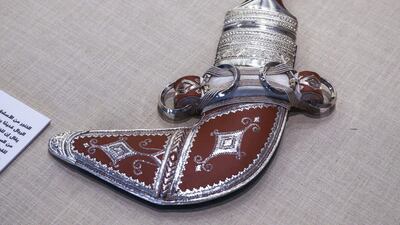
  • The khanjar is a curved ceremonial dagger worn by men in the UAE and Oman. An illustration of the knife can be seen on the Arabic side of the Dh10. Victor Besa / The National
    The khanjar is a curved ceremonial dagger worn by men in the UAE and Oman. An illustration of the knife can be seen on the Arabic side of the Dh10. Victor Besa / The National
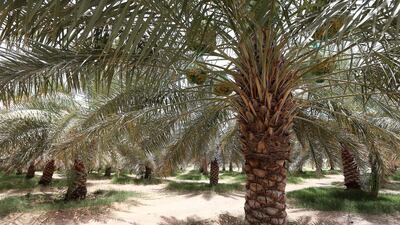
  • Date palm tree at Al Dahra farm in Al Ain. A date tree and farm are the main illustrations on the Dh10 note. Pawan Singh / The National
    Date palm tree at Al Dahra farm in Al Ain. A date tree and farm are the main illustrations on the Dh10 note. Pawan Singh / The National
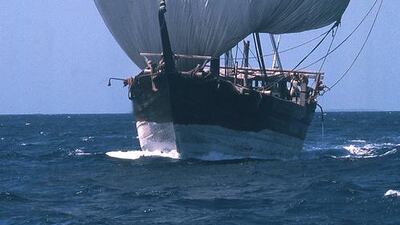
  • An Arabian dhow at sea in 1973. The vessel features prominently on the Dh20 note. Marion Kaplan
    An Arabian dhow at sea in 1973. The vessel features prominently on the Dh20 note. Marion Kaplan
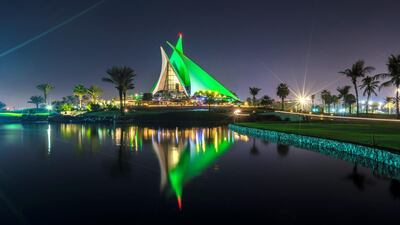
  • Dubai Creek Golf & Yacht Club opened in 1993 and can be seen on the Arabic side of the Dh20 note. Tourism Ireland
    Dubai Creek Golf & Yacht Club opened in 1993 and can be seen on the Arabic side of the Dh20 note. Tourism Ireland
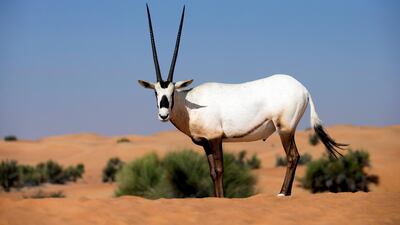
  • An Arabian oryx at Al Maha Desert Resort in Dubai. The species was endangered but conservation efforts, led by Sheikh Zayed, helped it to flourish. It can be seen on the Dh50 note. Gerry O’Leary
    An Arabian oryx at Al Maha Desert Resort in Dubai. The species was endangered but conservation efforts, led by Sheikh Zayed, helped it to flourish. It can be seen on the Dh50 note. Gerry O’Leary
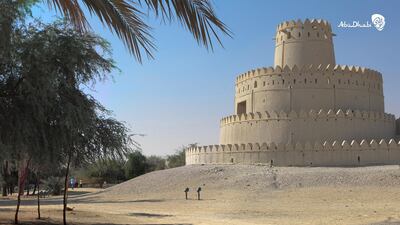
  • Completed in 1898 on the orders of Sheikh Zayed the First, Al Jahili Fort in Al Ain is one of the country’s largest. It appears on the English-language side of the Dh50 note. Abu Dhabi Culture and Tourism
    Completed in 1898 on the orders of Sheikh Zayed the First, Al Jahili Fort in Al Ain is one of the country’s largest. It appears on the English-language side of the Dh50 note. Abu Dhabi Culture and Tourism
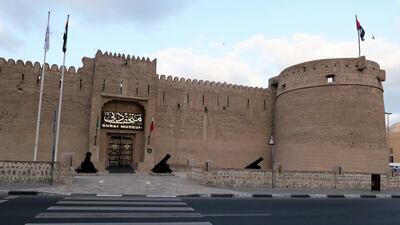
  • Al Fahidi Fort in Dubai was built in 1787. Since then, it has had many uses, even functioning as a prison for outlaws for a time. It can be found on the Arabic face of the Dh100 note. Pawan Singh / The National
    Al Fahidi Fort in Dubai was built in 1787. Since then, it has had many uses, even functioning as a prison for outlaws for a time. It can be found on the Arabic face of the Dh100 note. Pawan Singh / The National
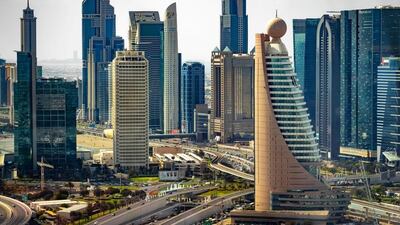
  • Dubai World Trade Centre (the grey, rectangular building to the middle left) was opened by Queen Elizabeth II in 1979. The tallest building in the UAE until 1999, it appears on the Dh100 banknote. Alamy
    Dubai World Trade Centre (the grey, rectangular building to the middle left) was opened by Queen Elizabeth II in 1979. The tallest building in the UAE until 1999, it appears on the Dh100 banknote. Alamy
  • Established in 1980, the UAE Central Bank was preceded by the Currency Board, which issued the country’s first independent currency: the dirham. The headquarters now features on the Dh200 note. Sammy Dallal / The National
    Established in 1980, the UAE Central Bank was preceded by the Currency Board, which issued the country’s first independent currency: the dirham. The headquarters now features on the Dh200 note. Sammy Dallal / The National
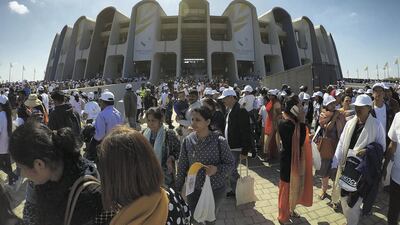
  • Worshippers leave the stadium at Zayed Sports City, Abu Dhabi, after Pope Francis led a holy Mass there in 2019. The building opened in 1979 and is featured on the Dh200 banknote. Pawan Singh / The National
    Worshippers leave the stadium at Zayed Sports City, Abu Dhabi, after Pope Francis led a holy Mass there in 2019. The building opened in 1979 and is featured on the Dh200 banknote. Pawan Singh / The National
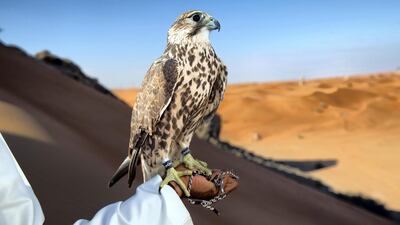
  • Falcons feature on each of the dirham notes, but the beloved bird takes centre stage on the Arabic side of the Dh500. Getty
    Falcons feature on each of the dirham notes, but the beloved bird takes centre stage on the Arabic side of the Dh500. Getty
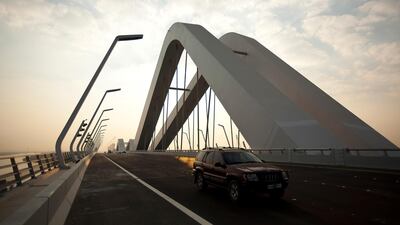
  • Sheikh Zayed Bridge was designed by renowned Iraqi architect Zaha Hadid. It was opened in 2010, becoming the third gateway from Abu Dhabi island to the greater emirate. During the Year of Zayed in 2019, a special Dh100 note, which is still in circulation, was printed depicting the bridge. Andrew Henderson / The National
    Sheikh Zayed Bridge was designed by renowned Iraqi architect Zaha Hadid. It was opened in 2010, becoming the third gateway from Abu Dhabi island to the greater emirate. During the Year of Zayed in 2019, a special Dh100 note, which is still in circulation, was printed depicting the bridge. Andrew Henderson / The National
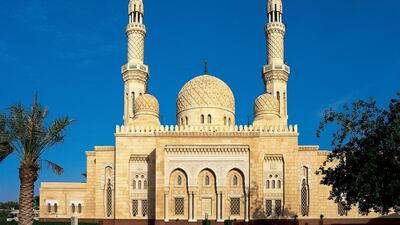
  • Jumeirah Mosque in Dubai opened in 1979. One of two mosques open to non-Muslims, it is a distinctive feature of the Dh500 note. Getty
    Jumeirah Mosque in Dubai opened in 1979. One of two mosques open to non-Muslims, it is a distinctive feature of the Dh500 note. Getty
  • Qasr Al Hosn, the birthplace of Sheikh Zayed, is on the Arabic side of the Dh1,000 note. Victor Besa / The National
    Qasr Al Hosn, the birthplace of Sheikh Zayed, is on the Arabic side of the Dh1,000 note. Victor Besa / The National
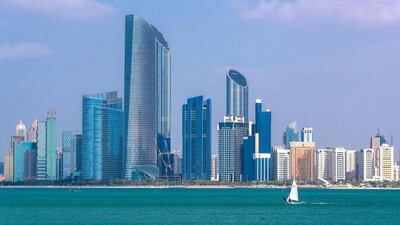
  • Abu Dhabi’s skyline has changed dramatically since the dirham was launched. The UAE’s capital is featured on the Dh1,000 note. Chris Whiteoak / The National
    Abu Dhabi’s skyline has changed dramatically since the dirham was launched. The UAE’s capital is featured on the Dh1,000 note. Chris Whiteoak / The National
Women%E2%80%99s%20T20%20World%20Cup%20Qualifier
%3Cp%3E%3Cstrong%3EUAE%20results%3C%2Fstrong%3E%0D%3Cbr%3EIreland%20beat%20UAE%20by%20six%20wickets%0D%3Cbr%3EZimbabwe%20beat%20UAE%20by%20eight%20wickets%0D%3Cbr%3EUAE%20beat%20Netherlands%20by%2010%20wickets%0D%3C%2Fp%3E%0A%3Cp%3E%3Cstrong%3EFixtures%3C%2Fstrong%3E%0D%3Cbr%3EUAE%20v%20Vanuatu%2C%20Thursday%2C%203pm%2C%20Zayed%20Cricket%20Stadium%0D%3Cbr%3EIreland%20v%20Netherlands%2C%207.30pm%2C%20Zayed%20Cricket%20Stadium%0D%3C%2Fp%3E%0A%3Cp%3E%3Cstrong%3EGroup%20B%20table%3C%2Fstrong%3E%0D%3Cbr%3E1)%20Ireland%203%203%200%206%20%2B2.407%0D%3Cbr%3E2.%20Netherlands%203%202%201%204%20%2B1.117%0D%3Cbr%3E3)%20UAE%203%201%202%202%200.000%0D%3Cbr%3E4)%20Zimbabwe%204%201%203%202%20-0.844%0D%3Cbr%3E5)%20Vanuatu%203%201%202%202%20-2.180%3C%2Fp%3E%0A
The specs
 
Engine: 3.0-litre six-cylinder turbo
Power: 398hp from 5,250rpm
Torque: 580Nm at 1,900-4,800rpm
Transmission: Eight-speed auto
Fuel economy, combined: 6.5L/100km
On sale: December
Price: From Dh330,000 (estimate)
WIDE%20VIEW
%3Cp%3EThe%20benefits%20of%20HoloLens%202%2C%20according%20to%20Microsoft%3A%3C%2Fp%3E%0A%3Cp%3E%3Cstrong%3EManufacturing%3A%3C%2Fstrong%3E%20Reduces%20downtime%20and%20speeds%20up%20onboarding%20and%20upskilling%3C%2Fp%3E%0A%3Cp%3E%3Cstrong%3EEngineering%20and%20construction%3A%3C%2Fstrong%3E%20Accelerates%20the%20pace%20of%20construction%20and%20mitigates%20risks%20earlier%20in%20the%20construction%20cycle%3C%2Fp%3E%0A%3Cp%3E%3Cstrong%3EHealth%20care%3A%3C%2Fstrong%3E%20Enhances%20the%20delivery%20of%20patient%20treatment%20at%20the%20point%20of%20care%3C%2Fp%3E%0A%3Cp%3E%3Cstrong%3EEducation%3A%3C%2Fstrong%3E%20Improves%20student%20outcomes%20and%20teaches%20from%20anywhere%20with%20experiential%20learning%3C%2Fp%3E%0A
World record transfers

1. Kylian Mbappe - to Real Madrid in 2017/18 - €180 million (Dh770.4m - if a deal goes through)
2. Paul Pogba - to Manchester United in 2016/17 - €105m
3. Gareth Bale - to Real Madrid in 2013/14 - €101m
4. Cristiano Ronaldo - to Real Madrid in 2009/10 - €94m
5. Gonzalo Higuain - to Juventus in 2016/17 - €90m
6. Neymar - to Barcelona in 2013/14 - €88.2m
7. Romelu Lukaku - to Manchester United in 2017/18 - €84.7m
8. Luis Suarez - to Barcelona in 2014/15 - €81.72m
9. Angel di Maria - to Manchester United in 2014/15 - €75m
10. James Rodriguez - to Real Madrid in 2014/15 - €75m

The years Ramadan fell in May

1987

1954

1921

1888

In numbers: PKK’s money network in Europe

Germany: PKK collectors typically bring in $18 million in cash a year – amount has trebled since 2010

Revolutionary tax: Investigators say about $2 million a year raised from ‘tax collection’ around Marseille

Extortion: Gunman convicted in 2023 of demanding $10,000 from Kurdish businessman in Stockholm

Drug trade: PKK income claimed by Turkish anti-drugs force in 2024 to be as high as $500 million a year

Denmark: PKK one of two terrorist groups along with Iranian separatists ASMLA to raise “two-digit million amounts”

Contributions: Hundreds of euros expected from typical Kurdish families and thousands from business owners

TV channel: Kurdish Roj TV accounts frozen and went bankrupt after Denmark fined it more than $1 million over PKK links in 2013 

Mercer, the investment consulting arm of US services company Marsh & McLennan, expects its wealth division to at least double its assets under management (AUM) in the Middle East as wealth in the region continues to grow despite economic headwinds, a company official said.

Mercer Wealth, which globally has $160 billion in AUM, plans to boost its AUM in the region to $2-$3bn in the next 2-3 years from the present $1bn, said Yasir AbuShaban, a Dubai-based principal with Mercer Wealth.

Within the next two to three years, we are looking at reaching $2 to $3 billion as a conservative estimate and we do see an opportunity to do so,” said Mr AbuShaban.

Mercer does not directly make investments, but allocates clients’ money they have discretion to, to professional asset managers. They also provide advice to clients.

“We have buying power. We can negotiate on their (client’s) behalf with asset managers to provide them lower fees than they otherwise would have to get on their own,” he added.

Mercer Wealth’s clients include sovereign wealth funds, family offices, and insurance companies among others.

From its office in Dubai, Mercer also looks after Africa, India and Turkey, where they also see opportunity for growth.

Wealth creation in Middle East and Africa (MEA) grew 8.5 per cent to $8.1 trillion last year from $7.5tn in 2015, higher than last year’s global average of 6 per cent and the second-highest growth in a region after Asia-Pacific which grew 9.9 per cent, according to consultancy Boston Consulting Group (BCG). In the region, where wealth grew just 1.9 per cent in 2015 compared with 2014, a pickup in oil prices has helped in wealth generation.

BCG is forecasting MEA wealth will rise to $12tn by 2021, growing at an annual average of 8 per cent.

Drivers of wealth generation in the region will be split evenly between new wealth creation and growth of performance of existing assets, according to BCG.

Another general trend in the region is clients’ looking for a comprehensive approach to investing, according to Mr AbuShaban.

“Institutional investors or some of the families are seeing a slowdown in the available capital they have to invest and in that sense they are looking at optimizing the way they manage their portfolios and making sure they are not investing haphazardly and different parts of their investment are working together,” said Mr AbuShaban.

Some clients also have a higher appetite for risk, given the low interest-rate environment that does not provide enough yield for some institutional investors. These clients are keen to invest in illiquid assets, such as private equity and infrastructure.

“What we have seen is a desire for higher returns in what has been a low-return environment specifically in various fixed income or bonds,” he said.

“In this environment, we have seen a de facto increase in the risk that clients are taking in things like illiquid investments, private equity investments, infrastructure and private debt, those kind of investments were higher illiquidity results in incrementally higher returns.”

The Abu Dhabi Investment Authority, one of the largest sovereign wealth funds, said in its 2016 report that has gradually increased its exposure in direct private equity and private credit transactions, mainly in Asian markets and especially in China and India. The authority’s private equity department focused on structured equities owing to “their defensive characteristics.”

The bio

Date of Birth: April 25, 1993
Place of Birth: Dubai, UAE
Marital Status: Single
School: Al Sufouh in Jumeirah, Dubai
University: Emirates Airline National Cadet Programme and Hamdan University
Job Title: Pilot, First Officer
Number of hours flying in a Boeing 777: 1,200
Number of flights: Approximately 300
Hobbies: Exercising
Nicest destination: Milan, New Zealand, Seattle for shopping
Least nice destination: Kabul, but someone has to do it. It’s not scary but at least you can tick the box that you’ve been
Favourite place to visit: Dubai, there’s no place like home

Results

Stage 5:

1. Jonas Vingegaard (DEN) Team Jumbo-Visma  04:19:08

2. Tadej Pogacar (SLO) UAE Team Emirates  00:00:03

3. Adam Yates (GBR) Ineos Grenadiers

4. Sergio Higuita (COL) EF Education-Nippo 00:00:05

5. Joao Almeida (POR) Deceuninck-QuickStep 00:00:06

General Classification:

1. Tadej Pogacar (SLO) UAE Team Emirates 17:09:26

2.  Adam Yates (GBR) Ineos Grenadiers 00:00:45

3. Joao Almeida (POR) Deceuninck-QuickStep 00:01:12

4. Chris Harper (AUS) Team Jumbo-Visma 00:01:54

5. Neilson Powless (USA) EF Education-Nippo 00:01:56

RESULTS

Men – semi-finals

57kg – Tak Chuen Suen (MAC) beat Phuong Xuan Nguyen (VIE) 29-28; Almaz Sarsembekov (KAZ) beat Zakaria Eljamari (UAE) by points 30-27.

67kg – Mohammed Mardi (UAE) beat Huong The Nguyen (VIE) by points 30-27; Narin Wonglakhon (THA) v Mojtaba Taravati Aram (IRI) by points 29-28.

60kg – Yerkanat Ospan (KAZ) beat Amir Hosein Kaviani (IRI) 30-27; Long Doan Nguyen (VIE) beat Ibrahim Bilal (UAE) 29-28

63.5kg – Abil Galiyev (KAZ) beat Truong Cao Phat (VIE) 30-27; Nouredine Samir (UAE) beat Norapat Khundam (THA) RSC round 3.

71kg​​​​​​​ – Shaker Al Tekreeti (IRQ) beat Fawzi Baltagi (LBN) 30-27; Amine El Moatassime (UAE) beat Man Kongsib (THA) 29-28

81kg – Ilyass Hbibali (UAE) beat Alexandr Tsarikov (KAZ) 29-28; Khaled Tarraf (LBN) beat Mustafa Al Tekreeti (IRQ) 30-27

86kg​​​​​​​ – Ali Takaloo (IRI) beat Mohammed Al Qahtani (KSA) RSC round 1; Emil Umayev (KAZ) beat Ahmad Bahman (UAE) TKO round

Company%20profile
%3Cp%3EName%3A%20Tabby%3Cbr%3EFounded%3A%20August%202019%3B%20platform%20went%20live%20in%20February%202020%3Cbr%3EFounder%2FCEO%3A%20Hosam%20Arab%2C%20co-founder%3A%20Daniil%20Barkalov%3Cbr%3EBased%3A%20Dubai%2C%20UAE%3Cbr%3ESector%3A%20Payments%3Cbr%3ESize%3A%2040-50%20employees%3Cbr%3EStage%3A%20Series%20A%3Cbr%3EInvestors%3A%20Arbor%20Ventures%2C%20Mubadala%20Capital%2C%20Wamda%20Capital%2C%20STV%2C%20Raed%20Ventures%2C%20Global%20Founders%20Capital%2C%20JIMCO%2C%20Global%20Ventures%2C%20Venture%20Souq%2C%20Outliers%20VC%2C%20MSA%20Capital%2C%20HOF%20and%20AB%20Accelerator.%3Cbr%3E%3C%2Fp%3E%0A
Museum of the Future in numbers
  •  78 metres is the height of the museum
  •  30,000 square metres is its total area
  •  17,000 square metres is the length of the stainless steel facade
  •  14 kilometres is the length of LED lights used on the facade
  •  1,024 individual pieces make up the exterior 
  •  7 floors in all, with one for administrative offices
  •  2,400 diagonally intersecting steel members frame the torus shape
  •  100 species of trees and plants dot the gardens
  •  Dh145 is the price of a ticket
How to wear a kandura

Dos

  • Wear the right fabric for the right season and occasion 
  • Always ask for the dress code if you don’t know
  • Wear a white kandura, white ghutra / shemagh (headwear) and black shoes for work 
  • Wear 100 per cent cotton under the kandura as most fabrics are polyester

Don’ts 

  • Wear hamdania for work, always wear a ghutra and agal 
  • Buy a kandura only based on how it feels; ask questions about the fabric and understand what you are buying
Biog

Mr Kandhari is legally authorised to conduct marriages in the gurdwara

He has officiated weddings of Sikhs and people of different faiths from Malaysia, Sri Lanka, Russia, the US and Canada

Father of two sons, grandfather of six

Plays golf once a week

Enjoys trying new holiday destinations with his wife and family

Walks for an hour every morning

Completed a Bachelor of Commerce degree in Loyola College, Chennai, India

2019 is a milestone because he completes 50 years in business