Covid-19 vaccines have become household names after being heralded as the most viable long-term solution to an outbreak which has raged for more than a year.
From Sinopharm and Pfizer-BionTech, to Moderna and Oxford-AstraZeneca, all have seeped into the collective consciousness of a world eager for a way back to normality.
Over the coming months, other vaccines are set to become equally well known as they secure approval from regulators.
No fewer than 74 Covid-19 vaccines - including those already released - have reached clinical trials and a further 182 are in preclinical studies.
According to Prof Polly Roy, professor of virology at the London School of Hygiene and Tropical Medicine, experience with vaccines so far during the pandemic is proving useful to researchers looking to improve jabs.
“I think it is teaching us many different things that help to make better quality vaccines,” she said.
“Vaccines all the time are going to improve – they will be better and better quality.”
For example, messenger RNA (mRNA) vaccines will be modified so that they are easier to preserve – the Pfizer-BioNTech jab must be stored at at least -70 °C – while "multi-variant vaccines" better able to cope with mutations in the coronavirus will also be released, Prof Roy indicated. Pfizer and BioNTech are seeking approval to be allowed to store the vaccine at higher temperatures.
With efficacy rates in some cases above 90 per cent, existing vaccines have set a high bar for subsequent shots and weeded out some below-par shots.
Here, we look at some of the key vaccines set to make a mark.
Six promising Covid vaccines awaiting approvals:
- Janssen/Johnson and Johnson, single dose
- Bharat Biotech (Covaxin), two doses
- EpiVacCorona, two doses
- Valneva, two doses
- Novavax, two doses
- SpyBiotech
The Janssen /Johnson and Johnson vaccine
Developed by Janssen, a Belgian subsidiary of US-headquartered Johnson and Johnson, this vaccine stands out for being administered as a single dose. It was recently approved for US distribution by the FDA.
Crucially for global distribution, it is low cost and can be stored in refrigerators.
“It looks very good. It will be useful in poorer-world situations,” said Prof David Taylor, professor emeritus of pharmaceutical and public health policy at University College London.
It is based on an adenovirus that normally infects people but has been modified to prevent it from replicating and causing disease.
Genetic material has been added so the adenovirus causes human cells to produce harmless coronavirus spike proteins, the immune response to which protects against the coronavirus.
The Oxford-AstraZeneca vaccine and Russia’s Sputnik V are also based on adenoviruses.
Clinical trials found the vaccine did not produce major side effects and was 66 per cent effective at preventing moderate to severe illness four weeks after a single dose, and 85 per cent effective at averting severe illness.
The vaccine also reduces transmission, although it is less effective against the South African and Brazilian variants. One billion doses could be produced this year.
The Bharat Biotech (Covaxin) vaccine
India’s Covid-19 vaccine, developed by Bharat Biotech, has been pre-approved by the country’s authorities.
It was found to be 81 per cent effective against the virus in phase three trials.
Covaxin is based on an inactivated version of the coronavirus that cannot replicate or cause illness, yet prompts a protective immune response, like the Sinopharm and Sinovac vaccines.
The inactivated virus is given alongside an immune potentiator or adjuvant, a substance that strengthens the immune response.
This two-dose vaccine entered late-stage clinical trials in India – where it is being manufactured – in mid-November, and there are trials in Bangladesh too.
-

A handout photo by Bangalore Kempegowda International Airport showing the arrival of Covid-19 vaccine in Bangalore, India. EPA -

Officials arrange boxes containing vials of Covishield, a coronavirus vaccine manufactured by Serum Institute of India, after a consignment of the vaccines arrived from the western city of Pune for its distribution, inside a cold storage room at a vaccination storage centre in Ahmedabad, India. Reuters -

Officials unload boxes containing vials of Covishield, a coronavirus vaccine manufactured by Serum Institute of India, after a consignment of the vaccines arrived from the western city of Pune for its distribution, outside a vaccination storage centre in Ahmedabad, India. Reuters -

Workers transfer carton boxes of a Covishield vaccine manufactured by Pune based Serum Institute of India (SII) that arrived in a lorry into the Karnataka Health Department cold storage facility in Bangalore, in preparation for the first round of vaccination drive scheduled to begin across the country from January 16. AFP -

A health official carries Covid-19 vaccine boxes at a state vaccine storage centre in Bangalore, India. EPA -

Policemen guard the entrance of the Karnataka Health Department cold storage centre as a vehicle carrying 648,000 vials of Covishield vaccine produced by Pune-based Serum Institute of India (SII) arrives in Bangalore, in preparation for the first round of vaccination drive scheduled to begin across the country from January 16. AFP -

A health official pretends to administer a shot of Covid-19 vaccine to a volunteer during a mock vaccination drill at a school, in Dharmsala, India. AP Photo -

A health worker checks a syringe before performing a trial run of Covid-19 vaccine delivery system in Gawahati, India. AP Photo -

A health worker performs a trial run of the Covid-19 vaccine delivery system in New Delhi, India. AP Photo -

A transport vehicle ferries 648,000 vials of Covishield vaccine manufactured by Pune-based Serum Institute of India (SII) to the Karnataka Health Department cold storage centre after the consignment arrived at Bangalore International Airport in Bangalore, in preparation for the first round of vaccination drive scheduled to begin across the country from January 16. AFP -

A handout photo made available by Bangalore Kempegowda International Airport showing the arrival of Covid-19 vaccine in Bangalore, India. EPA


Because the vaccine is made up of inactivated whole virus particles – not just the spike protein – the immune response may be more protective against emerging variants, which tend to have key changes in the spike protein.
Stored in refrigerators, the vaccine is likely to be administered in numerous Asian countries, including the Philippines, Sri Lanka and Myanmar, as well as Bahrain and Oman. Bharat Biotech’s investments in factories mean monthly production could reach 40 million doses.
The EpiVacCorona vaccine
Following Russia’s Sputnik V comes another vaccine from the country, EpiVacCorona, from the Vector State Research Centre of Virology and Biotechnology. Regulators in Russia have already approved the vaccine.
While many Covid-19 vaccines involve injecting into people genetic material that codes for the production of coronavirus proteins, EpiVacCorona consists of synthetic versions of coronavirus proteins themselves.
These are in the form of short fragments or peptides linked to a carrier protein, and are supplied with an adjuvant to strengthen the immune response.
Officials have claimed that results from early trials are impressive. All under-60s developed antibodies against the coronavirus, while 94 per cent of over-60s produced an immune response.
They have also said the vaccine has been shown to be effective against the UK coronavirus variant and have predicted that it would work against the South African and Brazilian variants too.
Administered as two doses, the vaccine is said to have sparked interest from 45 countries, with Russia’s neighbour Belarus among the nations likely to receive supplies.
The Valneva vaccine
Like the Sinopharm and Sinovac vaccines and others likely to be used soon, the Valneva offering is based on an inactivated version of the coronavirus.
Valneva, which is headquartered in France and has manufacturing plants in Austria, Scotland and Sweden, announced in late January that it had started producing doses so that there would be stockpiles once approval was granted.
The UK has already ordered 100 million doses of the vaccine and these supplies should be available from the end of 2021 or early next year, should the vaccine be approved.
-

Margaret Austin, 87, receives an injection of a Covid-19 vaccine at a NHS mass coronavirus vaccination centre at Robertson House in Stevenage. Reuters -

A woman receives Covid-19 vaccine at a vaccination centre at a cinema in Maidstone, Britain. Reuters. -
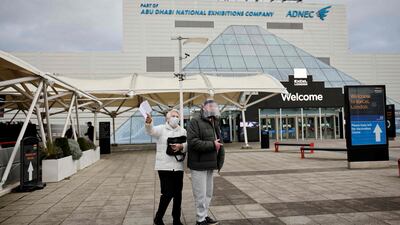
A couple pose for the press as they arrive at the Excel Centre as it opens as a mass vaccination centre in London. AFP -

A member of staff wears a mask inside the Excel Centre in London. Getty Images -

People queue inside the Excel Centre in London. Getty Images -

People arrive at the Excel centre in London. AFP -

People arrive at Epsom Downs Racecourse as it opens as a Covid-19 mass vaccination centre. AFP -
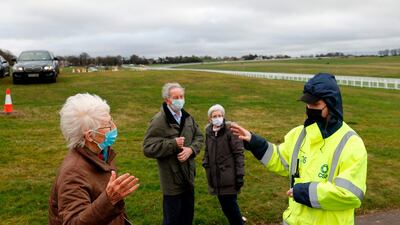
People speak to a car-parking attendant to get directions as they arrive at Epsom Downs Racecourse. AFP -
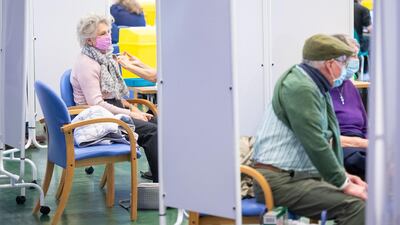
A patient receives an injection of the Oxford/AstraZeneca vaccine at a NHS mass coronavirus vaccination centre at Epsom Downs Racecourse. Reuters -

Robert Williams, 84, receives an injection of the Oxford/AstraZeneca Covid-19 vaccine at a mass vaccination centre at Epsom Downs Racecourse. AFP -
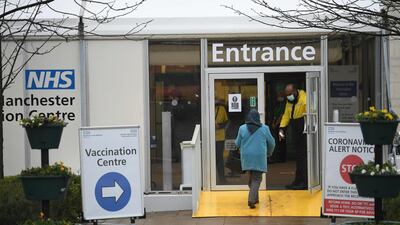
Members of the public arrive at the Etihad tennis centre as it opens as a mass vaccination centre in Manchester. AFP -
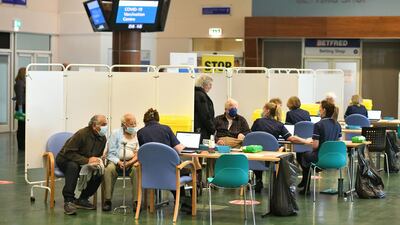
Members of the public sit with staff before receiving an Oxford/AstraZeneca Covid-19 vaccine at a mass vaccination centre at Epsom Downs Racecourse. AFP -

People wait in line for their injection of the Oxford/AstraZeneca vaccine at the mass vaccination centre in Newcastle Upon Tyne. AP Photo -
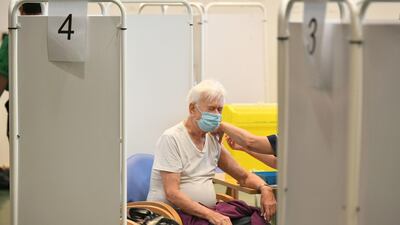
A man receives an injection of the Oxford/AstraZeneca Covid-19 vaccine at a mass vaccination centre at Epsom Downs Racecourse. AFP -

The Ashton Gate stadium in Bristol, where a Covid-19 vaccination center has been set up. EPA -
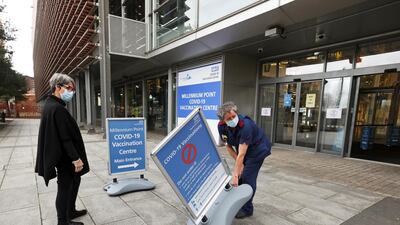
A nurse puts up a sign outside the Millennium Point Vaccination Centre in Birmingham. Reuters -
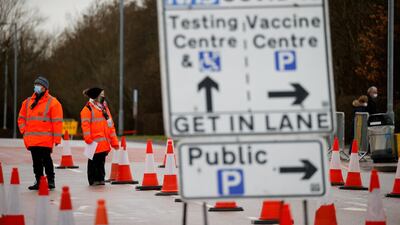
People stand behind a sign showing the way to the NHS Vaccination Centre in Manchester. Reuters


Showing how far ahead governments are looking, and indicating that Covid-19 vaccination is going to be an ongoing part of life, the British government has an option for a further 90m doses to be delivered between 2023 and 2025. Up to 60m doses may be ordered by the European Union.
The company has said results from the first clinical trials of the vaccine – the only one based on an inactivated virus under development in Europe – should be available in April.
The Novavax vaccine
This vaccine consists of purified coronavirus spike protein, produced in insect cells, along with Novavax’s proprietary adjuvant to strengthen the immune response.
Novavax, a US biotechnology company founded in 1987, said the vaccine cannot replicate in human cells nor can it cause Covid-19, and is stable in refrigerators.
Clinical trials in the UK found the vaccine to be 89.3 per cent effective overall at preventing Covid-19, although it was marginally less effective at stopping people from falling ill to the more transmissible UK variant.
During clinical trials in South Africa, where another more transmissible variant is prevalent, efficacy was significantly lower, at only 60 per cent.
In the second quarter of this year, the company plans to begin testing a reworked vaccine better able to cope with new variants. This could be given as a booster shot or as part of a joint vaccine with the original version, what the company calls a combination bivalent vaccine.
Should the vaccine get the regulatory green light, Novavax is due to deliver 60m doses to the British government in the second half of this year, manufactured in England.
-
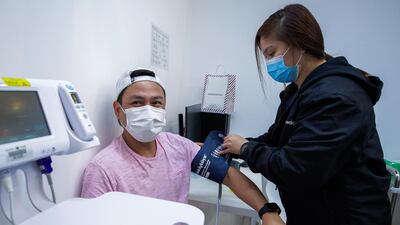
UAE residents of all ages are eligible for the Sinopharm shot, which is available across the seven emirates. All photos by Victor Besa / The National -

People register for the vaccine at Seha's cruise ship terminal vaccine centre -
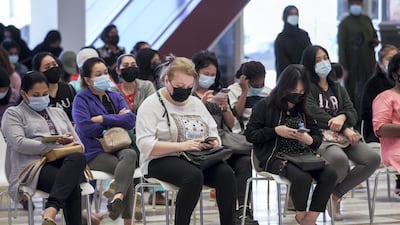
Both the government and employers have urged the public to get vaccinated, as the country faces record daily numbers of new cases -
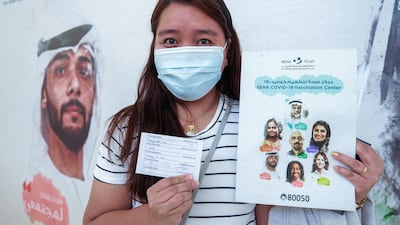
An Abu Dhabi resident waits to receive her first shot at the Seha vaccination centre at Abu Dhabi Cruise Terminal. -

Sisters Aya and Jana register for the vaccine shot -
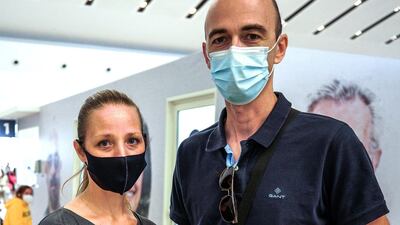
Suzana and husband Novica Ristovic get vaccinated pictured with the advice brochures given to all volunteers -
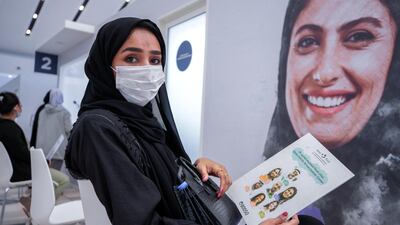
Shaikha Al Dheiri waits to be called in for the first of two shots that are necessary to provide protection against the virus -
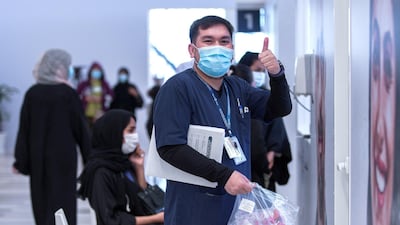
The Seha Vaccination Centre at Abu Dhabi Cruise Terminal can serve up to 3,000 people per day. Victor Besa / The National -
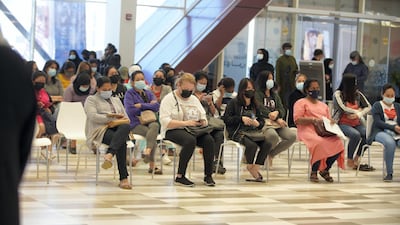
The vaccination Centre at Abu Dhabi Cruise Terminal -
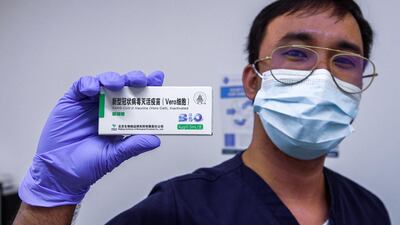
A medic holds up a package containing the Chinese-made Sinopharm vaccine -
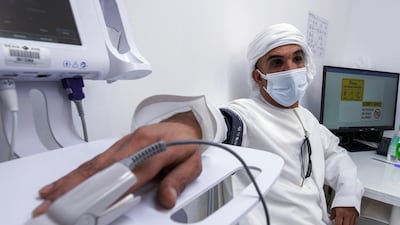
Emirati Abdulaziz Karmastaji gets a basic blood oxygen check before his vaccination -
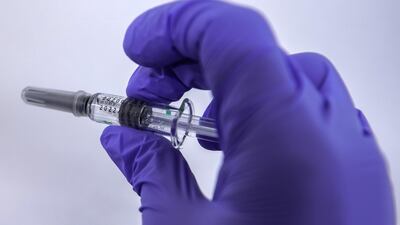
Two shots are required 21 days apart to ensure people have sufficient antibodies to protect them -
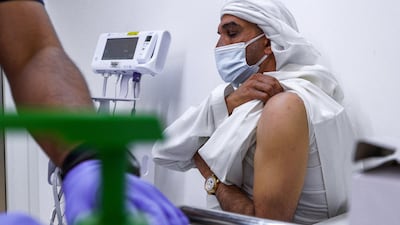
A man is inoculated at Seha Vaccination Centre in the Abu Dhabi Cruise Terminal -

Mohamed Hawas Al Sadid, chief executive of Abu Dhabi's public hospital operator Seha, oversees the vaccination drive -
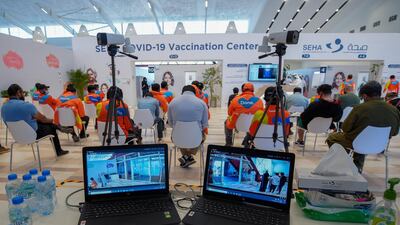
The Seha Vaccination Centre at Abu Dhabi Cruise Terminal can serve up to 3,000 people per day


The Sanofi / GlaxoSmithKline vaccine
Disappointing clinical results for this vaccine were announced last year, with the immune response in older people poorer than had been hoped. Reports have indicated that people in clinical trials were given a lower dose than they should have been.
New trials are being carried out with a different dosing regime with the aim of seeing the vaccine released at the end of 2021. The companies are also developing an updated version aimed to protect against the South African and other variants.
Adopting a similar approach to EpiVacCorona, this vaccine consists of Sars-CoV-2 proteins produced by genetically engineered organisms (contributed by Sanofi), plus an adjuvant (supplied by GSK). Protein vaccines of this kind produced through genetic engineering are well established.
The SpyBiotech vaccine
Developed with the Serum Institute of India, this vaccine uses SpyBiotech’s own “superglue” technology to display the coronavirus spike protein on virus-like particles (VLPs), which are similar to viruses but are unable to cause infection. The VLPs, based on hepatitis B, are a well-established vaccine platform.
The superglue technology, called SpyCatcher/SpyTag, is licensed from the University of Oxford, from which SpyBiotech was "spun out" as a company, and produces what is described as a "stable" bond. It can be used to produce vaccines against a wide variety of pathogens.
"The vaccine I'm most interested in is the one being produced by SpyBiotech," said Sir John Bell, regius professor of medicine at the university, adding that in tests it produced one of the highest levels of neutralising antibodies – which destroy the virus – in the blood.
“It’s very, very cheap and easy to make. It looks like a great vaccine.”
Clinical trials began in September last year.