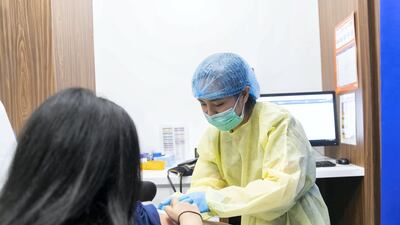

More than 40 per cent of the UAE population has now received at least one dose of a vaccine against Covid-19.
On January 4, I received my second shot of the Sinopharm vaccine.
Five weeks later, I was keen to learn how my body had responded, so I booked myself in for a serology test.
That scanned my blood for antibodies to two Sars-Cov-2 proteins, as well as a “quality check” of their neutralising abilities against the virus.
So, what is the test? And should we all be doing it?
The National explains.
What are antibodies – and what does the test do?
Antibodies are proteins that help to fight off infections and can provide protection against getting that disease again.
I took a quantitative test, which measures the level of antibodies in a person's blood against the Sars-Cov-2 virus, which causes Covid-19.
It provides three results, with levels of two antibodies: one against the N protein – or nucleocapsid – which is found inside the virus; and one against the spike or S, on the surface, which the virus uses to enter our bodies.
-
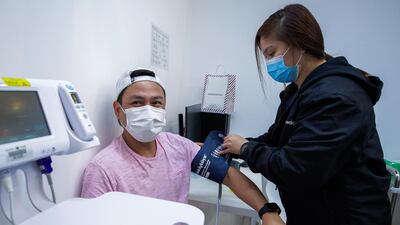
UAE residents of all ages are eligible for the Sinopharm shot, which is available across the seven emirates. All photos by Victor Besa / The National -
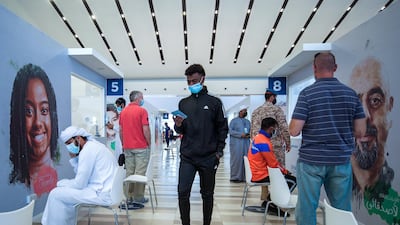
People register for the vaccine at Seha's cruise ship terminal vaccine centre -
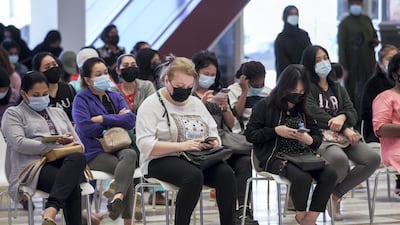
Both the government and employers have urged the public to get vaccinated, as the country faces record daily numbers of new cases -
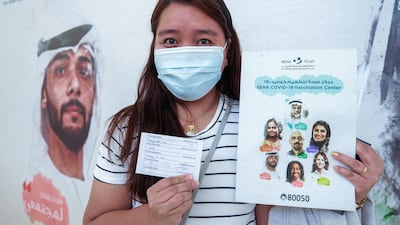
An Abu Dhabi resident waits to receive her first shot at the Seha vaccination centre at Abu Dhabi Cruise Terminal. -

Sisters Aya and Jana register for the vaccine shot -
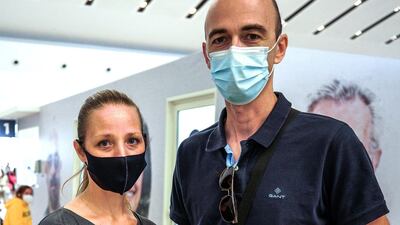
Suzana and husband Novica Ristovic get vaccinated pictured with the advice brochures given to all volunteers -
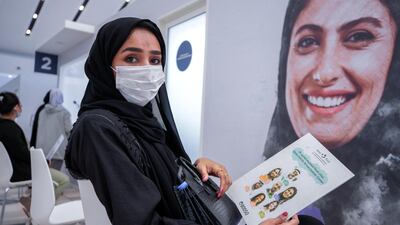
Shaikha Al Dheiri waits to be called in for the first of two shots that are necessary to provide protection against the virus -
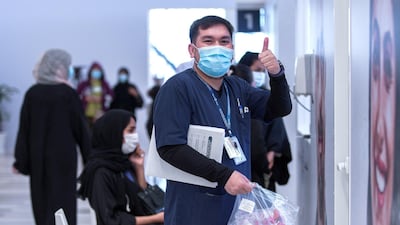
The Seha Vaccination Centre at Abu Dhabi Cruise Terminal can serve up to 3,000 people per day. Victor Besa / The National -
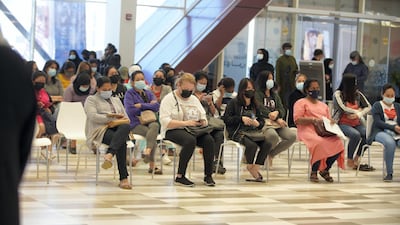
The vaccination Centre at Abu Dhabi Cruise Terminal -
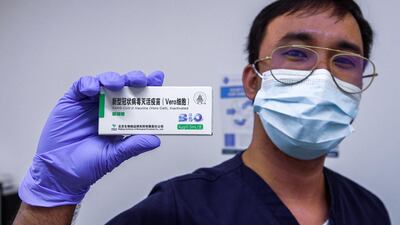
A medic holds up a package containing the Chinese-made Sinopharm vaccine -
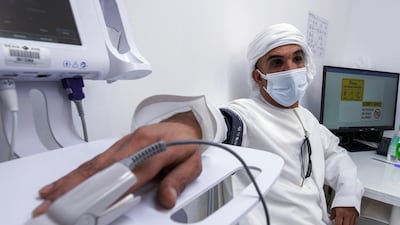
Emirati Abdulaziz Karmastaji gets a basic blood oxygen check before his vaccination -
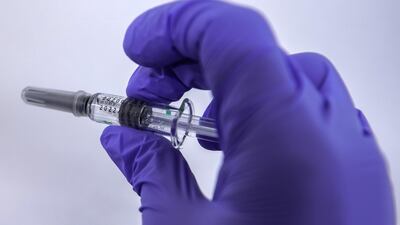
Two shots are required 21 days apart to ensure people have sufficient antibodies to protect them -
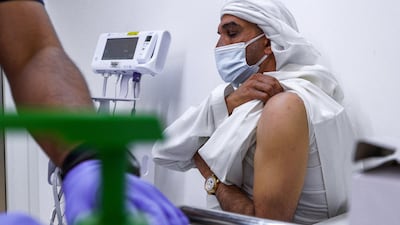
A man is inoculated at Seha Vaccination Centre in the Abu Dhabi Cruise Terminal -

Mohamed Hawas Al Sadid, chief executive of Abu Dhabi's public hospital operator Seha, oversees the vaccination drive -
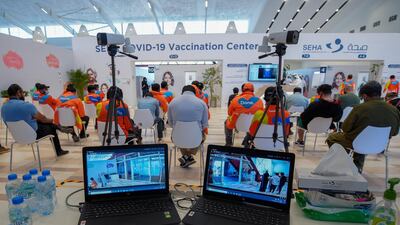
The Seha Vaccination Centre at Abu Dhabi Cruise Terminal can serve up to 3,000 people per day


The third result provides a simple positive or negative result for neutralising antibodies.
Scientists have discovered that people who have been infected with Sars-Cov-2 make antibodies against the N protein and the spike.
But people who have received vaccines against Covid-19 – including the Sinopharm vaccine, the most widely used shot in the UAE – tend to make antibodies mainly against one protein: the spike. These are known as anti-S or anti-spike antibodies.
Often people who have received a Covid-19 vaccine do not usually make anti-N antibodies.
That's according to Dr Sally Mahmoud, lab director at Biogenix Labs, part of G42 Healthcare, an Abu Dhabi technology company that helped lead trials of the Sinopharm vaccine.
People who take the test after receiving a Covid-19 vaccine should not be surprised if the result is negative for anti-N antibodies, she said.
Only "a small fraction" test positive for anti-N antibodies after vaccination, Dr Mahmoud said.
My results
- Immunoglobulin G (IgG) Anti-N antibodies: 4.86 (negative is less than 1.4, positive is more than 1.4)
- IgG Anti-S antibodies: 124 (negative is 12 or less, borderline is 12-15, positive is more than 15)
- Neutralising antibodies: positive
What does that mean?
I should be well protected.
I have enough neutralising antibodies and both other results were strongly positive.
The anti-S or anti-spike antibodies are "very good", Dr Mahmoud said, which should prevent the virus from entering my cells.
The high level of anti-N antibodies – which are usually reflected more during infection than vaccination – should prevent the virus from progressing, if it does manage to invade my cells.
The level of my anti-N antibodies probably means I had the virus before being vaccinated against it, said Dr Mahmoud.
This was news to me.
“It’s very possible you had it,” she said.
“I cannot prove it of course, because there is a fraction who do respond to the vaccine with anti-N.
“But of the small fraction, we reckon whoever had the anti-N most probably was previously infected. However, we cannot yet prove that, we need to complete our studies.”
This is perfectly possible, as the virus affects everyone differently.
Up to a third of people who contract Covid-19 are completely asymptomatic.
“People who have been vaccinated after infection have had a better response to the vaccine, of course, because it is like a second infection,” she said.
"The body responds even better than just vaccination," she said, as the antibody concentrations "are usually much higher than in people who are only vaccinated, or only infected".
-
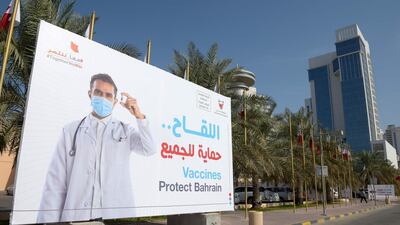
A billboard urges the public to sign up for the voluntary vaccine outside Bahrain International Exhibition and Convention Centre in Manama. The tiny island nation has put technology at the heart of its response, using WhatsApp, Facebook Messenger and chatbots to deliver test results and information. Mazen Mahdi / AFP -

Saudis are greeted by a health worker as they enter a new coronavirus vaccination centre at the Jeddah old airport, Saudi Arabia. AP Photo -
The Seha Vaccination Centre at Abu Dhabi Cruise Terminal can immunise up to 3,000 people per day. Victor Besa / The National -
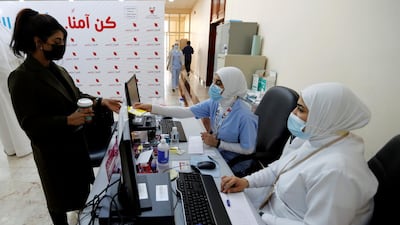
A woman attends her appointment for a second dose of a coronavirus vaccine at Bahrain International Exhibition & Convention Centre (BIECC), in Manama, Bahrain December 24, 2020. Reuters -

Bahrain's Mobile Vaccination Unit. Courtesy: Bahrain News Agency -
A man is inoculated at Seha Vaccination Centre in the Abu Dhabi Cruise Terminal area. Victor Besa / The National -
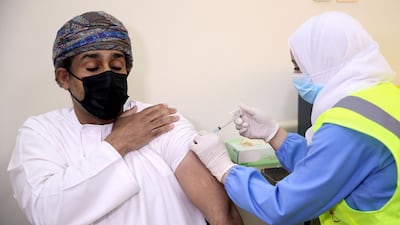
A man receives his first dose of the Pfizer-BioNTech Covid-19 vaccine in the Omani capital, Muscat. AFP -
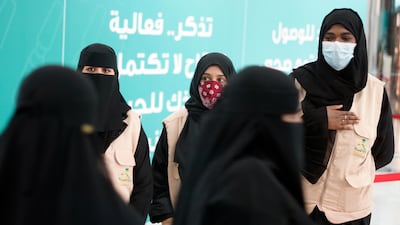
Health workers greet people after they receive their vaccine at a new coronavirus vaccination centre, at the Jeddah old airport in Saudi Arabia. Amr Nabil / AP -

A nurse administers a dose of vaccine against the covid-19 diseases at the Riyadh International Convention and Exhibition Centre in the capital of Saudi Arabia. Fayez Nureldine / AFP -
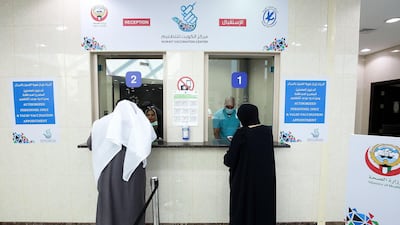
Kuwaitis arrive to get the Covid-19 vaccine at Al Masayel new vaccination centre in Kuwait City. Yasser Al Zayyat / AFP -
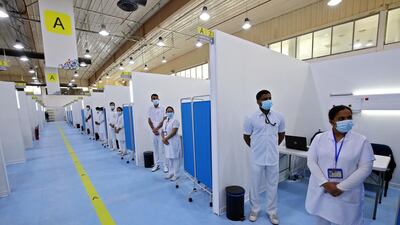
Medical staff stand ready at the Kuwait vaccination centre for Covid -19 at the International Fairgrounds in Kuwait City. Sports stadiums, cathedrals and theme parks the world over have been rapidly repurposed as temporary vaccination centres in a global drive to administer the life-saving shots. AFP -
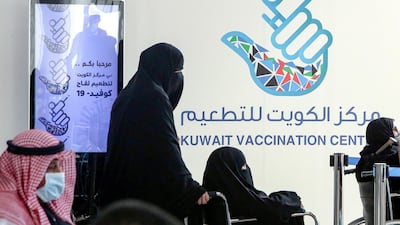
A woman pushes another in a wheelchair as they queue to register before receiving a dose of Covid-19 coronavirus vaccine at the make-shift vaccination centre erected at the Kuwait International Fairground, in the Mishref suburb south of Kuwait City. Yasser Al Zayyat / AFP


How does Sinopharm compare to Pfizer-BioNTech?
Theoretically, because Sinopharm is an inactivated vaccine – a 'killed' virus – the immune response should be broader than Pfizer-BioNTech, which is designed to induce antibodies to the spike only.
However, medics are still examining how effective any vaccine is against new strains, including the Sinopharm shot.
What is an average result?
That is a hard question to answer, Dr Mahmoud said.
Anything above 15 arbitrary units per millilitre is positive for the anti-S antibody test. However, a typical result after the Sinopharm vaccine is anything between 50au/ml to 150au/ml.
But although rare, the lab has seen people with levels below 20 and above 1,000, she said.
For the anti-N antibody test, anything above 1.4 is positive.
The test to check for neutralising antibodies is a straight positive above 30 per cent, or negative if below that.
What does a higher result mean?
The higher the value, the better response to the vaccine, and the better immune response, Dr Mahmoud said.
“Higher antibodies stay for longer and are said to give better protection than lower antibodies," she said.”
Should we all be taking this test?
This quantitative serology test is not one that has been widely carried out in other countries – and not something UAE authorities urge people to get. But it is available in some hospitals in the UAE, mostly in Abu Dhabi.
Other doctors said more research is needed.
"Some vaccines remain in our body for life – that's why we need only one dose when we take a childhood vaccine," said Dr Anitha Varghese, a general practitioner at Aster Jubilee Medical Centre in Dubai.
"When it comes to Covid-19, it's very new. We still don’t know how long the cells’ memory to kill the virus lasts.”
She said antibody tests could help determine whether people vaccinated against Covid-19 would require regular booster injections.
Hospitals in Dubai previously told The National the tests were not available there, at the request of the authorities.
In Abu Dhabi, the test typically costs about Dh300 ($81).
How long do antibodies last?
Scientists are still working out the answer to that. It really depends on a person's immune system.
"Some people we have been monitoring, they have had the antibodies for almost eight months now," Dr Mahmoud said.
"Other people have had a drop in antibodies after a couple of months, so getting this average number is ongoing.
“We’re still doing the research.”
Does recovering from the virus give as much protection as getting the vaccine?
Only for a short period, Dr Mahmoud said.
"Depending on the strength of the infection, people with severe infections do respond with very high antibody levels," she added.
“But we have seen the antibody levels drop very quickly after infection.”
Antibodies produced after vaccination appear to last longer. However, this needed to be confirmed by research, she said.

