


Several countries are preparing to give out a Covid-19 booster shot between six and 12 months after people were vaccinated.
The latest country to join the list is Bahrain. It will begin to issue third Covid-19 vaccine doses six months after the second shot.
The United States, Israel and the UK are among other countries putting procedures in place to offer additional vaccines to protect against a possible winter wave.
The US said it is preparing for the possibility that a third booster will be required between nine and 12 months after people complete the first vaccine course.
Israel, which effected one of the world's most comprehensive vaccine drives solely using the Pfizer-BioNTech shot, bought 36 million Moderna vaccines in case boosters are required later in the year.
And the UK, which has now fully vaccinated a third of adults against the disease, aims to begin issuing boosters in the autumn.
In Bahrain, boosters will initially be offered to priority groups, with the rest offered a third dose within 12 months of their second shot.
What is the latest research on boosters? And is it possible to take a different shot the third time around?
The National explains.
Why will boosters be required?
Vaccines currently available against Covid-19 are effective but the protection they offer is not lifelong.
And a few variants of the virus demonstrate the ability to evade some antibodies generated by previous infection or vaccination.
The makers of the Pfizer-BioNTech or Moderna coronavirus vaccines said boosters will be required later this year.
Albert Bourla, chief executive of Pfizer, said it is likely that people will need a third dose of the vaccine within a year.
Other vaccine manufacturers have not yet said when third shots will be needed.
But the protection offered by the Sinopharm shot, which Bahrain has mostly relied upon for its mass vaccination campaign, is believed to last four to six months.
Bahrain's vaccination taskforce said the vaccine type for the third dose may be different from the two previous doses, based on recommendations to be issued later.
In the UAE, extra doses were administered to a small number of people whose immune systems were found to have not responded to the vaccine.
Can you mix vaccines the third time around?
Luke O’Neill, professor of biochemistry in the School of Biochemistry and Immunology at Trinity College Dublin, said no research had been conducted yet into issuing a booster dose with a different type of vaccine after an inactivated one.
Pfizer-BioNTech and Moderna are RNA or mRNA vaccines while Sinopharm uses a weakened or deactivated form of the pathogen that causes Covid-19.
But it could theoretically be done safely.
"This hasn't been tested but there is no immunological reason as to why not," Prof O'Neill told The National.
Other experts agree it is possible to get a different vaccine type later, after you complete the first course.
It is believed it may even help boost the immune response against variants, especially if a particular type is shown to offer better protection against them, they said.
“Getting one kind of Covid-19 vaccine does not make it unsafe or ineffective to get a different kind later,” Dr H Dirk Sostman, president of the Academic Institute at Houston Methodist, told Healthline, a health and wellness website.
The UK is considering offering a different type of vaccine in the autumn for the third shot.
It is currently using the Oxford-AstraZeneca and Pfizer vaccines only, but has other types on order.
Earlier this month, China's top disease control official said the effectiveness of vaccines produced in the country could be boosted by mixing different types.
In the UAE, Dr Farida Al Hosani, official spokeswoman for the health sector, said the Ministry of Health and Prevention received several inquiries about people taking a second vaccine.
"We would like to draw your attention to the fact that there are no studies regarding the efficacy of taking more than a brand of a vaccine at the time being," she said.
"This requires further in-depth future studies, so we are monitoring all the international studies ... providing you with the latest on the topic, whenever available.
"At the time being, we advise those who have received two doses of Covid-19 vaccine not to take any other type of vaccine, just to ensure their health and wellness."
-

A technician oversees the production of the UAE's version of the Sinopharm vaccine - named Hayat-Vax - at drug maker Julphar's plant in Ras Al Khaimah. All photos are screengrabs of a video courtesy of G42 Healthcare / Julphar -
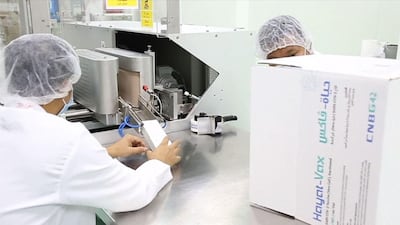
This video grab shows the Hayat-Vax being boxed up. Each packet contains one vial of the vaccine, which is identical to the Sinopharm vaccine that was made in Beijing and approved in December -
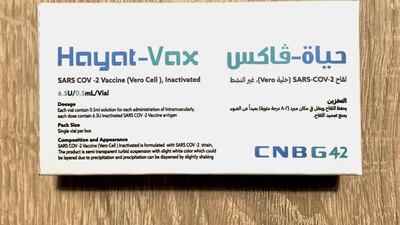
Hayat-Vax will be made in Ras Al Khaimah and later in a purpose-built facility in Abu Dhabi's Kizad industrial zone -

For now, production of Hayat-Vax will take place in Ras Al Khaimah's Julphar drug plant. It is capable of producing about two million doses per month -
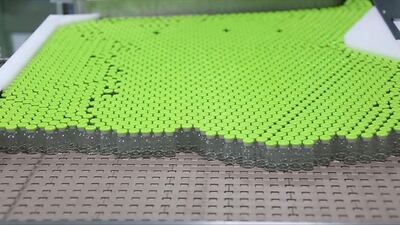
There is plans to build a dedicated vaccine plant in Abu Dhabi's Kizad industrial zone later in 2021 -

A video shows the production of Hayat-Vax in Ras Al Khaimah -

The deal to produce Sinopharm in the Emirates will allow the country to rapidly ship doses to countries, particularly in the developing world -

Sinopharm can be stored in a normal fridge, unlike other vaccines, meaning it is well-suited for use in the developing world


Are trials being conducted into the use of different vaccine types?
Yes. A trial is under way in the UK into the effects of using different vaccines for the initial course, mixing the first two doses.
However, some countries have begun using different types for the first and second shots with no reports of ill effects.
In late March, authorities in Germany announced people under the age of 60 who received the Oxford-AstraZeneca vaccine for the first dose would receive a different shot for the second.
The policy was introduced over concerns about Oxford-AstraZeneca's links to rare blood clots.
They now receive either the Pfizer-BioNTech, or the Moderna vaccine for their second dose.
Has research been done into third boosters?
Yes. Last week, Moderna released the results of a study that showed a single dose of a new type of vaccine developed to fight the South African strain worked well as the third dose.
It was administered to people who were previously vaccinated and the third injection boosted the levels of neutralising antibodies against Sars-CoV-2.
They tested the original shot, as well as a booster specifically created to guard against the South African strain.
Both vaccines increased antibodies against the virus and improved immune responses against variants of concern from South Africa and Brazil.
However, the vaccine designed against the South African strain was proven to offer better protection against that particular variant.
The vaccines were administered six to eight months after people received their second shot.
The safety and tolerability of the third dose booster injections were found to be generally comparable to those observed from a second dose of the Moderna vaccine in Phase 2 and 3 studies.
The new vaccine is currently in its trial stage.

