
A major Covid-19 screening campaign in Abu Dhabi has helped drive infection rates below one per cent in part of the emirate, officials confirmed.
More than 380,000 people across the capital have been tested during the National Screening Programme so far this month.
A ban on travel in and out of Abu Dhabi and its regions was rolled out on June 2 as part of the concerted effort to contain the spread of the virus.
The restrictions on movement were initially introduced for a week but have subsequently been extended.
The measures are due to be lifted on Tuesday, but are subject to a possible further extension.
The emirate's Emergency, Crisis and Disaster Committee has announced that the number of positive cases has now fallen below one in every 100 people tested.
In a tweet posted by Abu Dhabi Media Office, the authority stated screening would continue to be ramped up in Al Dhafra and Al Ain over the next 14 days to reach the same target.
The National Screening Programme is focused on high density areas and tower blocks across the emirate of Abu Dhabi.
Authorities are screening all workers living in Mussaffah, an industrial area on the outskirts of the capital to curb the spread of the coronavirus.
Mass testing on an industrial scale is under way at the nation’s largest Covid-19 screening centre in Abu Dhabi.
Assembled in just 10 days, a small tented village in Mussaffah with the capacity to test 10,000 people a day began swabbing the first of many blue collar workers early last month.
Workers are bussed in from various zones around the emirate to
the testing site, the third built by Abu Dhabi Health Services Company, or Seha, to support the National Screening Programme.
Ambulatory Healthcare Service chief executive, Mohamed Hawas Al Sadid, supervised the development of the 3,500 square metre test centre and said staff there will aim to test 10,000 people a day.
The UAE has made high testing rates a focal point of its ongoing fight against the virus.
Everyone in Abu Dhabi will be tested for Covid-19, if necessary, Dr Jamal Al Kaabi, acting undersecretary for Abu Dhabi’s Department of Health, said last week.
“Our target is to eventually eliminate the virus. We will take all the necessary actions to eradicate the virus and ensure that the Emirate is free of Covid-19 – even if it requires us to test the whole population to get a handle on the virus,” he said.
-
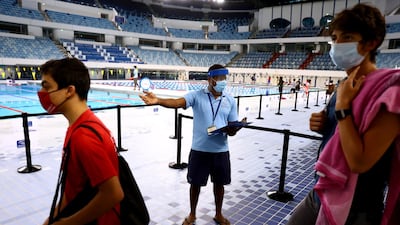
A staff member directs swimmers to the correct swimming zone at Hamdan Sports Complex. Pools have reopened in Dubai Getty Images -
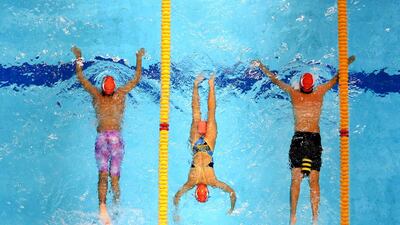
Swimmers train at Hamdan Sports Complex in Dubai, United Arab Emirates. Getty Images -
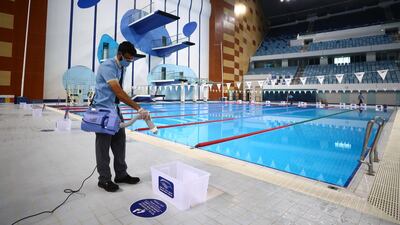
A worker is seen disinfecting the pool area in between training sessions at Hamdan Sports Complex in Dubai. Getty Images -
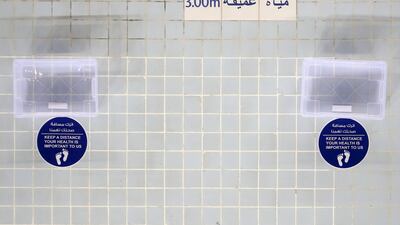
A signs showing social distancing regulations is seen at Hamdan Sports Complex. Getty Images -
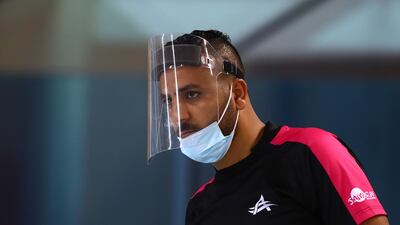
A swimming coach wearing a plastic face visor is seen at Hamdan Sports Complex. Getty Images -
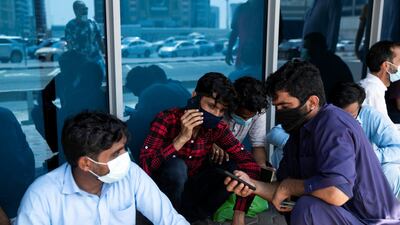
Pakistani citizens who live in Dubai line up outside Dnata. They’ve received a confirmation call from the consulate regarding their repatriation flights. Reem Mohammed / The National -
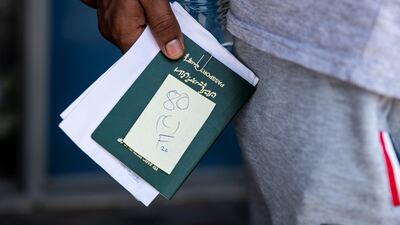
Pakistani citizens who live in Dubai line up outside Dnata. They’ve received a confirmation call from the consulate regarding their repatriation flights. Reem Mohammed / The National -
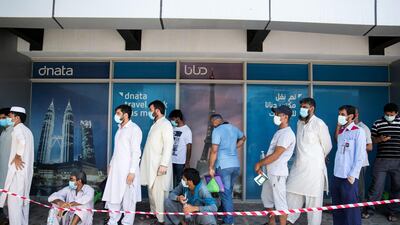
Pakistani citizens who live in Dubai line up outside Dnata. They’ve received a confirmation call from the consulate regarding their repatriation flights. Reem Mohammed / The National -
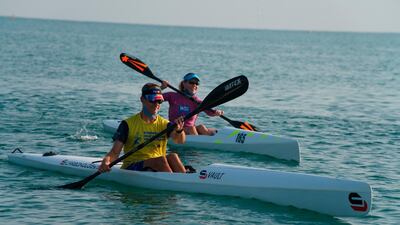
Kayakers race off the coast of Dubai. AP Photo -
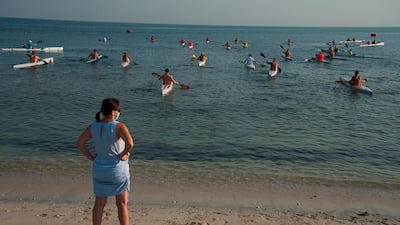
A woman watches kayak racers take off from the coast of Dubai. AP Photo -
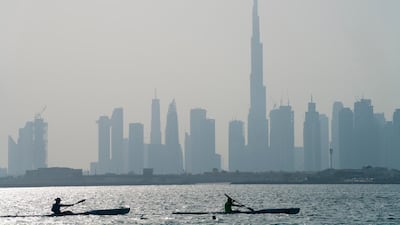
Kayakers race in front of the Burj Khalifa, the world's tallest building, off the coast of Dubai. AP Photo


Across the country, more than 2.5 million people have been tested at medical centres, large screening facilities and drive-through facilities.
As of Sunday, the UAE had recorded 44,925 coronavirus cases since the outbreak began, while 32,415 people have made full recoveries during this time.
Since the country identified its first cases in January, 302 patients have died after contracting Covid-19.

