


Many believed vaccines would herald the beginning of the end of Covid-19.
But now they are here, not much has changed.
Social distancing, masks and regular sanitising are all still necessary – and still could be for some time to come.
Experts are even saying we are now in the most dangerous phase of the pandemic.
But why? What is the hold-up? And when will we be able to get back to normal?
The National explains.
Why have countries with high vaccination rates not removed Covid-19 rules?
-
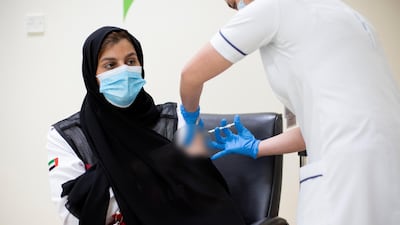
A Dubai ambulance worker is vaccinated with the Pfizer-BioNtech vaccine in Dubai. -
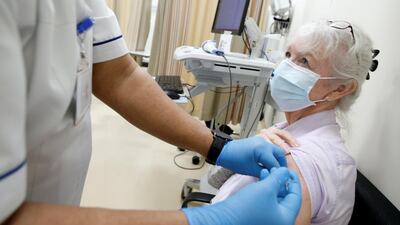
An older resident receives her first shot at Zabeel Health Centre on December 27, 2020. -
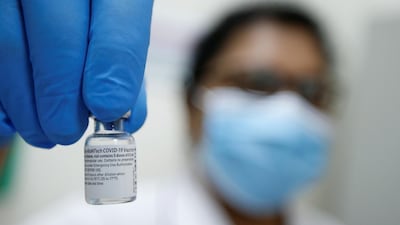
The vaccine is expected to be rolled out to all age groups once people in the essential categories have been vaccinated. -
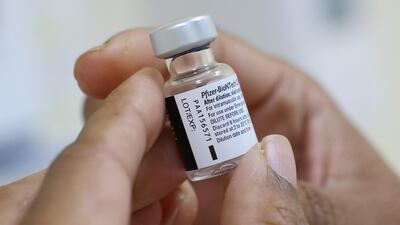
A nurse holds a dose of the Pfizer-BioNTech vaccine, which was approved for use by Dubai's emergency and crisis authority and the federal Ministry of Health. -
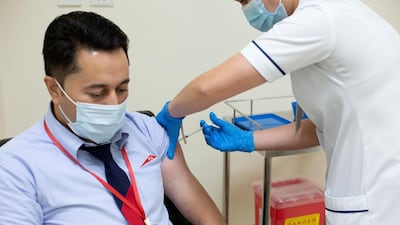
An employee from Roads and Transport Authority receives a dose of the Pfizer-BioNTech vaccine in Dubai. -
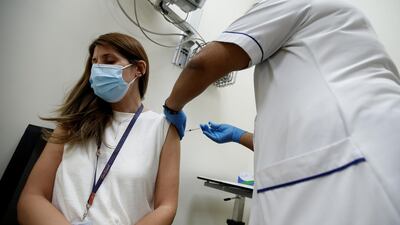
A woman receives a dose of the Pfizer-BioNTech vaccine at Zabeel Health Centre in Dubai on 27 December, 2020. -
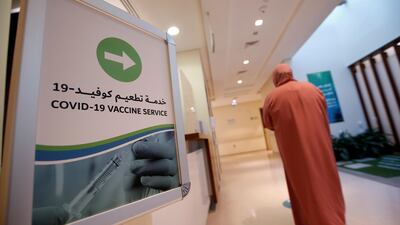
The city has six vaccine centres where the Pfizer-BioNTech shot is available. -
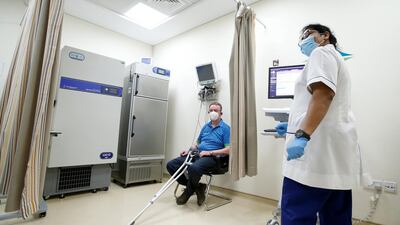
A man waits to receive the first of two doses at Zabeel Health Centre in Dubai on 27 December, 2020. -
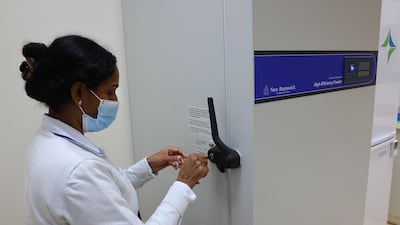
A nurse opens a freezer at Barsha Health Centre. The Pfizer-BioNTech vaccine must be kept at minus 70C when transported. -
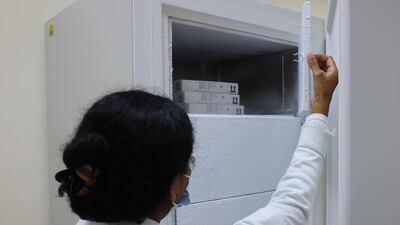
A nurse opens a freezer at Barsha Health Centre. The Pfizer-BioNTech vaccine must be kept at minus 70C when transported. -
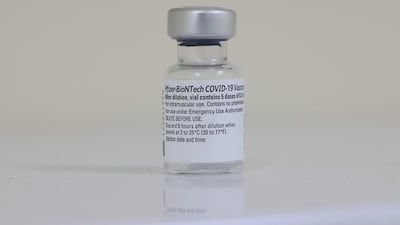
A vial of the vaccine is seen at Barsha Health Centre. AFP -
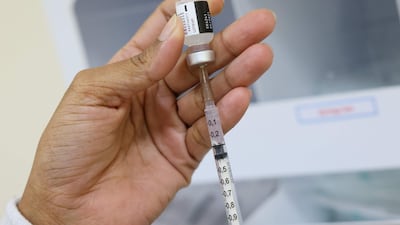
A nurse prepares a dose of the Pfizer-BioNTech vaccine at al-Barsha Health Centre in Dubai. AFP


Experts are advising against lifting safety rules until we know more about how long the current crop of vaccines gives immunity.
“We are following people who have received vaccinations to find out if their immune response is durable over time and the length of time for which they are protected against disease,” said the World Health Organisation's Dr Kate O'Brien.
“So we are really going to have to wait for time to pass to see just how long these vaccines last.”
Dr O'Brien said it is not clear how effective the vaccines are at limiting transmission.
Experts, including those here in the UAE, have said it is possible to catch and pass on the virus on after having a Covid-19 vaccine.
And a large section of the population – children – still cannot take it yet.
“So for the time being those age groups are going to continue to be at risk of both disease and infection, and being able to transmit to other people,” Dr O’Brien said.
Why are we 'in a dangerous phase' of the pandemic?
-
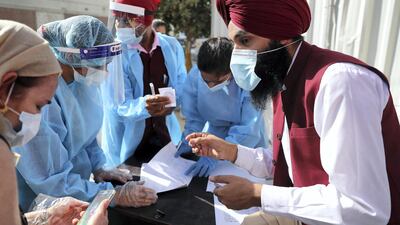
Thousands of people signed up for a three-day vaccine drive at Guru Nanak Darbar, Dubai's Sikh temple. All photos by Pawan Singh / The National -
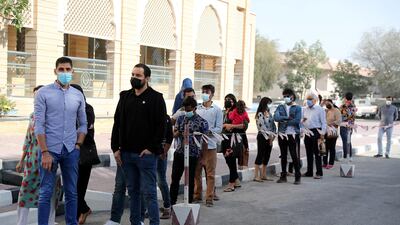
Hundreds of people queued on Saturday to receive a dose of the Sinopharm vaccine -
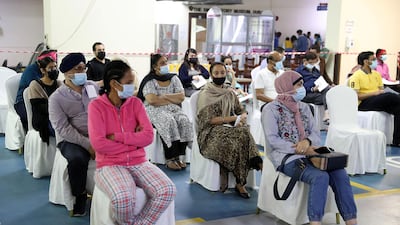
Over three days, it is hoped that 4,500 people will receive the first of two vaccine shots made by Sinopharm -

The temple organised the drive with Tamouh Health Care to ensure as many people are protected as possible, given a recent spike in cases -
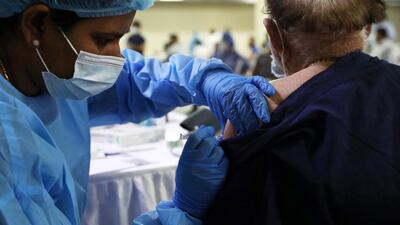
Medics administer shots of the vaccine on Saturday -

People queued patiently as staff worked their way through hundreds of people -
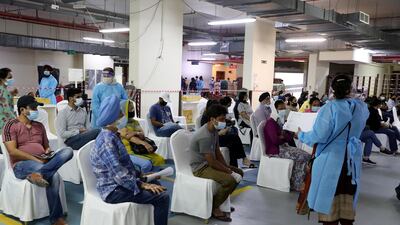
The vaccine drive was arranged not just for regular worshippers but also people of all nationalities and faiths -
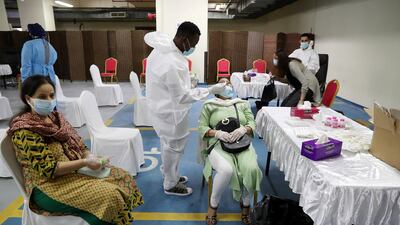
A medic also carries out a PCR swab test


Variants, in a word. Viruses mutate, so their emergence was no surprise to scientists.
But several concerning variants emerged towards the end of last year. These either had the power to escape previous immunity from past infection, or were more transmissible and possibly even more deadly.
In Manaus, a city in the Brazilian rainforest, a variant led to an even deadlier second wave, overwhelming hospitals again, even after more than half of the population already had the virus.
Experts are afraid that something similar could happen in a country with a high vaccination rate, as the virus searches for ways to survive.
The UK, already home to a so-called variant of concern, is currently the country most at risk of spawning another mutation that could get "very nasty, very quickly" Prof Graeme Ackland of the University of Edinburgh told The National.
However, experts say the same precautions such as social distancing and masks are still the world’s best weapon against any variant of the virus.
When can we ditch masks and social distancing?
The short answer is: no one really knows yet.
But it is likely to be when most of the world is vaccinated.
“Though we are approaching normality, we have to continue wearing face masks and maintain social distancing until Covid-19 ends,” said Dr Karthikeyan Dakshinamoorthy, a specialist in internal medicine at NMC Royal Hospital, Dubai.
“No one knows when that will be.”
Some experts have, however, been willing to stick their neck out with a guess.
And the news is not good.
Mary Ramsay, the head of immunisation at Public Health England, said masks and social distancing could remain in place until other countries start their vaccination programmes – which may take “a few years”.
She told the BBC: "People have got used to those lower-level restrictions now, and people can live with them, and the economy can still go on with those less-severe restrictions in place".
"So I think certainly for a few years, at least until other parts of the world are as well vaccinated as we are, and the numbers have come down everywhere – that is when we may be able to go very gradually back to a more normal situation," she said.

