


A new food safety standards system will be introduced in the UAE in the next two months, under a Ministry of Climate Change and Environment initiative.
Minister of Climate Change and Environment Abdullah Al Nuaimi said the rules would ensure only top-rated food products that complied with the highest international standards could enter the country.
Mr Al Nuaimi on Monday told The National that food previously imported into the UAE fell into three categories – A, B and C – with A representing the highest quality.
“Now only food that falls into the A category will be allowed to enter the UAE,” he said.
His comments came as the country launched an initiative to encourage more young Emiratis to consider careers in agriculture.
Authorities are to build five centres where Emiratis can spend 16 months learning about the sector.
It is hoped hundreds of Emiratis will be trained up to become experts in agriculture within a few years.
The Covid-19 pandemic sharpened awareness of how crucial food security is to the UAE, which imports around 90 per cent of its food needs.
“Covid-19 is the reason [the project is being launched]," said Mr Al Nuaimi. "We had time during the pandemic to assess the threat that could be posed by another pandemic, or a disaster in another country, to our food supply.”
The first of five centres – known as "youth food security stations" – will be built in Abu Dhabi and more will follow.
Anyone interested would spend up to 18 months at a centre to learn about animal and crop agriculture, beekeeping and aquaculture. Further details about the plan and the new food standards are expected in the coming weeks
Coronavirus has focused the world's attention on food supplies.
Mariam Al Mheiri, the Minister of State for Food Security, said last year that the pandemic forced the UAE to assess its food supply chain after the country experienced some initial disruption.
Ms Al Mheiri said authorities acted quickly to ensure people had access to vital products, while the government's policy in supporting agri-tech companies to increase local food supply helped.
Over the past few years there has been a large increase in the number of UAE companies producing food, including farmed fish in Jebel Ali and leafy greens grown under LEDs in Abu Dhabi.
This project aims to further support these trends.
While the initial placing at one of the stations will last for 18 months, Mr Al Nuaimi said the plan was for Emirati youths to spend much longer than that in the industry.
“It’s not a year and a half – it’s a career for the youth. We are designing agriculture into the future and we want people taking part to establish their own stations and own businesses," said Mr Al Nuaimi. “This isn’t about planting food for the good times – it’s for emergencies,” he said.
“In a few years we hope to have 300 people who would have taken part and will be experts in agriculture. That would be a huge help to future sustainability.”
Ms Al Mheiri also backed the initiative.
“As a source of hope for a better future, youth empowerment and capacity building is a key element of advancing the UAE’s vital priorities, including food security,” she said.
“To this end, the youth food security stations will engage Emirati youth and harness their power to create innovative food projects.”
In pictures: the blooming UAE flower farm in Fujairah
-

Mohammed Al Mazroui on his flower farm in Asimah Valley, Fujairah. Reem Mohammed / The National -
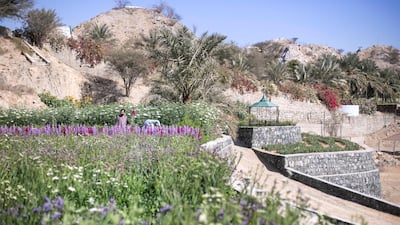
Al Mazroui has been growing flowers on the farm for the last seven years, though he acquired the land 23 years ago. Reem Mohammed / The National -
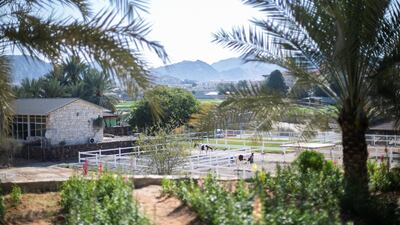
The flower farm's location among the mountains of Al Hajar offers a cooler climate for the plants. Reem Mohammed / The National -
Gladioli flowers are among the farm's 30,000 blooms this year. Reem Mohammed / The National -
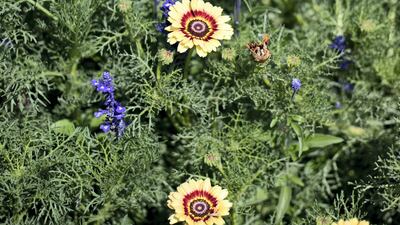
Al Mazroui also grows larkspurs, dandelions, sunflowers and marigolds. Reem Mohammed / The National -
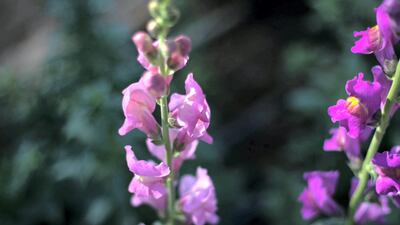
Al Mazroui begins planting from September to November and the flowers bloom throughout February until April. Reem Mohammed / The National -
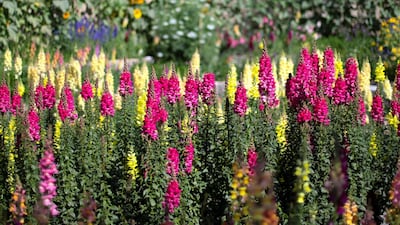
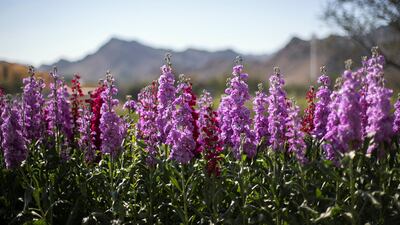
Among the first flowers Al Mazroui planted is the snapdragon, which produces intensely vibrant flowers that grow along tall stalks. Reem Mohammed / The National -
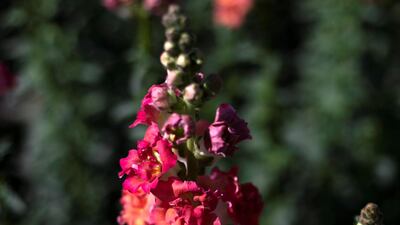
Al Mazroui purchased the initial snapdragon seeds from the US, and soon grew more using his own. Reem Mohammed / The National -
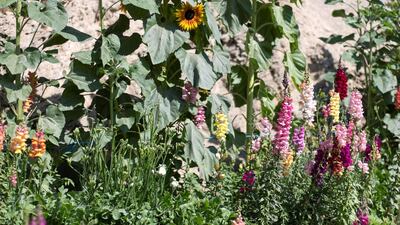
The farm’s most recent bloom totaled 30,000 flowers, which included larkspurs, hollyhocks, gladioli, sunflowers, snapdragons and marigolds, to name a few. Reem Mohammed / The National -

Snapdragon flowers. Reem Mohammed / The National -
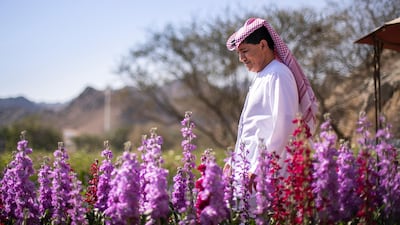
Al Mazroui's interest in horticulture goes back to when he was young. 'I’ve loved flowers since childhood,' he says. Reem Mohammed / The National -

Statice flowers or sea lavenders at the UAE Flower Farm in Wadi Asimah. Reem Mohammed / The National -
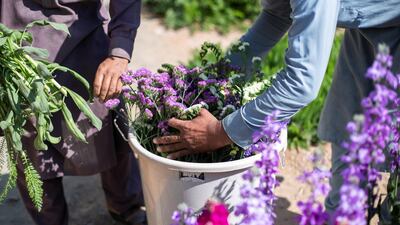
Workers at the farm begin harvesting flowers to send to shops in Sharjah and Dubai. Reem Mohammed / The National -
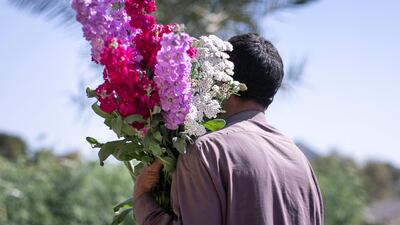
Munir, one of the workers on the farm, carries freshly cut flowers to prepare them for delivery to shops. Reem Mohammed / The National -
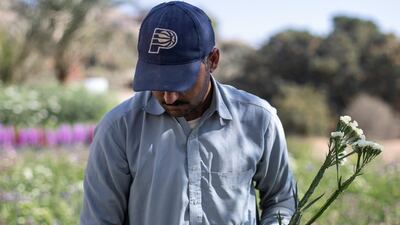
Abdulrahman, one of the farm's workers, picks white sea-lavenders. Reem Mohammed / The National -
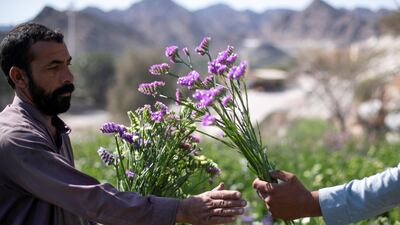
The UAE Flower Farm has recently opened to visitors, giving them the option to create their own bouquets with the help of the workers and paying directly on-site. Reem Mohammed / The National



