![Sand is pumped onto a man-made island part of a $1 billion project in the shape of palm trees off the Dubai coast September 9, 2005. [Thousands of workers from the Indian subcontinent, lured by promises of jobs in the oil-rich United Arab Emirates, toil in scorching heat and high humidity for most of the year. The emirate is fast becoming an architect's playground as more and more outlandish structures take it closer to its dream of being the world's most visually striking metropolis. The infrastructure boom is part of the emirate's ambition to attract foreign cash and investment into an economy that is weaning itself off rapidly-dwindling crude oil reserves.]](https://www.thenationalnews.com/resizer/v2/FQZMRFGM66YADS7ML2L2ARFWLM.jpg?auth=b8df0d49c49b145bc49285d5e54817a615390090c384f7715ed62be6131ebf89&smart=true&width=800&height=450)


An aerial view of the spectacular Palm Jumeirah is one usually reserved for skydivers – but that will change when an observatory overlooking the huge man-made island opens to the public on Wednesday.
The 240-metre tall Palm Tower signifies the latest stage in the island’s development as a critical tourism hotspot, with up to 70 per cent of visitors to Dubai taking in a visit to the island.
At the summit of the striking structure stands The View At the Palm, offering panoramic views of the island.
It is 20 years since work began on one of the few structures that can be seen from space with the naked eye.
“The Palm Jumeirah has always been a hugely popular destination for tourists coming into Dubai,” said Gail Sangster, assets director for Nakheel Malls.
“I don’t think there is anyone who comes here for a visit who has not heard of The Palm or who has not wanted to come and see it.
“Having The View at The Palm gives tourists a new way to see the islands.
“Rather than from a hop-on and off bus like they would usually do, they can now experience it from all its glory from the observation point.
“It is a fantastic new addition for tourists coming to Dubai.
“Dubai is about creating multiple attractions, we are not trying to compete with the Burj Khalifa or other tourist destinations, but enhance Dubai’s vision and vast array of options.”
Much has changed since the first island plans were drawn up more than two decades ago.
The Palm has since become home to thousands of residents and attracts floods of tourists eager to make one of its many luxury hotels a base for a city stay.
Spawned from an idea to create acres of new hotel development land as Dubai accelerated its status as a global holiday destination, the palm-shaped island has become symbolic of the UAE's can-do attitude.

How the islands were built
A breakwater spanning 11 kilometres to protect the islands from the waves of the Arabian Gulf was created using 7 million tonnes of rock mined from 16 different quarries in the Northern Emirates and transported by sea to Dubai.
The crescent-shaped barrier is designed to absorb energy during both normal and extreme weather conditions.
It descends as deep as 100 metres in places and has become an artificial reef providing a safe habitat for all kinds of marine life.
Vibro-compaction – a construction technique to stabilise sand and gravel – compacted the imported materials to ensure they did not shift with the tide.
The work was done with relative speed to allow other structural construction to get under way, while decreasing the risk of shifting during earth tremors.
During this phase of the project, 15 cranes were on site to allow drilling of 200,000 holes at depths close to 16 metres. This was completed in July 2004.
The island is connected to the mainland by a 300-metre bridge, with the outer crescent connected to the spine of The Palm by an undersea tunnel.

Dredging
The dredging of sand from the seabed and land reformation to create one of the world’s largest man-made islands was a huge undertaking.
The first stage of creating the islands that can be seen today involved dredging large amounts of sea sand and transporting it considerable distances to deposit off the Dubai shoreline.
The shape of the island was then carefully plotted using satellite imagery to create the outline of a palm tree, although that design had changed slightly from an original idea to build them in the shape of a sun.
This was done by pouring and depositing more than 100 million cubic metres of sand to add 70 kilometres of beaches to the city’s coastline.
Shallow areas of beach were formed using a "rainbowing" technique, where sand was deposited into the water from cannons on-board hopper suction dredger vessels.
Meanwhile, cutter suction dredgers were used to help shape the islands, using gigantic rotating machine heads to carve through the rock and sand.
Once the sand was in place, land-based machinery and bulldozers heaved and pushed the imported materials to shape the final contour lines of the island and to form the beaches.
Enough sand to spread across 600 football pitches was extracted 10 nautical miles offshore during the entire process.

Rapid development
Fast forward to 2021, the 52-storey Palm Tower now overlooks 1,500 villas spread across the island’s 17 fronds, with two marinas capable of housing up to 538 ships, up to 36 metres in length.
Waterside residences have also been built in Palm Marina east and west, as well as along the trunk in the Shoreline properties, while Palm West Beach has recently opened to offer a destination for beach relaxation, eating and drinking.
The Palm Monorail has a line spanning 4.8km and now stops at five stations.
Starting at Palm Gateway on the trunk, the train also calls in at Al Ittihad Park, the Atlantis Aquaventure water park, Nakheel Mall and with The Pointe due to open soon.
A Guinness World Record was set in 2020 when the 130,000 square metre Palm Fountain opened, becoming the world’s largest when it began dazzling displays from The Pointe waterfront.
The finishing touches are being applied to the new $1.4 billion Royal Atlantis Resort & Residences, due to open later this year.
The hotel's two striking towers will be connected by a "spa-bridge" and have 90 swimming pools on site.
“Twenty years ago, Nakheel embarked on a journey to bring the vision of Palm Jumeirah to life and today, we celebrate its growing success story,” said Omar Khoory, chief assets and hospitality officer, Nakheel.
“As well as a world attraction, The View at The Palm tower will uncover the evolutionary journey behind building one of the most splendid man-made islands in the world.”
Beachfront destination Palm West Beach - in pictures
-
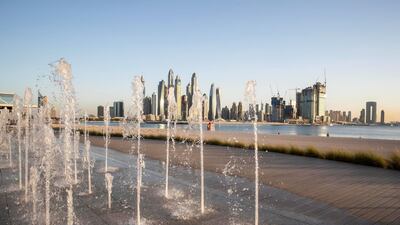
Palm West Beach looks out across to the looming Marina skyline. All photos Antonie Robertson/The National -
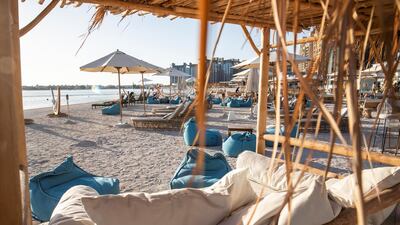
Bali-inspired Koko Bay has opened at Palm West Beach -
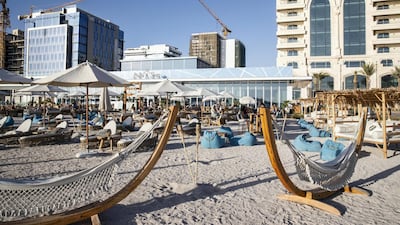
The spot features beach beanbags and hammocks, inspired by the beach bars of Bali -
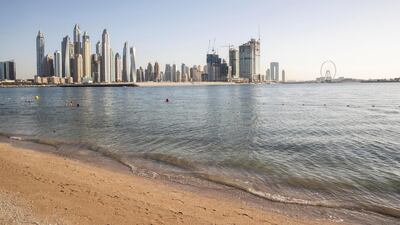
Palm West Beach spans 1.6 kilometres -

Koko Bay is already proving a popular spot -

Palm West Beach will offer a number of beach-side dining spots -

Senōr Pico is one of the new restaurants located at Palm West Beach -
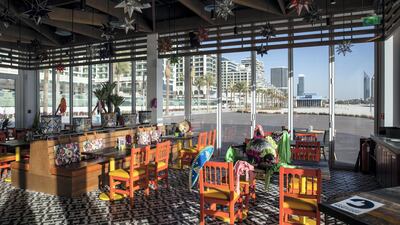
The colourful spot will serve up authentic Mexican food -
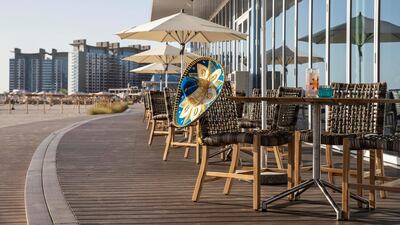
Outdoor seating at Senōr Pico at Dubai's West Palm Beach -

There will be a number of water sport activities on offer from kayaking to VR diving -
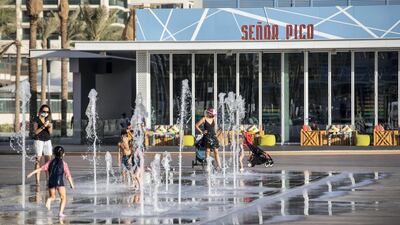
Senōr Pico is now open at Dubai's Palm West Beach -

More than 300 illuminated palm trees line the promenade at Dubai's Palm West Beach -
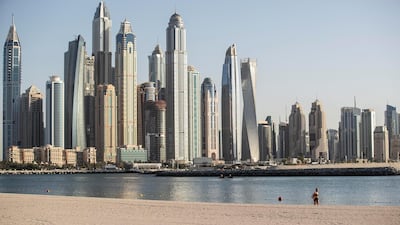
The beach offers great views across the Dubai's towering Marina skyline -

Dubai's Palm West Beach is now open to the public -

Bali-inspired vibes at Koko Bay -

The promenade also features fountains that children will love -

Koko Bay at Dubai's Palm West Beach -
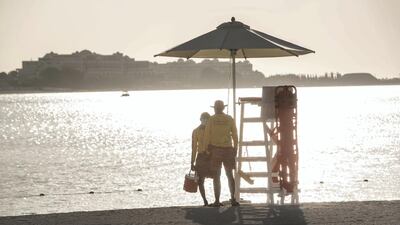
The newly opened West Beach located on The Palm Dubai -

Koko Bay offers relaxed beachfront dining at Dubai's Palm West Beach -
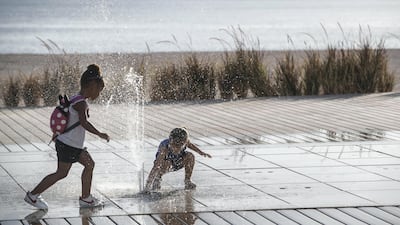
The newly opened West Beach



