


Read also: Ten turtally awesome facts in celebration of World Sea Turtle Day
Thirty sea turtles were returned to their natural habitat in Dubai on Wednesday to mark World Sea Turtle Day, including one 65kg Loggerhead turtle.
The reptiles were cleared for release into Dubai's waters by marine biologists at the Dubai Turtle Rehabilitation Programme, after a lengthy recovery period, during which they received regular check-ups and medical care when necessary.
Some were cold-stunned by continued exposure to chilly waters during winter, while others had eaten plastic or sustained injuries requiring surgery.
All were rehabilitated in the safety of the Turtle Lagoon at Jumeirah Al Naseem, before being released off the beach near the hotel, said Barbara Lang-Lenton, director of aquarium at the Burj Al Arab hotel.
“We follow a well-organised process, encompassing critical care, followed by time spent in a state-of-the-art, sea-fed lagoon, where the animals can reacquaint themselves with the marine environment they are used to, prior to release,” she said.
World Sea Turtle Day is celebrated on June 16 each year by conservationists around the world to highlight the importance of the reptiles in the marine ecosystem, and their endangered status.
Six of the world's seven species of sea turtle are threatened with extinction caused by loss of habitat, poaching and pollution.
The hawksbill turtle, which is native to the Middle East, is listed as critically endangered after an 87 per cent decline in population over the past three decades. There are now estimated to be only 8,000 nesting females left worldwide.
The Dubai Turtle Rehabilitation Programme at Jumeirah Hotels and Resorts seeks to reverse the decline of the species in the emirate's waters, and has rescued and rehabilitated almost 2,000 sea turtles since it was established in 2004.
Ms Lang-Lenton said the efforts of the programme help to protect the UAE's natural ecosystem, as outlined in the Ministry of Climate Change and Environment's plan of action for the conservation of marine turtles in the emirates.
"The hawksbills, in particular, play an irreplaceable role within the wider coral reef health," she said.
"It is imperative that we continue to rehabilitate and protect these turtles, especially as they are faced with increasing threats to their nests, juveniles and adults, causing rapidly declining numbers.”
The hotel group also has a turtle rescue project in Abu Dhabi at its Saadiyat Island resort.
Since it opened in 2018, the programme has protected turtle nests and helped more than 700 hatchlings make their way to sea.
The team also assisted with the rehabilitation and release of 250 juvenile hawksbill turtles.
In pictures: Sharjah sheikh rescues 'Farah' the turtle
-
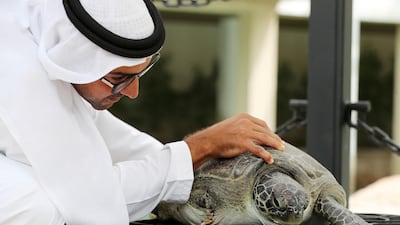
Sheikh Fahim bin Sultan Al Qasimi rescued the turtle 'Farah' in Sharjah and took it to the Burj Al Arab Turtle Rehabilitation Sanctuary for surgery. Chris Whiteoak / The National -
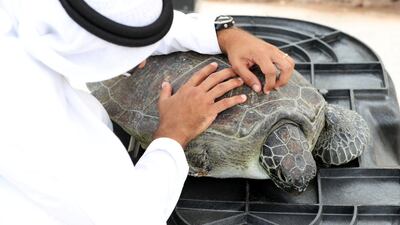
Sadly one flipper had to be amputated after Farah the turtle got tangled up in fishing wire. Staff at the Burj Al Arab Turtle Rehabilitation Sanctuary still hope she might be able to be released back into the wild, if she can still dive. Chris Whiteoak / The National -
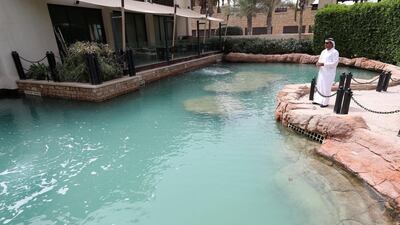
Sheikh Fahim bin Sultan Al Qasimi observes the Turtle Rehabilitation Lagoon at Jumeirah Al Naseem. This is the second stage of the Burj Al Arab Turtle Rehabilitation project. Chris Whiteoak / The National -
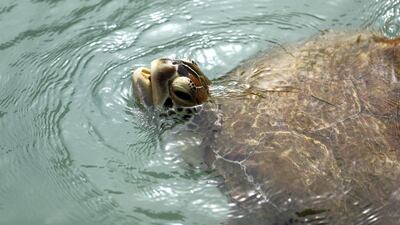
One of the rescued turtles in the Turtle Rehabilitation Lagoon at Jumeirah Al Naseem. This is the second stage of the Burj Al Arab Turtle Rehabilitation project. Chris Whiteoak / The National -
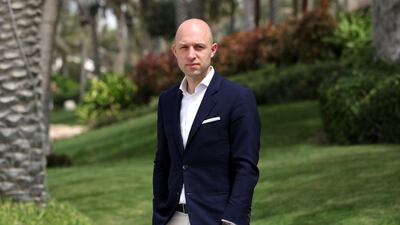
Tristan Delmas, hotel manager at the Burj Al Arab said they have rescued 2,000 turtles since the project started in 2004. Chris Whiteoak / The National -
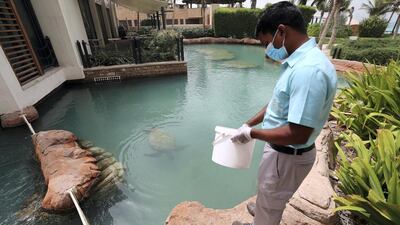
Feeding time at the Turtle Rehabilitation Lagoon at Jumeirah Al Naseem. This is the second stage of the Burj Al Arab Turtle Rehabilitation project. Chris Whiteoak / The National -
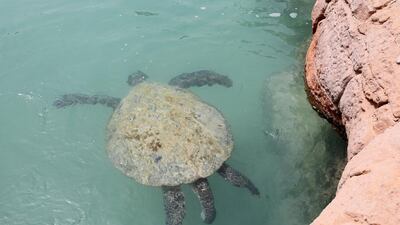
This rescued turtle is over 100 years old. It is currently resident at the Turtle Rehabilitation Lagoon at Jumeirah Al Naseem, but staff hope to release it back into the wild in the summer. Chris Whiteoak / The National -
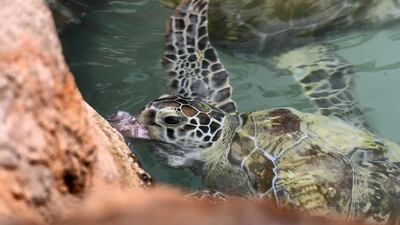
The rescued turtles in the Turtle Rehabilitation Lagoon at Jumeirah Al Naseem are fed squid. Chris Whiteoak / The National -
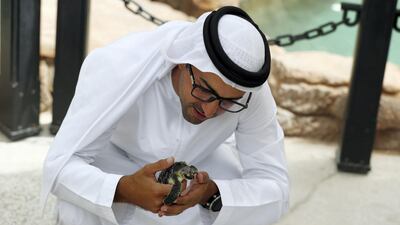
Sheikh Fahim bin Sultan Al Qasimi examines the smaller turtles, who have had barnacles removed from their shells by the team at the Burj Al Arab Turtle Rehabilitation Sanctuary. Chris Whiteoak / The National -
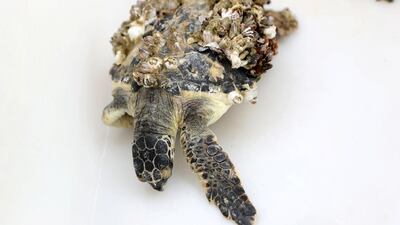
Barnacles slow turtles down, and make it harder to feed. This turtle is halfway through its treatment at the Burj Al Arab Turtle Rehabilitation Sanctuary. Chris Whiteoak / The National -
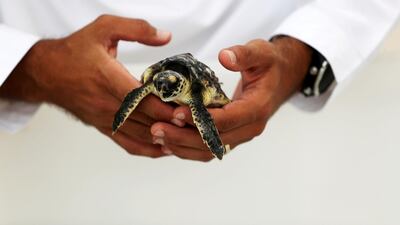
This turtle will be able to be released from the Burj Al Arab Turtle Rehabilitation Sanctuary in the summer, once it is stronger. Chris Whiteoak / The National



