
A successful marine programme in Dubai is helping to bolster shark numbers while changing attitudes towards nature's precious predator.
Five Arabian carpet sharks and three honeycomb stingrays were the latest marine animals bred to repopulate the Jebel Ali nature reserve.
A co-ordinated release due to take place on Sunday was postponed to October because of a sudden surge in temperatures.
In Dubai, the mercury pushed 45°C on Sunday, almost 10 degrees higher than a week earlier.
“The salinity of the water was already very high so, when the temperature increases, salinity increases further and we get low oxygen levels in the water,” said Robert Bennett, manager at the Lost Chambers Aquarium in Atlantis, The Palm, where the animals were bred.
“We can acclimatise the animals, but temperatures were creeping up higher than we had anticipated.”
Fish quarantine facilities at Atlantis have become a focal point for regional conservation.
Uncertain future
Sharks and rays are among many marine animals facing threats across the world from overfishing, habitat destruction and pollution.
As apex predators, sharks play a vital role in maintaining healthy marine ecosystems which, in turn, encourages fish populations.
-
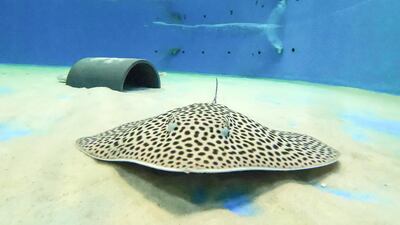
The reticulate whipray or honeycomb stingray swims in one of the back of house salt water tanks in Atlantis, The Palm's fish hospital. Antonie Robertson / The National. -
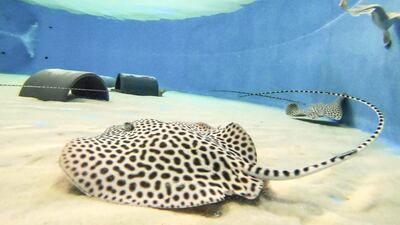
Five Arabian carpet sharks and three honeycomb stingrays were the latest marine animals bred to repopulate the Jebel Ali nature reserve. Antonie Robertson / The National. -
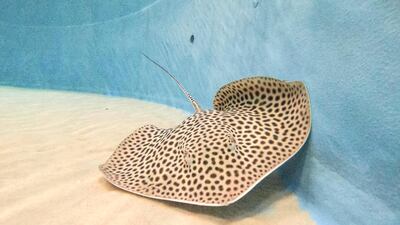
The honeycomb stingray is a species of stingray in the family Dasyatidae. It inhabits coastal waters in the western Indian Ocean including the Red Sea and Arabian Gulf. Antonie Robertson / The National. -

Arabian carpet sharks swim in one of the back of house salt water tanks in Atlantis, The Palm's fish hospital. Antonie Robertson / The National. -

Arabian sharks were due to be released into the Jebel Ali marine sanctuary but rising temperatures delayed the programme. Antonie Robertson / The National. -
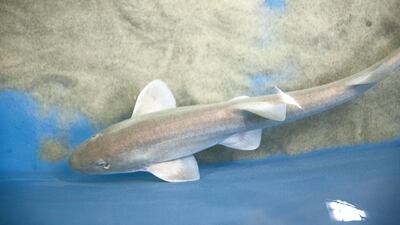
The aquarium’s programme acts as an educational facility as well as a breeding ground to boost the number of sharks and rays swimming freely in UAE waters. Antonie Robertson / The National. -
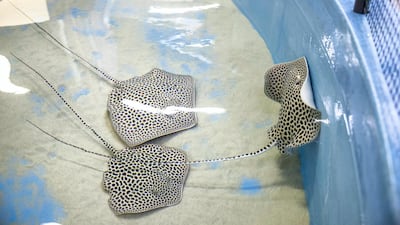
Fish quarantine facilities at The Atlantis have become a focal point for regional conservation. Antonie Robertson / The National. -
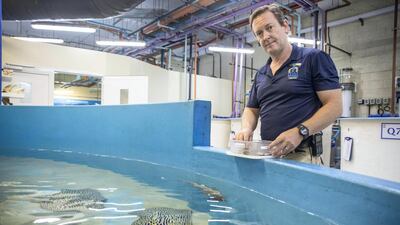
Robert Bennet, Manager of Large Exhibits at Atlantis The Palm feeds the Arabian carpet sharks and honeycomb stingray as they swim in one of the back of house salt water tanks in Atlantis, The Palm. Antonie Robertson / The National.


The aquarium's programme acts as an educational centre as well as a breeding ground to boost the number of sharks and rays swimming freely in UAE waters.
So far in 2021, 30 different species of sharks and rays have been released into the Gulf.
Education on sharks and their importance to marine ecosystems has also offered hope for conservationists that decimated populations could recover.
Experts believe about 90 per cent of sharks across the globe have been wiped out due to overfishing, with many either killed for their fins for the Asian food market or snared in industrial trawlers as by-catch.
Of the 470 species of sharks worldwide, 2.4 per cent are critically endangered, 3.2 per cent are endangered, 10.3 per cent are vulnerable and 14.4 per cent are near-threatened.
Attitudes towards sharks are slowly beginning to shift, Mr Bennett said.
“Dubai is built on a fishing culture, so changing attitudes towards sharks is not going to happen overnight,” he said.
But certainly there has been a big change in the last decade or so, he said.
“It wasn’t unusual to see 200-300 sharks lined up for sale in the fish market 12 years ago,” Mr Bennett said.
“You go there now and you won’t see any.
“Government agencies are getting better at shark conservation but the downside is there are fewer sharks out there.”
In March 2020, Atlantis, The Palm became the first destination in the Middle East granted accreditation from the Association of Zoos and Aquariums, an internationally recognised gold standard in the field.
The AZA certification applies to their entire operation including animal welfare, veterinary care, conservation, education, guest services, physical infrastructure and safety.
Pandemic allows marine life to flourish
“Everything we are trying to do here is to care for these animals to the highest standards and the best of our abilities and to educate people about these global issues,” said Kelly Timmins, director of conservation, education and corporate social responsibility at Atlantis.
“Sharks are top predators and removing them will damage ecosystems and fisheries. It all ties into a larger global picture.”
An idle 12 months in UAE waters during the pandemic with restricted water sports and fishing has allowed marine life to bloom giving hope that fish stocks could recover.
Once water temperatures have cooled, the sharks and rays will be released but that is unlikely to happen until summer has passed.
Until then, they will swim in a huge nursery tank away from public view as they continue to grow.

“We allow the breeding to happen naturally and it just happens that these species of sharks and rays have reproduced,” said Ms Timmins, who is British.
“Other species have bred but they have not been as prolific as these carpet sharks and honeycomb rays.
“The sharks will be released into a gentle, shallow sloping area of protected coastline at Jebel Ali.
“There is a sandy shore, but there will be some shelter in coral reefs embedded further off shore.
“That will become their natural habitat.”

