


Hybrid learning could transform the educational landscape across the Middle East over the next decade, a conference heard.
But education chiefs on Tuesday gave a warning that many pupils could be left behind because of poor internet access and digital infrastructure.
And they urged governments to do more to resolve these "alarming inequalities" the Covid-19 pandemic has exposed.
It came on the first day of the Maple Virtual Conference organised by Quacquarelli Symonds, a global education research consultancy.
The rise of hybrid learning – where pupils divide their time between face-to-face lessons and online classes – dominated the agenda.
“This pandemic has revealed alarming inequalities within and across countries, which must be tackled immediately," said Hakima El Haite, Morocco's former environment minister and president of Liberal International, a federation of the world's liberal political parties. “Have we compressed 10 years in one? I will say that maybe yes for some countries," she said.
Ms El Haite said many schools in the Middle East and North Africa have been unable to fully embrace online learning due to lack of digital infrastructure and internet access.
She called for more government support to boost education.
“In some countries in our region, the digital infrastructure was and is not available," said Ms El Haite.
“We will for sure shift to a hybrid system after the pandemic.
“It will require political will, vision and bigger financial efforts from our government and educational institutions."
-
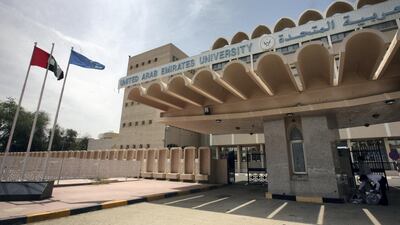
United Arab Emirates University in Al Ain has a strong standing in research and offers one of the country's main medicine degrees. Randi Sokoloff / The National -
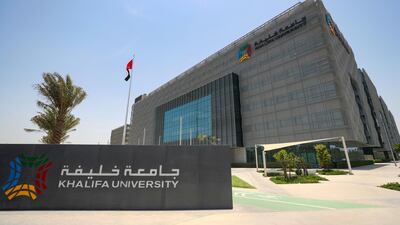
Khalifa University has rapidly climbed the global rankings in recent years but was knocked off the UAE top spot this year by UAEU. It boasts a nuclear engineering school staffed by top nuclear scientists, many of them from South Korea. Chris Whiteoak / The National -
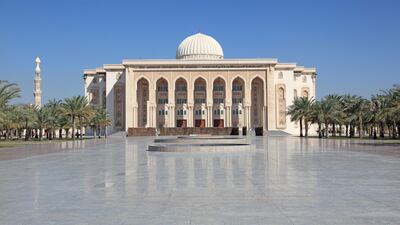
With its its striking architecture, American University of Sharjah offers about two dozen major degrees including humanities, engineering and business to about 5,000 students. It often scores strongly in global rankings and is particularly popular with Arab expat students. Alamy Photo -
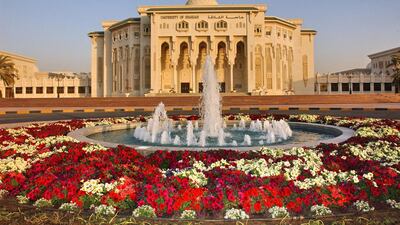
University of Sharjah was established in 1997 and is one of the country's largest, with about 14,000 students enroled. It also has campuses in the town of Dhaid and in Kalba, in Sharjah's east coast enclave. Wikicommons
Ms El Haite said in Morocco, many educational institutions were simply not ready. She highlighted the challenges faced by families who had several children and had to manage online education.
“Online courses were a nightmare,” she said.
Sonia Ben Jaafar, chief executive at Abdulla Al Ghurair Foundation for Education, one of the largest philanthropic education initiatives in the Arab world, said the old models of learning would not return after the pandemic ends.
"If we are serious about quality education for all, then we need to address the needs of marginalised communities," said Ms Ben Jaafar.
"There is a digital divide along socio-economic disparities that further created educational disparities.
"If we are serious about inclusive and equitable quality education for all, then we need the ecosystem that supports that vision."
Ms Ben Jaafar said UAE universities were already ahead of their peers in the region, since online learning had been on their agenda before Covid-19 and the Ministry of Education had accreditation channels for online degree programmes.
Prof Tony Chan, president of King Abdullah University of Science and Technology in Saudi Arabia, said the Covid-19 pandemic had forced universities into new territories.
“Hybrid is a very definite thing and there will be a mixture because we have seen the advantages,” said Prof Chan.
Instead of just putting a lecture series online, instructors used online spaces for brainstorming or discussions, he said.
"The other thing we are looking at is how to make our laboratories more remotely accessible."
Flexible working at universities was another aspect under consideration.
“Flexible working has been adopted by many companies around the world the because it’s good for work-life balance," he said.
“In the university setting, we are debating whether we can do a bit of that.”
The online conference continues until Thursday.

