

Pupils across the country return to the classroom for the first time since March in less than two weeks.
But it will be a very different experience for learners and staff alike as schools adopt strict safety measures due to the Covid-19 outbreak.
Earlier this week Abu Dhabi's Department of Education and Knowledge (Adek), the emirate's private schools regulator, set out final guidelines institutions must follow to keep pupils safe.
These included some changes on earlier recommendations.
So what are they?
The National explains.
What do the guidelines say?
Distance learning is now an option to all pupils for the entire first term, subject to co-ordination with the school.
Pupils will have a staggered start, with only those in kindergarten or foundation stage two to year six initially returning to school for in-person classes on August 30.
Children in foundation stage one, who will be three at the start of the school year, and all those in year seven and above will start face-to-face classes four weeks later.
Authorities said this will enable schools to "monitor and evaluate how students adapt and respond to the measures in place, and plan accordingly for the return of other students".
Staff and pupils will be subject to daily temperature checks, while physical distancing - of at least 1.5 metres - must be adhered to throughout the school day.
All sport and extracurricular activities will be suspended and alternate break times will be implemented to avoid overcrowding and support physical-distancing measures.

Which pupils will have to wear masks?
All children over the age of six will be required to wear masks inside school.
What about inside the classroom?
Pupils will be required to maintain social distancing of 1.5m at all times. Classes will be limited to 15 pupils. There will also be smaller bubbles of 10 for the youngest years. And breaks will be alternated to ensure social distancing.
What about Covid-19 testing?
Authorities earlier said all pupils and staff would have to be tested ahead of their return. That has now changed.
Instead, only children over the age of 12 must be tested, in addition to all staff.
-
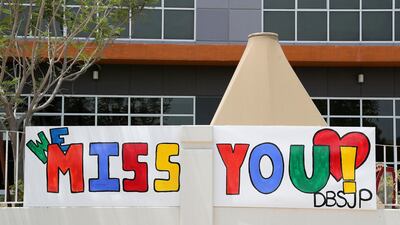
‘We Miss You’ banner posted on the boundary wall of the building. Pupils are being welcomed back after more than five months. -

The Dubai British School in Jumeirah Park will welcome back 1,230 pupils on August 30. 'The National' takes a look at the Covid-19 precautionary measures taken to ensure staff and pupil safety. Campuses are beign reopened after more than five months of closure. All photos by Pawan Singh / The National -
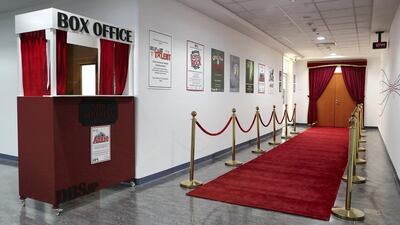
The entrance of the school will soon include thermal scanners. There are dedicated entry and exit points for primary and secondary sections. -
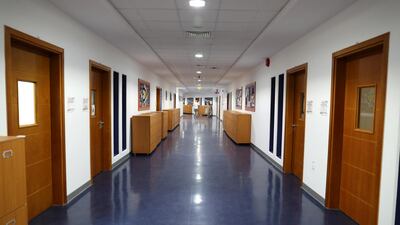
Storage units have been placed at a distance to prevent gathering. -
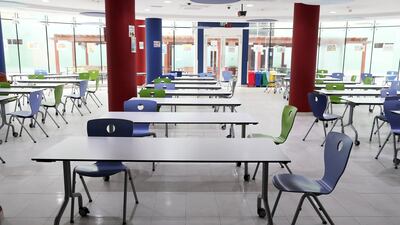
Tables in the canteen area are distanced by two metres. -
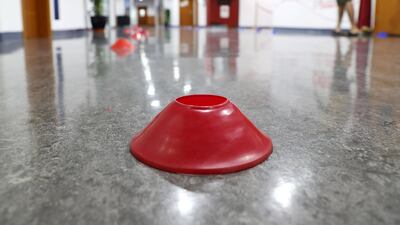
Markings have been placed in hallways throughout the school to encourage social distancing. -
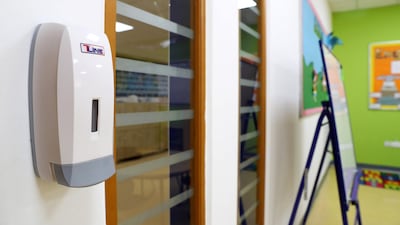
A total of 130 automatic hand sanitisers have been fitted across the school. -
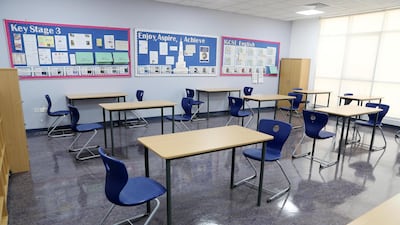
Desks inside classrooms have been distanced and only two pupils per table will be allowed. -
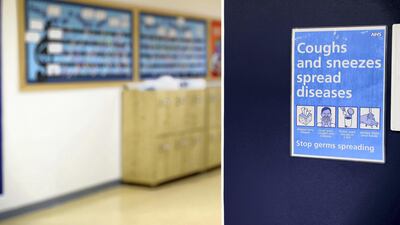
Posters promoting good hygiene are placed in hallways and different areas of the school. -
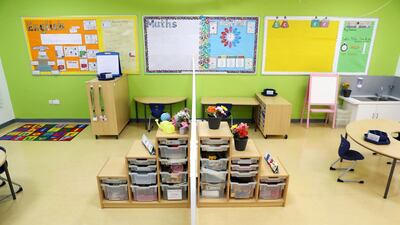
Partitions are placed in Year 1 classrooms.


Authorities have not yet clarified whether the test will be taken on site at schools, or whether parents should organise them separately.
“We haven’t received any recommendations, so I think we will be getting them soon,” said Dr Manoj Chandran, specialist paediatrician, Medcare Women and Children Hospital.
“In Medcare we are planning on some back-to-school campaigns so kids can be tested. I think all the hospitals will be doing this.”
It is also not yet clear whether it will be a swab test to check for current infection, a blood test to check for antibodies to the virus, or even a laser finger prick blood test to see whether they need further screening.
Doctors say it will most likely be a swab test, which is said to be the most reliable.
What is the swab test like, and when will they have to take it?
Doctors say it causes a “little discomfort,” but should not be painful if it is done properly. The person taking the test inserts a thin stick up the child's nose and swirls it around to obtain a sample. The test lasts a few seconds.
“If you are doing it properly from the nose, it should not cause severe pain. But it causes discomfort like sneezing. It’s a very thin swab. It’s not big,” said Dr Chandran.
A Dubai medic expects tests to be conducted between 48 to 72 hours before children return to the classroom.
“That’s what we follow for patients who are being operated on also, for patients who are having surgeries. They have a test 48 hours prior,” said Dr Jyoti Upadhyay, specialist, internal medicine, Aster Hospital, Mankhool, Dubai.
“If it’s longer than that and it’s negative, you never know if the patient is in contact with someone and they might catch it and be developing an infection by the time they return to school.
“So 48 hours will ensure there hasn’t been any recent exposure.”
How do parents reassure anxious children?
"I would probably tell my child in the simplest form, this is uncomfortable but it’s very short lived in terms of time," said Malak Kamel, a licensed psychologist and clinical director at Thrive Wellbeing Centre in Dubai.
"It’s not going to take more than 30 seconds or so. And just because things are uncomfortable doesn’t mean we can’t get through them."
She said coping statements could be helpful both before and during the procedure.
"This is where we can say things like 'this is tough, but so am I.' Or 'this is tough and I will feel better when this passes,' or 'this is for everyone’s safety,' or 'I can be anxious and still get through this."
Children who have been anxious about the test should take a moment to congratulate themselves, as it could help the next time around. Tests are expected to be done regularly.
"Taking a moment to reward yourself or taking a moment to remind yourself that you have accomplished something can ease the next time you have to do something similar," said Ms Kamel.
-

The first thermal gate has been installed at the school that can measure the temperature of hundreds of children passing through it quickly. Courtesy: Jumeira Baccalaureate School -
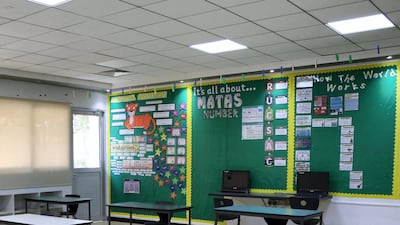
All desks in the classrooms have a distance of two metres. Courtesy: Jumeira Baccalaureate School -
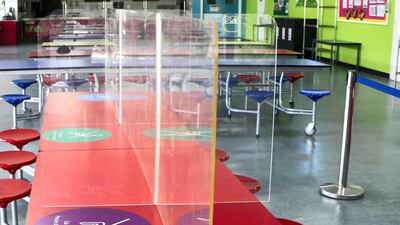
Plastic screens have been installed in the cafetaria to separate pupils. Courtesy: Jumeira Baccalaureate School -
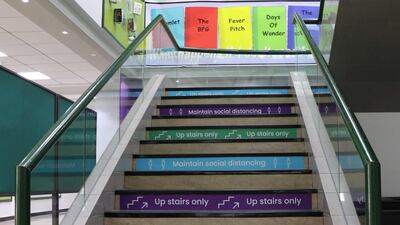
Markings on each step will help pupils remember not to get close to each other. Courtesy: Jumeira Baccalaureate School -
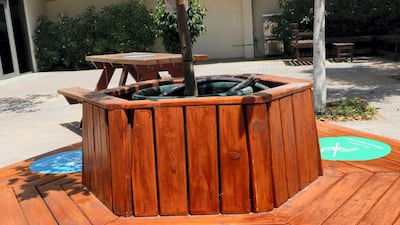
There are marking all around the school to remind pupils to maintain social distancing. Courtesy: Jumeira Baccalaureate School -

Several basketball hoops have been installed for pupils.Courtesy: Jumeira Baccalaureate School -
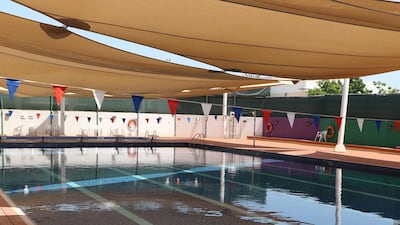
Lane markings will help pupils avoid coming in close contact with each other. Courtesy: Jumeira Baccalaureate School -
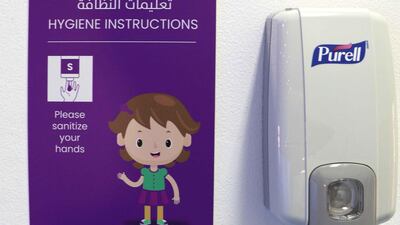
There are hand sanitiser stations at regular intervals so that pupils can clean their hands more often. Courtesy: Jumeira Baccalaureate School -
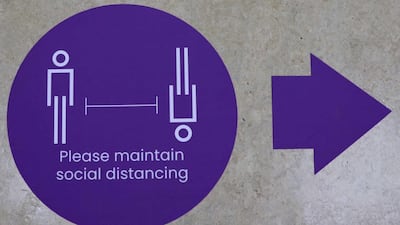
Markings show separate exit and entry points. Courtesy: Jumeira Baccalaureate School -
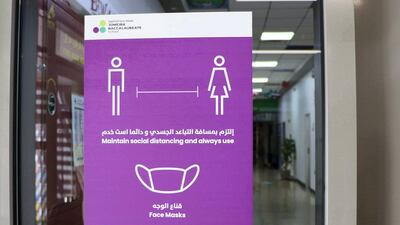
Markings to remind pupils the importance of precautionary measures. Courtesy: Jumeira Baccalaureate School -
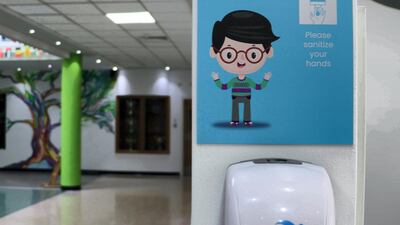
There are hand sanitiser stations at regular intervals so that pupils can clean their hands more often. Courtesy: Jumeira Baccalaureate School -
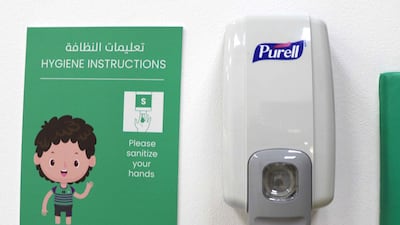
A hand sanitiser station outside a classroom. Courtesy: Jumeira Baccalaureate School -
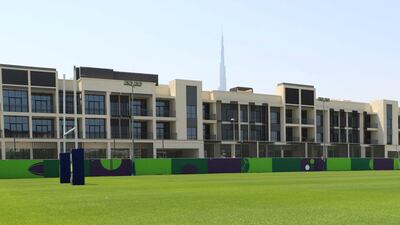
Marking to follow social distancing at the school. Courtesy: Jumeira Baccalaureate School -

Markings to show separate entry and exit points. Courtesy: Jumeira Baccalaureate School -

Floor markings at the school. Courtesy: Jumeira Baccalaureate School


Why are schools introducing these precautions?
Early in the outbreak, it was assumed children did not contract or transmit the virus easily as few fell ill.
Now experts say that was probably associated with the fact that schools were shut and families were shielding children from the virus.
More recent examples have shown just how easily it transmits between children.
“It is a highly contagious infection,” said Dr Chandran.
“If we don’t take precautions like physical distancing and masks, children can easily spread this infection.”
A summer camp held in Georgia, in the US, in June was a case in point.
Two days after campers arrived on site, and a week after staff and counsellors first gathered there, a single teenage counsellor developed symptoms and was sent home.
And within a few days, 344 children and staff had contracted the virus, which was almost half of all attendees. Researchers suspect the numbers were an underestimate as not everyone was tested. They did not wear masks or observe social distancing, underscoring how important precautionary measures are to prevent the spread of the virus.
What has happened in other countries where schools have reopened?
Denmark was the first country to welcome pupils back to the classroom in April. Children there practice social distancing, arrive at staggered times and are separated into micro groups of 12. The measures taken there have prevented an increase in cases.
However, the reopening of schools in Israel was associated with a significant rise in infections among pupils and staff. Experts say that could be because children were allowed to remove their masks during a heatwave, when the windows were also shut. Masks and the circulation of fresh air are both recommended to slow the spread of the virus.
And some schools in the US were shut within days of reopening because of outbreaks.
Mandatory masks, social distancing, and smaller class sizes are designed to prevent that from happening in the UAE.

