


As the queue forms to be the next president of Barcelona, following Tuesday's resignation by the beleaguered Josep Maria Bartomeu, potential candidates can all see clearly where the power really resides. It is with a single footballer. There is almost no issue as important in elections for the new president as Lionel Messi.
Messi, the greatest player in Barcelona’s history, directly accelerated Bartomeu’s departure. The now former president, who had served in the position since 2014, had hoped to complete a mandate due to expire next year. Yet once the club captain described the running of the club as “disastrous,” citing Bartomeu, his days were numbered.
Supporters mobilised to oust him after Messi reached such a low point of exasperation with the club, with the quality of the squad, and had developed such suspicion towards the board, that he asked to leave. Only when Bartomeu insisted Messi must honour a contract that has a season left on it and a buyout clause of €700 million ($822m) until next June did the skipper agree to stay.
So much for the antagonism, and a storyline that had Messi as the troubled hero versus Bartomeu the bad landlord who clumsily failed to appreciate the importance of the club’s icon. The landscape now changes abruptly for 33-year-old Messi. The elections for a new president are expected to take place in early January, by which time candidates will have privately sounded out the superstar about his intentions. Supporters will be anxious to know them, too.
What if Messi still wants to go, even when a fresh regime is in charge? Barcelonistas, the fans, might not be so sympathetic to the captain then.
It may be that the next president can and will persuade Messi there is a bold, compelling way to revive a Barca who have just finished a season without a trophy for the first time in 12 years. But the revival will have to be a relatively cut-price one.
The next president, however gifted, will be confronted with the same reality that Bartomeu was: that the era of big spending is over. The club’s debt is climbing towards €500m, with the coronavirus crisis having swelled the annual losses for the outgoing president’s final season, 2019/20.
____________________________
Barca fans protest outside Camp Nou
-
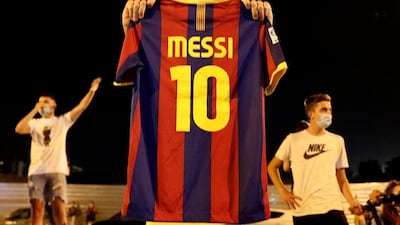
A Barcelona fan holds up a Lionel Messi shirt outside the Camp Nou after captain Lionel Messi told Barcelona he wishes to leave the club immediately, a source confirmed on Tuesday. Reuters -
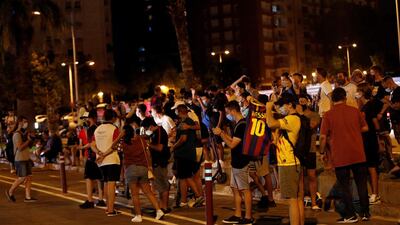
Dozens of FC Barcelona fans gather outside Camp Nou Stadium to demand the resignation of the club's president, Josep Maria Bartomeu. EPA -
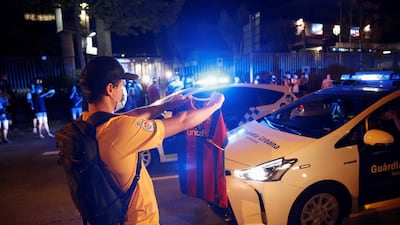
Dozens of FC Barcelona fans gather outside Camp Nou Stadium. EPA -
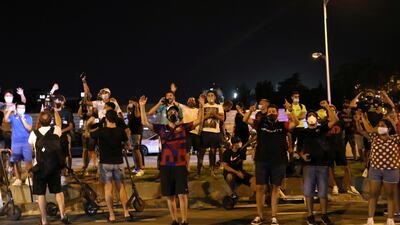
Barcelona fans react outside the Camp Nou after captain Lionel Messi told Barcelona he wishes to leave the club. Reuters -
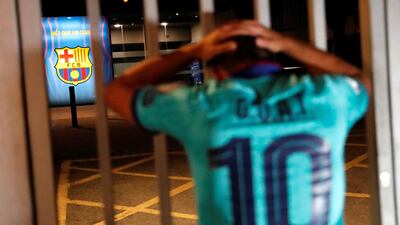
Barcelona fans gathered outside the Camp Nou. Reuters -
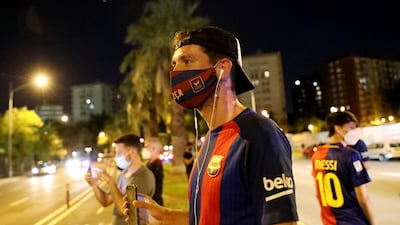
Barcelona fans mingle outside the Camp Nou. Reuters -
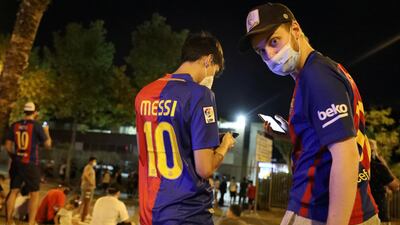
Barcelona fans are seen outside the Camp Nou. Reuters -
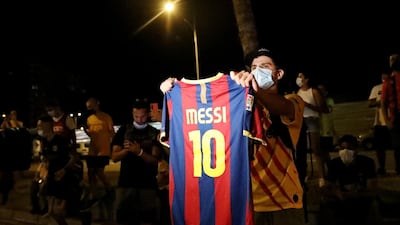
A Barcelona fan holds up a Lionel Messi shirt outside the Camp Nou. Reuters -
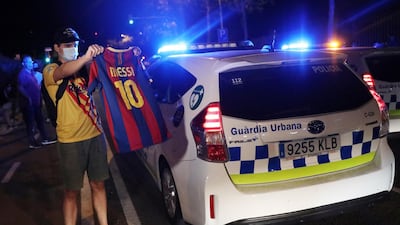
A Barcelona fan holds up a Lionel Messi shirt outside the Camp Nou. Reuters -
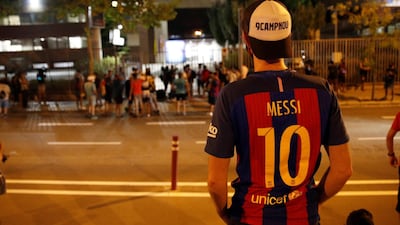
Dozens of FC Barcelona fans gathered outside Camp Nou Stadium. EPA -
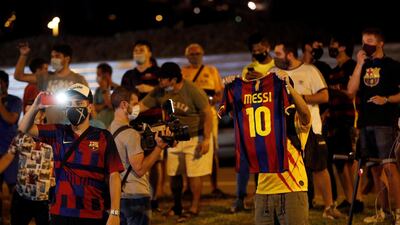
Dozens of FC Barcelona fans gather outside Camp Nou Stadium. EPA -
Barcelona fans are seen outside the Camp Nou. Reuters -
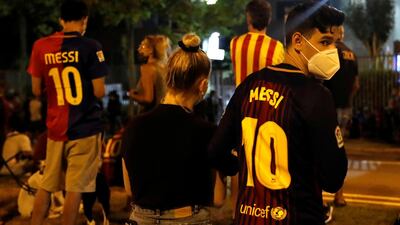
Barcelona fans are seen outside the Camp Nou. Reuters -
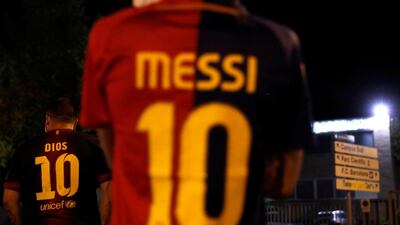
Barcelona fans are seen outside the Camp Nou. Reuters -
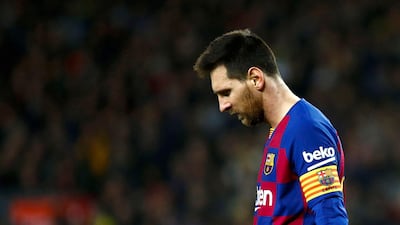
Lionel Messi endured a disappointing season at Barcelona. EPA


____________________________
That was the year that turned Messi from loyal, one-club man to wantaway desperado. It changed him.
The private, diffident professional became an outspoken combatant, calling out his bosses in the media when, among many points of contention, they failed to push through the big-name transfers the captain thought were needed, such as buying back Neymar from Paris Saint-Germain; or when the dressing-room was blamed for Bartomeu’s sacking of Ernesto Valverde as head coach in January.
That was not true, blasted Messi, adding that “we players are the first to take responsibility when we fall short. The sporting executives should also take responsibility and own up to decisions they have made.”
Those sharp ripostes to the board would come around more and more regularly. There has been a common theme from Messi: Barcelona’s standards have been steadily falling.
_________________________
Bayern 8, Barca 2
-
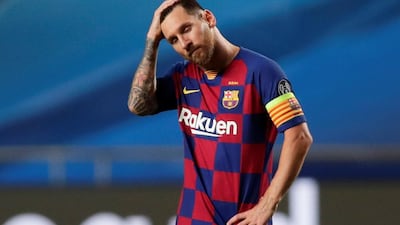
Barcelona's Lionel Messi looks broken after the 8-2 defeat by Bayern Munich. Reuters -
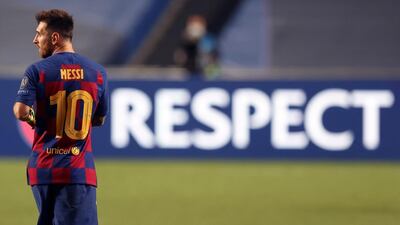
Lionel Messi leaves the pitch after the 8-2 humiliation. AP -
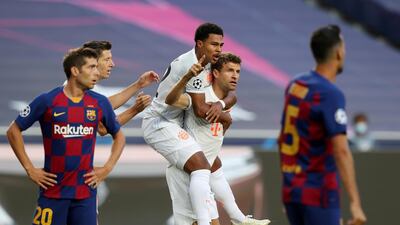
Thomas Muller celebrates giving Bayern a 1-0 lead. Reuters -
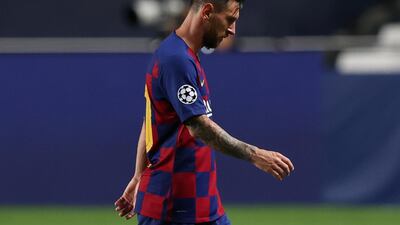
Lionel Messi after the match. Reuters -
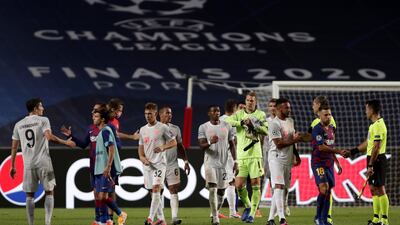
Bayern Munich celebrate. EPA -
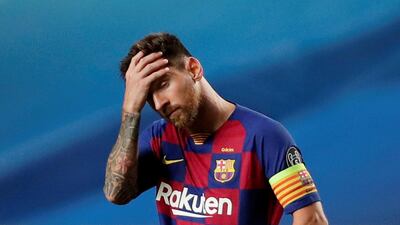
Barcelona star Lionel Messi's future at the club will now be under scrutiny. Reuters -
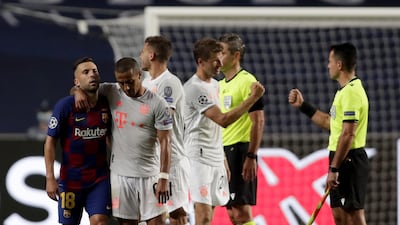
Bayern Munich players celebrate after the astonishing win. EPA -
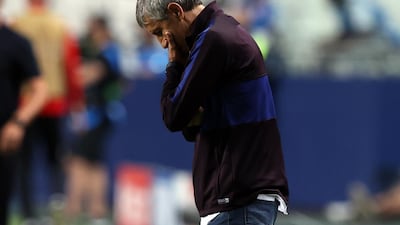
Barcelona coach Quique Setien. EPA -
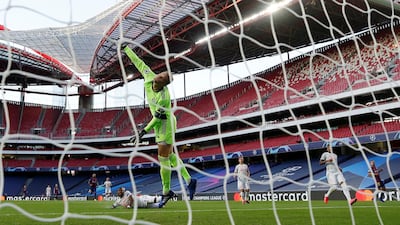
Bayern Munich's David Alaba scores an own goal to make the score 1-1. Reuters -
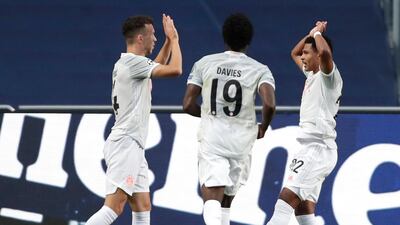
Croatian midfielder Ivan Perisic (L) celebrates putting Bayern 2-1 ahead. AFP -
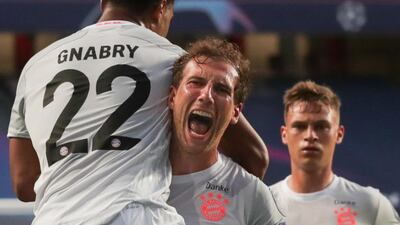
Serge Gnabry (L) after making the score 1-3. EPA -
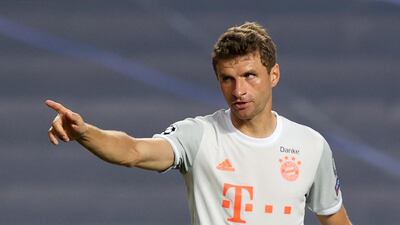
Thomas Mueller celebrates after making it 1-4. Reuters -
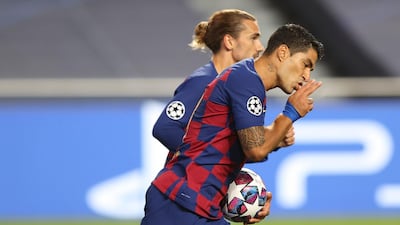
Luis Suarez, right, gives Barca brief hope after pulling a goal back, 2-4. PA -
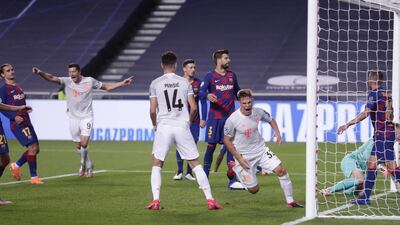
Joshua Kimmich makes it 2-5. EPA -
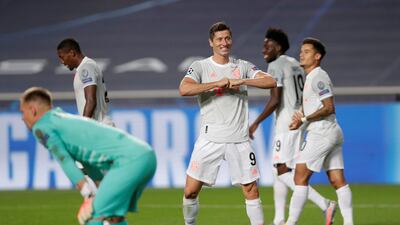
Robert Lewandowski on target for 2-6. Reuters -
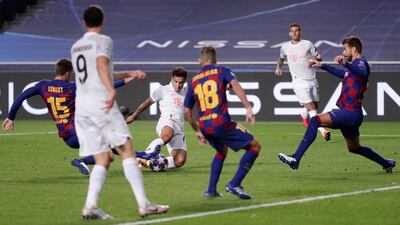
Bayern Munich's Philippe Coutinho gets in on the act, and it's 2-7. Reuters -
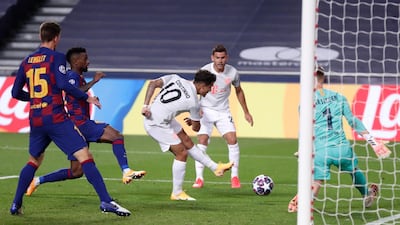
Coutinho again, and the Barca nightmare is over, final score 2-8. AP


_________________________
He had said so before Bayern Munich beat Barca 8-2 in the quarter-final of the Champions League in August. He hardly needed to say it again after that, a crushing night for Bartomeu, in which the president saw a player who he spent close to €150m on, Philippe Coutinho, scoring twice for Bayern, where Barca had loaned him after an unhappy 18 months as the most expensive signing in Barcelona history.
He saw a striker he had spent €120m on, Antoine Griezmann, left on the bench, barely a year after the Frenchman joined. Yet another, Ousmane Dembele, was already way out on the margins. Dembele’s €100m-plus recruitment has yielded only 36 Liga starts in well over three years as a Barcelona player.
The huge cost of those players are part of Bartomeu’s unhappy legacy. “It was time for him to go,” said Joan Laporta, a former Barca president from the successful period in which Messi came into the first team. Intriguingly, Laporta may well put his name forward to come back into the role.
Whoever takes over will need to be imaginative, or take some radical steps to make the club dominant enough in the transfer market to supply the sorts of teammates Messi would like, or indeed to buy in the type of player who can ease the impact of Messi’s departure, or eventual retirement.
One of Bartomeu’s last acts as president was to recommend the club push forward plans for a selective, lucrative European Super League, in which they would be members. “It would guarantee the club’s future financial stability,” he suggested.
But while the so-called Super League has powerful backing, it faces many hurdles before it can be more than just the dreamy plan of a cartel of leading clubs.
Messi will most likely be somewhere else before the Super League even has a prospective starting date.

