
Two days after Jurgen Klopp announced he would leave Liverpool at the end of the season, another vacancy will soon open up at a European superclub as Xavi confirmed on Saturday night he would step down at Barcelona.
The Spaniard, one of Barca's greatest ever players, took charge of the Catalan club in November 2021 and initially helped to steer a sinking ship, guiding Barcelona to La Liga glory in his first full season in charge.
However, after Saturday's 5-3 home defeat to Villarreal, Barca are now 10 points off leaders Real Madrid. They were also eliminated from the Copa del Rey on Thursday with a 4-2 defeat at Athletic Bilbao, meaning their only realistic hope of silverware lies in the Champions League – although given their current issues, Barca are considered outsiders for the trophy.
Barcelona were also comprehensively beaten by rivals Real in the Spanish Super Cup final in Riyadh earlier this month.
Soon after the loss to Villarreal, Xavi revealed he would leave Barcelona at the end of the current campaign, saying: "I think the club needs a change of dynamic."
What did Xavi say?
Xavi, whose contract runs until June 2025, pulled no punches in announcing his decision to cut short his time at Barcelona. He began by explaining that he had given everything and that he was leaving for the benefit of the club.
“I would like to announce that on 30 June I will not continue as coach of Barcelona,” he said. “We have been talking to the president [Joan Laporta], with Rafa Yuste [the vice-president], Alejandro Echevarria [an adviser], Deco [the sporting director] and part of the staff.
“The situation needs to change and as a cule [a Barcelona fan] I can’t allow this. I took this decision days ago, but it is time to make it public. I don’t want to be a problem for the club. [I am] thinking about the club, the good of the players, and the directors.
"As a club man, I think the best thing to do is go on 30 June. I will give my best in these four months; I still think we can complete a great season. I take this decision calmly; it’s common sense.”
However, Xavi refused to hold back on the working conditions he has encountered at Camp Nou.
“You often feel there is lack of respect, you feel that your work is not appreciated,” Xavi said. “It wears you down terribly, in terms of health, of mental health, your mood, your emotional state. I am a positive guy but the energy goes down, down, down, until the point at which you say: it makes no sense. It makes no sense to continue. That’s how I explain it.
“I decided it some time ago; the people closest to me know. It’s a situation that I think affects the club now. It affects me but when it affects the club I think I have to leave.”
Spanish Super Cup final player ratings
-
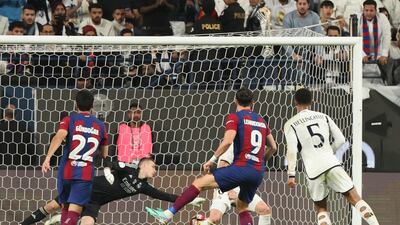
REAL MADRID RATINGS: The Ukrainian was entrusted with the gloves for the final after sitting out the semi-final, and delivered a reliable performance. Not much he could do about Lewandowski's goal. AFP -
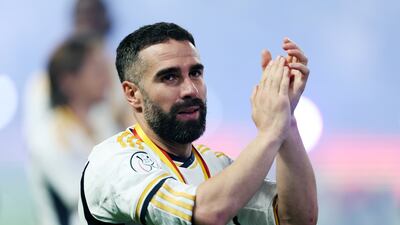
After his goal-scoring heroics in the semi-final, the Spanish full-back was more defensive against Barcelona. Did well to contain the pace and threat of Balde. Getty Images -

The German defender loves the big occasion and proved it again on Sunday night in Riyadh. Led the defence with a series of tackles and headers, while keeping Barca's attack largely quiet. AFP -
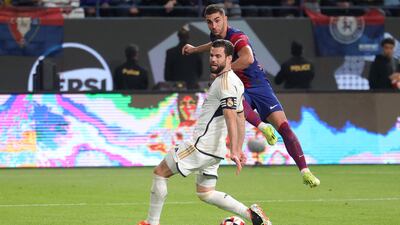
A solid display from the Real Madrid captain at the centre of his team's defence. AFP -

The French left-back was comfortably the winner in his duel with Torres, although he found it tougher up against substitute Yamal. Didn't matter, though, as Real had a comfortable lead by that point. AFP -
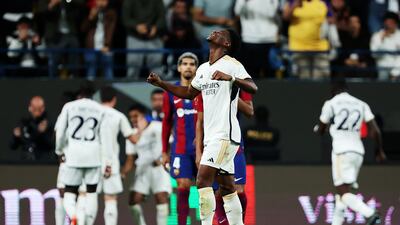
Effective at the base of Real Madrid's midfield, the Frenchman put in the tackles and protected his defence while keeping Pedri quiet. Getty Images -

The German continued to get booed by sections of the fans for his less-than-complimentary comments about the Saudi Pro League, but didn't let that impact his performance. Displayed his usual full array of passing ability. AFP -

A typically all-action, energetic performance from the Uruguayan who helped Real Madrid control the midfield. AFP -
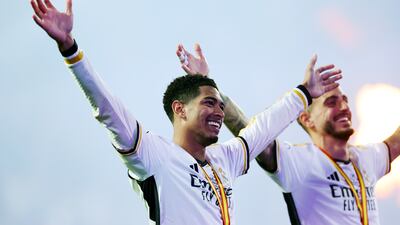
A data report last week named him the most valuable footballer on the planet, and the Super Cup final demonstrated why. Got the rout underway with a sublime assist for Vinicius' opening goal, and stayed composed on the ball throughout. Happy to run and dig in, too. Getty Images -
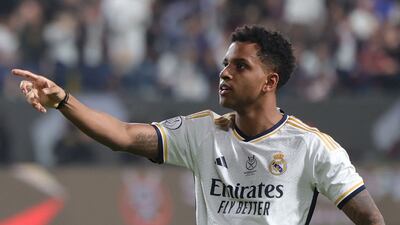
The Brazilian was a constant menace to the Barcelona defence. Bullied left-back Balde all game and ended the final with one goal and one assist. AFP -
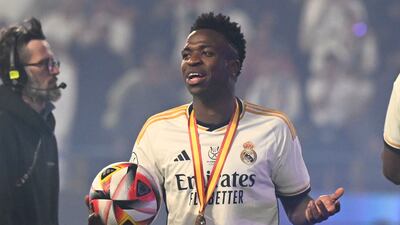
A hat-trick in a cup final against your fiercest rivals is as good as it gets. The Brazilian opened the scoring in the seventh minute when he sprinted clear and rounded Pena, and got his second just three minutes later. Completed his 39-minute hat-trick from the penalty spot to leave with a winner's medal and the match ball. EPA -
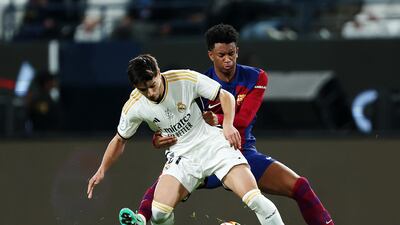
SUBS: (Rodrygo 77') Could have scored just moments after coming on, and remained a threat until the final whistle. Getty Images -
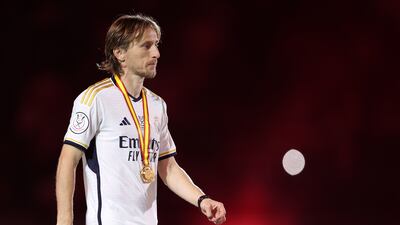
(Kroos 81') Brought his usual composure and experience to the team as Real looked to close out the victory. Getty Images -
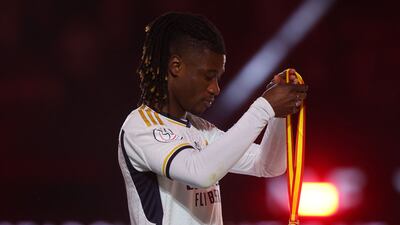
(Vinicius 82') A defensive switch from Carlo Ancelotti to ensure no late drama as Real eased to victory. AFP -

(Valverde 86') Provided fresh legs in midfield for the final few minutes. AFP -
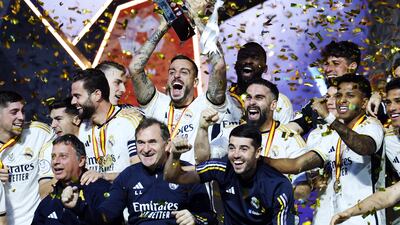
(Bellingham 86') No time to make an impact. Getty -
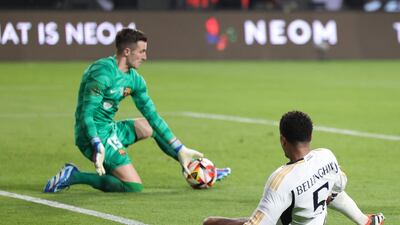
BARCELONA RATINGS: A horror first half as he conceded three goals to Vinicius in 32 minutes. The Brazilian had scored three goals total in his previous 15 clasicos. And it could have been much worse if Madrid were more clinical in their 4-1 win. Yet he wasn’t at fault for any of the goals. AFP -
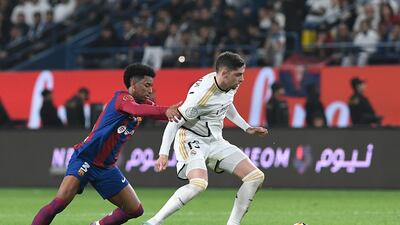
Part of a defence blitzed by Madrid’s counter attacks in front of the 23,977 crowd. The Catalans’ defence was continually pulled out of shape. Couldn’t get forward as he usually does. AP -
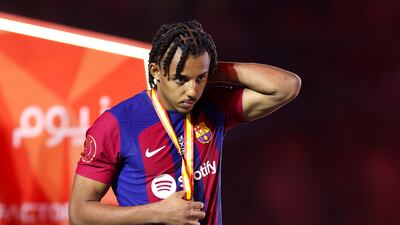
Couldn’t get to grips with Vinicius. Did get a foot to a 64th-minute Vinicius cross – but only enough to prod the ball straight to Rodrygo, who scored Madrid’s fourth. Blocked a Bellingham shot on the line. Getty Images -

Pulled wide and left a space behind him as Madrid flooded forward and their Brazilians scored all four goals. The positioning of Barcelona’s defenders cost them in the first half. AFP -
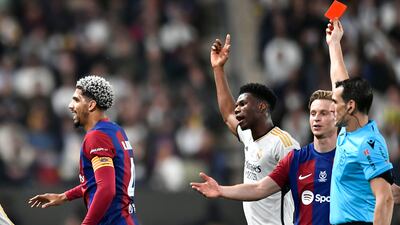
Gave away the penalty (and received a yellow card) for putting his arm around Vinicius, who then scored Madrid’s third before half time. Sent off after 71 minutes for kicking Vinicius as his frustration got the better of him. Usually Barcelona’s best defender, but not in Saudi Arabia. EPA -
![Cleared to play after an injury on Thursday, he’s lacking match fitness and it showed. A fit Pedri will help a Barcelona side who’ve missed him and will continue to miss Gavi. “We played the worst possible game,” said coach Xavi. “It started horribly, then we got a bit back to it but the 3-1 [goal] was extremely painful. We have not been comfortable at any time, we have dominated at times, but we missed the chances we got.” Getty Images](https://www.thenationalnews.com/resizer/v2/JVNEQEDR63EBOQRP3U34SQO33I.jpg?auth=850bdb53d1b5fcb7573e600adfe1255257ee7b8cc952b3e8d613a7ffefdfb06e&smart=true&width=400&height=225)
Cleared to play after an injury on Thursday, he’s lacking match fitness and it showed. A fit Pedri will help a Barcelona side who’ve missed him and will continue to miss Gavi. “We played the worst possible game,” said coach Xavi. “It started horribly, then we got a bit back to it but the 3-1 [goal] was extremely painful. We have not been comfortable at any time, we have dominated at times, but we missed the chances we got.” Getty Images -
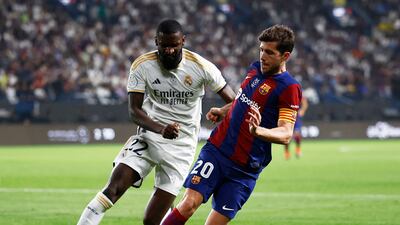
Anonymous and outshone by Kroos in a new low for Barcelona coach Xavi. Couldn’t cut out the balls to Bellingham. Reuters -
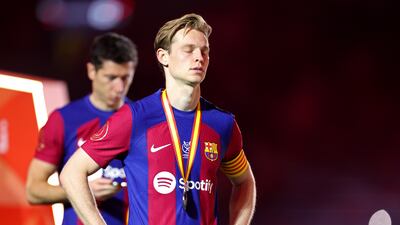
After a poor start for his team who were 2-0 down inside nine minutes, he helped Barcelona control possession in the first half, yet Madrid were content to counter with devastating effect. Getty Images -
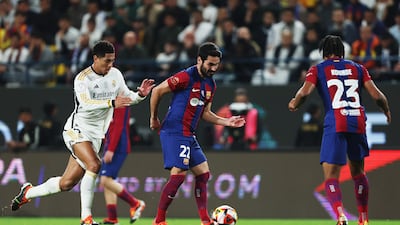
Outshone by his opponents who dazzled in white. Was out of position as Carvajal set up Rodrygo to score. Needs must means he’s played as a deep-lying playmaker in a side missing Sergio Busquets, yet he’s most effective further forward. Getty Images -
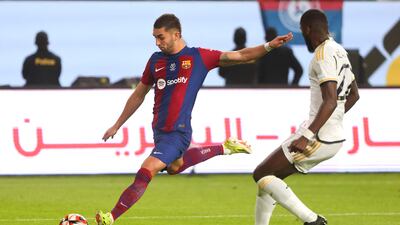
Was unfortunate not to score his side’s first goal but Lunin saved. Hit the woodwork but then Madrid scored four against Barca for the second time in three clasicos and Barcelona’s strikers are struggling to score. AFP -
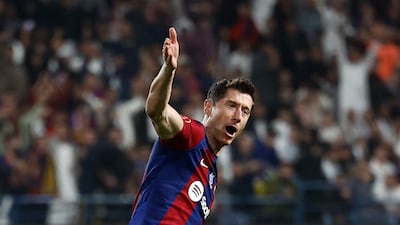
Still not at his best, but his low 33rd-minute effort from outside the area was Barcelona’s best moment of the game. Reuters -
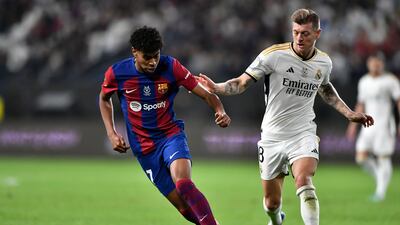
SUBS: (Roberto 61') Improved Barca but not by much. EPA -
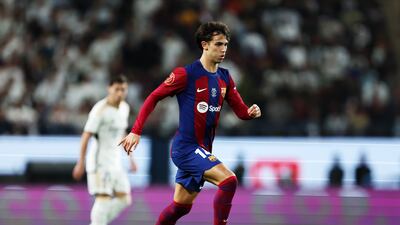
(Ferran 61') Showed energy as he ran towards goal, past two Madrid players and got a shot on target after 80. Scythed by Rudiger after the Portuguese had turned him – and he was rightly booked; Fermin Lopez: 5/10 (Pedri 61'). Getty Images


![Cleared to play after an injury on Thursday, he’s lacking match fitness and it showed. A fit Pedri will help a Barcelona side who’ve missed him and will continue to miss Gavi. “We played the worst possible game,” said coach Xavi. “It started horribly, then we got a bit back to it but the 3-1 [goal] was extremely painful. We have not been comfortable at any time, we have dominated at times, but we missed the chances we got.” Getty Images](https://www.thenationalnews.com/resizer/v2/JVNEQEDR63EBOQRP3U34SQO33I.jpg?auth=850bdb53d1b5fcb7573e600adfe1255257ee7b8cc952b3e8d613a7ffefdfb06e&smart=true&width=800&height=450)


How did it reach this point?
When Xavi returned to Barcelona 26 months ago, the club were in a mess. Predecessor Ronald Koeman was sacked with Barca ninth in La Liga and on the verge of exiting the Champions League at the group stage.
While the Dutchman, himself a Barca great as a player, could shoulder the blame for some of the immediate issues the team were facing, much of it was years in the making following a prolonged spell of financial mismanagement, which culminated in Lionel Messi leaving the club on a free transfer.
Xavi's arrival sparked an immediate improvement in form and the former midfielder led Barca to third in La Liga, although he could not salvage their Champions League campaign.
Given the promising early signs, the club decided to back Xavi in the transfer market, making funds available by essentially selling stakes in the club's future business. By activating these 'economic levers', Xavi was able to recruit the likes of Robert Lewandowski, Jules Kounde, and Raphinha for a combined $160 million, while Franck Kessie, Andreas Christensen, and Marcos Alonso were signed on free transfers.
The move was initially vindicated as Xavi last season led Barca to their first league title in three years, with Lewandowski firing 23 goals to claim Spain's "Pichichi" award for top goalscorer. Defensively, Barca were rock solid, conceding just 20 goals as they cantered to the title by 10 points.
However, the wheels have fallen off dramatically this season. Lewandowski, another year older at 35, has scored just eight La Liga goals in 19 appearances, while Barca have conceded nine more goals than the entirety of last season after just 21 games.
The club's perilous financial situation can again be looked at as a cause for their decline in results. While rivals Real Madrid were busy strengthening with Jude Bellingham – a revelation in his debut season – Barca were limited to free transfers.
That said, Xavi has also received criticism for muddled tactics, inconsistent lineups, and for struggling to imprint a clear playing style. There is also a feeling that not enough players have improved under his guidance. Of the seven managers to follow Pep Guardiola at Barcelona, Xavi has the lowest goals-per-game average of just 1.89.
The manager has also struggled for support in the boardroom. Key allies including sporting director Jordi Cruyff and director of football Mateu Alemany have both departed the club, while president Laporta has reportedly never been fully convinced that Xavi was the right man for the job.
Who next for Barcelona?
While the list of potential candidates to replace Klopp at Liverpool is extensive, there aren't as many immediately obvious options to succeed Xavi at the Camp Nou. Once considered one of the most coveted roles in football management, Barcelona will struggle to attract a top-tier manager due to their ongoing financial problems.
Girona's Michel would seem a logical target following the outstanding job he continues to do at another Catalan club. Playing in only their fourth season in La Liga, Girona have mounted an unlikely, yet sustained, title challenge while playing a modern and attractive brand of football. Only Bayern Munich (56) have scored more than Girona's 51 goals across Europe's top five leagues.
Should Barcelona wish to once again turn to one of their own, Las Palmas manager Garcia Pimienta would be a suitable successor. Like Girona, Las Palmas are punching above their weight in La Liga this season and Pimienta is earning plenty of plaudits for the style and identity of his team, much of it gleaned from his three decades within the Barcelona system, first as a player and then as coach at La Masia, the club's famed youth academy.
Another former player who might interest Barcelona is Thiago Motta, the Brazilian who played eight years for the club. After a rocky start to his managerial career, Motta has been working wonders in Italy with Bologna. Last season he led the club to a ninth-placed finish in Serie A – their highest in 11 years – and they are currently only two points off fourth this campaign.

What's next for Xavi?
It's difficult to assess at this stage what the future has in store for Xavi. The Spaniard was in the infancy of his managerial career at Qatar's Al Sadd when the SOS came from his boyhood club.
The job arguably came a little too early, given both his lack of experience and the trouble Barcelona were in, but he deserves immense credit for turning around their fortunes so quickly and making them league champions again.
Whether the steady decline of this season has impacted his wider standing in the game is too early to tell. After all, there is still half a season for Xavi to finish strongly and even potentially end his tenure with the club's sixth European Cup.
Should that happen, Xavi will have clubs clamouring to become their next manager. However, whether he views his long-term career in management, once he has left his dream job, remains to be seen.

