
For some, success at World Cups can be life-changing.
Would Imran Khan be Pakistan’s prime minister now if he had not captained the country’s cricket team to glory in 1992? Perhaps, but it is certainly a handy entry on his CV.
When Kapil Dev did similar in 1983, it altered not just his life, but the course of cricket history. The fact India is the seat of power in the game now largely can be traced back to that tournament 36 years ago.
Even one-off days in the sun can have lasting effects. Kevin O’Brien, the Irishman who holds the record for the fastest century in World Cups, says that day against England in 2011 was transformative for him.
Others are not so lucky. Saleem Raza was the man of the match when the UAE claimed their sole win to date at a World Cup, against the Netherlands in Lahore in 1996.
He scored 84 to inspire a seven-wicket win in the first official one-day international between sides from beyond the Test sphere. In the process, he hit six sixes in his innings, at a time when hitting six sixes in an innings was a rare feat.
Now, 23 years on, the champion of UAE cricket’s greatest day is unemployed. Since losing the job he held in Abu Dhabi for nearly 29 years in 2017, he is back at home in Lahore trying to provide for his family while meeting medical costs for his failing eyesight, which has been brought on by hereditary diabetes.
“Diabetes runs in the family - both my parents had it,” Raza, 54, said on the telephone from Lahore, over the din of heavy rain on the roof of his house.
“Two years ago, I began to a struggle at work after all of a sudden I started to have trouble with both eyes.
"I had prepared to visit Pakistan to get some treatment when my employers terminated my contract. So I returned home in bad shape, with the kids being young, too.”
Raza, who has four daughters, has been able to lean on support from some well-connected friends.
Misbah-ul-Haq, who Raza befriended after recruiting him for Ramadan, night-cricket in Abu Dhabi, long before he became famous as Pakistan’s captain, helped raise substantial funds for the medical treatment.
Abdul Qadir, the great Pakistan leg-spinner who was a clubmate of Raza’s in their early days in Lahore, has helped, too – and even introduced him to prime minister Imran.
“This helped me get one of my eyes operated upon and a lens fixed,” Raza said. “I am still undergoing treatment. It is an ongoing process. I get injections for both eyes, each costing me 15,000 Pakistan rupees [Dh363]. This is a six-month procedure, and I have four more months to go before I am done with them.”
Raza only stumbled – almost literally – on the root of his condition when he was playing a social cricket match in the capital two years ago.
“I actually had no idea my problem was diabetes,” he said. “I was fielding during a match in 2017 in Abu Dhabi – when my crisis had already begun – and I dived for the ball and got a nasty cut on my shin, which required stitches.
“When I got my blood pressure and sugar levels checked, I was told I had diabetes. I said, ‘That's impossible’, so they showed me the report.

“Thereafter they put me on insulin. That helped, but by then my eyes had been affected. It was like I had become blind. I couldn't see a thing. My vision was cloudy.
“It was then determined that there was no option other than to get an operation done to get lenses on. That's when I started to receive all this support.”
The troubles of today could not be further removed from the glories of his younger days, playing cricket in the UAE.
Raza had been a player of great promise in his homeland, and was even part of Pakistan’s national team for matches against West Indies and England.
He was one of five outstanding players competing for one of the two opening berths for Pakistan. Ramiz Raja and Saeed Anwar were the two who were generally selected, so Raza opted to expand his horizons for cricket and employment.
Sharjah cricket was at its zenith at the time, and he moved to the UAE, at the suggestion of his close friend Shahzad Altaf, a colleague in the 1996 UAE side, who had made the move some time previously.
“I played for them [Sharjah] for a year, without a job,” Raza said. “They used to pay me Dh400 per match, and that was enough to get by for a week. I was also looking for a job, and I got one at Etihad.”
Domestic cricket was blossoming, thanks almost exclusively to the recruiting of talented players from the subcontinent by cricket-loving employers.
Even though international cricket regularly visited Sharjah, the merit of the newly-formed UAE team remained a complete unknown to their rivals.
When they arrived at the 1994 World Cup qualifier in Kenya – with the UAE’s tour costs underwritten by captain Sultan Zarawani – the mystery surrounding them worked in their favour.
“No one knew anything about this dark horse, UAE, while the likes of Kenya, Bangladesh and Netherlands had matured cricket-wise,” Raza said.
“We were essentially a group of Indian, Pakistani and Sri Lankan players who had played good cricket in their home countries before. But the team were not really rated, with some even wondering 'What country is this?'

“For instance, the Kenyans didn't know about the UAE, or where this UAE was. They knew about Sharjah and that cricket gets played there, but they didn't know the players. However, we were mature and experienced having played elsewhere.”
UAE breezed through the competition, winning nine matches in a row, including the final against hosts Kenya, to seal a World Cup debut two years later.
For Raza, that meant a return to his hometown, as UAE played two group matches in Lahore. The second of them was against a Netherlands side the UAE had beaten in the semi-final of the qualifier in Kenya.
“Both teams were sat next to each other at breakfast, and the Holland guys were calling our game the 'Bottom Cup final',” Raza said.
“Our group had such big teams as New Zealand, England, South Africa, we couldn't even dream of beating them.
“So there was bound to be competition between the bottom two sides, with the aim to win at least one match.
“At breakfast, I told Holland fast bowler Paul-Jan Bakker, 'When you bowl, I'll send the ball out of the ground in the first over'. I hit him for two sixes in his first two overs.
“We were told if one of our batsmen scored a hundred, he would be given Dh100,000.
“When I heard about it, I said the aim was to win the match. Anyway, I got out on 84. But they paid Dh50,000 because we won. Which was the point, right? To win.”
It might be pushing it to suggest it inspired a generation of UAE cricketers, but some did take note.
“When I started playing back in 1999 in Abu Dhabi, I played against him [Raza],” said Amjad Javed, a Dubai-born fast-bowler who was in the side the next time UAE played at a World Cup, in 2015.
__________________________
The Cricket Pod: Mohammed Amir's Pakistan return for World Cup cannot come soon enough
__________________________
“I scored 80 in that match, and I didn’t know who he was until he came and congratulated me. I was 18 then, and my teammates told me about him, and I was like, ‘He really plays for UAE’.
“He was the first one I had met who represented the national team, and from that day I started believing I could also make it happen one day.”
Raza and his 1996 teammates had hoped that would be the start of something for the game here, but it took UAE 19 years to get back to a World Cup.
“We thought of this as a historic moment for the country and the game,” Raza said. “We continued to play for another eight years, but we had no sponsors. I didn't have so much of a problem since I had the support of sponsors but we [the team] didn't get a penny.
“We missed qualifying for two World Cups during that time. If we work hard and perform well in the game but don't receive anything from it, what's the point of playing?
“We have all been there to find work - although in my case I was called to go play for the UAE. The first four to five years were great. But it went bad after 1996.”
____________
Cricket World Cup: Where are they now? Khurram Khan and the 2015 UAE squad
-

Mohammed Tauqir: Controversially brought back to captain the side, having been absent from the team for some years. The relationships manager for a bank now serves as one of the selectors for the national team. Getty Images -
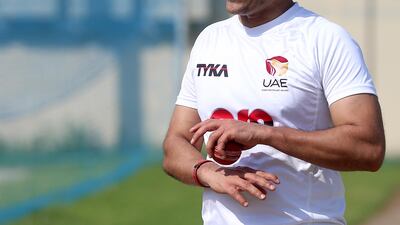
Khurram Khan: As with Tauqir, Khurram is now part of the selection panel for the UAE team – when his job with Emirates airline permits - having ended arguably the greatest of all UAE international careers less than three months after the 2015 World Cup. Satish Kumar / The National -
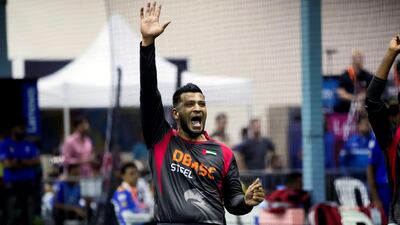
Fahad Al Hashmi: The former policeman snapped cruciate ligaments at the World Cup while fielding a ball off AB de Villiers in New Zealand. He battled back to represent UAE at the indoor cricket version of the World Cup, in Dubai in 2017. Chris Whiteoak / The National -
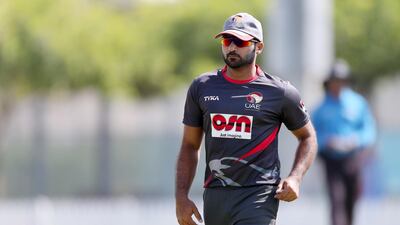
Amjad Ali: The classy left-handed batsman recently left for Lahore after more than 16 years as a resident in Dubai, having lost his job with United Bank Limited. He is back here playing Ramadan cricket as a tourist, and hopes to return to live permanently. Pawan Singh / The National -
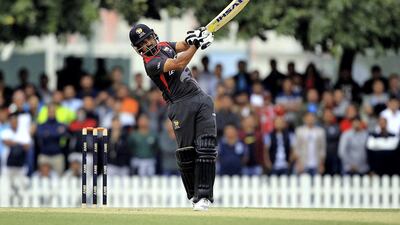
Shaiman Anwar: Shaiman’s liking for the big stage manifested itself when he became the first UAE player to score a World Cup century, against Ireland in Brisbane. He remains a centrally contracted member of the national team. Satish Kumar for The National -

Nasir Aziz: The off-spinner is still just 32, but has not played for the national team since a home series against Hong Kong in November 2015. He remains a regular wicket-taker in domestic cricket, where he plays for Defenders CC. Pawan Singh / The National -
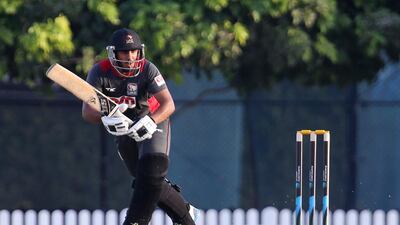
Andri Berenger: The Dubai-born opener played at an Under 19 World Cup for Sri Lanka, where he went to school from the age of 14, but represented UAE at the real thing in 2015. He left again not long after, has played in Sri Lanka, Australia and Qatar since. Pawan Singh / The National -
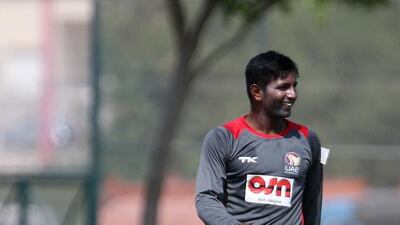
Krishnachandran Karate: The Keralite all-rounder is still in Dubai, working in customer services for Dnata, the airport services arm of Emirates. He plays for Fly Emirates in domestic cricket, and, now aged 34, craves a return to the national team. Pawan Singh / The National -

Manjula Guruge: The left-arm swing bowler left UAE to return to his native Sri Lanka in November 2016. He subsequently played two seasons of grade cricket in South Australia, in 2017 and 2018, and is looking to return there again. AFP -

Saqlain Haider: Made a first-class century for UAE in 2017, but has barely been seen in national team colours since. The wicketkeeper lost his banking job last year, and he continues to covet an Emirates Cricket Board central contract. Christopher Pike / The National -
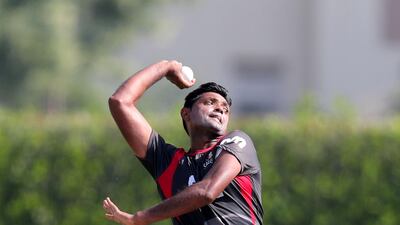
Amjad Javed: One of the greats of UAE cricket officially retired at the end of last year, aged 38. The Dubai-born fast bowler works as a cargo loadmaster for Emirates airline, a job he maintained throughout his playing career. Chris Whiteoak / The National -
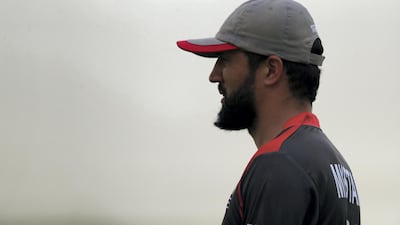
Rohan Mustafa: A one-handed catch to get India’s Shikhar Dhawan in Perth was the bright spot of an otherwise forgettable World Cup. Since then he has represented the team with great distinction, and captained the team until the end of last year. Chris Whiteoak / The National -
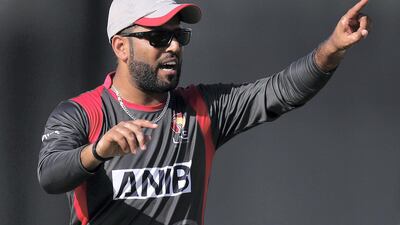
Mohammed Naveed: Took up the UAE captaincy this year after Mustafa’s broadly-successful spell in charge was ended by a code of conduct breach. Former tape-ball cricketer Naveed remains the country’s premier fast bowler. Chris Whiteoak / The National -

Swapnil Patil: Back in 2015, the India-born wicketkeeper was a mainstay of the side. He was due to be handed one of the first UAE central contracts, but was then ruled ineligible for selection on residency grounds. Jeffrey E Biteng / The National -
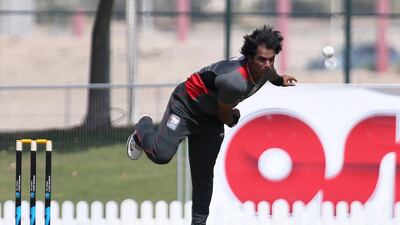
Kamran Shahzad: UAE had high hopes for the powerfully-built fast-bowler, but he only played one game at the World Cup because of a chronic knee injury. He is now back living in his native Pakistan. Pawan Singh / The National -
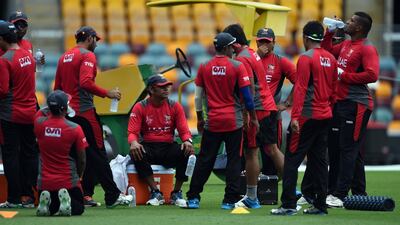
Coach: Aaqib Javed: UAE played at three world tournaments on Aaqib’s watch – in 50-over cricket, Twenty20, and Under 19. He left after overseeing qualification for the 2016 Asia Cup, and is now in charge of Pakistan Super League franchise Lahore Qalandars. AFP



