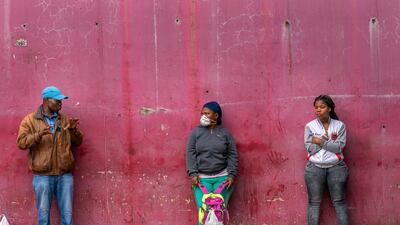
As many countries continue to struggle to contain the ongoing spread of the novel coronavirus and keep their populations healthy, some nations are seizing upon the crisis to transform how government and the economy operate. Across the world’s democracies, panicked citizens are giving up civil liberties such as privacy in an effort to track the virus’s spread. In others, the crisis contains an ironic silver lining. Simply put, some nations are in desperate need of a profound transformation. South Africa is one such place.
This is not to deny the gravity of this health crisis. There is no denying the possibility that Covid-19 could bring wholesale destruction to South Africa and many other countries on the African continent. A struggling economy compounded by a decade of mismanagement and sky-high unemployment is the last place that could benefit from a once-in-a-century health emergency. Throw into the mix a large population of immunocompromised citizens due to HIV, and the situation is downright dire.
According to the OECD, governments across Africa spend roughly $12 per capita per year on health care, compared with more than $4,000 in the United Kingdom. Some countries have less than 100 ventilators on hand with little recourse to purchase additional supplies.
Leading the continent’s response to the crisis, South Africa’s President Cyril Ramaphosa announced a strict nationwide lockdown more than 10 days ago. Beginning on March 26 and lasting to April 16, the lockdown is far more serious than similar examples in the West. The government has imposed restrictions on everything from walking your dog to purchasing cigarettes.
This is no small feat in a country like South Africa, which has a sordid history of lockdowns and curfews from the Apartheid era. In densely populated poor slums, moreover, people do not have the ability to stockpile food and social isolation is impossible in such cramped living quarters.
Cyril Ramaphosa has taken few critical measures to triage the economy since he came to power more than two years ago
The lockdown announcement was hailed by a broad section of South African society and virtually all political parties. Glowing articles in the Western press have praised Mr Ramaphosa’s leadership, despite the toll it will take on the country’s already fragile economy.
Last week, Moody’s became the final major credit agency to downgrade the country’s investment grade to junk status. This is a dreaded development for any economy, and triggered an outflow of passive investment income. The South African rand, which has been one of the worst-performing emerging market currencies, has now lost close to 40 per cent of its value to the dollar since January.
But here is the silver lining. This type of dramatic and deep shock to the economy was perhaps the only thing that could bring about systemic change. Mr Ramaphosa was elected on a platform of reforming the economy and reversing the damage his predecessor Jacob Zuma wrought through mismanagement, corruption, and cronyism. But his efforts have been stifled by political infighting, internal corruption in his party, and the outsized power of several unions. Few critical measures have been taken to triage the economy since he came to power more than two years ago.
Consider the fledging state-owned airline South African Airways. Mired in debt, the state has essentially been forced to keep pumping money into the carrier. The Covid-19 crisis is wreaking havoc on the global aviation industry and might just be the nail in SAA’s coffin. Most economists agree that the airline's collapse is a necessary step in any economic recovery.
The national power utility, Eskom, is another state-owned enterprise that is benefiting from the Covid-19 crisis. Due to its ageing infrastructure, Eskom has been forced to implement rolling blackouts through the country, which has humbled the manufacturing sector. With heavy industries shuttered for three weeks, Eskom has been able to conduct several repairs to the power grid that will at least buy more time while a political decision is made about future investment in energy.
Mr Ramaphosa himself is likely the greatest winner in this crisis, depending upon how the next several months unfold. His position has been strengthened as opposition parties have been forced to simply fall in line behind the commander-in-chief. While there have been widespread reports of excessive police brutality in administering the lockdown, political goodwill remains strong across various sectors of society.
Thus far, the lockdown has been able to flatten the curve of infected people and the government is creatively re-tooling testing kits for TB to be used on possible coronavirus patients. But anything can change and given the vicious spread of the disease, no official is ready to say that South Africa has reached the peak. Covid-19 is undoubtedly the most severe crisis democratic South Africa has faced in its short history. But this freak event might be the catalyst the country needs to overcome its man-made crisis. As we consider the post-Covid-19 geopolitical landscape, the changes taking place in South Africa facilitate a critical preview of the destruction and possible resurrection this crisis is creating.
Joseph Dana is the editor of emerge85, a project exploring change in the emerging world and its global impact

Four reasons global stock markets are falling right now
There are many factors worrying investors right now and triggering a rush out of stock markets. Here are four of the biggest:
1. Rising US interest rates
The US Federal Reserve has increased interest rates three times this year in a bid to prevent its buoyant economy from overheating. They now stand at between 2 and 2.25 per cent and markets are pencilling in three more rises next year.
Kim Catechis, manager of the Legg Mason Martin Currie Global Emerging Markets Fund, says US inflation is rising and the Fed will continue to raise rates in 2019. “With inflationary pressures growing, an increasing number of corporates are guiding profitability expectations downwards for 2018 and 2019, citing the negative impact of rising costs.”
At the same time as rates are rising, central bankers in the US and Europe have been ending quantitative easing, bringing the era of cheap money to an end.
2. Stronger dollar
High US rates have driven up the value of the dollar and bond yields, and this is putting pressure on emerging market countries that took advantage of low interest rates to run up trillions in dollar-denominated debt. They have also suffered capital outflows as international investors have switched to the US, driving markets lower. Omar Negyal, portfolio manager of the JP Morgan Global Emerging Markets Income Trust, says this looks like a buying opportunity. “Despite short-term volatility we remain positive about long-term prospects and profitability for emerging markets.”
3. Global trade war
Ritu Vohora, investment director at fund manager M&G, says markets fear that US President Donald Trump’s spat with China will escalate into a full-blown global trade war, with both sides suffering. “The US economy is robust enough to absorb higher input costs now, but this may not be the case as tariffs escalate. However, with a host of factors hitting investor sentiment, this is becoming a stock picker’s market.”
4. Eurozone uncertainty
Europe faces two challenges right now in the shape of Brexit and the new populist government in eurozone member Italy.
Chris Beauchamp, chief market analyst at IG, which has offices in Dubai, says the stand-off between between Rome and Brussels threatens to become much more serious. "As with Brexit, neither side appears willing to step back from the edge, threatening more trouble down the line.”
The European economy may also be slowing, Mr Beauchamp warns. “A four-year low in eurozone manufacturing confidence highlights the fact that producers see a bumpy road ahead, with US-EU trade talks remaining a major question-mark for exporters.”
Temple numbers
Expected completion: 2022
Height: 24 meters
Ground floor banquet hall: 370 square metres to accommodate about 750 people
Ground floor multipurpose hall: 92 square metres for up to 200 people
First floor main Prayer Hall: 465 square metres to hold 1,500 people at a time
First floor terrace areas: 2,30 square metres
Temple will be spread over 6,900 square metres
Structure includes two basements, ground and first floor
Vidaamuyarchi
Director: Magizh Thirumeni
Stars: Ajith Kumar, Arjun Sarja, Trisha Krishnan, Regina Cassandra
Rating: 4/5
Results
%3Cp%3E%0D%3Cstrong%3EElite%20men%3C%2Fstrong%3E%0D%3Cbr%3E1.%20Amare%20Hailemichael%20Samson%20(ERI)%202%3A07%3A10%0D%3Cbr%3E2.%20Leornard%20Barsoton%20(KEN)%202%3A09%3A37%0D%3Cbr%3E3.%20Ilham%20Ozbilan%20(TUR)%202%3A10%3A16%0D%3Cbr%3E4.%20Gideon%20Chepkonga%20(KEN)%202%3A11%3A17%0D%3Cbr%3E5.%20Isaac%20Timoi%20(KEN)%202%3A11%3A34%0D%3Cbr%3E%3Cstrong%3EElite%20women%3C%2Fstrong%3E%0D%3Cbr%3E1.%20Brigid%20Kosgei%20(KEN)%202%3A19%3A15%0D%3Cbr%3E2.%20Hawi%20Feysa%20Gejia%20(ETH)%202%3A24%3A03%0D%3Cbr%3E3.%20Sintayehu%20Dessi%20(ETH)%202%3A25%3A36%0D%3Cbr%3E4.%20Aurelia%20Kiptui%20(KEN)%202%3A28%3A59%0D%3Cbr%3E5.%20Emily%20Kipchumba%20(KEN)%202%3A29%3A52%3C%2Fp%3E%0A
Why are asylum seekers being housed in hotels?
The number of asylum applications in the UK has reached a new record high, driven by those illegally entering the country in small boats crossing the English Channel.
A total of 111,084 people applied for asylum in the UK in the year to June 2025, the highest number for any 12-month period since current records began in 2001.
Asylum seekers and their families can be housed in temporary accommodation while their claim is assessed.
The Home Office provides the accommodation, meaning asylum seekers cannot choose where they live.
When there is not enough housing, the Home Office can move people to hotels or large sites like former military bases.
SPECS
%3Cp%3E%3Cstrong%3EEngine%3A%20%3C%2Fstrong%3E4-litre%20flat-six%0D%3Cbr%3E%3Cstrong%3EPower%3A%20%3C%2Fstrong%3E525hp%20(GT3)%2C%20500hp%20(GT4)%0D%3Cbr%3E%3Cstrong%3ETorque%3A%20%3C%2Fstrong%3E465Nm%20(GT3)%2C%20450Nm%20(GT4)%0D%3Cbr%3E%3Cstrong%3ETransmission%3A%20%3C%2Fstrong%3ESeven-speed%20automatic%0D%3Cbr%3E%3Cstrong%3EPrice%3A%20%3C%2Fstrong%3EFrom%20Dh944%2C000%20(GT3)%2C%20Dh581%2C700%20(GT4)%0D%3Cbr%3E%3Cstrong%3EOn%20sale%3A%20%3C%2Fstrong%3ENow%0D%3Cbr%3E%3C%2Fp%3E%0A
Farage on Muslim Brotherhood
Nigel Farage told Reform's annual conference that the party will proscribe the Muslim Brotherhood if he becomes Prime Minister.
"We will stop dangerous organisations with links to terrorism operating in our country," he said. "Quite why we've been so gutless about this – both Labour and Conservative – I don't know.
“All across the Middle East, countries have banned and proscribed the Muslim Brotherhood as a dangerous organisation. We will do the very same.”
It is 10 years since a ground-breaking report into the Muslim Brotherhood by Sir John Jenkins.
Among the former diplomat's findings was an assessment that “the use of extreme violence in the pursuit of the perfect Islamic society” has “never been institutionally disowned” by the movement.
The prime minister at the time, David Cameron, who commissioned the report, said membership or association with the Muslim Brotherhood was a "possible indicator of extremism" but it would not be banned.
Skoda Superb Specs
Engine: 2-litre TSI petrol
Power: 190hp
Torque: 320Nm
Price: From Dh147,000
Available: Now
UAE currency: the story behind the money in your pockets
Brief scoreline:
Liverpool 2
Mane 51', Salah 53'
Chelsea 0
Man of the Match: Mohamed Salah (Liverpool)
Brief scores:
Arsenal 4
Xhaka 25', Lacazette 55', Ramsey 79', Aubameyang 83'
Fulham 1
Kamara 69'
The distance learning plan
Spring break will be from March 8 - 19
Public school pupils will undergo distance learning from March 22 - April 2. School hours will be 8.30am to 1.30pm
Staff will be trained in distance learning programmes from March 15 - 19
Teaching hours will be 8am to 2pm during distance learning
Pupils will return to school for normal lessons from April 5
