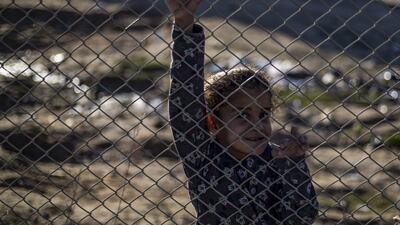

Last Thursday, UN counter-terrorism chief Vladimir Voronkov said that 700 people had died in the Syrian camps of Al Hol and Roj from lack of food and medicine. Humanitarian workers have described these camps as "perilously overcrowded", with one speaking of "dramatic mortality rates", according to the International Crisis Group.
For more than a year, nearly 70,000 people in Al Hol, mostly families of ISIS members, have been living in an open-air prison. There is no trial in sight to end their plight, should they be found innocent, or to hold them to account of any crimes they may have committed.
The first people to suffer from inhumane detention are children, who constitute more than half of the camp's population. They are the innocent victims of extremist parents, now paying for crimes they did not commit.
ISIS lost control of its last Syrian bastion last March, but the group once controlled a vast territory spanning parts of Iraq and Syria. Its reign of violence and dispossession is now over, but there is still a risk that the group might resuge.
The hardships of camp dwellers echo that of ISIS suspects in prisons run by the US-backed Syrian Democratic Forces in Syrian Kurdistan, none of whom have been tried. About 12,000 men and boys suspected of ISIS affiliation are currently held by Kurdish authorities, which also manage the Al Hol and Roj camps. Photographs of the detained depict emaciated figures sitting in overcrowded cells, waiting. In May, ISIS suspects rioted with some holding placards demanding that their human rights be respected. It may seem hypocritical for suspected terrorists to plead for human rights. Yet none of the jailed have been tried or had a chance to defend themselves. Some may be innocent. The People's Protection Units (YPG), the primary component of the SDF, is known to forcibly conscript young men, with defectors being sent to jail.
The SDF have repeatedly asked western countries to repatriate 12,000 foreign extremists currently holed up in camps and prisons. The group does not have the capacity to hold fair trials for terrorism suspects, nor can it hold them and their families indefinitely.
In February, Syrian Kurdish authorities warned they will hold trials for suspected terrorists with or without western support. But the plan fell through, as there are no defence lawyers in the area and no legal framework to hold fair trials.
Western countries should take responsibility for the crimes of their citizens, who have been radicalised at home before wreaking havoc abroad. They must be repatriated to be tried in their own countries, lest they one day escape.

Many of the detained are family members of ISIS suspects who may not have committed any crimes. But instead of helping them through deradicalisation and rehabilitation programmes, delayed justice and continued violations of their rights are likely to fuel anger and resentment, laying the groundwork for an ISIS resurgence.
For justice to take place, Syria needs to become a stable country with solid institutions. President Bashar Al Assad has, however, blocked any attempt at finding a peaceful solution. He refuses to step down after nine years of civil war and rejects negotiations with a now-armed opposition. As a result, the lives of tens of thousands are stuck in limbo. The international community must pressure the West into repatriating homegrown terrorists and support local authorities to provide the detained with better living conditions. Most importantly, the world must press for a political resolution of the conflict. If it fails to do so, extremism is bound to resurge.

