

Can it really be less than a month since social media feeds the world over were filled with messages bidding a less than fond farewell to 2020 and making optimistic throws forward to 2021? The worst was behind us; better days were to come.
It hasn’t turned out that way just yet. The chaos of 2020, has been refashioned into the complications of 2021. No wonder our collective nerves are frayed.
Around the world, new Covid-19 infection rates have risen sharply over the past few weeks.
On Wednesday, the UAE recorded 3,506 new coronavirus cases, the highest number of daily cases for the ninth consecutive day. Meanwhile, schools in Abu Dhabi reverted to distance learning at the start of January and will now continue home schooling until February. For KS3 pupils, that means they will have not been taught in-person for 11 months, although given the rise in new infections over the past few weeks, many would argue that there was no real alternative but to keep school gates closed temporarily.

Elsewhere in the world, a senior Australian official announced on Monday that his country’s borders will probably be closed for the rest of 2021. It’s worth reminding ourselves that those comments were made less than 20 days into a new year. Freedom to travel is on hold for now.
On the same day, Britain's loneliness minister issued a stark warning about the long-term damage that the UK's youngest citizens may suffer due to the series of lockdowns that have been imposed in the country. Baroness Diana Barran cited the example of a nearly one-year-old toddler who has never played with another child. Lockdowns have had many consequential and life-changing impacts around the world.
It was also revealed this week that the UK has the highest death rate for coronavirus. As The National reported, statistics show that deaths in Britain are 40 per cent above average over the past month. Across the Atlantic, the final hours of the Trump administration in the US were marked by the Covid-19 death toll in the country breaching 400,000.
So when and how does this all end?
The first thing to say is that eradication now seems unlikely. As long ago as last March, scientists were warning that coronavirus could be with us for years, and last week Stephane Bancel, CEO of vaccine developer Moderna, offered an even more bleak assessment that coronavirus may be with us forever.
The challenge for leadership and officials the world over will be to work out what level of infection is low enough to get lockdowns ended and economies and societies moving more freely once again, while rolling out vaccination drives to quickly get more people protected against the virus.
The general focus on how many new cases are announced each day is becoming less instructive with each passing day. Other metrics, such as how many cases are active, how quickly patients are recovering, what is the excess death rate and how many vaccines have been administered should inform public policy in the next phase of the pandemic. Taken together they present a more accurate picture of where we are right now.
The UAE's commitment to accessible testing from the early days of the pandemic – more than 23.8 million tests have also been undertaken in the UAE since records began – has been supplemented in recent weeks by a comprehensive vaccine drive.
The National Emergency Crisis and Disasters Management Authority coronavirus tracker reported on Tuesday that more than 2.1m doses of the Sinopharm vaccine had already been administered nationwide to a population of just under 10 million people. Progress has been rapid.
Bloomberg’s global vaccine tracker estimates that 51.9m vaccine doses had been delivered worldwide in 51 countries by the middle of this week.
-
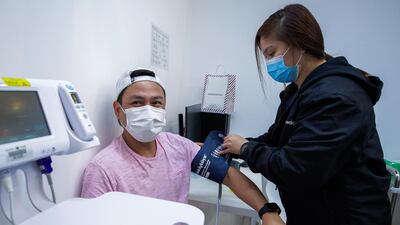
UAE residents of all ages are eligible for the Sinopharm shot, which is available across the seven emirates. All photos by Victor Besa / The National -
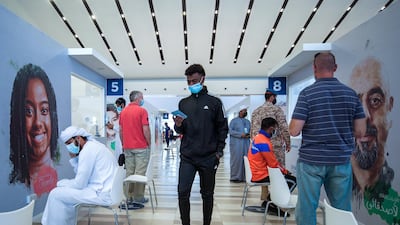
People register for the vaccine at Seha's cruise ship terminal vaccine centre -
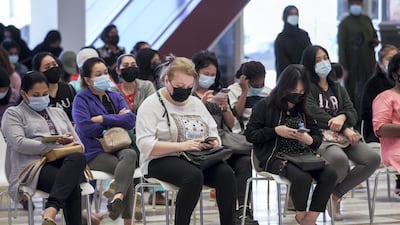
Both the government and employers have urged the public to get vaccinated, as the country faces record daily numbers of new cases -
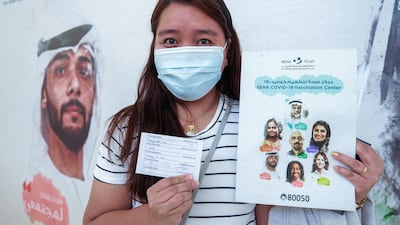
An Abu Dhabi resident waits to receive her first shot at the Seha vaccination centre at Abu Dhabi Cruise Terminal. -

Sisters Aya and Jana register for the vaccine shot -
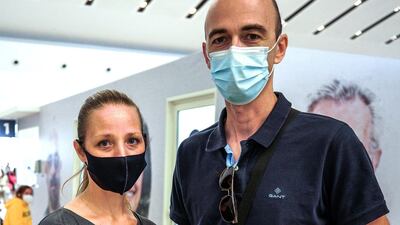
Suzana and husband Novica Ristovic get vaccinated pictured with the advice brochures given to all volunteers -
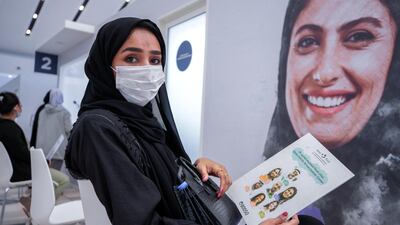
Shaikha Al Dheiri waits to be called in for the first of two shots that are necessary to provide protection against the virus -
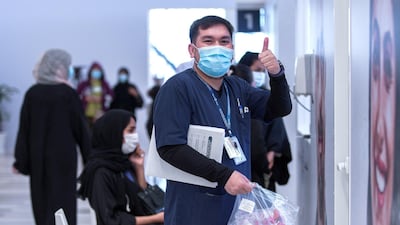
The Seha Vaccination Centre at Abu Dhabi Cruise Terminal can serve up to 3,000 people per day. Victor Besa / The National -
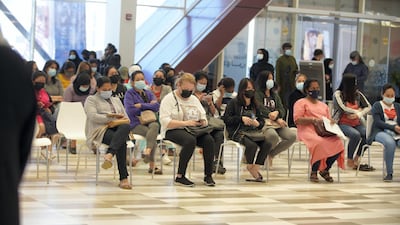
The vaccination Centre at Abu Dhabi Cruise Terminal -
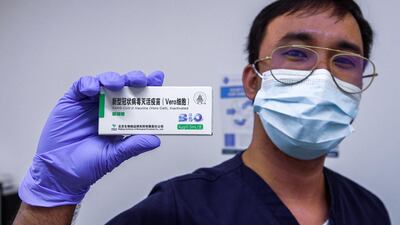
A medic holds up a package containing the Chinese-made Sinopharm vaccine -
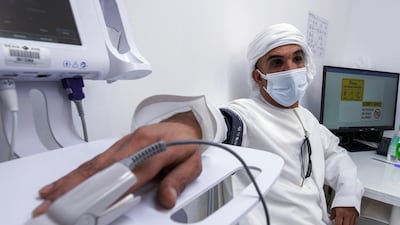
Emirati Abdulaziz Karmastaji gets a basic blood oxygen check before his vaccination -
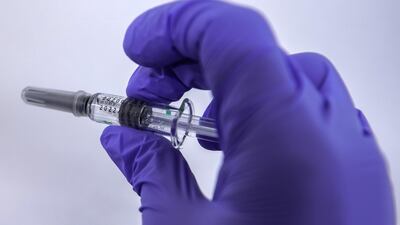
Two shots are required 21 days apart to ensure people have sufficient antibodies to protect them -
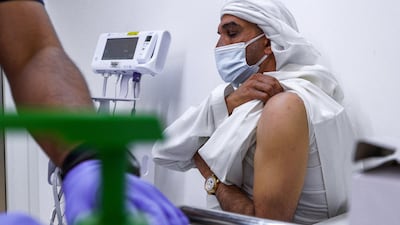
A man is inoculated at Seha Vaccination Centre in the Abu Dhabi Cruise Terminal -
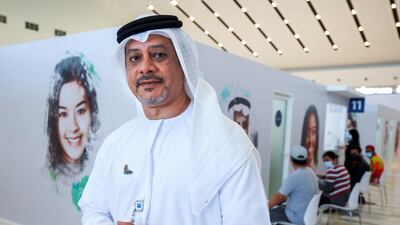
Mohamed Hawas Al Sadid, chief executive of Abu Dhabi's public hospital operator Seha, oversees the vaccination drive -
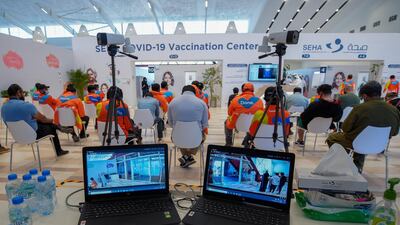
The Seha Vaccination Centre at Abu Dhabi Cruise Terminal can serve up to 3,000 people per day


At the current rate of vaccine distribution, the tide may turn within months, but we should be prepared to do it all again next year. Annual vaccinations are likely to be a feature of our lives for years to come. Frequent workplace testing will be with us for a while, too.
The long-term impact of the coronavirus crisis will also require policymakers to be adaptable and agile. It may also spur new thinking on existing problems.
This week in Abu Dhabi, the window was opened onto what post-pandemic policymaking may look like. Speaking during sustainability week, Dr Sultan Al Jaber, the UAE's special envoy for climate change, said that after coronavirus, climate change was the most critical challenge confronting the world today.
Other officials made similar comments, reflecting both resolve and realism.
Nawal Al Hosany, the UAE's permanent representative to the International Renewable Energy Agency, said the battle to prevent climate change was winnable. Abdullah Al Nuaimi, the UAE's Minister of Climate Change and Environment, said the country would accelerate its transition to a green economy as part of its post-pandemic plans.
Masdar's chief executive Mohamed Jameel Al Ramahi wrote in these pages this week that a collective will had emerged from the pandemic, and that the way the world has responded to the challenges it posed has shown that we can work together to seek effective solutions.
The race to find effective vaccines quickly to tackle coronavirus will be remembered as one of the most extraordinary events of the early 21st century. It might yet spur another sprint towards mitigating climate change and a further embrace of renewable energy. That would be a welcome and partially unexpected postscript to the challenges that all of us faced last year.
Nick March is an assistant editor-in-chief at The National

