Teachers in the UK are fuelling divisions over how to restart the cruelly interrupted school year.
One of the greatest consequences of the coronavirus shutdown is set to be the decades-long effects on those who are still learning.
Lost time is harmful at every age, but particularly for the youngest and those in crucial exam years hoping for a gateway to the future.
Throughout the pandemic, the magical factor of good leadership has been obvious. Some countries bore a lesser impact of the pandemic than peers because of good decisions.
The teaching profession is now being asked how it can lead for those it has been entrusted to build and guide.
Unfortunately, many in the profession are shying away from the call and appear preoccupied with political debating points and picking fights.
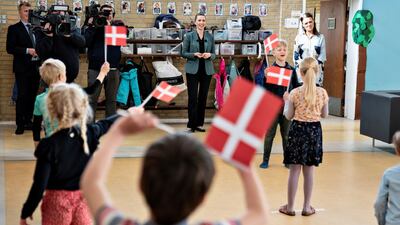
One country that has successfully restarted schooling is Denmark. The teaching profession there has shown initiative in how to create space for socially distant learning.
Its children have been successfully back in school since April 15. The key to a quick restart from the lockdown was that teachers played a leading role in reinventing schooling.
Some of the classes take place outdoors. There was a well-structured plan for distancing as pupils queued to get into the school.
Small classes mean children can keep their distance. Administrators were quick to strike deals with cultural centres, which are still mothballed, to open up performing spaces and auditoriums for additional classroom space.
Teacher have embraced the new venues. Schoolchildren were even able to go to school in Denmark’s national soccer stadium.
For a country that was fearful of the future, the images of five-year-olds singing the national anthem in the lounges overlooking the pitch were a real boost to national morale.
The poorest children are suffering the most, cut off from school meals, organised exercise, computers and knowledge
Museum space was imaginatively co-opted as a place of learning.
A yacht club threw open its space and sailing capabilities to local children, who have since begun learning to sail.
All this is possible while continuing to observe special measures, such as regular breaks for hand-washing.
Other neighbouring countries have also returned successfully.
Germany has been able to go ahead with the Arbitur, the country’s top school exam.
It has separated school rooms with white lines and made face masks compulsory in communal areas.
The experience of the 22 European countries that reopened classrooms since the pandemic was declared is, however, mixed.
Not every country has been able to get all institutions up and running. Others have opened schools only to face partial shutdowns.
Then there is the resistance to a restart before the summer break in places where the lockdown was continuing.
Britain cancelled its A-Level exams as it went into lockdown in mid-March. The decision had the merits of being clear cut.
It appears to have convinced teachers they would not be back in schoolrooms until the next teaching year.
Now rows rage in the UK about protective equipment and resources for changing the layouts of the schools.
A June 1 deadline for the resumption has been put in doubt, even though many teachers and experts say there are compelling reasons to resume.
The medical evidence is not yet conclusive on how infectious a child with Covid-19 is, but there is strong evidence that the clinical effect on the young is negligible.
The real danger in keeping children out of school is the impact on their development.
Parents are not trained teachers. There is plenty of anecdotal evidence that children at the best (and most expensive) fee-paying schools are able to access a seamless level of education.
Outside the top tier of schools, the picture is grim.
Teachers who post one blog of five or six tasks a day are barely carrying out their mission to be educators.
A single call by the teacher in a week, or a month, to parents in lockdown is tokenistic at best.
One survey in Britain estimated that 10 per cent of pupils had no home coursework from their schools.
That inevitably means the poorest children are suffering the most.
Life chances have already been altered by changes in exam timetabling. Covid-19 has cut off the disadvantaged from access to school meals, organised exercise, computers and knowledge.
It is more than an offence against the natural justice of doing well or badly according to circumstance.
The wider social need for children to pass through uniform education is a universal good.
Nearly every country can sustain this regardless of conflict, poverty or ideology. Like the postal system it is remarkably common and familiar.
Instead teachers are feeding on a climate of fear and rumour mongering. The pendulum has swung as the lockdown has continued while infection rates peaked.
Avoiding longer term harms now rests on the shoulders of teachers.
Damien McElroy is the London bureau chief of The National

Who was Alfred Nobel?
The Nobel Prize was created by wealthy Swedish chemist and entrepreneur Alfred Nobel.
- In his will he dictated that the bulk of his estate should be used to fund "prizes to those who, during the preceding year, have conferred the greatest benefit to humankind".
- Nobel is best known as the inventor of dynamite, but also wrote poetry and drama and could speak Russian, French, English and German by the age of 17. The five original prize categories reflect the interests closest to his heart.
- Nobel died in 1896 but it took until 1901, following a legal battle over his will, before the first prizes were awarded.
MOUNTAINHEAD REVIEW
Starring: Ramy Youssef, Steve Carell, Jason Schwartzman
Director: Jesse Armstrong
Rating: 3.5/5
UAE currency: the story behind the money in your pockets
Youth YouTuber Programme
The programme will be presented over two weeks and will cover the following topics:
- Learning, scripting, storytelling and basic shots
- Master on-camera presence and advanced script writing
- Beating the algorithm and reaching your core audience
Chef Nobu's advice for eating sushi
“One mistake people always make is adding extra wasabi. There is no need for this, because it should already be there between the rice and the fish.
“When eating nigiri, you must dip the fish – not the rice – in soy sauce, otherwise the rice will collapse. Also, don’t use too much soy sauce or it will make you thirsty. For sushi rolls, dip a little of the rice-covered roll lightly in soy sauce and eat in one bite.
“Chopsticks are acceptable, but really, I recommend using your fingers for sushi. Do use chopsticks for sashimi, though.
“The ginger should be eaten separately as a palette cleanser and used to clear the mouth when switching between different pieces of fish.”
Skoda Superb Specs
Engine: 2-litre TSI petrol
Power: 190hp
Torque: 320Nm
Price: From Dh147,000
Available: Now
THE BIO
Born: Mukalla, Yemen, 1979
Education: UAE University, Al Ain
Family: Married with two daughters: Asayel, 7, and Sara, 6
Favourite piece of music: Horse Dance by Naseer Shamma
Favourite book: Science and geology
Favourite place to travel to: Washington DC
Best advice you’ve ever been given: If you have a dream, you have to believe it, then you will see it.
T20 WORLD CUP QUALIFIERS
Qualifier A, Muscat
(All matches to be streamed live on icc.tv)
Fixtures
Friday, February 18: 10am Oman v Nepal, Canada v Philippines; 2pm Ireland v UAE, Germany v Bahrain
Saturday, February 19: 10am Oman v Canada, Nepal v Philippines; 2pm UAE v Germany, Ireland v Bahrain
Monday, February 21: 10am Ireland v Germany, UAE v Bahrain; 2pm Nepal v Canada, Oman v Philippines
Tuesday, February 22: 2pm Semi-finals
Thursday, February 24: 2pm Final
UAE squad:Ahmed Raza(captain), Muhammad Waseem, Chirag Suri, Vriitya Aravind, Rohan Mustafa, Kashif Daud, Zahoor Khan, Alishan Sharafu, Raja Akifullah, Karthik Meiyappan, Junaid Siddique, Basil Hameed, Zafar Farid, Mohammed Boota, Mohammed Usman, Rahul Bhatia
Who has lived at The Bishops Avenue?
- George Sainsbury of the supermarket dynasty, sugar magnate William Park Lyle and actress Dame Gracie Fields were residents in the 1930s when the street was only known as ‘Millionaires’ Row’.
- Then came the international super rich, including the last king of Greece, Constantine II, the Sultan of Brunei and Indian steel magnate Lakshmi Mittal who was at one point ranked the third richest person in the world.
- Turkish tycoon Halis Torprak sold his mansion for £50m in 2008 after spending just two days there. The House of Saud sold 10 properties on the road in 2013 for almost £80m.
- Other residents have included Iraqi businessman Nemir Kirdar, singer Ariana Grande, holiday camp impresario Sir Billy Butlin, businessman Asil Nadir, Paul McCartney’s former wife Heather Mills.
Hunting park to luxury living
- Land was originally the Bishop of London's hunting park, hence the name
- The road was laid out in the mid 19th Century, meandering through woodland and farmland
- Its earliest houses at the turn of the 20th Century were substantial detached properties with extensive grounds
Bio
Age: 25
Town: Al Diqdaqah – Ras Al Khaimah
Education: Bachelors degree in mechanical engineering
Favourite colour: White
Favourite place in the UAE: Downtown Dubai
Favourite book: A Life in Administration by Ghazi Al Gosaibi.
First owned baking book: How to Be a Domestic Goddess by Nigella Lawson.
Directed by: Craig Gillespie
Starring: Emma Stone, Emma Thompson, Joel Fry
4/5
THE SIXTH SENSE
Starring: Bruce Willis, Toni Collette, Hayley Joel Osment
Director: M. Night Shyamalan
Rating: 5/5
Living in...
This article is part of a guide on where to live in the UAE. Our reporters will profile some of the country’s most desirable districts, provide an estimate of rental prices and introduce you to some of the residents who call each area home.
Five expert hiking tips
- Always check the weather forecast before setting off
- Make sure you have plenty of water
- Set off early to avoid sudden weather changes in the afternoon
- Wear appropriate clothing and footwear
- Take your litter home with you
