

At the height of its power, ISIS recruited thousands of people from across the world. Many of them were women and minors.
The women had various reasons for joining. Some went to seek adventure or felt they were joining what they deemed a "noble" cause. Some went to fight in the feared, all-female Al Khansaa Brigade, a self-appointed ISIS female "police team". Others went with romantic notions, to marry and have children.
Gulfer Ulas, a researcher at the London School of Economics determined that the “typical” female recruit was a second or third generation immigrant living in a western country. In countries such as France, where Muslims often feel alienated and are pushed to the periphery of society in terms of housing, education and work – an ISIS "family" was a heady notion. Being a part of such a unit in a false caliphate gave them a sense of purpose.
Today, two years after the collapse of the so-called caliphate, more than 200 women from 11 European countries and their 650 children live in two Syrian camps called Al Hol and Roj. European women are a minority in the camps compared to others who are Iraqi or Syrian, but European governments are under pressure from rights’ groups to bring their citizens home.
Some of these women are hard-core ISIS supporters, waiting for the return of an imagined caliphate. They are dangerous and pose threats to western countries. There are other women though, who are trapped and do want to come home but their countries see them as security risks and refuse to repatriate them.
The conditions of these women are dire. Al Hol camp is a long way from what many envisaged when they set out for the Syrian city of Raqqa. The camp accomodates families of ISIS militants – wives, widows, children. More than 80 per cent of Al Hol's 62,000 residents are women and children. There is a lack of clean water, insufficient sanitation and housing, little education or medical assistance. There are also sexual predators and Covid-19 is rampant.
The children, who committed no crime, are the ones suffering the most. Save the Children, the international child rights organisation, says hundreds have died and there are more than 9,000 foreign children in the region.
Early after the fall of ISIS, the US, Turkey and Kazakhstan began taking their citizens back. In 2019, Turkey took back 200 children as well as dozens of Turkish women. Last December, Germany and Finland began bringing some of their women home on humanitarian grounds. In March, Belgium said it would begin to examine case by case situations after their intelligence service reported that ISIS was gaining ground in the camps. Returnees pose a risk, their authorities concluded, but less of a risk than the consequences of non-repatriation.
But other European countries, and the UK in particular, are wary of repatriation. France has so far repatriated at least 35 children, many of them orphans. But France has suffered from years of terrorist attacks and has the largest number of citizens in camps and prisons in Iraq and Syria. The repatriation plan was suddenly abandoned after an investigation into the camps by the French intelligence services.
Sweden, a country that values human rights, has said they might take children, but not mothers. Netherlands will probably follow. Meanwhile, Britain has stripped 20 women of their citizenship, including Shamima Begum, who is now 21-years-old.
Begum joined ISIS with two friends in 2015 as a 15-year-old East London schoolgirl. Discovered by British journalists in a Kurdish-run camp in 2019, she was turned into the poster child as the “indoctrinated bride” when she was interviewed, which went viral in the UK. No one appeared to stop and think that she was a teenager who had matured too early, married and lost two children already to disease.
Begum was 9 months pregnant when the journalists found her. No one prepared her for an interview, and her words were indeed harsh. Partially as a result of the public debate over the handling of such returnees – but largely because of the interview and her demeanour – she was promptly stripped of her UK citizenship. Bangladesh, the country of her parents’ birth, also refused to take her.
Begum then decided to challenge the Home Office's decision to remove her citizenship. But in February, five Supreme Court justices unanimously turned down her request to be able to return to the UK to fight for her citizenship to be restored. She is still in a camp in Northern Syria with her surviving two-year old child.
While UK officials vowed Begum would “never return to the UK” because of what she could potentially do, there is a far greater cost to keeping her in a camp. She is, quite rightly, angry and vulnerable to deeper radicalisation. Technically, international law forbids governments from rendering their citizens stateless, but the ISIS cases have been grey areas.
The United Nations Refugee Agency and other numerous human rights experts have said it is inhumane for countries to strip their citizens of their citizenship. Britain, like France, has suffered terrorist attacks and bombings, and is not taking any chances. Brexit with its undercurrent of xenophobia hasn’t helped either.
The most pressing argument for repatriation is that the children are at greatest risk of radicalisation in the camps. Reports from inside Al Hol say the pro-ISIS women are rapidly trying to indoctrinate children with videos and intense brainwashing. They police the other women’s’ dress and behaviour and punish those who behave inappropriately.

I recall visiting several settlements in Lebanon at the height of the Syrian war, where young teenage boys, who had nothing to do all day, told me that recruiters for militia preyed on their families. Miserable, with no future and no hope for anything better, the young boys spoke of others who routinely succumb to these recruiters and their offers of a "better future".
And reports now show ISIS is gaining ground in the camps.
In September 2019, residents of Al Hol camp revealed that pro-ISIS women burnt down tents, threw stones and threatened with knives others who did not follow their mindset.
Begum’s third child was born in such a place of confusion, hate and desperation. There are many others who will grow up in these camps knowing nothing more than misery and hopelessness, conditions that make it a prime breeding ground for recruitment.
Then there is the question of policing. The Kurdish forces simply don’t have the manpower to patrol and prevent women from breaking away and fleeing. One fear is that they will fall into the hands of the Assad regime and will be used as pawns in hostage negotiations.
Finally, they are vulnerable to other ISIS affiliates that might “rescue” them only to deliver them to more radical groups.
We can’t ignore Al Hol and the other camps teeming with militants. They won’t disappear. They will instead grow and fester. Several security experts believe leaving them there is a greater security risk than sending them home with their children, likening it to a “Guantanamo in the desert”.
I remember well Abu Ghraib prison in the years after the invasion of Iraq. It essentially became a prime breeding grounds for radicalism, where militants could expand their networks with other terror groups.
I also keep thinking of one inmate who made the transition from religious scholar and soccer fan to mastermind of a terrorist organisation. His name was Abu Bakr Al Baghdadi and he became the founder of ISIS.
Janine di Giovanni teaches human rights at Yale University's Jackson Institute for Global Affairs and is a columnist for The National
More from The National
- Editorial: The case for repatriating ISIS Europeans
- Denmark to repatriate women and children from Syrian camps
- Repatriation of ISIS-linked families from Syria to Iraq angers locals
-
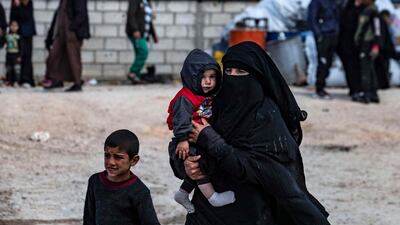
A family awaits departure during the release of another group of Syrian families from the Kurdish-run Al Hol camp, Syria. AFP -
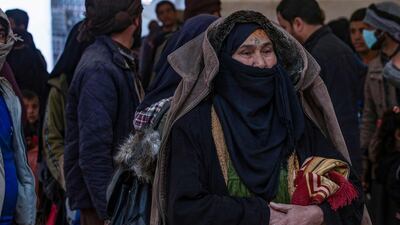
The camp, in the Hasakah governorate of northeastern Syria, holds suspected relatives of ISIS fighters. AFP -
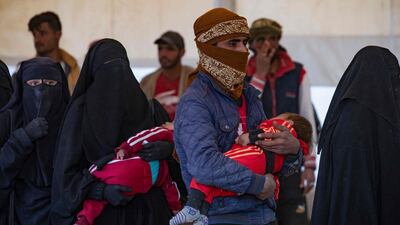
The sprawling site is home to more than 30,000 people, the majority of them children. AFP -
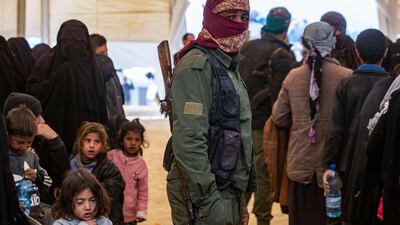
The United Nations has called on countries, including the US, the UK and Germany, to repatriate its citizens. AFP -
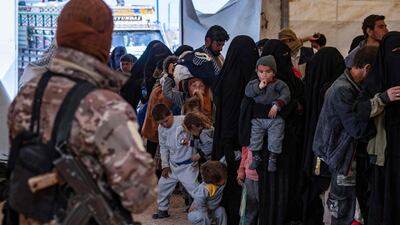
There are an estimated 10,000 foreign women and children from 57 countries detained at the Al Hol camp and its neighbouring Roj camp. AFP -
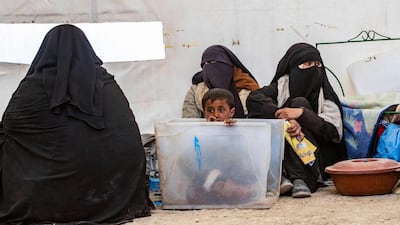
The UN has warned of fast-spreading disease and coronavirus outbreaks at the camps. AFP -
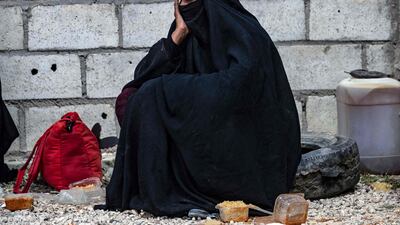
This month, Denmark announced it is to repatriate 22 Danish citizens, women and children. AFP -
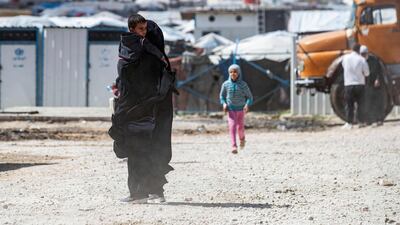
Under international law, states have a duty to repatriate their citizens and, if there is evidence, to prosecute adults for war crimes or other offences at fair trials in their domestic courts, UN rights experts said. AFP



