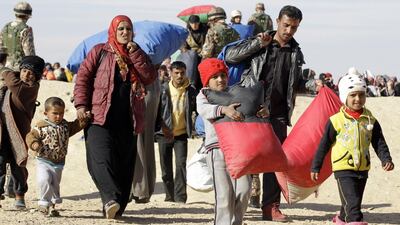
Millions of Syrians have been forced to flee their country since the war began in 2011. AFP

Syria's cash-strapped government is extorting refugees


  • English
  • Arabic

A video that was circulated last week in Syrian media outlets has stirred great controversy and fear among Syrians living abroad or who have been displaced by the conflict in their country. It has also highlighted the extent to which the regime of Bashar Al Assad is suffering financially and willing to collectively punish those it chased out of their homes.

The official video featured Elias Bitar, a senior military official in charge of the department in the army that deals with reserves and exemptions from military service. In it, he said the government might seize the assets of Syrians who were over 42 years old and had not paid their military exemption fines – a threat that is likely to have an outsized effect on refugees who fled the country and opponents of the regime living abroad.

By law, Syrians are required to serve in the armed forces for a period as conscripts, but they can be exempted under certain conditions, especially if they reside outside the country and pay a large fee to the authorities. Until recently, the option of paying a fee applied only to Syrians living abroad for a few years. Obligatory military service has long been a tool used by some Arab governments to build a form of attachment to a symbol of national identity and to control the influx of young people into job markets with limited opportunities. This became a critical tool for the Syrian regime as the country descended into civil war.

The regime of President Bashar Al Assad is facing financial difficulties. AP Photo

But due to the economic crisis facing Syria, a perfect storm caused by a lack of foreign currency due to the crisis in neighbouring Lebanon, wartime sanctions, and the subsequent lack of reconstruction funds from abroad to rebuild the destroyed country, the government has taken steps thought unthinkable in the past to secure a sustainable source of funding from an already impoverished population.

In 2020, the government began allowing Syrians residing inside the country to pay a (smaller) fee to secure an exemption from the draft. Those living abroad had the requirements for how long they must live outside Syria before being eligible for exemption reduced. Depending on how many years you spent outside the country, you could be expected to pay between $8,000-10,000.

The government has had the power to confiscate deserters’ assets for a few years now after amending the relevant laws during the war. These measures allow the government to seize the assets of deserters if they do not pay the exemption fee after they reach 42 years of age, to sell them off, and possibly to even freeze the assets of their family members, without due process. But the fact that the government is threatening to do so now shows the dire straits it is in, in addition to essentially being an attempt at extortion.

Syria's economy is in tatters and does not appear on the verge of recovery. Despite winning the war militarily, the Assad regime continues to preside over an economy so decrepit that it could not afford to lock down the country during the coronavirus pandemic. The hyperinflation and banking collapse in neighbouring Lebanon has contributed to the crisis in Syria, where the currency has largely collapsed, and basic staples are becoming too expensive for many families. The regime's refusal to entertain any prospect of reform or serious negotiation with the opposition has resulted in western sanctions remaining in place. In addition, the US during the Trump administration imposed extensive, stringent sanctions as part of the so-called Caesar Act that shut out Syria and its political and business elites from the global financial system.

A textile factory in Aleppo, Syria. The Assad regime continues to preside over a decrepit economy. AP Photo

The government has grown so desperate for hard currency that it has imposed various fees over the past few years to recoup some wealth from its own citizens. Syrian passports are the most expensive in the world, at $800 (more if you are in a hurry), which is more than three times costlier than the next passport in line. In 2020, the government imposed a tax on its own citizens returning to the country, requiring them to exchange $100 at the fictional official rate, in effect imposing a visa fee on its nationals.

The military conscription measures are an obvious cash grab attempt from a regime that, despite a military victory, is economically crippled and has no immediate prospects for revival. But more crucially, it shows how little it values the lives of those who oppose it, or even those who fled the violence to protect their families. Many people evaded military service because they wanted nothing to do with the brutality of the war, and at any rate those living abroad as refugees certainly cannot afford to pay $8,000 to get out of serving in the military. Instead, they risk conscription, detention, or other more severe punishments upon their return.

Syria remains unsafe for its dispersed people. But its regime does not want them to return either – it would rather extort them for protection money, like the mafia it is.

Kareem Shaheen is a veteran Middle East correspondent in Canada and a columnist for The National

SPEC%20SHEET%3A%20APPLE%20M3%20MACBOOK%20AIR%20(13%22)
%3Cp%3E%3Cstrong%3EProcessor%3A%3C%2Fstrong%3E%20Apple%20M3%2C%208-core%20CPU%2C%20up%20to%2010-core%20CPU%2C%2016-core%20Neural%20Engine%3C%2Fp%3E%0A%3Cp%3E%3Cstrong%3EDisplay%3A%3C%2Fstrong%3E%2013.6-inch%20Liquid%20Retina%2C%202560%20x%201664%2C%20224ppi%2C%20500%20nits%2C%20True%20Tone%2C%20wide%20colour%3C%2Fp%3E%0A%3Cp%3E%3Cstrong%3EMemory%3A%3C%2Fstrong%3E%208%2F16%2F24GB%3C%2Fp%3E%0A%3Cp%3E%3Cstrong%3EStorage%3A%3C%2Fstrong%3E%20256%2F512GB%20%2F%201%2F2TB%3C%2Fp%3E%0A%3Cp%3E%3Cstrong%3EI%2FO%3A%3C%2Fstrong%3E%20Thunderbolt%203%2FUSB-4%20(2)%2C%203.5mm%20audio%2C%20Touch%20ID%3C%2Fp%3E%0A%3Cp%3E%3Cstrong%3EConnectivity%3A%3C%2Fstrong%3E%20Wi-Fi%206E%2C%20Bluetooth%205.3%3C%2Fp%3E%0A%3Cp%3E%3Cstrong%3EBattery%3A%3C%2Fstrong%3E%2052.6Wh%20lithium-polymer%2C%20up%20to%2018%20hours%2C%20MagSafe%20charging%3C%2Fp%3E%0A%3Cp%3E%3Cstrong%3ECamera%3A%3C%2Fstrong%3E%201080p%20FaceTime%20HD%3C%2Fp%3E%0A%3Cp%3E%3Cstrong%3EVideo%3A%3C%2Fstrong%3E%20Support%20for%20Apple%20ProRes%2C%20HDR%20with%20Dolby%20Vision%2C%20HDR10%3C%2Fp%3E%0A%3Cp%3E%3Cstrong%3EAudio%3A%3C%2Fstrong%3E%204-speaker%20system%2C%20wide%20stereo%2C%20support%20for%20Dolby%20Atmos%2C%20Spatial%20Audio%20and%20dynamic%20head%20tracking%20(with%20AirPods)%3C%2Fp%3E%0A%3Cp%3E%3Cstrong%3EColours%3A%3C%2Fstrong%3E%20Midnight%2C%20silver%2C%20space%20grey%2C%20starlight%3C%2Fp%3E%0A%3Cp%3E%3Cstrong%3EIn%20the%20box%3A%3C%2Fstrong%3E%20MacBook%20Air%2C%2030W%2F35W%20dual-port%2F70w%20power%20adapter%2C%20USB-C-to-MagSafe%20cable%2C%202%20Apple%20stickers%3C%2Fp%3E%0A%3Cp%3E%3Cstrong%3EPrice%3A%3C%2Fstrong%3E%20From%20Dh4%2C599%3C%2Fp%3E%0A
If you go

The flights
Emirates and Etihad fly direct to Nairobi, with fares starting from Dh1,695. The resort can be reached from Nairobi via a 35-minute flight from Wilson Airport or Jomo Kenyatta International Airport, or by road, which takes at least three hours.

The rooms
Rooms at Fairmont Mount Kenya range from Dh1,870 per night for a deluxe room to Dh11,000 per night for the William Holden Cottage.

UAE currency: the story behind the money in your pockets
SPEC%20SHEET%3A%20SAMSUNG%20GALAXY%20Z%20FOLD%204
%3Cp%3E%3Cstrong%3EMain%20display%3A%3C%2Fstrong%3E%207.6%22%20QXGA%2B%20Dynamic%20Amoled%202X%2C%202176%20x%201812%2C%2021.6%3A18%2C%20374ppi%2C%20HDR10%2B%2C%20up%20to%20120Hz%3C%2Fp%3E%0A%3Cp%3E%3Cstrong%3ECover%20display%3A%3C%2Fstrong%3E%206.2%22%20HD%2B%20Dynamic%20Amoled%202X%2C%202316%20x%20904%2C%2023.1%3A9%2C%20402ppi%2C%20up%20to%20120Hz%3C%2Fp%3E%0A%3Cp%3E%3Cstrong%3EProcessor%3A%3C%2Fstrong%3E%20Qualcomm%20Snapdragon%208%2B%20Gen%201%2C%204nm%2C%20octa-core%3B%20Adreno%20730%20GPU%3C%2Fp%3E%0A%3Cp%3E%3Cstrong%3EMemory%3A%3C%2Fstrong%3E%2012GB%3C%2Fp%3E%0A%3Cp%3E%3Cstrong%3ECapacity%3A%3C%2Fstrong%3E%C2%A0256%2F512GB%20%2F%201TB%3C%2Fp%3E%0A%3Cp%3E%3Cstrong%3EPlatform%3A%3C%2Fstrong%3E%20Android%2012%2C%20One%20UI%204.1.1%3C%2Fp%3E%0A%3Cp%3E%3Cstrong%3EMain%20camera%3A%3C%2Fstrong%3E%20Triple%2012MP%20ultra-wide%20(f%2F2.2)%20%2B%2050MP%20wide%20(f%2F1.8)%20%2B%2010MP%20telephoto%20(f%2F2.4)%2C%20dual%20OIS%2C%203x%20optical%20zoom%2C%2030x%20Space%20Zoom%2C%20portrait%2C%20super%20slo-mo%3C%2Fp%3E%0A%3Cp%3E%3Cstrong%3EVideo%3A%3C%2Fstrong%3E%208K%4024fps%2C%204K%4030%2F60fps%2C%20full-HD%4030%2F60fps%2C%20HD%4030fps%3B%20slo-mo%4060%2F240%2F960fps%3B%20HDR10%2B%3C%2Fp%3E%0A%3Cp%3E%3Cstrong%3ECover%20camera%3A%3C%2Fstrong%3E%2010MP%20(f%2F2.2)%3C%2Fp%3E%0A%3Cp%3E%3Cstrong%3EInner%20front%20camera%3A%3C%2Fstrong%3E%20Under-display%204MP%20(f%2F1.8)%3C%2Fp%3E%0A%3Cp%3E%3Cstrong%3EBattery%3A%3C%2Fstrong%3E%204400mAh%2C%2025W%20fast%20charging%2C%2015W%20wireless%20charging%2C%20reverse%20wireless%20charging%2C%20'all-day'%20life%3C%2Fp%3E%0A%3Cp%3E%3Cstrong%3EConnectivity%3A%3C%2Fstrong%3E%205G%3B%20Wi-Fi%2C%20Bluetooth%205.2%2C%20NFC%20(Samsung%20Pay)%3C%2Fp%3E%0A%3Cp%3E%3Cstrong%3EI%2FO%3A%3C%2Fstrong%3E%20USB-C%3C%2Fp%3E%0A%3Cp%3E%3Cstrong%3ECards%3A%3C%2Fstrong%3E%20Nano-SIM%20%2B%20eSIM%3B%202%20nano-SIMs%20%2B%20eSIM%3B%202%20nano-SIMs%3C%2Fp%3E%0A%3Cp%3E%3Cstrong%3EColours%3A%3C%2Fstrong%3E%20Graygreen%2C%20phantom%20black%2C%20beige%2C%20burgundy%20(online%20exclusive)%3C%2Fp%3E%0A%3Cp%3E%3Cstrong%3EIn%20the%20box%3A%3C%2Fstrong%3E%20Fold%204%2C%20USB-C-to-USB-C%20cable%3C%2Fp%3E%0A%3Cp%3E%3Cstrong%3EPrice%3A%3C%2Fstrong%3E%20Dh6%2C799%20%2F%20Dh7%2C249%20%2F%20Dh8%2C149%3C%2Fp%3E%0A
Dubai Bling season three

Cast: Loujain Adada, Zeina Khoury, Farhana Bodi, Ebraheem Al Samadi, Mona Kattan, and couples Safa & Fahad Siddiqui and DJ Bliss & Danya Mohammed 

Rating: 1/5

Who's who in Yemen conflict

Houthis: Iran-backed rebels who occupy Sanaa and run unrecognised government

Yemeni government: Exiled government in Aden led by eight-member Presidential Leadership Council

Southern Transitional Council: Faction in Yemeni government that seeks autonomy for the south

Habrish 'rebels': Tribal-backed forces feuding with STC over control of oil in government territory

The%20Witcher%20-%20season%20three
%3Cp%3E%3Cstrong%3EDirector%3A%20%3C%2Fstrong%3EVarious%0D%3Cbr%3E%3Cstrong%3E%0D%3Cbr%3EStars%3A%20%3C%2Fstrong%3EHenry%20Cavill%2C%20Freya%20Allan%2C%20Anya%20Chalotra%3Cstrong%3E%0D%3Cbr%3E%0D%3Cbr%3ERating%3A%3C%2Fstrong%3E%203%2F5%3C%2Fp%3E%0A
Infiniti QX80 specs

Engine: twin-turbocharged 3.5-liter V6

Power: 450hp

Torque: 700Nm

Price: From Dh450,000, Autograph model from Dh510,000

Available: Now

Lexus LX700h specs

Engine: 3.4-litre twin-turbo V6 plus supplementary electric motor

Power: 464hp at 5,200rpm

Torque: 790Nm from 2,000-3,600rpm

Transmission: 10-speed auto

Fuel consumption: 11.7L/100km

On sale: Now

Price: From Dh590,000

Ruwais timeline

1971 Abu Dhabi National Oil Company established

1980 Ruwais Housing Complex built, located 10 kilometres away from industrial plants

1982 120,000 bpd capacity Ruwais refinery complex officially inaugurated by the founder of the UAE Sheikh Zayed

1984 Second phase of Ruwais Housing Complex built. Today the 7,000-unit complex houses some 24,000 people.  

1985 The refinery is expanded with the commissioning of a 27,000 b/d hydro cracker complex

2009 Plans announced to build $1.2 billion fertilizer plant in Ruwais, producing urea

2010 Adnoc awards $10bn contracts for expansion of Ruwais refinery, to double capacity from 415,000 bpd

2014 Ruwais 261-outlet shopping mall opens

2014 Production starts at newly expanded Ruwais refinery, providing jet fuel and diesel and allowing the UAE to be self-sufficient for petrol supplies

2014 Etihad Rail begins transportation of sulphur from Shah and Habshan to Ruwais for export

2017 Aldar Academies to operate Adnoc’s schools including in Ruwais from September. Eight schools operate in total within the housing complex.

2018 Adnoc announces plans to invest $3.1 billion on upgrading its Ruwais refinery 

2018 NMC Healthcare selected to manage operations of Ruwais Hospital

2018 Adnoc announces new downstream strategy at event in Abu Dhabi on May 13

Source: The National
