

US President Joe Biden's April 14 announcement of the withdrawal of combat forces from Afghanistan caught many observers by surprise. The Pakistan Army was not one of them. It has insisted for two decades that foreign military victory over the Taliban was impossible, and that the western presence was as unsustainable as was the Soviets before them. Although US forces have now been in-country for twice as long as the Soviets, the latter's experience and the Pakistani response are useful guides for what lies ahead.
The Soviets in 1979, like the Americans in 2001, had never intended to linger in Afghanistan. But year after year, their friends in Kabul pleaded for just a little more time to turn the corner. The result was that they found themselves stuck, trapped by the inability of their new client regimes to contain the insurgencies that bloomed in the countryside.
Unsurprisingly, the Soviet politburo and the White House alike badly wanted out long before the world realised it, held back only by the fear of what a retreat might look like to friends and foes around the globe. But eventually former Russian leader Mikhail Gorbachev, just like Mr Biden and his predecessor Donald Trump, simply lost patience and cut his own deal with Pakistan and the Afghan insurgents, with scant regard for the Kabul government’s concerns.
Like the Soviets in 1988, the Americans are vowing to remain deeply engaged despite the military pullout, and to continue to prioritise supplying material and diplomatic support to the Kabul government. Certainly it appears that, like the Soviets before them, the US will retain a very substantial intelligence and consular presence in Afghanistan.
And even more so than the Soviets, the US is signalling that its forces in the region will strike if its enemies reorganise on Afghan soil. As an additional backstop, the Biden administration is also threatening the Taliban with total diplomatic isolation if they return to power with the same anti-woman and anti-minority behaviour shown in their 1996-2001 stint.
Should the Americans be taken seriously? Moscow kept its promises for three long years, despite initial pessimism. When in 1988 the Kremlin signed the Geneva Accords with Pakistan – which set the timetable for Soviet withdrawal from Afghanistan – it mistakenly assumed that the Kabul government would collapse like a house of cards after its forces left.
Instead, the withdrawal removed an enormous source of unproductive bureaucratic friction between the Red Army on the one hand, and the KGB and the Afghan government on the other, thereby stabilising the regime. It was only former US president George HW Bush’s arm-twisting amid the upheaval of a collapsing Soviet Union that forced the abandonment of their Afghan comrades in 1991, opening the door to the mujahideen. Ironically, communist rule in Kabul outlasted party control in Moscow.
It is possible that the withdrawal of the already shrinking western military forces may achieve similar results by reducing the Pentagon-CIA-State Department tensions that amplify Afghanistan's dysfunctionality. The Soviet experience shows that what really matters is that the West and others maintain the level of military and economic aid needed to keep the Afghan state running. Given the turbulence of American political and economic life in recent years, this is far from a given.
In his speech, Mr Biden singled out Pakistan in his announcement as the key to success. Given that the Pakistani government is the closest thing to a friend that the Taliban has, what course of action is it likely to take? One thing we can be sure of is that it won't look like a replay of the 1990s.

When the Red Army first rolled into Afghanistan, the regional assumption was that it was there to stay. As a result, Pakistan’s goals were defensive; to keep the Soviets too busy to advance any further. It wasn’t until the CIA’s information in 1984 indicated that the Soviets preferred to leave that Pakistani objectives grew far more ambitious.
Given the war’s permanent displacement of Afghanistan’s centuries-old ruling class, a Soviet retreat would mean that Pakistan could, for the very first time ever, imagine installing a friendly government in Kabul. It was a dream that became steadily more important to the Pakistan Army, as India’s military power and muscle-flexing grew sharply throughout the 1980s. This expanded goal was also something that the US strongly supported as part of the rollback of Soviet influence.
But as its trust in Mr Gorbachev was cemented during the first Gulf War, America increasingly pushed an unhappy Pakistan to compromise. Unfortunately, once the mujahideen fell into civil war following the 1992 collapse of the Afghan government, the US disengaged entirely, leaving Pakistan with a free hand. Little attention was paid in Washington until Osama bin Laden returned to the country in 1996 and began issuing his declarations of war against America.
Things couldn’t be more different now.
First, the US no longer treats South Asia as a sideshow. Instead, it is seen as vital to managing the intensifying competition with China. India is now one of America's key strategic partners, which means Afghanistan will continue to feature prominently on the joint agenda. Second, the US isn't assuming that the extremist threat to its homeland will just go away. The lessons from inattention to Al Qaeda in the 1990s, and to ISIS during the Obama years, appear to be sticking. Crucially, both of these policies were Trump administration priorities, and they are likely to survive even if the Biden-led Democratic Party loses control over Congress and the White House in the 2022 and 2024 elections.

In short, Pakistan does not have the same freedom to act in Afghanistan that it did from 1989 to 2001, before the American invasion. Its perennial need to avoid rupture with the US will impose restraints, which in turn greatly improves the Kabul government’s chances of survival.
Just as importantly, the Pakistan Army itself has been at the receiving end of extreme violence from cross-border extremism in the past decade, and is now far more cautious about the dangers from a total Taliban victory. Thirdly, Taliban factions are increasingly tying up with other regional powers such as Iran and Russia. Perhaps this explains why the Pakistani government has joined the Afghan and Turkish governments to publicly urge the Taliban to put their guns down and participate in a negotiated political solution to the war.
This is a very encouraging sign, but in the end, as ever, the extent of Pakistan’s helpfulness in Afghanistan will be determined by its level of insecurity vis-a-vis India. This is where American, and indeed Chinese, regional policies are essential to bring the temperature between the two countries down.
It is an awful tragedy that the dreams of millions of young Afghans attending schools and universities for the first time ever across this youthful country depend on how the generals and politicians of other countries behave towards each other. It is the duty of people around the world to ensure that these powerbrokers are accountable for how they treat this precious responsibility.
Johann Chacko is a writer and South Asia analyst
-
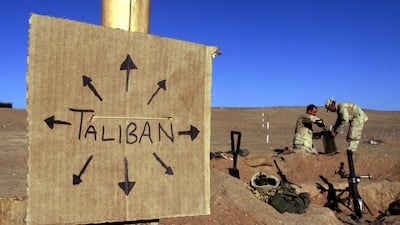
US Marines on the frontlines of a US Marine Corps base, near a cardboard sign reminding everyone that Taliban forces could be anywhere, in southern Afghanistan, December 1, 2001. Reuters -

Afghan Army soldiers break the fast at their military base, during Ramadan, amid the coronavirus pandemic in Herat, Afghanistan, April 17. EPA -
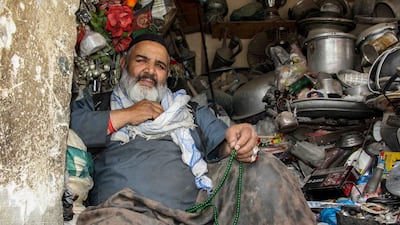
A man waits for customers at his shop in Kandahar, Afghanistan, April 15. EPA -
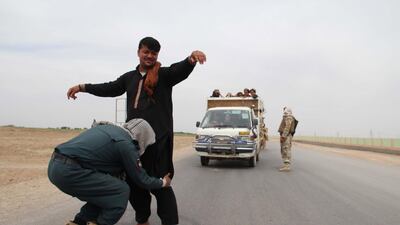
Afghan security officials pat down vistors at a roadside checkpoint in Helmand, Afghanistan, April 15. EPA -
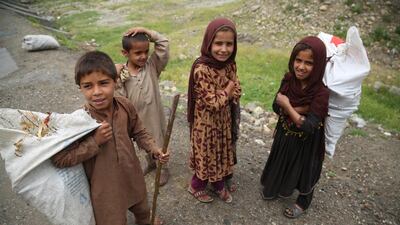
Children collect recycleable waste to be sold for a living, in Jalalabad, Afghanistan, April 15. EPA -

An Afghan man who was injured in a bomb blast, receives medical treatment at a hospital in Arghandab district of Kandahar, Afghanistan, April 15. EPA -
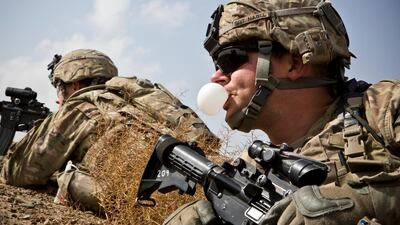
A US Army soldier near Command Outpost Pa'in Kalay in Maiwand District, Kandahar Province, Afghanistan, February 3, 2013. Reuters -
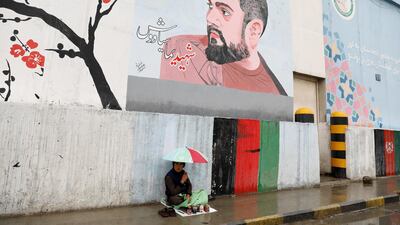
A shoe polisher boy holds an umbrella as he waits for customers under graffiti on a wall in Kabul, Afghanistan April 15. Reuters -

Captain Melvin Cabebe with the US Army's 1-320 Field Artillery Regiment, 101st Airborne Division stands near a burning M-ATV armored vehicle after it struck an improvised explosive device near Combat Outpost Nolen in the Arghandab Valley north of Kandahar, Afghanistan, July 23, 2010. Reuters -
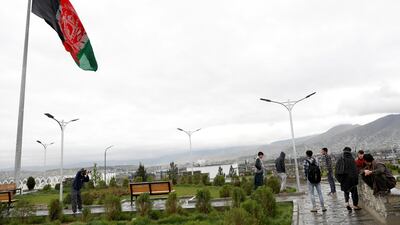
Youths take pictures near an Afghan flag on a hilltop overlooking Kabul, Afghanistan, April 15. Reuters -
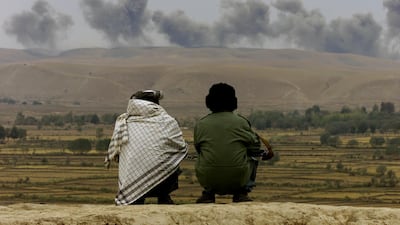
Two Northern Alliance soldiers watch as dust and smoke rise after explosions at Taliban positions on Kalakata hill, near the village of Ai Khanum in northern Afghanistan, November 1, 2001. Reuters -
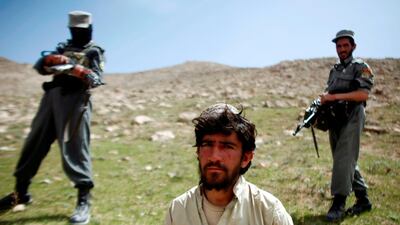
Afghan policemen stand next to a captured Taliban fighter after a gun battle near the village of Shajoy in Zabol province, Afghanistan March 22, 2008. Reuters -
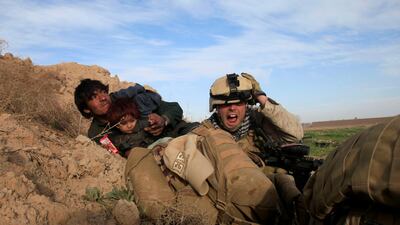
US Marine Lance Corporal Chris Sanderson, from Flemington, New Jersey shouts as he tries to protect an Afghan man and his child after Taliban fighters opened fire in the town of Marjah, in Nad Ali district, Helmand province, Afghanistan, February 13, 2010. Reuters -
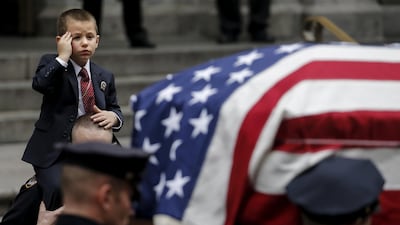
Ryan Lemm salutes the casket of his father, NYPD officer Joseph Lemm, who was killed on duty in Afghanistan. New York, US, December 30, 2015. Reuters -
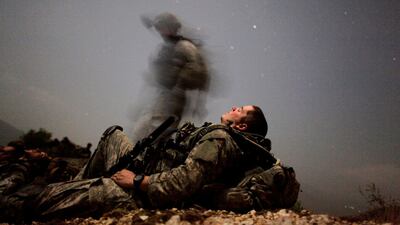
A US soldier of 2-12 Infantry 4BCT-4ID Task Force Mountain Warrior takes a break during a night mission near Honaker Miracle camp at the Pesh valley of Kunar Province, Afghanistan, August 12, 2009. Reuters -
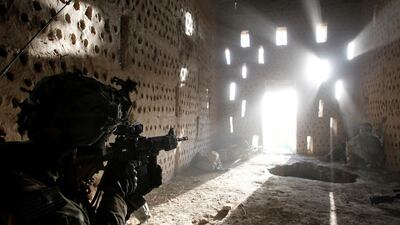
US soldier Nicholas Dickhut, from 5-20 infantry Regiment, attached to 82nd Airborne, points his rifle at a doorway after coming under fire by the Taliban while on patrol in Zharay district in Kandahar province, Afghanistan April 26, 2012. Reuters -
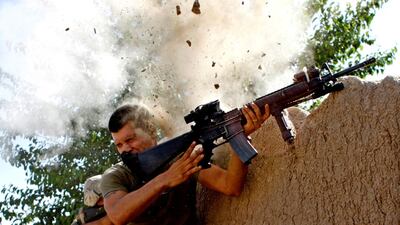
Sgt William Olas Bee, a US Marine from the 24th Marine Expeditionary Unit, has a close call after Taliban fighters opened fire near Garmsir in Helmand Province of Afghanistan, May 18, 2008. Reuters -
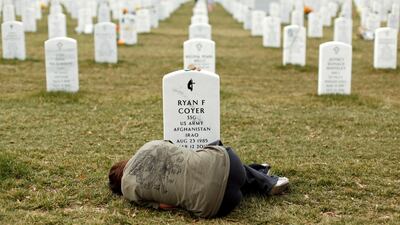
Lesleigh Coyer, of Saginaw, Michigan, lies down in front of the grave of her brother, Ryan Coyer, who served with the US Army in both Iraq and Afghanistan, at Arlington National Cemetery in Virginia, US, March 11, 2013. Reuters -
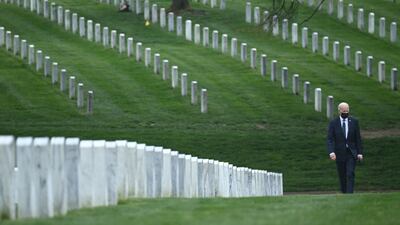
US President Joe Biden walks through Arlington National cemetary to honour fallen veterans of the Afghan conflict in Arlington, Virginia on April 14. AFP



