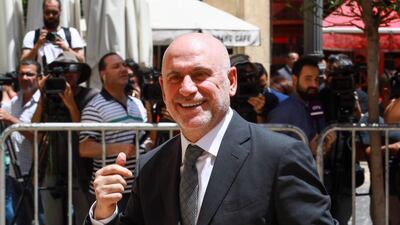
Late last week, Saad Hariri, Lebanon’s former prime minister and the scion of the Hariri political and business clan, decided to nominate himself as a candidate to form the next Lebanese government.
Mr Hariri put his name forward unilaterally after Mustapha Adib, a former diplomat, failed in his bid to form a government of technocrats that could push through a raft of reform measures. The measures were sorely needed in order to save the country from economic collapse and unlock a financial aid package from the international community.
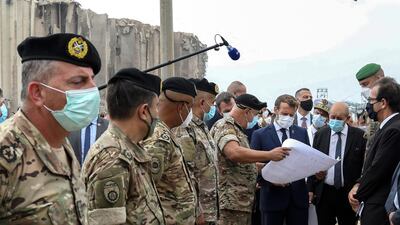
These measures were championed by French President Emmanuel Macron, who visited Lebanon in the aftermath of a cataclysmic explosion in Beirut in August, which levelled much of the city and rendered more than 250,000 people homeless. Mr Adib’s bid failed due to the intransigence of Hezbollah and Amal, the main Shia parties, who insisted on naming the new finance minister.
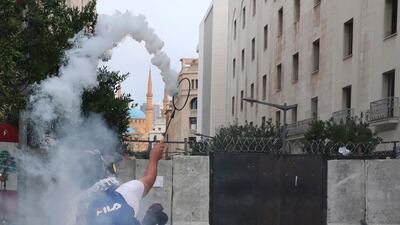
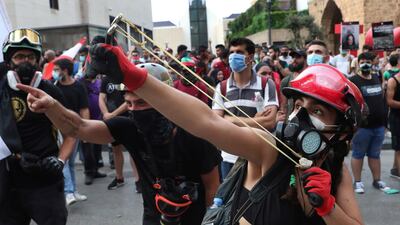
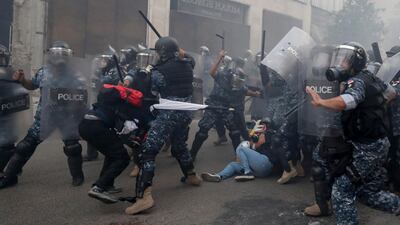
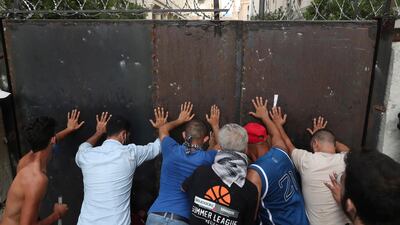
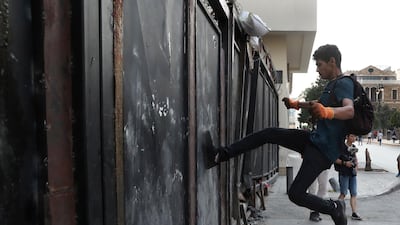
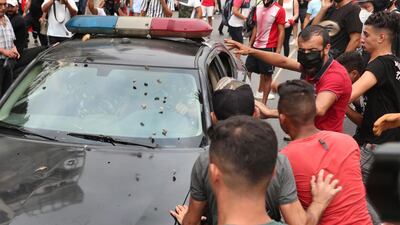
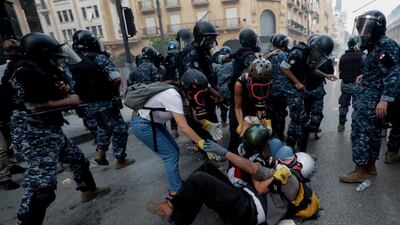
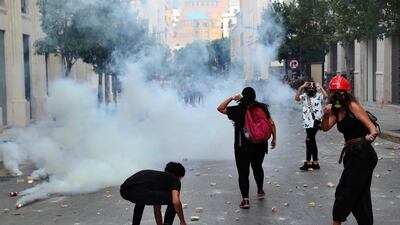
Mr Adib’s failure and Mr Hariri’s self-proclamation coincide with the one-year anniversary of a popular protest movement that began on October 17, 2019. The protesters have called for the removal of a craven and corrupt political class that has brought Lebanon to ruin.
The movement has won admiration around the world for its creativity and – most notably – the absence of sectarianism. Mr Hariri was in power at the time it began, and its popularity was responsible for his resignation.
His return does not bode well for any real departure from the political class that has proved so problematic for Lebanon. A lack of substantive change would be seen as a betrayal of the uprising.
The nominal spark that lit the protest movement in Lebanon was a proposed tax on WhatsApp calls, but it was only the latest stick to break the proverbial camel’s back. The Lebanese had weathered decades of poverty and nepotism under a system that distributed power based on sectarian affiliation.
Hezbollah, beholden to Iran, maintained military supremacy, a gun that it wielded to cow its opponents, and sometimes assassinate them. It created a state within a state.
The war in Syria worsened the destitution in Lebanon. One million refugees sought shelter across the border, adding to an existing population of 4 million. Hezbollah’s intervention to secure the regime of Bashar Al Assad in Damascus led to a spillover of violence, including suicide attacks by terrorist groups and sectarian clashes in major cities like Sidon and Tripoli.
Lebanon became the first Arab nation to experience hyperinflation
As citizens suffered, many of the country’s political elites continued to enrich themselves and wield influence to expand their patronage networks and protect their ill-gotten gains, leaving ordinary people without even basic services, like 24-hour access to electricity or water or garbage disposal.
The preeminent slogan of the uprising was “kellon yaani kellon”, or “all of them means all of them”, a brave proclamation that demanded nothing less than the ousting of the entire political class. The movement captured global attention last October with its good humour, musical prowess and sheer joy.
It did not last, largely because the depth of the depravity of most of the ruling class had not yet become apparent. A monumental economic collapse shortly began unravelling Lebanon's entire financial system, the very structure of which was morally corrupt.
Banks were reliant on fictionally high interest rates meant to attract US dollar deposits, which were then loaned to the government. As the state and banks ran out of foreign currency late last year, tens of billions of dollars were transferred abroad, and ordinary citizens paid the price, locked out of their bank accounts to preserve bankrupt institutions.
More people were plunged into poverty as the currency eventually lost 80 per cent of its value, and Lebanon became the first Arab nation to experience hyperinflation.
Then came the explosion in August of thousands of tons of ammonium nitrate that had simply been left unattended in the Beirut Port. The destruction is such that there is no word that quite captures the catastrophic levels of criminal negligence, and yet the same political elites who held power before remained in control after.
Finally, the coronavirus pandemic continues to ravage the country, with thousands of cases reported daily. The country now has over 55,000 officially recorded cases as of this writing.
The jubilation of the protest movement has been replaced by a hopelessness that things could ever change and an overwhelming desire among young people to leave.
Mr Macron’s initiative is laudable but ultimately unlikely to succeed. It may succeed in pushing some limited reforms that would head off further poverty, destitution and food insecurity. But in their essence, his proposals are meant to urge a shift in power away from a political elite that has long profited and cemented its power through the misery of ordinary citizens. Asking them to give it away voluntarily is a fool’s errand.
Mr Hariri himself may not be personally responsible for the calamity the country finds itself in, but he is still considered a member of the elite political class. So, it is difficult to see his return as a signal that meaningful change will materialise.
Kareem Shaheen is a veteran Middle East correspondent in Canada and a columnist for The National

Who has been sanctioned?
Daniella Weiss and Nachala
Described as 'the grandmother of the settler movement', she has encouraged the expansion of settlements for decades. The 79 year old leads radical settler movement Nachala, whose aim is for Israel to annex Gaza and the occupied West Bank, where it helps settlers built outposts.
Harel Libi & Libi Construction and Infrastructure
Libi has been involved in threatening and perpetuating acts of aggression and violence against Palestinians. His firm has provided logistical and financial support for the establishment of illegal outposts.
Zohar Sabah
Runs a settler outpost named Zohar’s Farm and has previously faced charges of violence against Palestinians. He was indicted by Israel’s State Attorney’s Office in September for allegedly participating in a violent attack against Palestinians and activists in the West Bank village of Muarrajat.
Coco’s Farm and Neria’s Farm
These are illegal outposts in the West Bank, which are at the vanguard of the settler movement. According to the UK, they are associated with people who have been involved in enabling, inciting, promoting or providing support for activities that amount to “serious abuse”.
SPEC%20SHEET%3A%20SAMSUNG%20GALAXY%20S23%20ULTRA
%3Cp%3E%3Cstrong%3EDisplay%3A%3C%2Fstrong%3E%206.8%22%20edge%20quad-HD%2B%20dynamic%20Amoled%202X%2C%20Infinity-O%2C%203088%20x%201440%2C%20500ppi%2C%20HDR10%2B%2C%20120Hz%3C%2Fp%3E%0A%3Cp%3E%3Cstrong%3EProcessor%3A%3C%2Fstrong%3E%204nm%20Qualcomm%20Snapdragon%208%20Gen%202%2C%2064-bit%20octa-core%3C%2Fp%3E%0A%3Cp%3E%3Cstrong%3EMemory%3A%3C%2Fstrong%3E%208%2F12GB%20RAM%3C%2Fp%3E%0A%3Cp%3E%3Cstrong%3EStorage%3A%3C%2Fstrong%3E%20128%2F256%2F512GB%2F1TB%20(only%20128GB%20has%20an%208GB%20RAM%20option)%3C%2Fp%3E%0A%3Cp%3E%3Cstrong%3EPlatform%3A%3C%2Fstrong%3E%20Android%2013%3C%2Fp%3E%0A%3Cp%3E%3Cstrong%3EMain%20camera%3A%3C%2Fstrong%3E%20quad%2012MP%20ultra-wide%20f%2F2.2%20%2B%20200MP%20wide%20f%2F1.7%20%2B%2010MP%20telephoto%20f%2F4.9%20%2B%2010MP%20telephoto%202.4%3B%203x%2F10x%20optical%20zoom%2C%20Space%20Zoom%20up%20to%20100x%3B%20auto%20HDR%2C%20expert%20RAW%3C%2Fp%3E%0A%3Cp%3E%3Cstrong%3EVideo%3A%3C%2Fstrong%3E%208K%4024%2F30fps%2C%204K%4060fps%2C%20full-HD%4060fps%2C%20HD%4030fps%2C%20full-HD%20super%20slo-mo%40960fps%3C%2Fp%3E%0A%3Cp%3E%3Cstrong%3EFront%20camera%3A%3C%2Fstrong%3E%2012MP%20f%2F2.2%3C%2Fp%3E%0A%3Cp%3E%3Cstrong%3EBattery%3A%3C%2Fstrong%3E%205000mAh%2C%20fast%20wireless%20charging%202.0%2C%20Wireless%20PowerShare%3C%2Fp%3E%0A%3Cp%3E%3Cstrong%3EConnectivity%3A%3C%2Fstrong%3E%205G%2C%20Wi-Fi%2C%20Bluetooth%205.2%2C%20NFC%3C%2Fp%3E%0A%3Cp%3E%3Cstrong%3EI%2FO%3A%3C%2Fstrong%3E%20USB-C%3B%20built-in%20Galaxy%20S%20Pen%3C%2Fp%3E%0A%3Cp%3E%3Cstrong%3ESIM%3A%3C%2Fstrong%3E%20single%20nano%20%2F%20nano%20%2B%20eSIM%20%2F%20nano%20%2B%20nano%20%2B%20eSIM%20%2F%20nano%20%2B%20nano%3C%2Fp%3E%0A%3Cp%3E%3Cstrong%3EColours%3A%3C%2Fstrong%3E%20cream%2C%20green%2C%20lavender%2C%20phantom%20black%3B%20online%20exclusives%3A%20graphite%2C%20lime%2C%20red%2C%20sky%20blue%3C%2Fp%3E%0A%3Cp%3E%3Cstrong%3EPrice%3A%3C%2Fstrong%3E%20Dh4%2C949%20for%20256GB%2C%20Dh5%2C449%20for%20512GB%2C%20Dh6%2C449%20for%201TB%3B%20128GB%20unavailable%20in%20the%20UAE%3C%2Fp%3E%0A
COMPANY%20PROFILE
%3Cp%3E%3Cstrong%3EName%3A%20%3C%2Fstrong%3EEjari%3Cbr%3E%3Cstrong%3EBased%3A%20%3C%2Fstrong%3ERiyadh%2C%20Saudi%20Arabia%3Cbr%3E%3Cstrong%3EFounders%3A%20%3C%2Fstrong%3EYazeed%20Al%20Shamsi%2C%20Fahad%20Albedah%2C%20Mohammed%20Alkhelewy%20and%20Khalid%20Almunif%3Cbr%3E%3Cstrong%3ESector%3A%20%3C%2Fstrong%3EPropTech%3Cbr%3E%3Cstrong%3ETotal%20funding%3A%20%3C%2Fstrong%3E%241%20million%3Cbr%3E%3Cstrong%3EInvestors%3A%20%3C%2Fstrong%3ESanabil%20500%20Mena%2C%20Hambro%20Perks'%20Oryx%20Fund%20and%20angel%20investors%3Cbr%3E%3Cstrong%3ENumber%20of%20employees%3A%20%3C%2Fstrong%3E8%3C%2Fp%3E%0A
Where to donate in the UAE
The Emirates Charity Portal
You can donate to several registered charities through a “donation catalogue”. The use of the donation is quite specific, such as buying a fan for a poor family in Niger for Dh130.
The General Authority of Islamic Affairs & Endowments
The site has an e-donation service accepting debit card, credit card or e-Dirham, an electronic payment tool developed by the Ministry of Finance and First Abu Dhabi Bank.
Al Noor Special Needs Centre
You can donate online or order Smiles n’ Stuff products handcrafted by Al Noor students. The centre publishes a wish list of extras needed, starting at Dh500.
Beit Al Khair Society
Beit Al Khair Society has the motto “From – and to – the UAE,” with donations going towards the neediest in the country. Its website has a list of physical donation sites, but people can also contribute money by SMS, bank transfer and through the hotline 800-22554.
Dar Al Ber Society
Dar Al Ber Society, which has charity projects in 39 countries, accept cash payments, money transfers or SMS donations. Its donation hotline is 800-79.
Dubai Cares
Dubai Cares provides several options for individuals and companies to donate, including online, through banks, at retail outlets, via phone and by purchasing Dubai Cares branded merchandise. It is currently running a campaign called Bookings 2030, which allows people to help change the future of six underprivileged children and young people.
Emirates Airline Foundation
Those who travel on Emirates have undoubtedly seen the little donation envelopes in the seat pockets. But the foundation also accepts donations online and in the form of Skywards Miles. Donated miles are used to sponsor travel for doctors, surgeons, engineers and other professionals volunteering on humanitarian missions around the world.
Emirates Red Crescent
On the Emirates Red Crescent website you can choose between 35 different purposes for your donation, such as providing food for fasters, supporting debtors and contributing to a refugee women fund. It also has a list of bank accounts for each donation type.
Gulf for Good
Gulf for Good raises funds for partner charity projects through challenges, like climbing Kilimanjaro and cycling through Thailand. This year’s projects are in partnership with Street Child Nepal, Larchfield Kids, the Foundation for African Empowerment and SOS Children's Villages. Since 2001, the organisation has raised more than $3.5 million (Dh12.8m) in support of over 50 children’s charities.
Noor Dubai Foundation
Sheikh Mohammed bin Rashid Al Maktoum launched the Noor Dubai Foundation a decade ago with the aim of eliminating all forms of preventable blindness globally. You can donate Dh50 to support mobile eye camps by texting the word “Noor” to 4565 (Etisalat) or 4849 (du).
Killing of Qassem Suleimani
The Sand Castle
Director: Matty Brown
Stars: Nadine Labaki, Ziad Bakri, Zain Al Rafeea, Riman Al Rafeea
Rating: 2.5/5
Match info:
Wolves 1
Boly (57')
Manchester City 1
Laporte (69')
The Melbourne Mercer Global Pension Index
Mazen Abukhater, principal and actuary at global consultancy Mercer, Middle East, says the company’s Melbourne Mercer Global Pension Index - which benchmarks 34 pension schemes across the globe to assess their adequacy, sustainability and integrity - included Saudi Arabia for the first time this year to offer a glimpse into the region.
The index highlighted fundamental issues for all 34 countries, such as a rapid ageing population and a low growth / low interest environment putting pressure on expected returns. It also highlighted the increasing popularity around the world of defined contribution schemes.
“Average life expectancy has been increasing by about three years every 10 years. Someone born in 1947 is expected to live until 85 whereas someone born in 2007 is expected to live to 103,” Mr Abukhater told the Mena Pensions Conference.
“Are our systems equipped to handle these kind of life expectancies in the future? If so many people retire at 60, they are going to be in retirement for 43 years – so we need to adapt our retirement age to our changing life expectancy.”
Saudi Arabia came in the middle of Mercer’s ranking with a score of 58.9. The report said the country's index could be raised by improving the minimum level of support for the poorest aged individuals and increasing the labour force participation rate at older ages as life expectancies rise.
Mr Abukhater said the challenges of an ageing population, increased life expectancy and some individuals relying solely on their government for financial support in their retirement years will put the system under strain.
“To relieve that pressure, governments need to consider whether it is time to switch to a defined contribution scheme so that individuals can supplement their own future with the help of government support,” he said.
Sheikh Zayed's poem
When it is unveiled at Abu Dhabi Art, the Standing Tall exhibition will appear as an interplay of poetry and art. The 100 scarves are 100 fragments surrounding five, figurative, female sculptures, and both sculptures and scarves are hand-embroidered by a group of refugee women artisans, who used the Palestinian cross-stitch embroidery art of tatreez. Fragments of Sheikh Zayed’s poem Your Love is Ruling My Heart, written in Arabic as a love poem to his nation, are embroidered onto both the sculptures and the scarves. Here is the English translation.
Your love is ruling over my heart
Your love is ruling over my heart, even a mountain can’t bear all of it
Woe for my heart of such a love, if it befell it and made it its home
You came on me like a gleaming sun, you are the cure for my soul of its sickness
Be lenient on me, oh tender one, and have mercy on who because of you is in ruins
You are like the Ajeed Al-reem [leader of the gazelle herd] for my country, the source of all of its knowledge
You waddle even when you stand still, with feet white like the blooming of the dates of the palm
Oh, who wishes to deprive me of sleep, the night has ended and I still have not seen you
You are the cure for my sickness and my support, you dried my throat up let me go and damp it
Help me, oh children of mine, for in his love my life will pass me by.
Killing of Qassem Suleimani
Moving%20Out%202
%3Cp%3E%3Cstrong%3EDeveloper%3A%3C%2Fstrong%3E%20SMG%20Studio%3Cbr%3E%3Cstrong%3EPublisher%3A%3C%2Fstrong%3E%20Team17%3Cbr%3E%3Cstrong%3EConsoles%3A%3C%2Fstrong%3E%20Nintendo%20Switch%2C%20PlayStation%204%26amp%3B5%2C%20PC%20and%20Xbox%20One%3Cbr%3E%3Cstrong%3ERating%3A%3C%2Fstrong%3E%204%2F5%3C%2Fp%3E%0A
WITHIN%20SAND
%3Cp%3EDirector%3A%20Moe%20Alatawi%3C%2Fp%3E%0A%3Cp%3EStarring%3A%20Ra%E2%80%99ed%20Alshammari%2C%20Adwa%20Fahd%2C%20Muhand%20Alsaleh%3C%2Fp%3E%0A%3Cp%3ERating%3A%203%2F5%3C%2Fp%3E%0A
Who's who in Yemen conflict
Houthis: Iran-backed rebels who occupy Sanaa and run unrecognised government
Yemeni government: Exiled government in Aden led by eight-member Presidential Leadership Council
Southern Transitional Council: Faction in Yemeni government that seeks autonomy for the south
Habrish 'rebels': Tribal-backed forces feuding with STC over control of oil in government territory