

The killing of George Floyd, the black American man, in the US state of Minnesota should horrify everyone who has seen the video of the incident. A white policeman kneels for almost nine minutes on Floyd's neck as he repeatedly says "I can't breathe". It is an image that personifies injustice.
The protests that have spread throughout the US are the only conceivable response to this kind of police brutality. While the looting that took place is inexcusable, it is hard to fathom how people could move on from this level of outright racial prejudice and the ingrained structures of systemic discrimination, particularly because such incidents have repeatedly occurred in America.
But the incident and its fallout should provoke some self-reflection in the Arab world to the systemic forms of racial, religious and class discrimination that are so pervasive in our societies and have played important roles in fomenting war and conflict, the elimination of minorities and the creation of underclasses that face routine abuse.
-
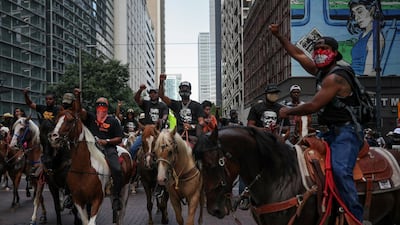
Protesters on horseback rally against the death in Minneapolis police custody of George Floyd, through central Houston, Texas. Reuters -
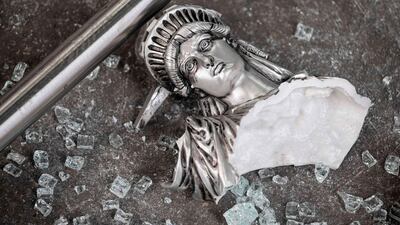
A broken Statue of Liberty figure is seen between glass shatters outside a looted souvenir shop after a night of protest against the death of an African-American man George Floyd in Minneapolis in Manhattan in New York City. AFP -
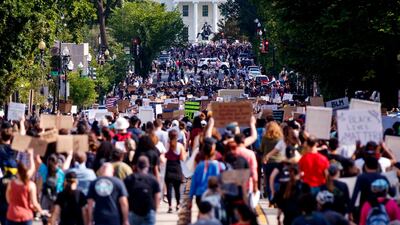
People, who gathered in protest against the death of George Floyd, peacefully march to the White House in Washington DC. EPA -
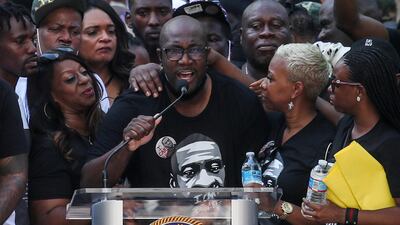
Philonise Floyd, brother of George Floyd, who died in Minneapolis police custody, is surrounded by family members as he speaks at a protest rally against his brother’s death, in Houston, Texas. Reuters -
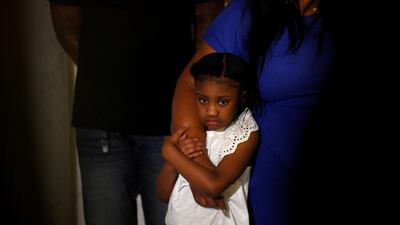
George Floyd's daughter, Gianna Floyd, 6, is seen during a press conference at Minneapolis City Hall following the death in Minneapolis police custody of George Floyd in Minneapolis, Minnesota. Reuters -
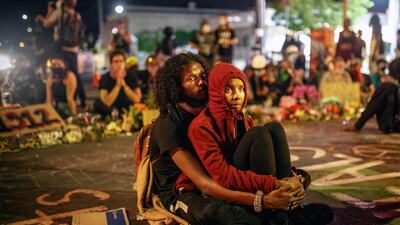
A Somali-American couple, alongside protesters calling for justice for the death of George Floyd, waits after curfew outside the Cup Foods in Minneapolis, Minnesota. AFP -
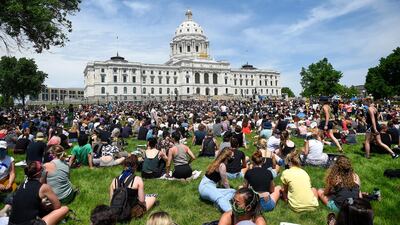
Thousands of protesters turn out for a sit-in at the State capitol, more than a week after George Floyd's death while under arrest, in St Paul, Minnesota. EPA -
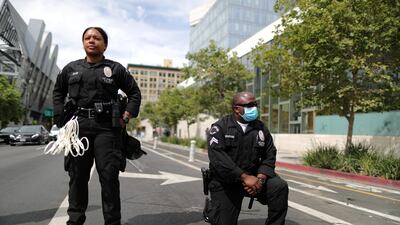
A police officer kneels during a protest against the death in Minneapolis police custody of George Floyd, outside LAPD headquarters in Los Angeles, California. Reuters -
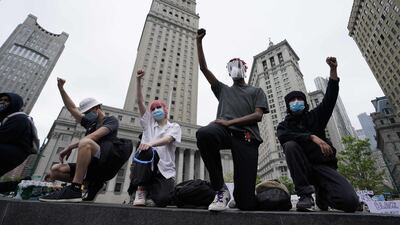
Protesters during a 'Black Lives Matter' demonstration in New York City. AFP -
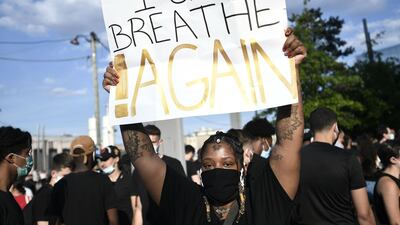
A protester holds a placard during a demonstration after French medical experts exonerated the gendarmes involved in the arrest of Adama Traore, a young black man who died in police custody in 2016, outside the 'Tribunal de Paris' courthouse in Paris. AFP -
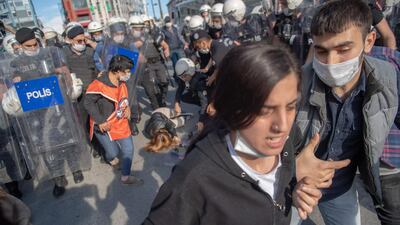
Turkish leftist demonstrators clash with police at Kadikoy in Istanbul, as leftist groups gather in support of US protesters against the death of George Floyd in Minneapolis police custody, and against police violence in Turkey. AFP -
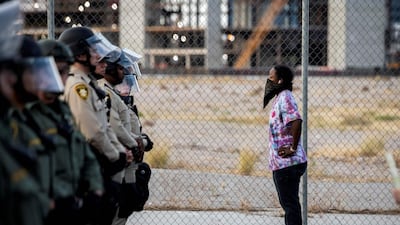
A woman stands in front of Police officers, in downtown Las Vegas, as they take part in a 'Black lives matter' rally in response to the recent death of George Floyd, an unarmed black man who died in police custody. AFP -
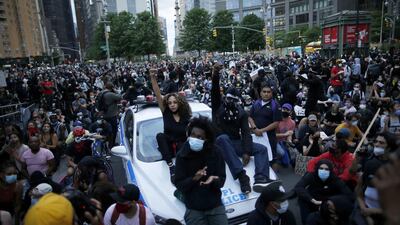
People take part in a protest against the death in Minneapolis police custody of George Floyd, at Trump International Hotel in New York. Reuters -
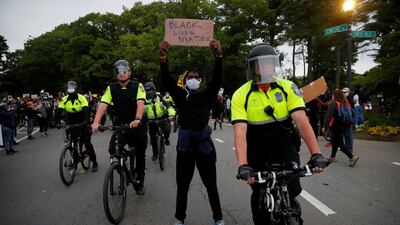
A demonstrator holds a sign during a rally following the death in Minneapolis police custody of George Floyd, in Boston, Massachusetts. Reuters -
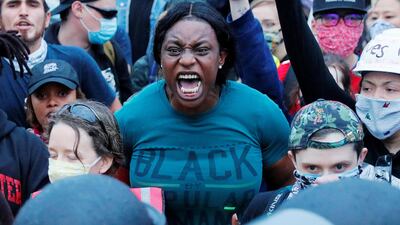
A demonstrator reacts during a rally following the death in Minneapolis police custody of George Floyd, in Boston, Massachusetts. Reuters -
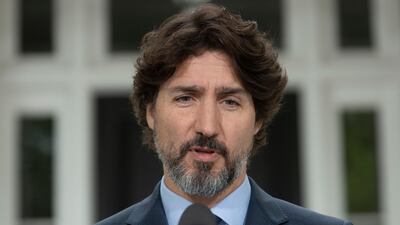
Canadian Prime Minister Justin Trudeau responds to a question on racism during a news conference outside Rideau Cottage in Ottawa. Mr Trudeau said Canadians were watching what’s unfolding in the US with 'horror and consternation'. AP -
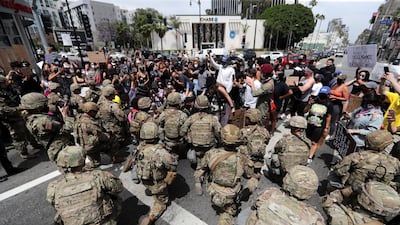
Members of the National Guard take a knee as people protest against the death of George Floyd in Minneapolis police custody, in Hollywood, Califronia. EPA


People are not born racists, but they are acclimatised to it over time through language and cultural references that promote the superiority or inferiority of segments of society.
We are often quick to justifiably condemn Islamophobia and profiling of Middle Easterners in the West, but racist tropes are prevalent in our language and culture, such as the repeated use of blackface in films and television as well as the stereotyping of black Middle Easterners in those same cultural productions – a case in point is the treatment of Nubians in Egyptian cinema, who were often depicted as simpletons and servants. Standards of beauty often refer to fair-skinned, blue-eyed blondes as the pinnacle, whereas black skin is cause for rejection. Anti-semitism is also widespread in cultural and religious discourse, because of a failure to distinguish opposing Zionism and supporting the Palestinian cause from Judaism as a faith, a crime that some Arab governments as well as Israel are complicit in.
This racism is also evident in the treatment of domestic and migrant workers. In extreme cases, it takes the form of sadistic abuse, including murder and torture. But most frequently, it is seen in persistent and myriad injustices, such as forced confinement, terrible living conditions, withholding wages and passports, verbal abuse, overwork and other modes discrimination that show that the abuser thinks of them as lesser humans. Viral videos of abuse of domestic and migrant workers, and the workers' desperate attempts at escape, sometimes even by jumping out of balconies, are testament to this horrific injustice.

These abuses are always extended to the demonised community du jour. In Lebanon, for instance, widespread abuse of domestic workers is routine and normalised, but so is racism against Syrians, over a million of whom took refuge in the country from the war, even by politicians and in mainstream media outlets.
Other forms of systemic prejudice have been far deadlier and have underpinned many of the region’s conflicts over the past two decades. Sectarian hatreds in Iraq fuelled the terrible civil war that followed the beginning of the American occupation, to the point where the sect of the perpetrator of the violence could be determined through the mode in which the victim was killed – a beheading meant the victim was probably Shia, while a hole drilled in the head meant they were Sunni.
In Syria, the regime of Bashar Al Assad very quickly adopted a sectarian narrative in explaining the conflict to the outside world, positioning itself as a protector of minorities who had to be saved from uncouth extremists bent on creating a caliphate. The violence and destruction ensured that this became a self-fulfilling prophecy, giving rise to groups like ISIS that slaughtered Shia, Alawites, Druze and fellow Sunnis who rejected their nihilism, enslaved thousands of Yazidis after branding them devil worshippers and exiled Christians from their ancestral homes in the Nineveh plains.

Mr Al Assad's shock troops, on the other hand, comprised Shia militias from Iraq and Lebanon, which committed widespread atrocities in Iraq and Syria, including extrajudicial killings, forced disappearances and sectarian cleansing of Sunni communities. It is impossible today to conceive of a peaceful, healthy Syrian society in which the elements that once made up the country's beautiful and diverse mosaic are able to live together in harmony again.
The coronavirus pandemic is likely to contribute to xenophobia and discrimination as countries turn inwards and the fear of strangers takes root. Prejudice against south-east Asians and the anti-Chinese racism, for example, that is promoted by US President Donald Trump, who branded the pathogen a "Chinese virus", can be seen in the widespread Arab social media memes that mock and blame ordinary Chinese citizens for the spread of the disease.
There is much work to be done if we are to address the root causes of racism in our part of the world. Part of it is the responsibility of some governments, who have vilified or scapegoated minorities and other groups over the decades to cement their hold on power.
They must do better in creating protections for domestic and migrant workers, in fighting disinformation and stereotypes in the popular culture and the media, and in addressing the root causes of poverty and ignorance that contribute to xenophobia. Religious authorities should emphasise the egalitarian values and commonalities between Islam, its sects, and the world’s faiths, rather than allowing their pulpits to be used to sow division.
But we also have to do better. We have to talk to our children about racism, about ingrained and systemic injustice, to expose them to a diversity of experiences and narratives and life stories. To teach them to stand up even when they are not the direct victims of injustice. To question these structures that enshrine inequality.
As the Prophet’s companion and Islam’s second caliph, Omar ibn Al Khattab, said, “when did you start enslaving people, when their mothers birthed them free?”
Kareem Shaheen is a former Middle East correspondent based in Canada

