
For much of the world, it's the beginning of the festive season. Or is it? With just over six weeks to Christmas, lockdowns with varying degrees of severity are sweeping Europe. Measures are being implemented in France, Germany, Italy, Spain, Belgium, Portugal, Netherlands, Czech Republic, Denmark and Ireland. The UK, where I am, has just begun its second national lockdown in England, due to end on December 2 but with caveats that it could go on much longer.
After a difficult year, this is not the news that people were hoping for. Many were caught out while planning for the run-up to Christmas, and are now left unsure about whether lockdown measures will allow them to be with their family and loved ones. In fact, the situation in the coming weeks will also affect Diwali, Hanukkah and Kartik Purnima – cherished and significant festivals in their respective faiths.
Many of us in the Muslim community already spent Ramadan and two Eids in lockdown this year. Here’s what I learned from that experience, and some reflections which may offer comfort.
-
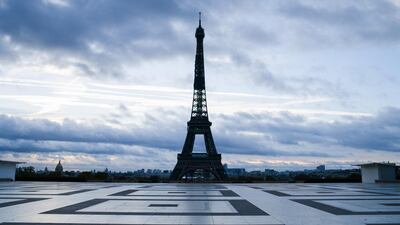
The Eiffel Tower beside the empty Trocadero Square in Paris, France. France implemented a second national lockdown on Friday. Bloomberg -
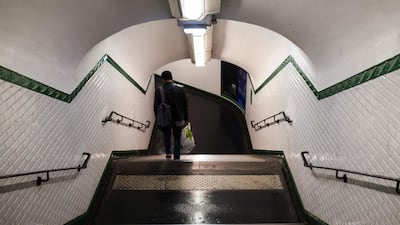
A solitary traveler walks down a staircase in an underground metro railway station in Paris. Bloomberg -
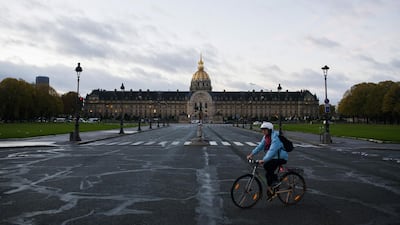
A cyclist rides across an empty road junction near Les Invalides in Paris. Bloomberg -
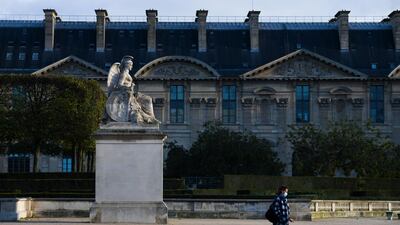
A pedestrian wearing a protective face mask passes the Louvre Museum in Paris. Bloomberg -
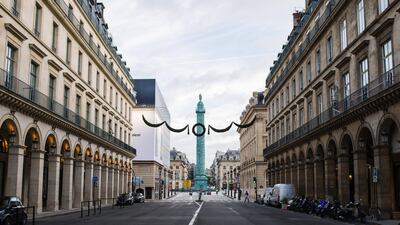
A traffic free street leading to Place Vendome luxury retail area in Paris. Bloomberg -
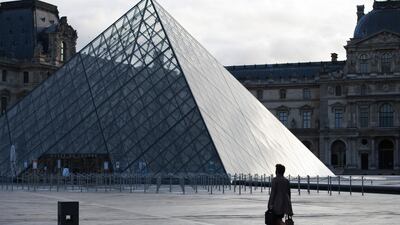
A pedestrian crosses the empty courtyard outside the Louvre Museum during morning rush hour in Paris. Bloomberg -
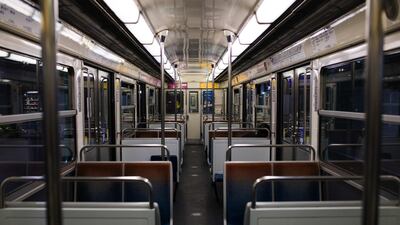
Empty passenger seats in an underground metro railway train in Paris. Bloomberg -
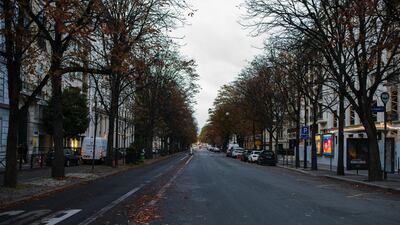
The traffic free Avenue Montaigne in Paris. Bloomberg -
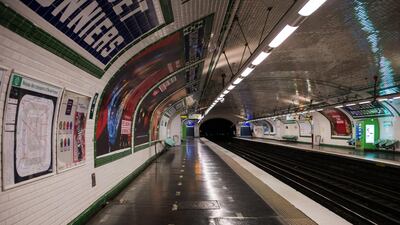
Empty platforms in the Marcadet – Poissonniers underground metro railway station in Paris. Bloomberg


Some aspects of togetherness, for social or spiritual reasons, might be lost. But the losses can bring gains.
The pressure to create the perfect festival is off. No more competition to broadcast an Instagram-ready lifestyle. The occasions become not for others or for show, but rather for ourselves. And that cliched thing about rediscovering the "true" meaning of the holidays? Completely true. Illness, death, poverty, fear and, above all, isolation were all around during Ramadan, and all the things that normally obscure the "real" meaning were gone. We get to know first-hand the difficulties that so many others face. Before the Ramadan fast began, I wrote in these pages that this year's holy month wasn't less Ramadan, it was more Ramadan. And the same can apply to the upcoming end-of-year season: this year, it's not less Christmas, it's more Christmas.
The special feeling of Ramadan is all about putting “normal” life on hold, but lockdown was already doing that. The same applies to Christmas. The tensions that can sometimes face the average believer during Ramadan and Eid, as well as Christmas – doing it for show, the stress, more focus on feeding others than the self, wastage, spending, extravagance – were properly punctured. We learned the joy of global Zoom calls on the big day itself. All the good bits of seeing everyone without any of the long car journeys or clearing up afterwards.
For those who are religious – or perhaps would like to engage with religion for the first time – the wide, online nature of services from around the world are a phenomenal chance to experience different kinds of services, religious leaders, scholars and religious approaches.
-
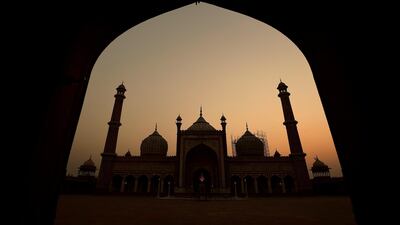
A general view of the Jama Masjid is seen on the last Friday of Ramadan after the government eased restrictions imposed as a preventive measure against the spread of the COVID-19 Coronavirus in the old quarters of New Delhi, India. AFP -
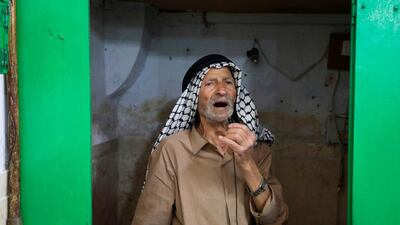
An elderly man calls for prayer and Palestinians gather for the last Friday prayer of the month of Ramadan inside the al-Sunyieh mosque in the old city of the occupied West Bank town of Hebron. AFP -
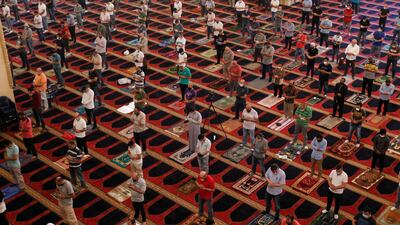
Muslims worshippers participate in the last Friday prayer of Ramadan, amid concerns over the spread of the coronavirus disease (COVID-19) outbreak, at al-Amin mosque in Beirut, Lebanon. Reuters -
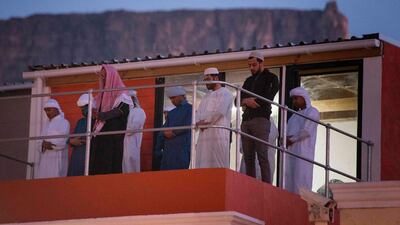
Members of a Muslim family perform the evening prayer after the evening fast-breaking meal, Iftar, during the Muslim fasting month of Ramadan, on a balcony in Bo-Kaap, Cape Town, South Africa. AFP -
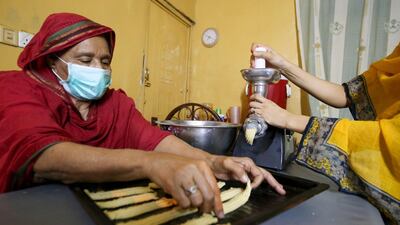
A Sudanese family prepares traditional biscuits at their home in the capital Khartoum ahead of the Eid al-Fitr feast marking the end of the Muslim holy month of Ramadan. AFP -
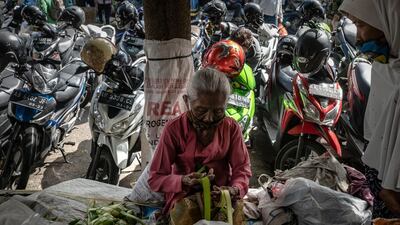
An elderly woman seller weaves a fresh coconut leaves used to make traditional rice cakes known as 'Ketupat' at traditional market in preparation of the upcoming Eid al-Fitr holiday in Yogyakarta, Indonesia. Getty Images -
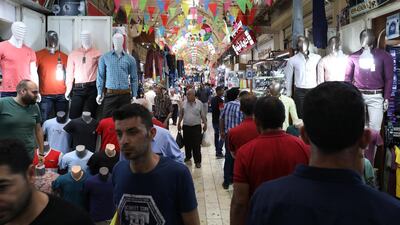
People go shopping ahead of the Eid al-Fitr holidays, in the West Bank city of Nablus. EPA -
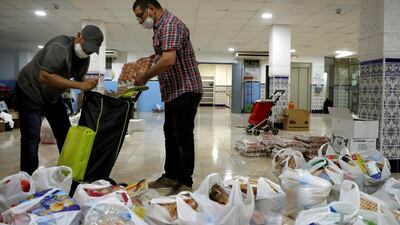
Volunteers with the Catalan Islamic Cultural Center of Barcelona prepare packages of food to be delivered during the Eid al-Fitr holidays in Barcelona, Catalonia, Spain. EPA -
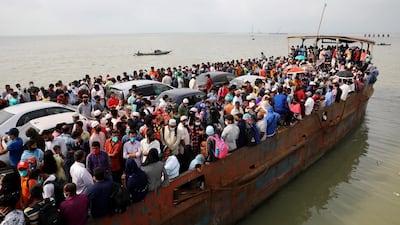
Migrant people are seen on board of an overcrowded ferry, as they go home to celebrate Eid al-Fitr in Munshiganj, Bangladesh. Reuters -
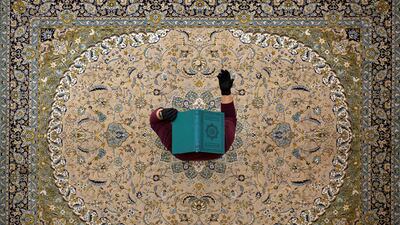
A young Iraqi Muslim man covers his head with the Quran on 'Lailat al Qardr' or the 'night of destiny' that during the holy month of Ramadan marks the night when the Koran was first revealed to the Prophet Muhammad, at a mosque in the southern Iraqi city of Basra. AFP


Festivals can be more inclusive than ever this year. The Muslim celebrations brought joy to many beyond Muslim families, because everyone no matter their background wanted to be part of something uplifting, celebratory and human. We can find the end of this year inclusive in the same way, bringing joy and togetherness in a celebration of humanity and struggle.
In fact, in previous years many have often found the festive season to feel lonely and isolating, especially if they were held back by cost, disability or social exclusion. With everyone going through the same thing, we are all in similar boats. And being more conscious of isolation means that those who were previously left out are now in the circle. We have a chance to level up and bring people into the fold.
Inclusivity also means recognising what others have been experiencing throughout the year, but that we were previously unaware of. Christian communities in Europe will be fortunate to have some time to prepare, psychologically and logistically, for a holiday under coronavirus restrictions. By contrast, before this year's Eid Al Fitr had to take place in lockdown, there were hopes that the holiday would be a "normal" celebration. In the UK, lockdown was only announced at 9pm the night before Eid Al Adha, and celebrations were cancelled in parts of the country with large Muslim communities. Food had already been prepared, gifts were ready and clothes pressed. Many affected British Muslims were left feeling emotionally vulnerable.

Maybe one of the outcomes of this round of lockdowns will be some reflection in other faith communities about what that experience must have been like. And maybe members of the Muslim community will be the most vocal in expressing their sympathy for what other faith communities are about to experience.
At the end of the day we are all the same, seek the same happiness and understand the shared pain many of us are going through. Despite how much we missed out on, we don’t want others to miss out. And while we may have found beauty in our difficulties in the end, why not ensure others have a headstart?
So here’s what I learned as a Muslim after Ramadan and Eid in a pandemic: see this year as a chance to escape from "things" and how things look. Instead, enjoy people who are closest to you and get to know who they really are – especially yourself. Enjoy the chance to level up, and have everyone experiencing the season in a more inclusive way. Most of all, find creative solutions to finding the “real” meaning of togetherness, memories, simplicity and family. Festivals are a time for cliches, so here are mine: love and humanity will always win out, whether we are in difficulty or ease.
Shelina Janmohamed is an author and a culture columnist for The National

