


The world is on the brink of a scientific achievement: a safe, effective Covid-19 vaccine will likely be ready by early next year. In fact, there will probably be more than one vaccine available. This is the development that will finally give the world the chance to eliminate the threat of the pandemic – and return to normal.
Because we can immunise against the disease, governments will be able to lift social distancing measures. People will stop having to wear masks. The world’s economy will start running again at full speed.
But elimination will not happen by itself. To achieve this goal, the world first needs three things: the capacity to produce billions of vaccine doses, the funding to pay for them, and systems to deliver them.
Right now, most of the world's supply of Covid-19 vaccines is slated to go to rich countries. These nations have been making deals with pharmaceutical companies, securing the right to buy billions of doses as soon as they are produced.
But what about low- and lower-middle income nations of the world, everywhere from South Sudan to Nicaragua to Myanmar? These nations are home to nearly half of all human beings, and they do not have the purchasing power to make big deals with pharmaceutical companies. As things stand now, these countries will be able to cover, at most, 14 per cent of their people.
New modelling from Northeastern University helps illustrate what will happen if vaccine distribution is so unequal. The researchers there analysed two scenarios. In one, vaccines are given to countries based on their population size. Then there is another scenario that approximates what is happening now: 50 rich countries get the first 2 billion doses of vaccine. In this scenario, the virus continues to spread unchecked for four months in three quarters of the world. And almost twice as many people die.
This would be a huge moral failing. A vaccine can make Covid-19 a preventable disease, and no one should die from a preventable disease simply because the country they live in cannot afford to secure a manufacturing deal. But you do not even have to care about fairness to see the problem with the “rich-country-only” scenario.
In this scenario, we would all become like Australia and New Zealand. Both have gone long stretches with very few cases inside their borders, but their economies remain depressed because their trading partners are on lockdown. And occasionally, a new carrier of the virus makes his way across the South Pacific, creating new clusters of the disease. Those clusters grow and spread. Schools and offices are shut down again.
Even with an oversupply of vaccine, wealthy nations risk re-infection in this way because not everybody will choose to be vaccinated. The only way to eliminate the threat of this disease somewhere is to eliminate it everywhere.

The best way to close this vaccine gap is not by shaming rich countries. They are doing something perfectly understandable – trying to protect their people. Instead, we need to vastly increase the world’s vaccine manufacturing capacity. This way, we can cover everyone no matter where they live.
Remarkable progress has already been made on this front when it comes to therapeutics. Pharmaceutical companies have agreed to expand drug-making capacity by using each other's factories. Remdesivir, for example, was created by Gilead, but extra quantities will now be produced in Pfizer factories. No company had ever allowed its factories to be used by a competitor in this way, and now we are seeing similar co-operation when it comes to vaccines.
This morning, 16 pharmaceutical companies and our foundation signed an important agreement. Among other things, the companies agreed to co-operate on vaccine manufacturing and to scale up production at an unprecedented speed, ensuring that approved vaccines are broadly distributed as early as possible.
-
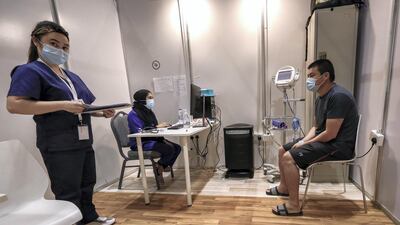
A volunteer undergoes a check-up before being accepted to the Covid-19 vaccine trial at Adnec. Victor Besa / The National -
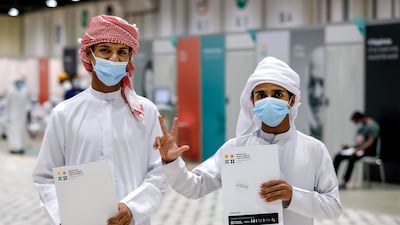
Vaccine volunteers at the Adnec volunteer facility. Victor Besa / The National -
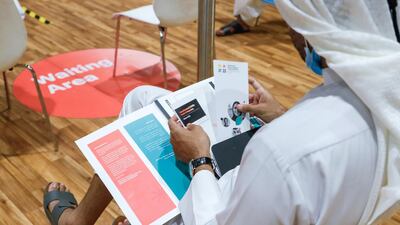
Volunteers read information about the Covid-19 vaccine trial at Abu Dhabi National Exhibition Centre. Victor Besa / The National -
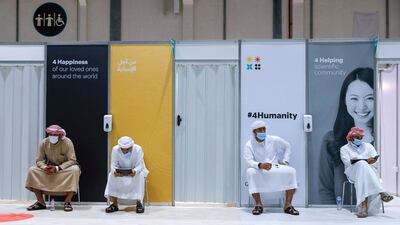
Vaccine volunteers wait to be screened at the Adnec facility. Victor Besa / The National -
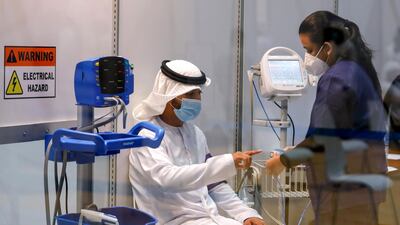
A volunteer has his heart rate checked after registering to take part in the Covid-19 clinical trial in Abu Dhabi. Victor Besa / The National -
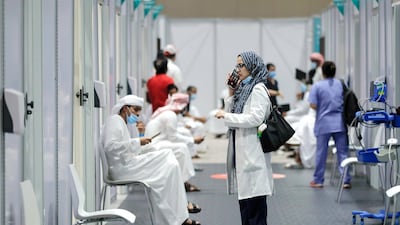
Volunteers wait to be screened and injected with the Covid-19 vaccine at Adnec. Victor Besa / The National -
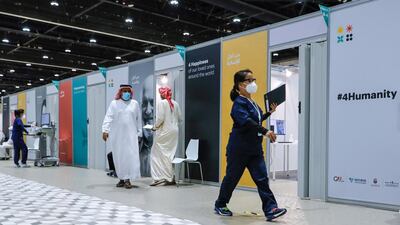
Volunteers are led to a stall where they are screened and vaccinated as part of the Covid-19 vaccine trial in Abu Dhabi. Victor Besa / The National -

Volunteers wait to be screened and injected with the Covid-19 vaccine at Adnec. Victor Besa / The National -
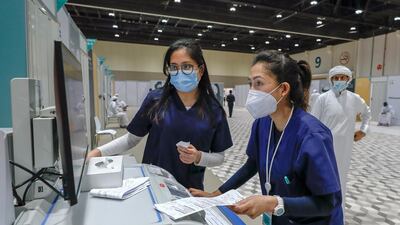
Nurses update medical records as part of the Covid-19 vaccine trial in Abu Dhabi. Victor Besa / The National -
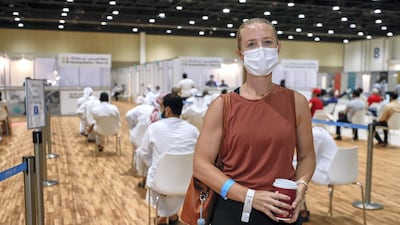
A mother-of-three, 41, has volunteered as part of the Covid-19 vaccine trial because her husband is in the aviation industry, which has been among the hardest hit by the pandemic. Victor Besa / The National -
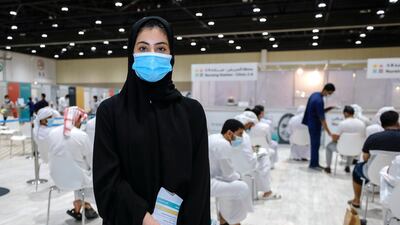
A volunteer, 26, takes part in the Covid-19 vaccine trial to give back and support the UAE. Victor Besa / The National -
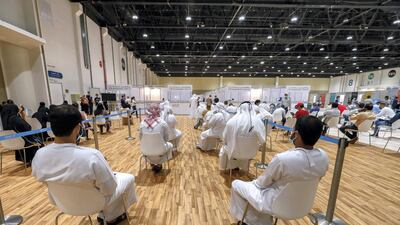
Volunteers wait their turn to be screened and inoculated with the first of two Covid-19 vaccines. Victor Besa / The National -
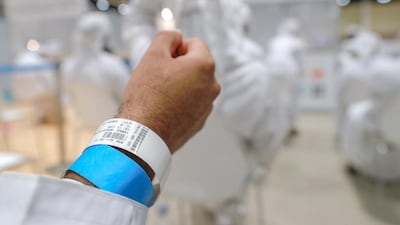
Volunteers wait their turn to be inoculated with the first of two Covid-19 vaccines. Victor Besa / The National -
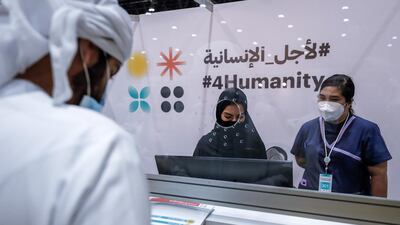
Volunteers register to take part in the Covid-19 vaccine trial in Abu Dhabi. Victor Besa / The National -
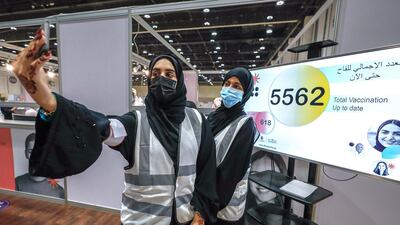
Staff take a selfie in front of the monitor that displays the number of volunteers who have been vaccinated since the start if the trial. Victor Besa / The National -
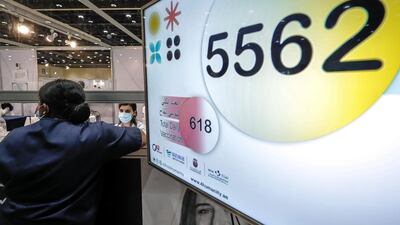
A monitor displays the number of volunteers who have received their first vaccine since the trial began. Victor Besa / The National -

A volunteer waits her turn to get a medical check up at the Covid-19 vaccine trial facility in Abu Dhabi. Victor Besa / The National -
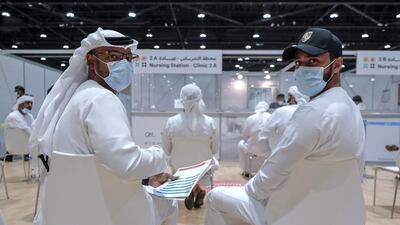
Volunteers read information about the Covid-19 vaccine trial at Abu Dhabi National Exhibition Centre. Victor Besa / The National -
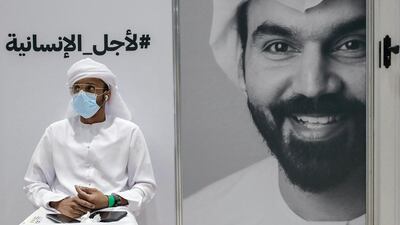
Volunteers for the Covid-19 vaccine trial wait to be screened at Abu Dhabi National Exhibition Centre. Victor Besa / The National


In addition to the manufacturing capacity to make them, we also need the funding to pay for billions of vaccine doses for poorer nations. This is where the ACT-Accelerator can help. It is an initiative supported by organisations such as Gavi and the Global Fund. Not many people have heard of them, but they have spent two decades becoming experts in the task of financing vaccines, drugs, and diagnostics.
Pharmaceutical companies have made the financing easier, foregoing profits on any Covid-19 vaccine and agreeing to make them as affordably as possible. But public funding is needed, too.
The UK is a good model for what other wealthy nations should do. It has donated enough money for the Accelerator to procure, probably, hundreds of millions of vaccine doses for poor countries. I hope other nations are as generous.
Gulf countries should also be commended for supporting the ACT-Accelerator, which will underwrite the manufacturing of doses both for their people, as well as the world's poorest. But more support is still needed.
Finally, even when the world has the manufacturing capacity and funding lined up, we will need to strengthen health systems – the workers and infrastructure that can actually deliver vaccines to people around the world.
There is a lot to be learned from the ongoing effort to eradicate polio. One of the most famous photos of the polio eradication effort in India was of a line of health workers. They were carrying vaccine coolers over their heads as they waded through waist-deep floodwaters to reach a remote village. Spotting Covid-19 cases in the poorest parts of the world will take a similar network of primary health workers – one that can reach places where even roads cannot. With good diagnostics, these workers can also sound the alarm if another disease jumps from a bat – or bird – to a human.
In other words, in eliminating Covid-19, we can also build the system that will help reduce the damage of the next pandemic.
One thing I have learned studying the history of pandemics is that they create a surprising dynamic when it comes to self-interest and altruism: pandemics are rare cases where a country’s instinct to help itself is tightly aligned with its instinct to help others. The self-interested thing and the altruistic thing – making sure poor nations have access to vaccines – are one and the same.
Bill Gates is the co-chair and trustee of the Bill and Melinda Gates Foundation

