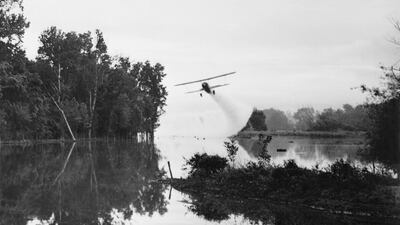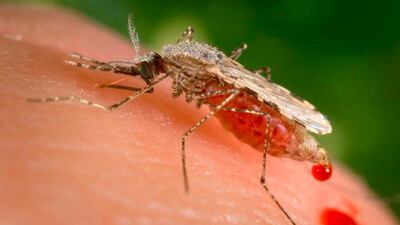
So far in 2020, Covid-19 has accounted for less than 1 per cent of deaths in Africa, even as widespread media coverage of the pandemic obscures other serious health emergencies. Malaria, alone, is 10 times more deadly. As of last week, a little over 53,000 recorded deaths in Africa have been linked to Covid-19. For comparison, the continent recorded 384,000 deaths due to malaria in 2019, as the World Health Organisation reported in its recent "World Malaria Report", released in late November.
Malaria is a preventable and treatable disease, and huge efforts have been made in the recent years; the very same report recounts that malaria deaths have reduced by 44 per cent over the past 19 years. Yet, our reactions to the coronavirus pandemic risk hampering these achievements and further exacerbating what is still a critical issue in Africa.
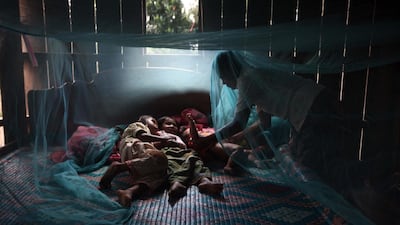
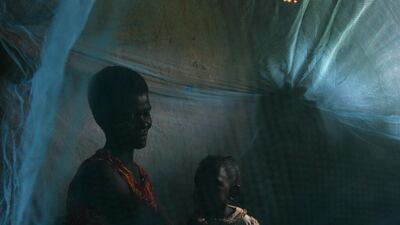
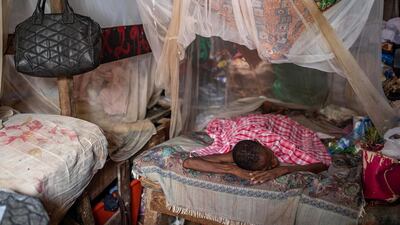
In the Sahel region, where our Doctors Without Borders (MSF) teams work, the peak of malaria struck more strongly and for longer this year. This is in part because the rains started earlier and were heavier compared to previous years, but also because national malaria prevention programmes have been impacted by the restrictions put in place in many countries across sub-Saharan Africa to stop the spread of Covid-19. Large-scale activities, such as mosquito net distribution and seasonal malaria prevention campaigns, have been slowed or postponed.
In Nigeria, the country with the highest number of malaria deaths in the world, the "Roll Back Malaria" partnership reported problems with regard to the supply of preventive treatment. These supply chain difficulties have already had consequences, including on the smooth running of seasonal prevention campaigns in the states of Borno and Kano where MSF teams are working. In Borno, the last round of the seasonal chemoprevention campaign, for instance, happened one month late. This risks losing the benefits of the first rounds, while access to health care is already very scarce there due to a conflict situation.
Globally, pharmaceutical production capacity has also shrunk in countries such as India and China, due to the pandemic and the restrictions put in place to control it. Some producers of rapid diagnostic tests for malaria – essential for quick and effective treatment – have started producing tests to diagnose Covid-19 instead, putting further strain on malaria projects. WHO also confirms that the supply of malaria medicines, including artemisinin-combination treatments, were particularly constrained because of hopes for a treatment to Covid-19. WHO analysis further suggests that even if malaria prevention campaigns are completed in 2020 as planned, disruptions to access to effective anti-malarial treatment could lead to considerable loss of life.
If we continue with this singular focus on Covid-19, the whole system – with its political, aid, economic and other players – risks actually contributing to the emergence of new health crises, with an even higher human toll. In Africa today, as tomorrow, the health and economic emergencies associated with Covid-19 are more the result of decision-making than the direct impact of the virus. Some of the disproportionate decisions are not made based on scientific evidence, but are driven by the fear generated by this virus.
For example, testing measures when entering a country have been shown to be more effective at the very start of an epidemic and when the virus is not circulating in the country. Implementing a lockdown once the epidemic is at the peak or when the virus’ circulation in a country is already out of control has not proved effective. When the virus is circulating in the country, priorities should rather focus on people at risk of dying from Covid-19 (those over the age of 65 years or with other illnesses, who certainly represent less than 10 per cent of the global population), rather than controlling or immobilising the entire working-age population of a country.
History will tell us the impact of these lockdowns on the global economy and the lives lost due to the economic precariousness they caused. Orienting healthcare systems mainly on Covid-19, which in the worst-affected countries represents less than 15 per cent of deaths, risks increasing casualties from other diseases because of a lack of access and thus creating a chain reaction leading to a burn-out of the health system. Another important element in any approach will be building relationships of trust with communities based on factual and scientific messaging, which contextualises deaths linked to Covid-19, particularly with regard to other public health issues.
Today, as tomorrow, the Covid-19 emergency is and will be a man-made one, instead of resulting from the virus itself. Some of the disproportionate decisions are not made based on scientific evidence, but are driven by the fear generated by this virus
In the many countries where Covid-19 is neither daily seen by the populations nor to be considered as one of the 10 leading causes of death by health authorities, it is time to rebalance public health priorities and treat Covid-19 as one disease among many.
With the year drawing to a close, the malaria peak in the Sahel is coming to an end, but other diseases will become a concern very soon. The performance drops in regular vaccination programmes seriously increase the risks associated with epidemics, such as measles, which are potentially more lethal than Covid-19 on this continent. Such risks are huge with preventive vaccinations having been delayed due to restrictions, but we will probably only be able to measure the impacts in the coming two or three years. In the shorter term, the rates of malnutrition will also be something to closely monitor, as the consequences of the pandemic are said to particularly risk increasing food insecurity in the coming months.
Dr Colette Badjo is the head of the MSF West and Central Africa office in Abidjan. Dr Dorian Job is the MSF West Africa programme manager

Avatar: Fire and Ash
Director: James Cameron
Starring: Sam Worthington, Sigourney Weaver, Zoe Saldana
Rating: 4.5/5
Sole survivors
- Cecelia Crocker was on board Northwest Airlines Flight 255 in 1987 when it crashed in Detroit, killing 154 people, including her parents and brother. The plane had hit a light pole on take off
- George Lamson Jr, from Minnesota, was on a Galaxy Airlines flight that crashed in Reno in 1985, killing 68 people. His entire seat was launched out of the plane
- Bahia Bakari, then 12, survived when a Yemenia Airways flight crashed near the Comoros in 2009, killing 152. She was found clinging to wreckage after floating in the ocean for 13 hours.
- Jim Polehinke was the co-pilot and sole survivor of a 2006 Comair flight that crashed in Lexington, Kentucky, killing 49.
Libya's Gold
UN Panel of Experts found regime secretly sold a fifth of the country's gold reserves.
The panel’s 2017 report followed a trail to West Africa where large sums of cash and gold were hidden by Abdullah Al Senussi, Qaddafi’s former intelligence chief, in 2011.
Cases filled with cash that was said to amount to $560m in 100 dollar notes, that was kept by a group of Libyans in Ouagadougou, Burkina Faso.
A second stash was said to have been held in Accra, Ghana, inside boxes at the local offices of an international human rights organisation based in France.
GAC GS8 Specs
Engine: 2.0-litre 4cyl turbo
Power: 248hp at 5,200rpm
Torque: 400Nm at 1,750-4,000rpm
Transmission: 8-speed auto
Fuel consumption: 9.1L/100km
On sale: Now
Price: From Dh149,900
FULL%20FIGHT%20CARD
%3Cp%3EFeatherweight%20Bout%3A%0D%20Abdullah%20Al%20Qahtani%20v%20Taha%20Bendaoud%0D%3Cbr%3EBantamweight%20Bout%3A%0D%20Ali%20Taleb%20v%20Nawras%20Abzakh%0D%3Cbr%3EBantamweight%20Bout%3A%0D%20Xavier%20Alaoui%20v%20Rachid%20El%20Hazoume%0D%3Cbr%3EFeatherweight%20Bout%3A%0D%20Islam%20Reda%20v%20Adam%20Meskini%0D%3Cbr%3EBantamweight%20Bout%3A%0D%20Tariq%20Ismail%20v%20Jalal%20Al%20Daaja%0D%3Cbr%3EBantamweight%20Bout%3A%0D%20Elias%20Boudegzdame%20v%20Hassan%20Mandour%0D%3Cbr%3EAmateur%20Female%20Atomweight%20Bout%3A%0D%20Hattan%20Al%20Saif%20v%20Nada%20Faheem%0D%3Cbr%3EFeatherweight%20Bout%3A%0D%20Maraoune%20Bellagouit%20v%20Motaz%20Askar%0D%3Cbr%3EFeatherweight%20Bout%3A%0D%20Ahmed%20Tarek%20v%20Abdelrahman%20Alhyasat%0D%3Cbr%3EShowcase%20Featherweight%20Bout%3A%0D%20Mido%20Mohamed%20v%20Yazeed%20Hasanain%0D%3Cbr%3EShowcase%20Flyweight%20Bout%3A%0D%20Malik%20Basahel%20v%20Harsh%20Pandya%0D%3C%2Fp%3E%0A
The Brutalist
Director: Brady Corbet
Stars: Adrien Brody, Felicity Jones, Guy Pearce, Joe Alwyn
Rating: 3.5/5
Classification of skills
A worker is categorised as skilled by the MOHRE based on nine levels given in the International Standard Classification of Occupations (ISCO) issued by the International Labour Organisation.
A skilled worker would be someone at a professional level (levels 1 – 5) which includes managers, professionals, technicians and associate professionals, clerical support workers, and service and sales workers.
The worker must also have an attested educational certificate higher than secondary or an equivalent certification, and earn a monthly salary of at least Dh4,000.
Where to submit a sample
Volunteers of all ages can submit DNA samples at centres across Abu Dhabi, including: Abu Dhabi National Exhibition Centre (Adnec), Biogenix Labs in Masdar City, NMC Royal Hospital in Khalifa City, NMC Royal Medical Centre, Abu Dhabi, NMC Royal Women's Hospital, Bareen International Hospital, Al Towayya in Al Ain, NMC Specialty Hospital, Al Ain
Kamindu Mendis bio
Full name: Pasqual Handi Kamindu Dilanka Mendis
Born: September 30, 1998
Age: 20 years and 26 days
Nationality: Sri Lankan
Major teams Sri Lanka's Under 19 team
Batting style: Left-hander
Bowling style: Right-arm off-spin and slow left-arm orthodox (that's right!)
Company Fact Box
Company name/date started: Abwaab Technologies / September 2019
Founders: Hamdi Tabbaa, co-founder and CEO. Hussein Alsarabi, co-founder and CTO
Based: Amman, Jordan
Sector: Education Technology
Size (employees/revenue): Total team size: 65. Full-time employees: 25. Revenue undisclosed
Stage: early-stage startup
Investors: Adam Tech Ventures, Endure Capital, Equitrust, the World Bank-backed Innovative Startups SMEs Fund, a London investment fund, a number of former and current executives from Uber and Netflix, among others.
WWE Super ShowDown results
Seth Rollins beat Baron Corbin to retain his WWE Universal title
Finn Balor defeated Andrade to stay WWE Intercontinental Championship
Shane McMahon defeated Roman Reigns
Lars Sullivan won by disqualification against Lucha House Party
Randy Orton beats Triple H
Braun Strowman beats Bobby Lashley
Kofi Kingston wins against Dolph Zigggler to retain the WWE World Heavyweight Championship
Mansoor Al Shehail won the 50-man Battle Royal
The Undertaker beat Goldberg
Ten tax points to be aware of in 2026
1. Domestic VAT refund amendments: request your refund within five years
If a business does not apply for the refund on time, they lose their credit.
2. E-invoicing in the UAE
Businesses should continue preparing for the implementation of e-invoicing in the UAE, with 2026 a preparation and transition period ahead of phased mandatory adoption.
3. More tax audits
Tax authorities are increasingly using data already available across multiple filings to identify audit risks.
4. More beneficial VAT and excise tax penalty regime
Tax disputes are expected to become more frequent and more structured, with clearer administrative objection and appeal processes. The UAE has adopted a new penalty regime for VAT and excise disputes, which now mirrors the penalty regime for corporate tax.
5. Greater emphasis on statutory audit
There is a greater need for the accuracy of financial statements. The International Financial Reporting Standards standards need to be strictly adhered to and, as a result, the quality of the audits will need to increase.
6. Further transfer pricing enforcement
Transfer pricing enforcement, which refers to the practice of establishing prices for internal transactions between related entities, is expected to broaden in scope. The UAE will shortly open the possibility to negotiate advance pricing agreements, or essentially rulings for transfer pricing purposes.
7. Limited time periods for audits
Recent amendments also introduce a default five-year limitation period for tax audits and assessments, subject to specific statutory exceptions. While the standard audit and assessment period is five years, this may be extended to up to 15 years in cases involving fraud or tax evasion.
8. Pillar 2 implementation
Many multinational groups will begin to feel the practical effect of the Domestic Minimum Top-Up Tax (DMTT), the UAE's implementation of the OECD’s global minimum tax under Pillar 2. While the rules apply for financial years starting on or after January 1, 2025, it is 2026 that marks the transition to an operational phase.
9. Reduced compliance obligations for imported goods and services
Businesses that apply the reverse-charge mechanism for VAT purposes in the UAE may benefit from reduced compliance obligations.
10. Substance and CbC reporting focus
Tax authorities are expected to continue strengthening the enforcement of economic substance and Country-by-Country (CbC) reporting frameworks. In the UAE, these regimes are increasingly being used as risk-assessment tools, providing tax authorities with a comprehensive view of multinational groups’ global footprints and enabling them to assess whether profits are aligned with real economic activity.
Contributed by Thomas Vanhee and Hend Rashwan, Aurifer
Quick pearls of wisdom
Focus on gratitude: And do so deeply, he says. “Think of one to three things a day that you’re grateful for. It needs to be specific, too, don’t just say ‘air.’ Really think about it. If you’re grateful for, say, what your parents have done for you, that will motivate you to do more for the world.”
Know how to fight: Shetty married his wife, Radhi, three years ago (he met her in a meditation class before he went off and became a monk). He says they’ve had to learn to respect each other’s “fighting styles” – he’s a talk it-out-immediately person, while she needs space to think. “When you’re having an argument, remember, it’s not you against each other. It’s both of you against the problem. When you win, they lose. If you’re on a team you have to win together.”