


Residents of New Delhi, one of the world's most polluted cities, have been waking up to blue skies. Empty beaches in Thailand have seen record numbers of turtles return to breed. Air travel has almost come to a standstill: London's Heathrow Airport has recorded a 97 per cent drop in passengers compared to a year ago. Carbon dioxide emissions are expected to drop this year by eight per cent, bringing them down to the level they were in 2010.
It is tempting to see this as a different kind of “silent spring” – not the environmental catastrophe unleashed by the wanton use of insecticides that the term originally predicted, but a welcome period of quiet and inactivity from the greatest despoiler of planet earth, mankind.
Archer Hill: Is the environment really recovering?
-
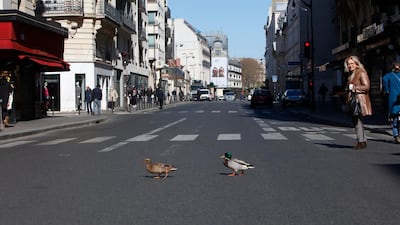
A couple of ducks spotted on Paris's Rue de Sevres. Getty Images -
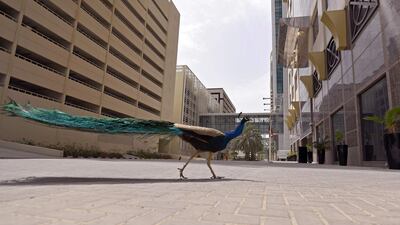
A lone peacock walks along a street in Dubai. AFP -
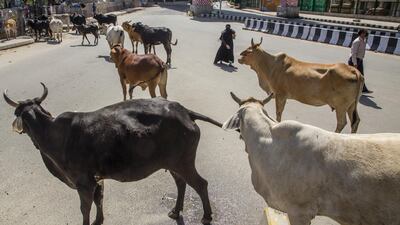
A herd of cows walk on a deserted road in New Delhi, India. Getty Image -
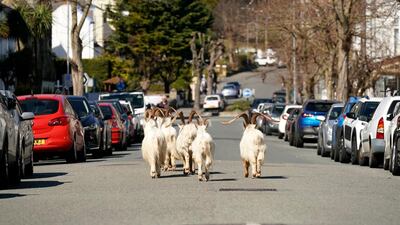
Mountain goats roam the streets of LLandudno in Wales. Getty Images -

A sign reads "Attention, wild animals, danger, stay away" near cows on the Mare e Sol beach in Coti-Chiavari, on the French Mediterranean island of Corsica. AFP -
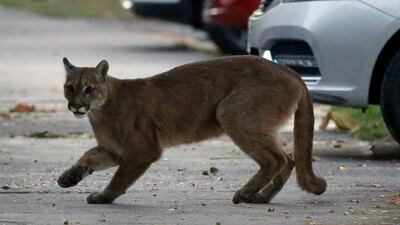
A juvenile puma in the streets of Santiago. AFP -
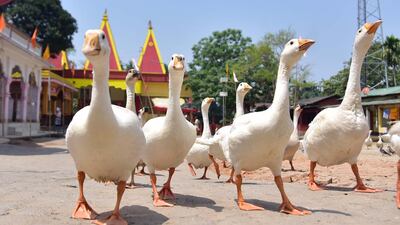
A flock of geese on the gander in Assam. Anuwar Ali / Getty Images


This was what my nine-year-old son – a keen follower of Greta Thunberg, like many young people – was alluding to when he asked me if this was the positive side of the coronavirus pandemic, as we wandered through Kuala Lumpur's near-empty Lake Gardens, now that we in Malaysia are at last allowed out for exercise.
Some short-term effects are easy to see – although they are not black and white – but it made me ask: what will the longer-term results be? Will we capitalise on some of the environmental gains from this time of restriction and suffering, or will we revert to our bad old ways, in spite of the climate crisis that we know is coming our way? To address the present, while we may be charmed by footage of herds of goats charging through Welsh villages and the like, the short-term picture is not as rosy as we suppose. Endangered species such as great apes are currently at great risk of virus transmission from humans.
Shaikha Salem Al Dhaheri: Climate change is as real as coronavirus
Meanwhile others are more exposed to poachers – as Marco Lambertini, Director-General of WWF International, has pointed out: “With countries closing borders and parks to prevent the spread of the virus, budgets for wildlife conservation are being decimated.”
In the longer term, thinks Robert Hamwey of the United Nations Conference on Trade and Development: “Many of the environmental challenges caused by the coronavirus crisis will gradually resolve on their own once the crisis comes to an end and previous levels of economic activity resume.” But he also concludes that “the benefits of air pollution reductions will also be erased. Overall, the crisis may thus have no permanent environmental effects".
I think this is too strong.
Mari Luomi: We must recover responsibly from Covid-19

Firstly, it is clear that for the foreseeable future we are all going to fly less, and there will be strong pressure on airlines to decarbonise and use more renewables. France's Finance Minister, Bruno Le Maire, has for instance said that Air France must set itself the target of becoming the world's "most environmentally friendly" airline in return for a multi-billion bailout. People will still travel; we have not seen the end of the commute. But once we have seen how much work can be done from home, many businesses will seek to lower overheads by encouraging employees to continue working remotely. So car journeys are likely to decrease.
Robin Mills: How we can build a greener world

Secondly, some analysts believe that coal – considered a dirty power source – has been dealt a fatal blow by the pandemic. "Covid-19 will slash coal emissions so much this year that the industry will never recover, even with a continued build-out in India and elsewhere," Rob Jackson, chair of Global Carbon Project, told the The Guardian. "The crash in natural gas prices, record cheap solar and wind power, and climate and health concerns have undercut the industry permanently."
Thirdly, we know that in the future much more food will be sourced locally. "Delegating our food supply to others is madness. We have to take back control," French President Emmanuel Macron said in March, prompting the supermarket chain Carrefour to announce that it would find 95 per cent of its fruit and vegetables within the country.
Daniel Sanderson: UAE farmers busier than ever
-
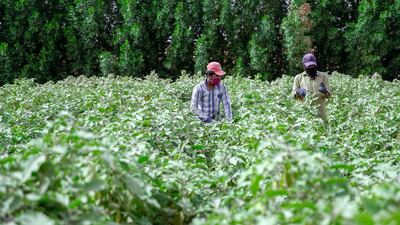
Farmers pick out ripe eggplants from the field. All photos by Victor Besa / The National -
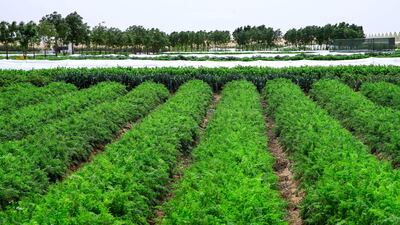
The massive organic farm in the middle of the Al Ain desert. -
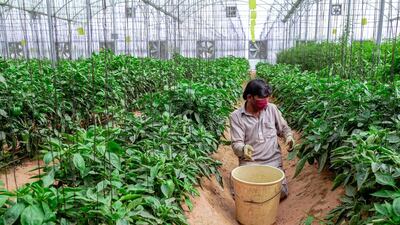
A farmer carries a bucket to harvest organic green capsicums. -
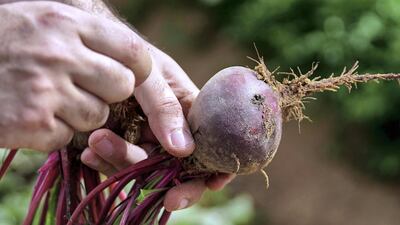
Organic beetroot is harvested. -
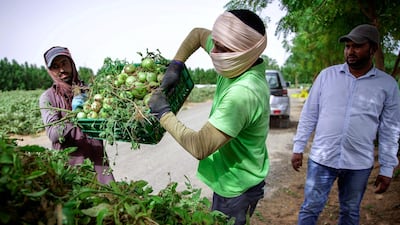
Farmers clear the tomato field to give way to a new planting season at Emirates Bio Farm. -
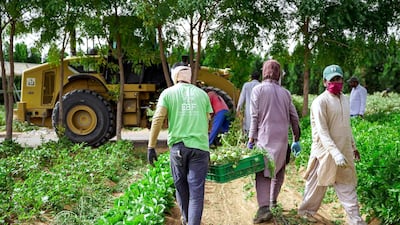
Farmers clear the tomato field to give way to a new planting season. -
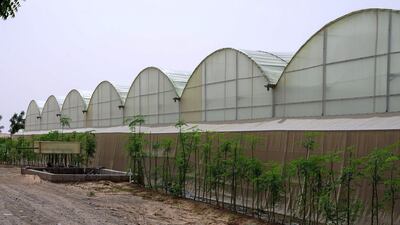
One of the greenhouses at the farm. -
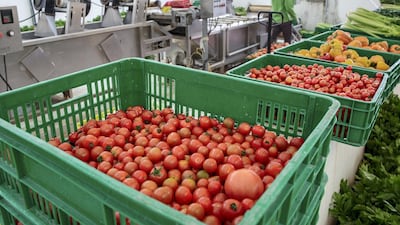
Assorted organic vegetables after being washed before sent to the packing station. -
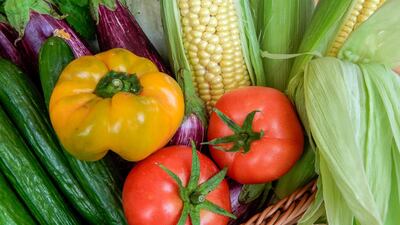
Assorted organic vegetables at the shop. -
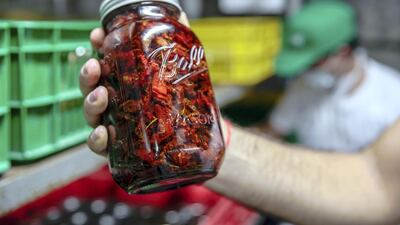
Organic dried tomatoes in olive oil being packed for delivery. -
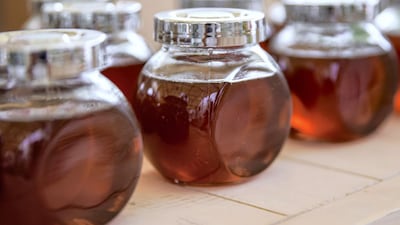
Organic honey from the farm. -

Freshly baked whole wheat organic bread with pumpkin seeds from the organic kitchen. -

Organic fresh farm eggs at the EBF store. -
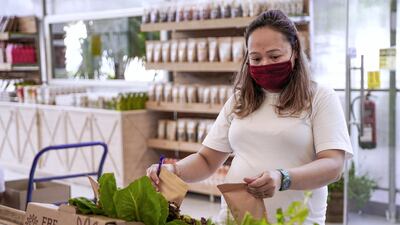
A store worker arranges online orders for delivery.


More broadly global supply chains will never be the same either; all countries are going to aim to be far more self-sufficient. Nobody wants to be entirely reliant on anyone else for anything essential, whether it be electronics or vaccines.
All of the above will have the very positive consequence of significantly reducing the global carbon footprint. But it is important to note that most of these changes will take place not because they are good for the environment – that is not why you are more likely to eat an aubergine grown locally as opposed to one shipped from thousands of kilometres away – but because nations will be protecting themselves against the perils of globalisation.
A view from The National: Abu Dhabi and the environment
Since viral transmissions are made more likely by human encroachment on wild habitats, and as climate change will present just as devastating a risk in the near future, the sustainability agenda ought to be taken more seriously than ever once the world moves into recovery mode.
The danger will be that in economies that have been devastated, opportunist politicians will make the pitch that creating new jobs and getting money in people's pockets are more important than what they will deride as the propaganda of the green lobby. Environmental regulations, which many on the right resent in any case, will be painted as the obsessions of liberal elites who never really suffered in the way the masses did.
A view from The National: Jane Goodall's message
In the US, the Environmental Protection Agency has suspended some environment laws, which means companies will face no penalties for releasing, for instance, carcinogenic pollutants – so long as they claim any violations were related to conditions caused by the pandemic. Given that the Trump administration has already dismantled more than 60 regulations deemed overly "burdensome", one can see what he, and like-minded leaders abroad, are likely to emphasise going forward. What they will call "necessity" could be the mother of environmental destruction.
So I do not share the optimism of those who think we will all collectively take a new approach to sustainability once we have passed the worse. There are too many who will fight tooth and nail to return to harmful and exploitative practices. The rest of us will have to battle equally vigorously if the planet is to gain anything from a period in which too many have lost too much, and worse is yet to come.
A sight to behold ...
Sholto Byrnes is a commentator and consultant in Kuala Lumpur and a corresponding fellow of the Erasmus Forum

