

Professor Lew, a giant salamander, was one of the lucky ones. The huge reptilian was among four members of his species seized by customs officials last year from an illegal shipment of wildlife bound for the table. The giant salamanders have been rehomed in the safety of London Zoo.
Described as prehistoric leftovers, reptiles like Professor Lew are no one's ideal of beauty. They are storied as the embodiment of the Chinese conceptualisation of the dragon, the mythical creature so central to the Middle Kingdom's civilisation.
However, they are becoming critically endangered. On the Edge of Existence index, developed by the Zoological Society of London, the giant salamander ranks No 2 in the most threatened category. The reason is that the creature is now sought after as a delicacy.
-
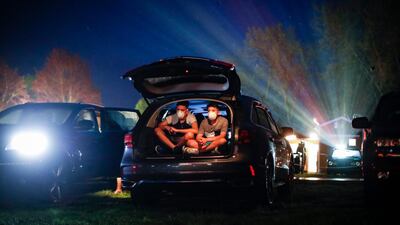
A viewer watches "Trolls World Tour" at the Four Brothers Drive In Theatre, in Amenia, US. AP Photo -
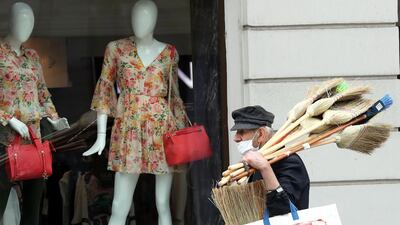
A cleaner carries brooms on a street in Sarajevo, Bosnia. EPA -

People walk around New York's Times Square in the US. Getty Images -

Demonstrators protest against the lockdown in Harrisburg, Pennsylvania, US. AFP -
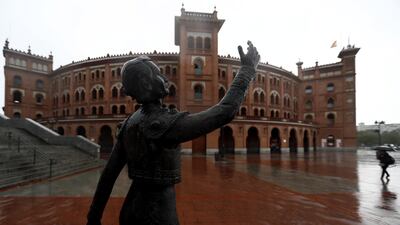
A statue of the bullfighter Luis Miguel Dominguin by Spanish sculptor Ramon Aymerich is on display in Madrid, Spain. EPA -

A Romanian washes the tables and the pavement of a beer terrace with as as another local passes by in Bucharest. EPA -

A specialist works in a lab dealing with Covid-19 tests in Moscow, Russia. AFP -
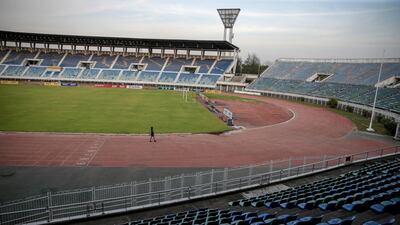
A girl walks along the running track at empty Thuwanna Stadium in Yangon, Myanmar. EPA -
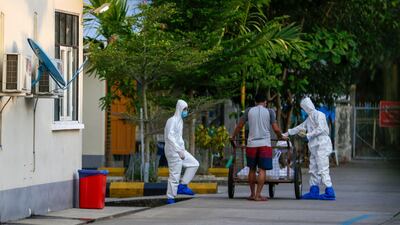
Volunteers prepare food to serve people who are in quarantine at a community centre in Yangon, Myanmar. EPA -
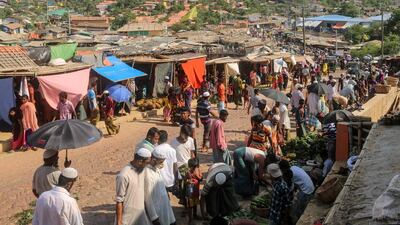
Rohingya refugees gather at a market after the first cases of Covid-19 coronavirus emerged in the area, in Kutupalong refugee camp in Ukhia, Bangladesh. AFP -

A visitor sits on the floor and reads in the library in Guangzhou, Guangdong province, China. EPA -

Pakistani Shi'ite Muslims beat themselves as they gather to observe the Martyr Day of Hazrat Ali, cousin of Prophet Muhammad, on the 21st day of Ramadan, despite the lockdown, in Hyderabad, Pakistan. EPA -
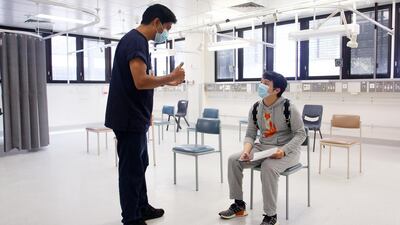
A nurse speaks with a patient awaiting testing in the clinical assessment room at St George Hospital in Sydney, Australia. Getty Images -
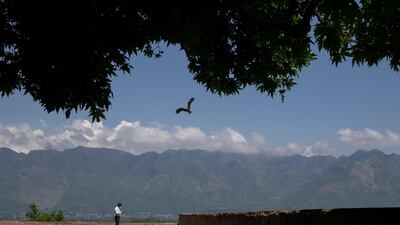
A Kashmiri Muslim checks his mobile phone after praying outside a closed Muslim shrine during the holy fasting month of Ramadan in Srinagar. AP Photo -
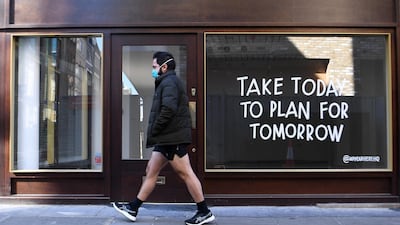
A man walks past a closed down shop in London, Britain. EPA -
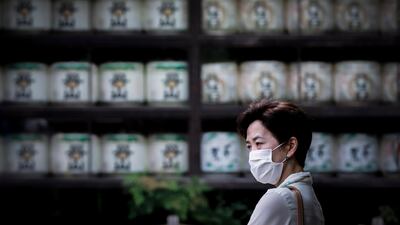
A woman looks on at Shimogamo Shrine in Kyoto, Japan. EPA -
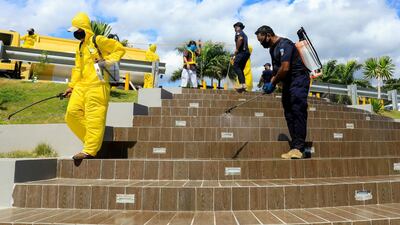
Health workers and police officers spray disinfectant on a city park in Dili, Timor Leste. EPA


The emergence of the Sars-CoV-2 has raised the stakes surrounding the illicit trade in animals. It is clear that circulating creatures like Professor Lew surreptitiously around the world poses a widening and unquantifiable threat.
With the growing proximity of humans to animals and the dangers of illness leaping the species barrier, there is a fallout from the pandemic.
The British polling firm YouGov's worldwide barometers have proved invaluable in tracking how people are reacting to the crisis. These have given real insight into the impact of a pandemic that caused hundreds of thousands of deaths and put a stop on world economy.
In this month’s YouGov data, there was telling statistic from China. Having lived in the country for almost a decade, I fully appreciate how its dietary habits are special to its history and its culture. And yet, the percentage of people in China planning to avoid eating raw or uncooked meat stands at 61 per cent in the data. That is much higher than other Asian countries that rank next on the list, and way above the 24 per cent figure of Australia, which is the highest of the western societies.
-

Passengers wearing face masks are seen as the train stops at a railway station in Macheng, in China’s central Hubei province on March 27, 2020. AFP -
A customer buys food from a steamed food stall in Jingzhou, after the lockdown was eased in Hubei province. Reuters -
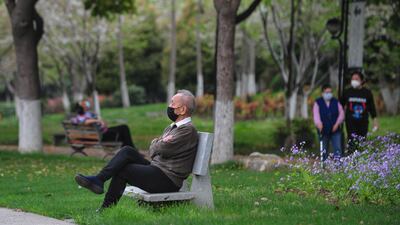
A man sits on a bench at a park in Wuhan, in China's central Hubei province on March 26, 2020. AFP -
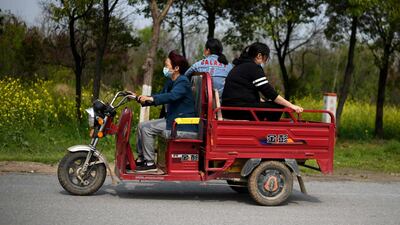
People wearing face masks ride on a motorised tricycle along a street in Huanggang, in China’s central Hubei province. AFP -

A waitress carries meals out of the kitchen at a restaurant in Macheng in China’s central Hubei province on March 25, 2020. AFP -
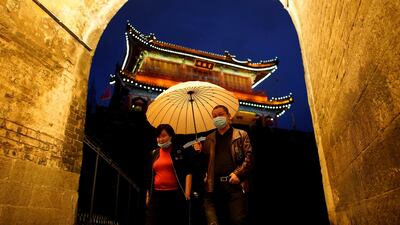
People wearing face masks walk through an ancient city wall in Jingzhou on March 26, 2020. Reuters -

A man selects apples inside a supermarket in Wuhan on March 26, 2020. Reuters -
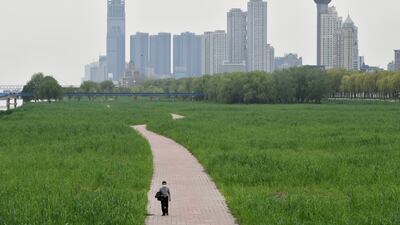
A man walks at a riverside park in Wuhan on March 26, 2020. Reuters -
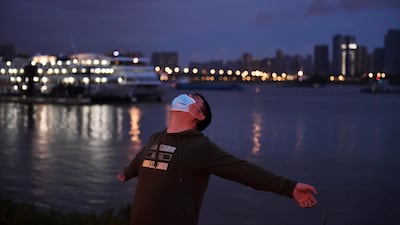
A man exercises at a riverside park by the Yangtze River in Wuhan on March 26, 2020. Reuters -
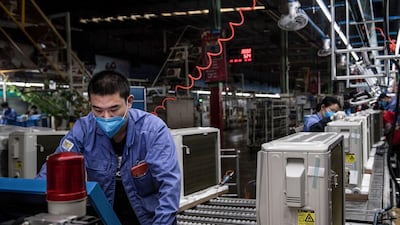
An employee works on an air conditioner production line at a Midea factory in Wuhan in China's central Hubei province on March 25, 2020. AFP -
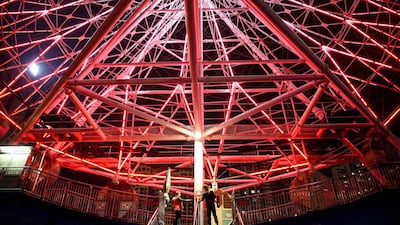
People prepare to ride on a ferris wheel at a theme park in Macheng on March 25, 2020. AFP


What it says to me is that there is a shift in whether or not people in future will accept, or even participate, in the exotic – and largely illegal – traffic in wild animals.
There are close parallels to be drawn with the fight against the illicit trade in antiques, which is dominated by looted treasures from the Middle East and North Africa. The campaigns to disrupt and destroy the two trades have much to learn from each other. Two very modern and often unseen scourges can be defeated. That would be a positive outcome of the ordeal the planet is currently undergoing.
Links between terror groups and the sale of artefacts triggered an urgent crackdown on sales and shipments. Worldwide backing came together when ISIS controlled large parts of Syria and Iraq. The revenues from the trade became a threat to life itself. It is a measure of success that smugglers are now substituting fakes to sell to gullible consumers.

Large stockpiles of ancient treasures still exist but at the moment these are not coming to the market quite as readily as five years ago. The recent gains could still be transitory but the lesson from targeting the cargoes of artefacts could also save the most endangered species.
Both trades have vulnerabilities that can be exploited to suppress their scope.
Research has shown up a reliance on sprawling international networks of people who are not long-standing acquaintances. Nonetheless they rely on trust and hidden communications to carry out their transactions. Surveillance and the threat of special agents listening in could help disrupt these relationships, which are not built on the more solid foundations of personal history common to more traditional smuggling networks.

Specifically there is more that the authorities can do to accentuate doubts about the product on offer. In the case of species, the safety of the consumer must be thrown up to create doubt. If there is a growing perception among potential buyers that their health could be put in jeopardy, the pool of consumers will dry up.
For antiques there is no specialist advice available to the buyer. But increasing doubts for provenance or quality is a great card to play for setting back demand for illicit products.
The smuggling networks are not known for reliance on technology either to garner customers or to cultivate sales network. This is an advantage for governments, which can track and trap the black market players.
With international laws – such as the Convention for International Trade in Endangered Species – made stronger over time, the framework for protecting the species against the smugglers will be made more robust.
Operationally, given the links to terror groups, the sale of artefacts is better targeted by law enforcement. The anti-terror financing techniques could usefully be also rolled over to take on poachers and traders. Western armed forces have for some years deployed against gangs in Africa that illegally hunt rhinos and other beasts of the wild.
The call to arms against underground smuggling, therefore, cries out for a twin-pronged offensive.
Damien McElroy is the London bureau chief of The National

