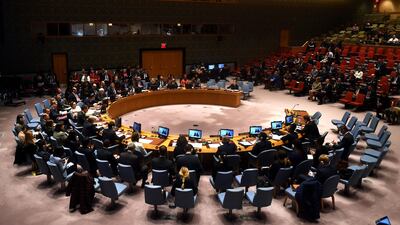

Over the past few weeks, I have spoken to dozens of experts about Covid-19, and there is clear evidence that the disease does discriminate in a few ways: it kills the old more often than the young, men more often than women, and it disproportionately impacts the poor.
But here is something I have seen no evidence of: Covid-19 discriminating on the basis of nationality. The virus does not care about borders.
I mention this because since the world became aware of the virus in early January, governments have focused on their own national responses and how they can protect the people living inside their borders. And that is understandable. But with such an infectious and widespread virus, leaders must also recognise that so long as there is Covid-19 somewhere, it concerns people everywhere.
-
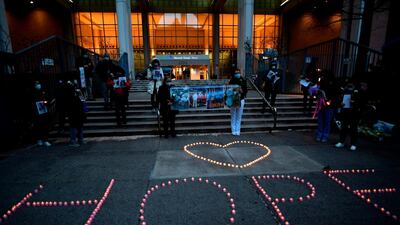
Nurses and healthcare workers formed the word "Hope" with candles as they mourn and remember colleagues who died during the outbreak of coronavirus outside Mount Sinai Hospital in Manhattan, New York City. AFP -
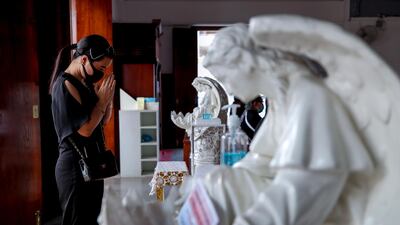
A parishioner prays as she enters an almost empty church on Good Friday in Bangkok, Thailand. EPA -
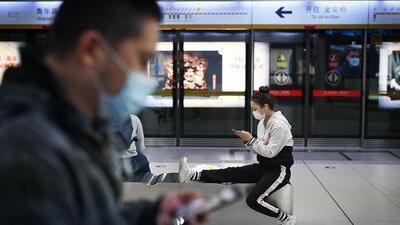
A woman uses her mobile phone at a subway station in Beijing. AFP -
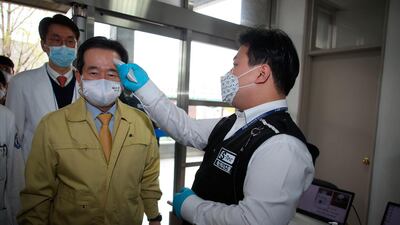
South Korean Prime Minister Chung Sye-kyun has his temperature checked upon arrival at Dongsan Medical Center in Daegu, South Korea. Yonhap via AP -

Aamir Gill plays with his daughter in a public park near a Christian neighbourhood in Islamabad, Pakistan. AFP -
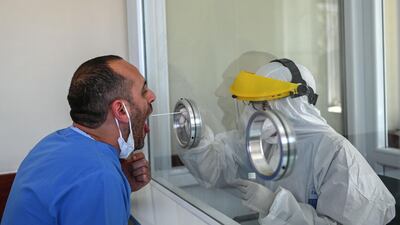
A health worker collects a swab sample from another health worker at the Istanbul University Cerrahpasa medical faculty hospital. AFP -
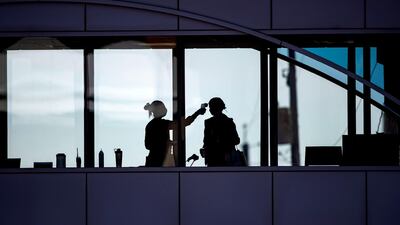
A healthcare worker takes the temperature of a visitor to Essentia Health in Duluth, Minnesota. Star Tribune via AP -
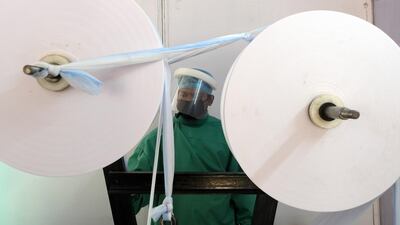
Rolls of fabric feed into a machine on a protective mask production line at Central Reserve Police Force (CRPF) Northern Sector staff camp in New Delhi, India. Bloomberg -
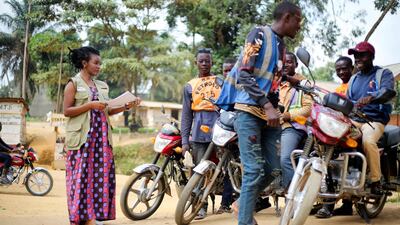
Martine Milonde, a Congolese community mobiliser who works with the aid group World Vision in Beni, eastern Congo, engages the public about coronavirus prevention. AP Photo -
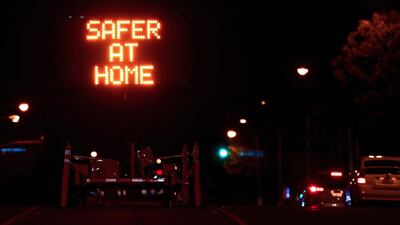
A sign reminds motorists it's "Safer At Home" in Los Angeles, California. AFP -
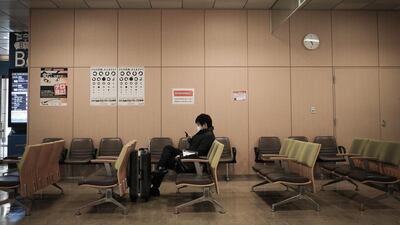
A traveler wearing a protective mask sits with his luggage in Shinjuku Expressway Bus Terminal in Tokyo, Japan. Bloomberg -

An evacuated passenger of a coronavirus-stricken Australian linerdescends from a bus to board the medically equipped plane that will fly Australian and New Zealander passengers to Melbourne, at Carrasco International Airport, Uraguay. AFP -
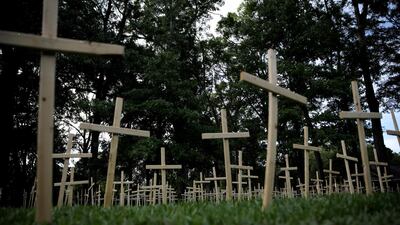
Crosses are seen outside a church in Baton Rouge, Louisiana. Each cross represents one life lost to coronavirus in the state. Reuters


Bill Gates: How we can end the diseases of poverty
Covid-19 has not yet hit many low- and middle-income countries hard. We are not exactly sure why. But what we do know is that the disease will eventually spread widely in these nations, and without more help, the caseloads and death tolls are likely to be worse than anything we have seen so far. Consider this: Covid-19 has overwhelmed cities such as New York, but the numbers suggest that even a single Manhattan hospital has more intensive-care beds than most African countries. Millions could die.
You do not have to live in a developing country to worry that this might impact you. Even if wealthy nations succeed in slowing the disease over the next few months, Covid-19 could return if the pandemic remains severe enough elsewhere. It is possibly only a matter of time before one part of the planet re-infects another.
This is why we need a global approach to fighting this disease. What that looks like will surely change as the pandemic evolves. But there are at least three steps world leaders – particularly those in the G20 – can take right now.
-
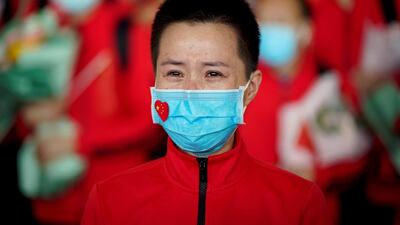
A member of a medical team weeps at the Wuhan Tianhe International Airport after travel restrictions were lifted. Reuters -
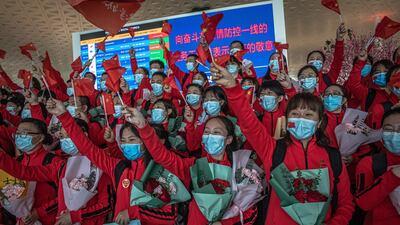
Medical workers from The First Bethune Hospital of Jilin University cheer during a ceremony at the airport as they prepare to leave after the lockdown was lifted in Wuhan, China. EPA -
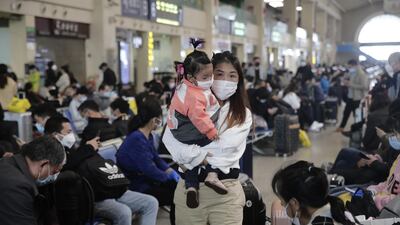
A woman carries a child as she walks past waiting travelers inside the Hankou railway station in Wuhan, Hubei Province, China. Bloomberg -
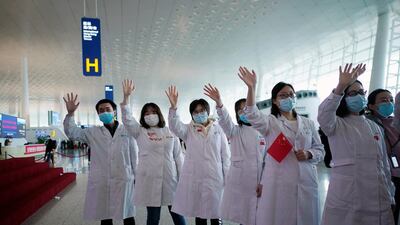
Medical workers wave goodbye to a medical team from Jilin at the Wuhan Tianhe International Airport after travel restrictions were lifted. Reuters -
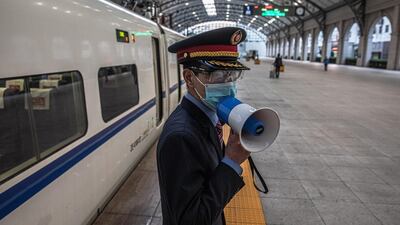
A railway worker speaks in a loudspeaker next to the first official train departing from a railway station after the lockdown was lifted in Wuhan, China. EPA -
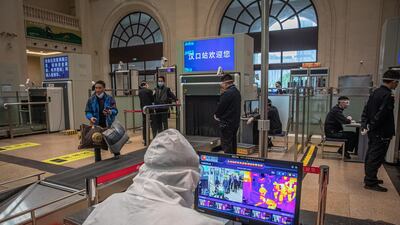
Passengers go through the security and body temperature check at the railway station after the lockdown was lifted in Wuhan, China. EPA -
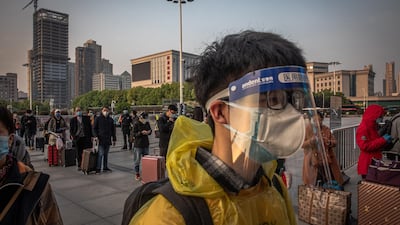
Passengers wait to enter the railway station after the lockdown was lifted, in Wuhan. EPA -
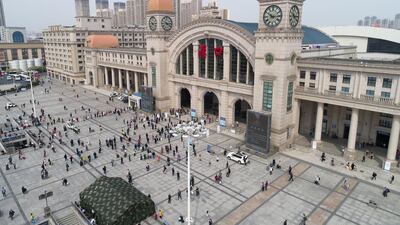
Hankou railway station is seen in this aerial photograph taken in Wuhan, Hubei Province, China. Bloomberg -
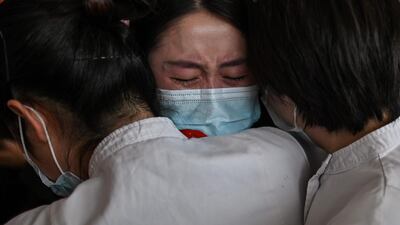
Medical staff from Jilin Province hug nurses from Wuhan after working together during the coronavirus outbreak, during a ceremony before leaving as Tianhe Airport is reopened. AFP -
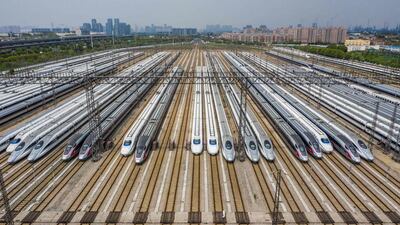
Bullet trains at a station in preparation for resuming operations after authorities lifted a more than two-month ban on outbound travel in Wuhan. AFP -
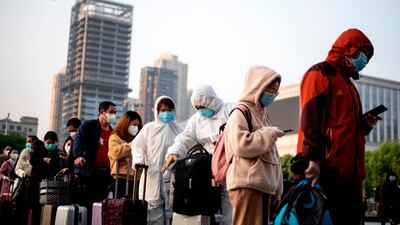
People wearing face masks arrive at Hankou Railway Station in Wuhan to take one of the first trains leaving the city. AFP -
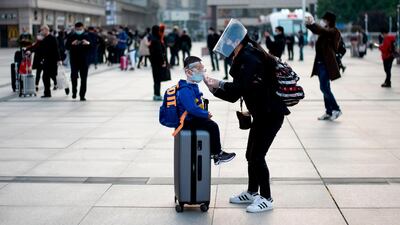
A woman adjusts her child's mask as they arrive at Hankou Railway Station in Wuhan. AFP -
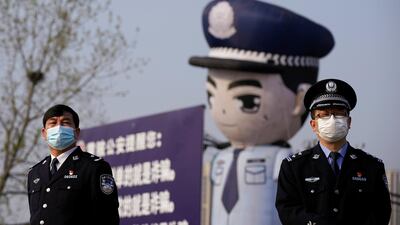
Police officers stand guard near an inflatable depicting a police officer at a toll station of an expressway after travel restrictions to leave Wuhan were lifted. Reuters -
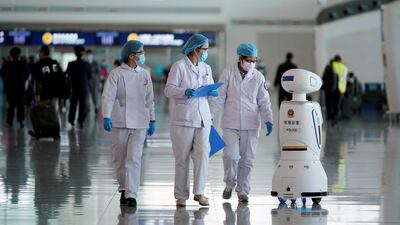
Medical workers walk by a police robot at the Wuhan Tianhe International Airport. Reuters


Ryan Wain: Tony Blair Institute praises UAE role
Co-ordinate resources
The first is making sure the world’s resources for fighting this pandemic are allocated effectively, including masks, gloves and diagnostic tests. Eventually, we hope there will be enough for everyone. But while the global supply is limited, we need to make hard choices in smart ways. Unfortunately, right now, that is not always happening.
There are some things leaders are starting to agree on – for instance, that frontline health workers should be tested first and receive priority access to personal protective equipment. But think about the choices we are making on a bigger scale: how are those masks and tests being distributed in one community or nation versus another? Right now, the answer often comes down to a troubling question: who is the highest bidder?
Phumzile Mlambo-Ngcuka: Women are on the front line
I am a big believer in capitalism. But some markets simply do not function properly in a pandemic, and the market for life-saving supplies is an obvious example. The private sector has an important role to play, but if our strategy for fighting Covid-19 devolves into a bidding war among countries, this disease will kill many more people than it has to.
We need to deploy resources based on public health and medical need. There are many veterans of the Ebola and HIV epidemics who can help craft guidelines to make this happen, and leaders of both developed and developing nations should work with the World Health Organisation and its partners to put them on paper. Then, all of the participating nations should agree to the guidelines publicly, so everyone is held accountable. These agreements will be especially important once a Covid-19 vaccine finally becomes available, because the only way we can completely end this pandemic is by immunising people against it.

Research and develop vaccines
That brings me to the second thing leaders must do: commit the necessary R&D funding to develop a vaccine.
There have been very few positive stories about Covid-19, but one is the science. Three years ago, our foundation, the Wellcome Trust, and various governments launched the Coalition for Epidemic Preparedness Innovations – or Cepi. The goal was to speed the process of testing vaccines and to fund new, faster ways of developing immunisations in the first place. If a novel virus were to start spreading around the world, we wanted to be ready.
Cepi is already developing at least eight potential vaccines for Covid-19, and researchers are confident they will have at least one ready within 18 months. That would be the fastest humans have ever gone from seeing a brand new pathogen to developing a vaccine against it.
This timeline, however, depends on funding. Many nations have contributed to Cepi within the past two weeks, but the coalition needs at least $2 billion for their work. That is only a rough number – innovation is an unpredictable business – but the G20 leaders should make meaningful pledges now.
They should also recognise that this funding is just to develop the vaccine – and not to manufacture or deliver it. That will require even more money and planning.
For one thing, we are not sure which vaccines will be the most effective yet, and each requires unique technology to make. That means nations need to invest in many different kinds of manufacturing facilities now, knowing that some will never be used. Otherwise, we will waste months after the lab develops an immunisation, waiting for the right manufacturer to scale up.

Mitigate costs
Another important consideration is the cost: If the private sector is willing to step up and manufacture this vaccine, for example, they should not have to lose money to do it. At the same time, any Covid-19 vaccine must be classified as a “global public good", and remain affordable and accessible to all. Fortunately, there are organisations such as Gavi, the Vaccine Alliance, which has a long history of helping low- and middle-income nations get access to critical immunisations.
Over the past two decades, Gavi has worked with the WHO and Unicef to introduce 13 new vaccines, including the Ebola vaccine, to the world’s 73 poorest countries. They are willing and able to do the same with a Covid-19 vaccine – but they, too, need more funding. Specifically, Gavi will need $7.4bn over the next five years – and that is just to maintain its current immunisation effort. Delivering a Covid-19 vaccine will cost even more.
-
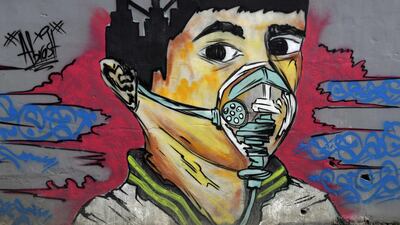
A mural depicts a mask-clad boy in front of the Zouk Thermal Power Plant, north of the Lebanese capital Beirut. AFP -
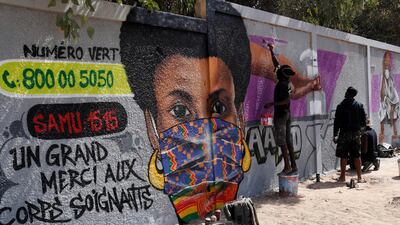
Graffiti artists from RBS crew work on their mural to encourage people to protect themselves amid the outbreak of the coronavirus disease in Dakar, Senegal. Reuters -
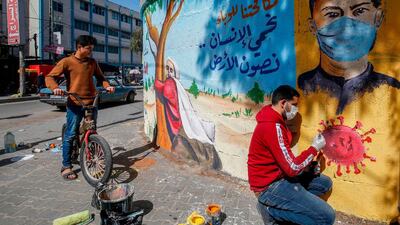
A Palestinian artist paints a mural that reads “By fighting this pandemic, we protect man and safeguard the Earth" as a youth watches him in Rafah in the southern Gaza Strip. AFP -
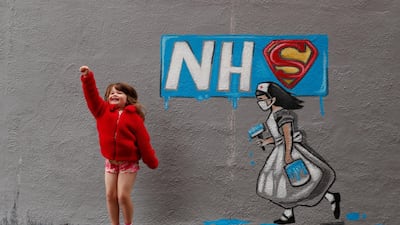
Lilly Davenport poses for her dad infront of a mural in tribute to the NHS painted by artist Rachel List in Pontefract. Reuters -
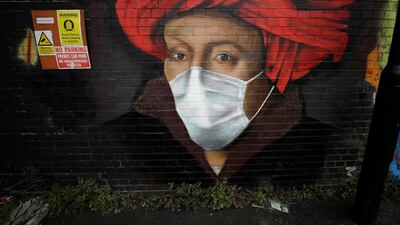
A mural by street artist Lionel Stanhope is seen on a bridge wall in Ladywell, south east London. AP Photo -
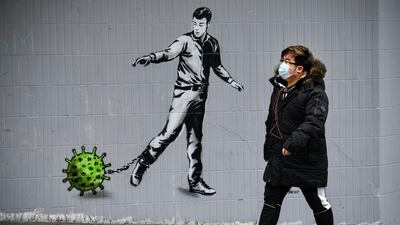
A man walks past a coronavirus mural on a building in Bath Street in Glasgow, Scotland. Getty Images -
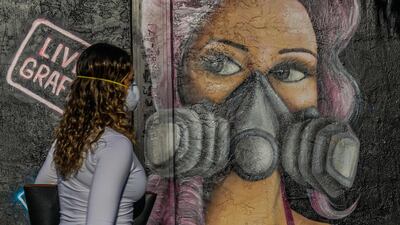
A woman walks past a closed shop with a mural in a deserted Wynwood Art District in Miami. AFP -

A mural with a message reading "Achoo Covid-10" in seen in a street in Paris. AFP -
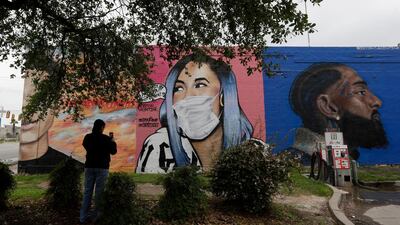
A woman photographs a mural of Cardi B that was updated by the artist to include a face mask to reflect the coronavirus pandemic, in San Antonio. AP Photo -

A mural showing medical personnel wearing protective masks is painted on a wall of a building in Warsaw, Poland. Reuters -
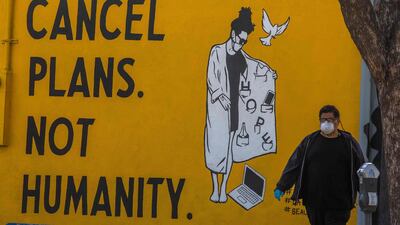
A man walks by a mural reading "Cancel Plans Not Humanity" in Los Angeles, California. AFP -
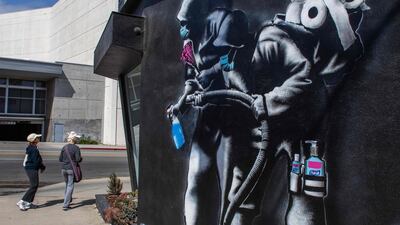
People walk by an apocalyptic mural by Hijackhart, where soldiers wearing face masks fight Covid-19 with disinfectant and hand sanitizers during the coronavirus pandemic in Los Angeles, California. AFP -
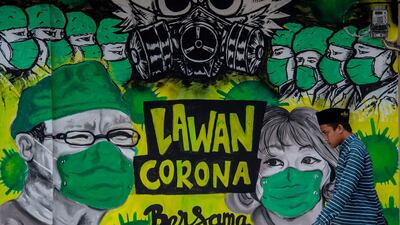
A man walks past a mural depicting the COVID-19 coronavirus in Surabaya, Indonesia. AFP -
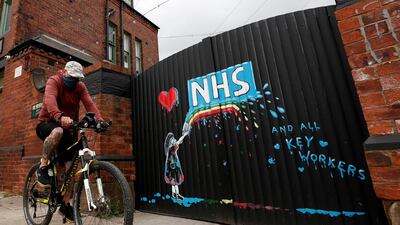
A cyclist rides past a mural in tribute to the NHS painted by artist Rachel List in Pontefract, Britain. Reuters


These multi-billion-dollar price tags may seem like a lot of money – especially at a time when entire economies are slowing to a halt. But they are nothing compared to the cost of a botched immunisation effort and a longer outbreak.
For the past 20 years, I have been asking world leaders to invest in the health of the world’s poorest people. I have argued that it was the right thing to do – and it is. But pandemics remind us that helping others is not just the right thing to do; it is also the smart thing to do.
Humanity, after all, is not just bound together by common values and social ties. We are also connected biologically, by a microscopic network of germs that links the health of one person to the health of everyone else.
In this pandemic, we are all connected. Our response must be, too.
Bill Gates is the co-chair and trustee of the Bill and Melinda Gates Foundation

