

In recent remarks to The National, US Secretary of State Mike Pompeo suggested once again that Covid-19 originated from Chinese laboratories based in the city of Wuhan. On this issue, however, it is important for us to hear what the scientific community is saying – not the politicians.
On February 19, a group of 27 public health scientists from nine countries signed an open letter that appeared in The Lancet medical journal, in which they strongly condemned "conspiracy theories suggesting that Covid-19 does not have a natural origin". The letter stated that scientific findings to date "overwhelmingly conclude that this coronavirus originated in wildlife". Among the scientists to sign this letter were James M Hughes, a former director at the US National Centre for Infectious Diseases, Rita Colwell, a former director at the US National Science Foundation, and Christian Drosten, a leading German virologist.

In a study conducted by the US-based Scripps Research Institute – and involving American, British and Australian researchers, including "Virus Hunter" Ian Lipkin of Columbia University – the conclusion could not be clearer. "We do not believe that any type of laboratory-based scenario is plausible," they wrote in an article that was published in Nature Medicine on March 17. "Our analyses clearly show that Sars-CoV-2 is not a laboratory construct or a purposefully manipulated virus."
The most recent rejection of this conspiracy theory came from Dr Anthony Fauci, one of the lead members of the US government's "Coronavirus Task Force", during a press briefing at the White House on April 17. A leading epidemiologist, Dr Fauci underscored that studies of the Covid-19 genome have strongly indicated that it was transmitted from an animal to a human rather than created or enhanced in a laboratory setting.

There is a clear consensus among scientists and public health experts from around the world that the virus came from nature, not labs. This is why I insist that the origin of Covid-19 is a matter of science – and that it should not be politicised. It is the considerable body of research conducted by scientists that gives us answers, not baseless and irresponsible accusations made by some politicians. We need to respect science as well as the facts.

The virus is a common enemy for all of mankind, and it could emerge any time and anywhere in the world. China is not an enemy of the US, but the virus is. Scapegoating China will not make America's problems at home go away. And smearing China cannot bring back wasted time or lost lives. In the face of a major public health crisis, the international community needs to maintain solidarity and strengthen co-operation.
Since the start of the outbreak, the Chinese government has been nothing but open, transparent and responsible in the timely sharing of pandemic-related information with all parties. We have shared the genome sequence of the virus and strengthened co-operation with the international community.
Thanks to the most comprehensive, thorough and stringent containment measures – and after making painstaking efforts and tremendous sacrifices – the situation in China is now well under control. And we have shared the valuable experience we gained from tackling the spread with the rest of the world, buying it precious time in the process, and made important contributions to the global fight against the disease.
In the early stages of China's struggle, the international community offered us their help and support. Countries like the UAE and organisations such as the Bill and Melinda Gates Foundation voiced their strong support and provided generous assistance. For this, we are grateful to them and, in turn, ready to help others as China's situation improves.
-
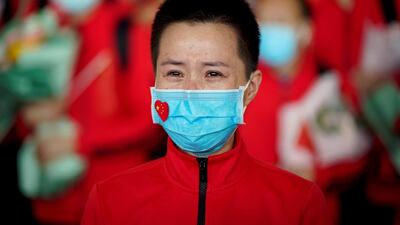
A member of a medical team weeps at the Wuhan Tianhe International Airport after travel restrictions were lifted. Reuters -
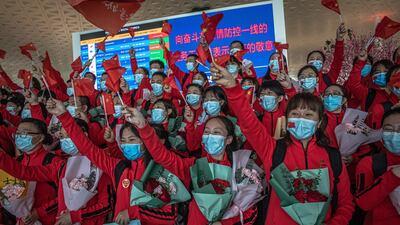
Medical workers from The First Bethune Hospital of Jilin University cheer during a ceremony at the airport as they prepare to leave after the lockdown was lifted in Wuhan, China. EPA -
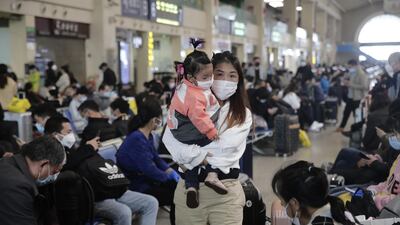
A woman carries a child as she walks past waiting travelers inside the Hankou railway station in Wuhan, Hubei Province, China. Bloomberg -
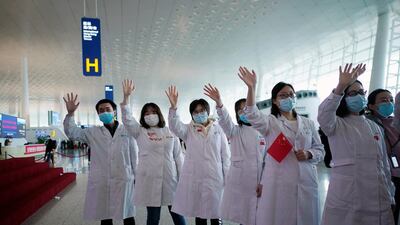
Medical workers wave goodbye to a medical team from Jilin at the Wuhan Tianhe International Airport after travel restrictions were lifted. Reuters -
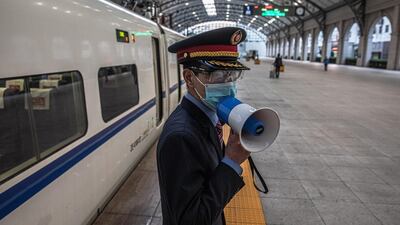
A railway worker speaks in a loudspeaker next to the first official train departing from a railway station after the lockdown was lifted in Wuhan, China. EPA -
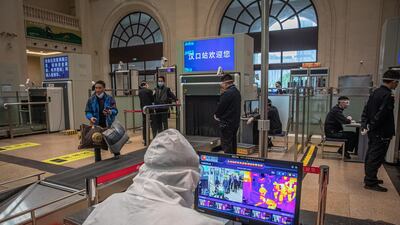
Passengers go through the security and body temperature check at the railway station after the lockdown was lifted in Wuhan, China. EPA -
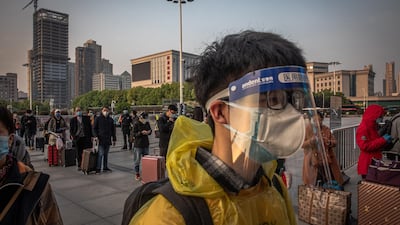
Passengers wait to enter the railway station after the lockdown was lifted, in Wuhan. EPA -
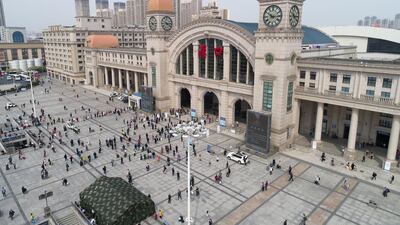
Hankou railway station is seen in this aerial photograph taken in Wuhan, Hubei Province, China. Bloomberg -
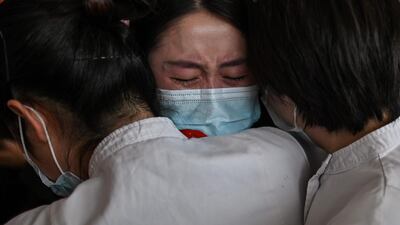
Medical staff from Jilin Province hug nurses from Wuhan after working together during the coronavirus outbreak, during a ceremony before leaving as Tianhe Airport is reopened. AFP -
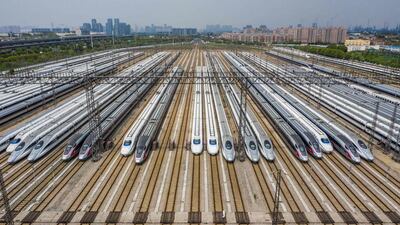
Bullet trains at a station in preparation for resuming operations after authorities lifted a more than two-month ban on outbound travel in Wuhan. AFP -
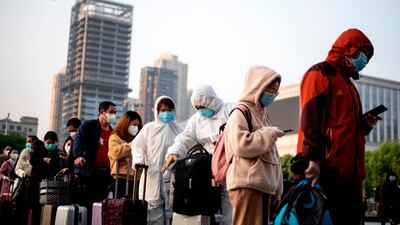
People wearing face masks arrive at Hankou Railway Station in Wuhan to take one of the first trains leaving the city. AFP -
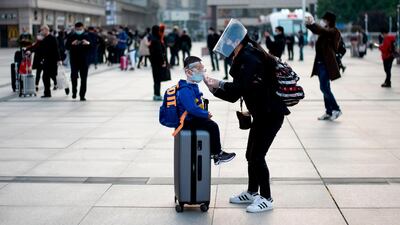
A woman adjusts her child's mask as they arrive at Hankou Railway Station in Wuhan. AFP -
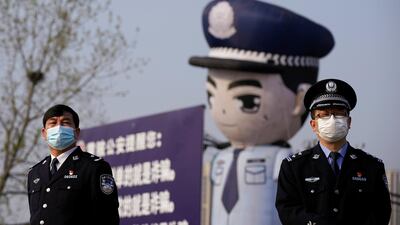
Police officers stand guard near an inflatable depicting a police officer at a toll station of an expressway after travel restrictions to leave Wuhan were lifted. Reuters -
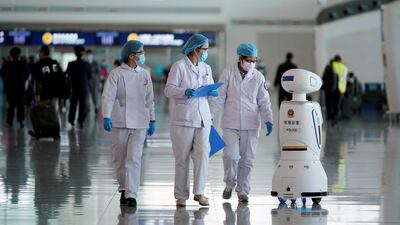
Medical workers walk by a police robot at the Wuhan Tianhe International Airport. Reuters


China has already provided urgently needed medical supplies to more than 150 countries, including the US, as well as to international organisations. We have sent medical teams to countries such as Italy and Saudi Arabia, and also facilitated other countries' commercial purchases of much-needed equipment.
We have also held video conferences to unreservedly share prevention and control experience, as well as treatment plans, in order to help people across the globe to defeat the virus and resume normal life at the earliest possible date. On April 21, for instance, officials of the "reopened" Wuhan held a video conference with their counterparts in Los Angeles to discuss ways to resume work and production while maintaining effective control measures.
"Alone we are weak, together we are strong," it is often said. It is important to remember that all of mankind is essentially a community with a shared future. We can only win this global fight by sticking together.
China will therefore continue to assist others and work with the international community to secure victory against the pandemic.
Ni Jian is China's ambassador to the UAE

