


Iraq has been buffeted by ill-winds over the past 40 years. Wars, sanctions, terrorism and domestic conflict have threatened its stability and the well-being of its citizens.
But by far the most serious long-term threat the country faces is from the potential economic impact and environmental devastation of climate change. According to the UN Environment Programme, Iraq is the fifth-most vulnerable country in the world to the consequences of changes in the climate.
Evidence of growing climate risks is all around us. Very high temperatures are becoming more common, drought more frequent, and dust storms more intense. Desertification is affecting 39 per cent of Iraq’s territory, and 54 per cent of our land is threatened with the loss of agriculture because of increased salination. Dam building on the headwaters and tributaries of the historic Tigris and Euphrates rivers – the lifeblood of our country – has reduced water flow, leading to a migration of the salt wedge from the Gulf upstream into the Shatt Al Arab.
These dams are creating growing shortages of water for irrigation, which threatens our agricultural production; access to drinking water in our towns and villages is also at risk. According to Iraq’s Minister of Water Resources, our country could face a shortfall of as much as 10.8 billion cubic metres of water annually by 2035.

The potential human costs of climate changes are immense. Seven million Iraqis have already been affected by drought and the risk of displacement. Based on Iraq’s high population growth rate, estimates suggest that the country’s population will grow from 38 million today to 80 million by 2050, heightening the economic and social risks if climate change is left unaddressed.
Confronting climate change must be a national priority for Iraq. And it is imperative that we act now. Our future generations depend on us, and we have a solemn responsibility to meet the challenge.
There is now an urgent need for a national programme to revitalise Mesopotamia and use it as an opportunity to diversify the Iraqi economy; support renewable energy and clean instruments; participate in carbon markets; increase the resilience of vulnerable areas that are exposed to climate changes and to sharp economic reversals; and to provide better and more sustainable living conditions for our citizens.
In January, I ratified our Parliament’s decision entering Iraq into the Paris climate agreement, a pact that represents an important opportunity for our planet to collectively confront climate change. Meanwhile, the Cabinet voted in February to invest in solar electricity plants to generate clean energy. Before that, the environment ministry began drafting our Nationally Determined Contributions detailing how we will address climate change in Iraq.
-
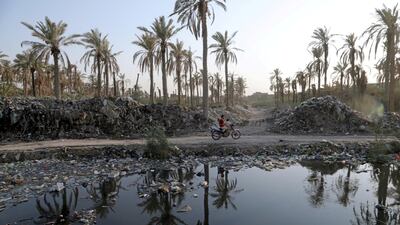
A motorcyclist rides along side the garbage floating on water canal running from the Euphrates River in Karbala, Iraq September 23, 2020. Picture taken September 23, 2020. Reuters -

Iraqi youths pose for a picture as women harvest rice in the marshes (ahwar) of the southern district of Chibayish in Dhi Qar province, on September 22, 2020. AFP -
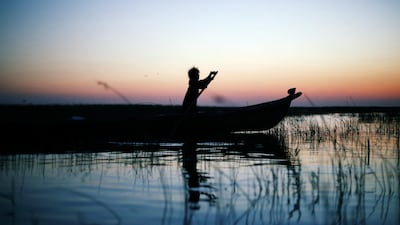
An Iraqi Marsh Arab girl paddles her boat at the Chebayesh marsh in Dhi Qar province, Iraq April 13, 2019. Reuters -
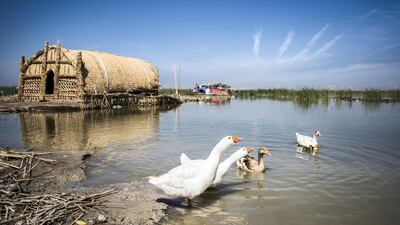
Geese swimming in the marshes of the southern Iraqi district of Chibayish in Dhi Qar province, about 120 kilometres northwest of the southern city of Basra. AFP -

An Iraqi Marsh Arab paddles his boat as he collects reeds at the Chebayesh marsh in Dhi Qar province, Iraq April 14, 2019. Reuters -

Mosul Dam lake, around 50 kilometres north of the Iraqi city of Mosul, April 16, 2019. AFP -
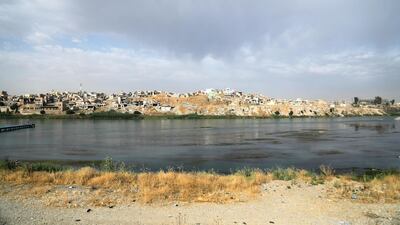
A view shows damaged and destroyed houses in the old city of Mosul on the Tigris River in Mosul, Iraq, June 3, 2020. Reuters -
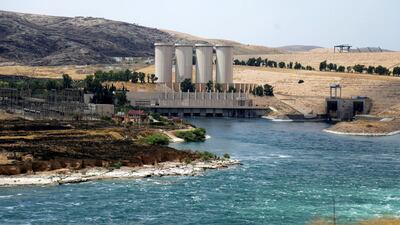
A general view of the Mosul Dam, north of Mosul, Iraq, June 15, 2019. Reuters -
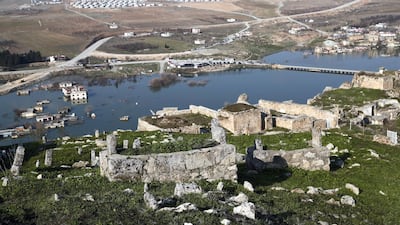
An old cemetery is seen in Hasankeyf, which will be significantly submerged by the Ilisu Dam, with new Hasankeyf in the background in southeastern Batman province, Turkey, February 20, 2020. Reuters -
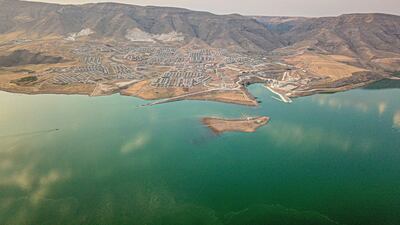
The Ilısu Dam separating the newly government built Hasankeyf town and the remains of the ancient town of the same name and its archaeological sites which were flooded as part of the Ilısu Dam project located along the Tigris River in the Batman Province in southeastern Turkey. AFP -
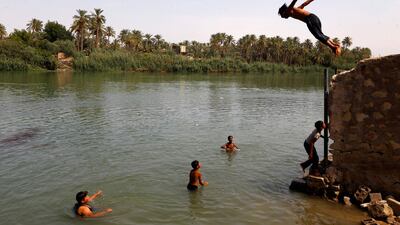
Iraqi youths dive into the Euphrates river to take a swim and cool off, during increased temperatures in the holy city of Najaf, Iraq July 14, 2020. Reuters -
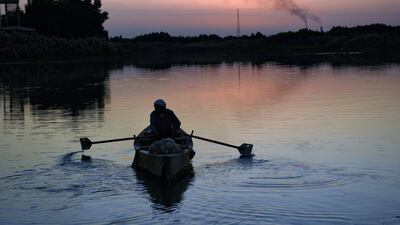
A man sails on the Euphrates river at sunset in the Iraqi city of Nasiriyah in the Dhi Qar province, about 360 kms southeast of the capital Baghdad , on December 30, 2020. AFP


We still have much to do. We need to develop a comprehensive set of initiatives to enhance environmental sustainability, conserve our available natural resources and establish a green economy. This requires tangible measures focused on land use, water preservation and energy efficiency as a first step to a more ambitious and longer-term programme.
Ardh Al Sawad and the Garden of Eden. These labels, the oldest known to man, described the plush green and fertile soil of Mesopotamia. Sadly, this land is now becoming barren desert.
The irony is that, in looking towards a better future, we must return to our recent green past. One route is through an extensive national reforestation effort in the south and west of the country, focused on planting palm trees – the cultural symbol of Mesopotamia – and on restoring forests in the mountain and urban areas of Kurdistan. These will not only serve as a carbon sink; they will also bolster agricultural production and help to protect soil. This reforestation will accord and integrate with the ambitious Saudi initiative for Green Middle East.
Beyond this effort, we should introduce new initiatives to modernise irrigation and water management, update building standards, improve waste disposal and recycling, and capture flared associated gas.
Collectively, these elements will deliver tangible economic benefits over the next decade by creating new jobs in areas such as agriculture, construction and light industry; by fostering the development of new industry in areas such as plastics, construction supplies and food processing; by supporting private-sector activity; by encouraging foreign investment; and by promoting the role of youth in economic development.
Set in the geographic heart of the Middle East, and blessed with a biodiversity of palms, marshes and the mountains of Kurdistan, Iraq also has the potential to bring the countries of the region together. We may differ politically, but we must collaborate to confront climate change. It is a danger that threatens us all. We will need to link our national plans to regional initiatives, and to address our shared environmental and economic threats – such as worsening dust storms, water scarcity, rising temperatures, desertification, and the dwindling of our financial resources as demand for oil falls – through broad efforts to reduce the cross-border impact of climate change and to administer water jointly and fairly.
Indeed, the issue of water requires a constructive dialogue between Iraq, Turkey, Iran and Syria based on the principles of joint responsibility, and common efforts to administer water sustainably.
This national programme to revitalise Mesopotamia will require the participation of the entire Iraqi government, its departments and its agencies, and legislative support from the Council of Representatives. Mustering the necessary political will be imperative: ministries will need to be empowered; new specialised institutions will need to be established; and a raft of new laws and regulations will need to be passed. There also needs to be a role for social and civil youth movements.
Iraq will also require the help of its friends in the international community, for technical and planning support, and technology transfer. One of our first tasks will be to co-ordinate with specialised climate agencies to further develop our efforts. We will also look to access Green Funds, private capital markets and international donors to help to finance the investments envisaged.
The time for action is now. We face an arduous task, and there is no time to waste. But addressing climate change also represents an opportunity for Iraq and the region to introduce measures that will leave them on a more solid foundation as they face the challenges of the decades to come.
Barham Salih is President of the Republic of Iraq

