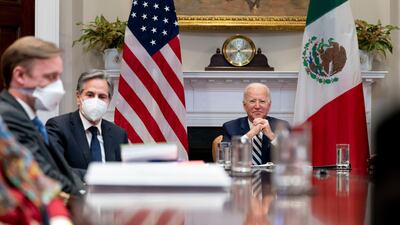

Earlier in the week, the Biden administration published a document called the “Interim National Security Strategic Guidance”. It provides important insights into how the new team in the White House is thinking about the world. Washington, under President Joe Biden, will use the twin-pronged principles of democracy and diplomacy as a means of safeguarding its national security.
Also worth noting is its view of Iran. The new administration does not place Tehran at the same security threat level as the previous Trump administration did. The regime is still dangerous enough to merit Washington’s attention and the administration will move to deter Iran’s threats to the sovereignty and security of other countries in the region.
The security document, however, also makes clear the Biden administration’s unwillingness to view military force as “the answer to the region’s challenges”. This comes just weeks after the withdrawal of US support for the war in Yemen, primarily between government forces and Houthi rebels. Furthermore, even as it condemned the repeated assaults being mounted by the Houthis on neighbouring Saudi Arabia, the administration has taken them off the US terror list. Importantly, the document is shorn of any leverage and barely mentions the instruments used by the Trump administration – sanctions and maximum pressure – against Tehran.
-

A screen grab from video released by Yemen's Houthi rebels shows Yemenis gathering at the purported crash site after a Saudi Tornado fighter jet crashed in Jawf province. AFP -

People rummage through rubble after an air strike in Yemen's Jawf province Yemen in this still image taken from a video. Houthi Media Centre via Reuters -
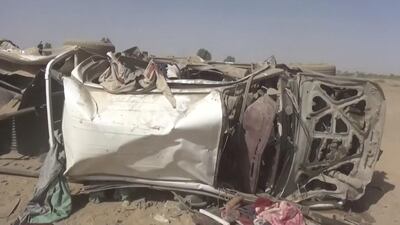
A destroyed vehicle is seen after an air strike in Jawf province. Houthi Media Centre via Reuters -
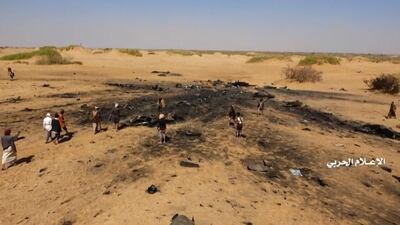
A still from a video released by Houthi rebels shows the site said to be where the Tornado fighter crashed. AFP -
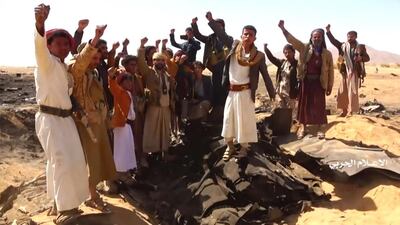
A still from a Houthi rebel video shows Yemenis cheering at the site. AFP -

Yemenis gather around what appears to be part of the crashed Tornado fighter. AFP -
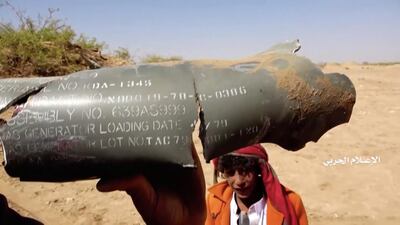
Purported plane wreckage is seen in a still image from a video a Houthi rebel video. Houthi Media Centre via Reuters -

People inspect purported plane wreckage in Yemen's Jawf provoince. Houthi Media Centre via Reuters -
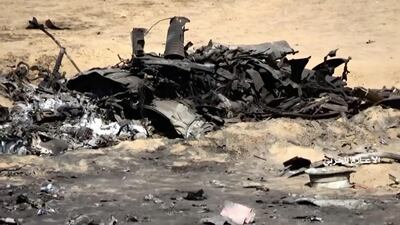
Purported plane wreckage seen in a Houthi rebel video. Houthi Media Centre via Reuters -
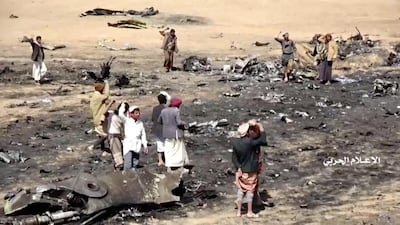
People inspect purported plane crash site in Jawf. Houthi Media Centre via Reuters


Apparently taking aim at China and Russia in the paper, the Biden administration has declared its willingness to use democracy as a weapon against what it views to be authoritarianism regimes. Democracy, according to Mr Biden, is America’s “fundamental advantage” and that Americans “must prove that our model isn’t a relic of history”. How he intends to carry out his agenda is a mystery. If, for example, the Biden administration wants to hold countries accountable for human rights violations, it must not paper over the record of some Middle Eastern states, such as Turkey and Iran. Indeed, upholding values selectively stated in the security document does way more harm than good.
Take Lebanon as another example.
If the political elite in Beirut is, by virtue of its corrupt practices and inefficiencies, denying its people access to international aid, then does that not count as a human rights violation? Could the Biden team not support the Lebanese people’s right to have a neutral foreign policy, as opposed to one that is favourable towards Iran? Could the US not call for an international investigation into possible crimes against humanity more than six months after explosions at Beirut Port destroyed parts of the capital, killing and injuring many of its residents?
Today the same politicians continue to rule Lebanon, mostly because the international community has done little to hold them accountable. The Biden administration surely has the clout to make a difference.
Unfortunately, it is unlikely to do so. Because, like in the case of the Europeans, America’s priority right now is to revive the nuclear deal it signed with Iran in 2015 or, better still, secure a new one. Tehran will not allow Washington or Brussels to get involved in the so-called internal affairs of Beirut, which is firmly in its grip. And this could count as a strong example as to why Iran rejects any attempt to discuss its malign regional behaviour even if the nuclear issue is addressed. This is what it did in 2015, after which it expanded its destabilising operations in Iraq, Syria, Lebanon and Yemen; and this is what it intends to do again.
-
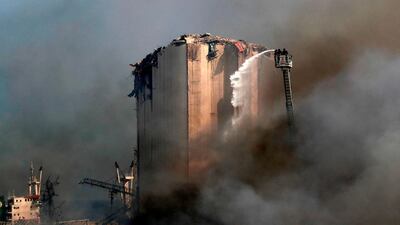
Lebanese firefighters stand on a ladder amid billowing smoke as they extinguish the remaining flames at the seaport of Beirut, a day after a huge fire erupted in warehouses. AFP -
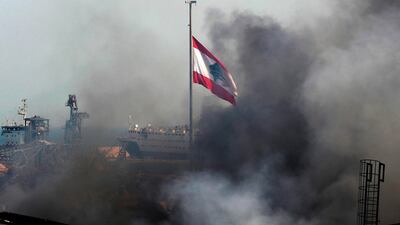
A Lebanese flag flutters amid billowing smoke. AFP -
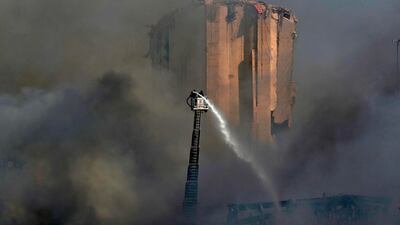
Firefighters stand on a ladder amid billowing smoke as they extinguish the remaining flames at the seaport of Beirut. AFP -

Firefighters extinguish a fire in a warehouse at the port of Beirut. EPA -
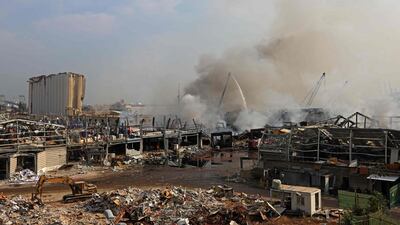
Firefighters extinguish the remaining flames at the seaport of Beirut. AFP -
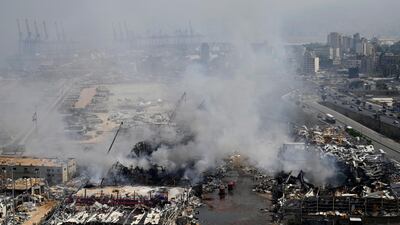
Firefighters extinguish a fire in a warehouse at the port of Beirut. EPA -
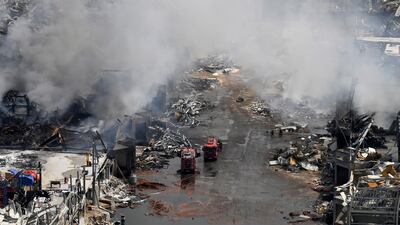
Firefighters extinguish a fire in warehouses at the port of Beirut. EPA -
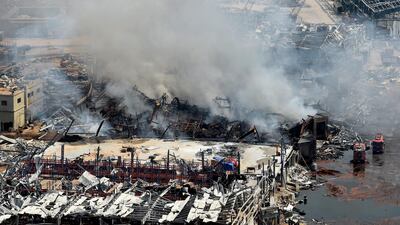
Firefighters extinguish a fire in a warehouse at the port of Beirut. EPA -

Firefighters extinguish a fire in a warehouse at the port of Beirut. EPA -

Firefighters extinguish a fire in a warehouse at the port of Beirut. EPA -
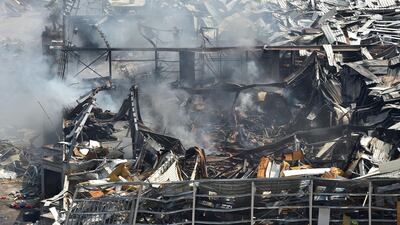
Firefighters extinguish a fire in a warehouse at the port of Beirut. EPA -

Firefighters extinguish a fire in a warehouse at the port of Beirut. EPA -
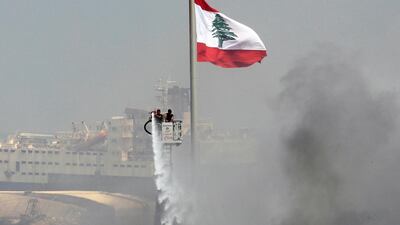
A man uses a water hose to put out the remains of a fire that broke out at Beirut's port yesterday. Reuters


Interestingly, while the security document makes no mention of the US relying on Europe's influence to get tricky negotiations done, this is effectively its current approach to prospective talks with Iran. In their joint bid to get Iran to the table, there is concern that the West will avoid seeking major concessions from Tehran, instead allowing it to fulfil its commitments to the International Atomic Energy Agency (IAEA) and nothing more. This way, the US will be able to fulfil Iranian demands in return, which could even include the lifting of some sanctions, using the European channel.
Europe’s gambit could be seen through a move to put forward, and then withdraw, a proposal to censure Iran at a global IAEA meeting. This will thereby allow the regime, in return, to supposedly backtrack on its refusal to talk to the US about reviving the 2015 deal. It all seems like theatre.
But an increasingly hardline regime in Tehran is convinced that the Biden administration is more desperate than it is for a deal. And until the sometimes contradictory statements and positions of American officials become clearer, the rest of the world will continue to hold its breath.
Raghida Dergham is the founder and executive chairwoman of the Beirut Institute and a columnist for The National

