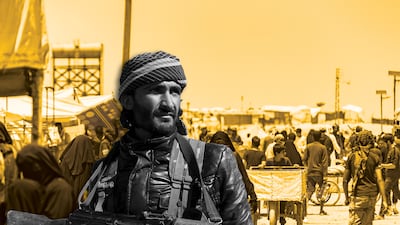

It has been five years since ISIS lost control of its last stronghold in its self-proclaimed caliphate. The group that once controlled territory eight times the size of Lebanon is no longer a global menace. However, the mission that brought together a global coalition of more than 60 states to fight it remains unfinished.
As an adaptable insurgency, ISIS has shifted its tactics. It relies on veteran, more decentralised cells to carry out a steady stream of small-scale yet deadly operations across parts of Syria, as well as some regions of Iraq. It extorts local businesses while simultaneously recruiting a new generation of fighters. Much as when its predecessor, Al Qaeda in Iraq, was on the ropes about 15 years ago, this approach keeps ISIS in the game, and generates revenue as it awaits an opportunity for resurgence.
North-east Syria remains especially vulnerable. The region that comprises ISIS’s former de facto capital, Raqqa, is currently controlled by Kurdish-led fighters best known as the Syrian Democratic Forces, or SDF. The SDF built its reputation as an effective counter-ISIS force on its ability to hold and secure the areas it captured. Yet this capacity is tied to continued American support and protection. Although few in number, the US troops and air assets based in the area deter the Syrian regime and its Russian and Iranian backers from attempting to retake the north-east by force. The American deployment also helps keep neighbouring Turkey from moving in to crush the SDF, whose parent organisation the Kurdistan Workers’ Party, or PKK, has fought an insurgency in Turkey since the early 1980s and is designated by Ankara (as well as Brussels and Washington) as a terrorist organisation.
-
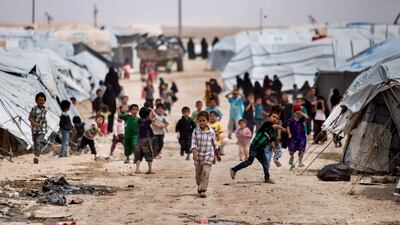
Al Hol camp in Al Hasakeh province, Syria, houses families of ISIS fighters. AP -

About 56,000 people, mostly women and children, live in crowded conditions in the camp. AFP -
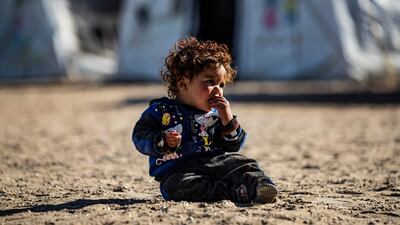
Many of its residents have been there since ISIS was defeated in Syria in 2019. AFP -
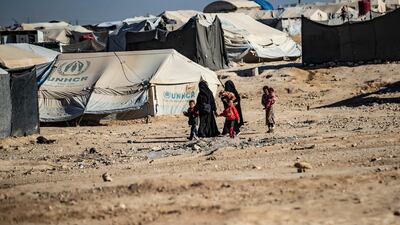
About 10,000 people at Al Hol are non-Arab foreign citizens, with the rest mostly from Syria and Iraq. AFP -
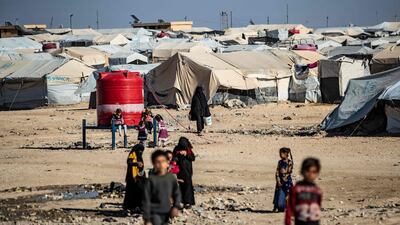
The Al Hol camp, which holds relatives of suspected ISIS group fighters. AFP -

UK charity Save the Children says 40,000 children from 60 countries live in dire conditions in Syria's Roj and Al Hol camps. AFP -
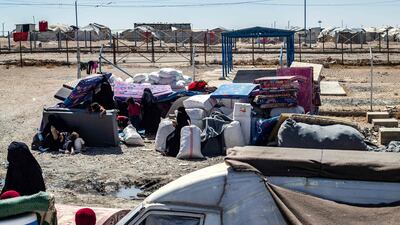
Families at Al Hol gather their belongings as they prepare to return home to Syria's northern Raqqa region. AFP -
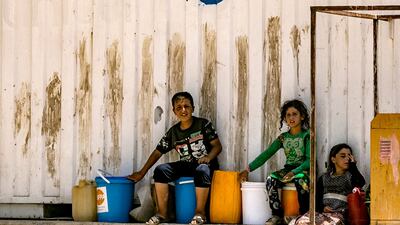
Two children die at the camp every week, Save the Children has said. AFP -
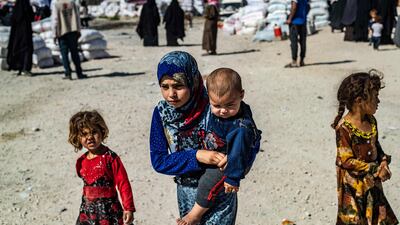
There have been reports of women in the camp being detained and tortured by ISIS supporters. AFP -
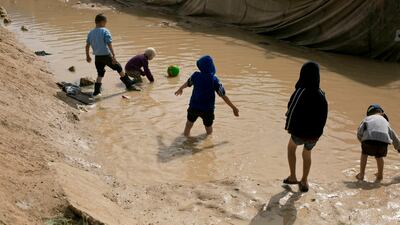
Children play in a mud puddle at Al Hol camp. AP


But despite its earlier gains in battles against ISIS, the SDF is limited in its ability to keep a lid on ISIS cells in the area. SDF-held territory is relatively rich in natural resources, notably oil and gas, and has informal economic ties to the rest of Syria and Iraq. Relying on racketeering, extortion and smuggling, ISIS has been able to fund small-scale attacks, continue recruiting, support the families of its fighters and pay bribes to secure ISIS releases from SDF custody. As deadly cells continue to assassinate and threaten locals, they sow fear, thus hampering the SDF and US-led coalition’s efforts to collect the intelligence needed to mop up ISIS remnants.
The detention centres and camps holding ISIS inmates, affiliated women, and children are equally vulnerable. The SDF has been housing families of foreign and Syrian ISIS fighters in makeshift camps, with the largest one located in Al Hol, Hasakah. In 2019, thousands of people who fled the militants’ last stronghold in Deir Ezzor were placed in this camp as a "temporary measure". Five years later, the camp not only still exists, but security and humanitarian conditions inside it have deteriorated significantly, with ISIS visibly active in parts of it. Today, the camp houses more than 40,000 people, mostly children (thousands of whom are undocumented) and female relatives of suspected ISIS militants from diverse backgrounds and affiliations, many of them Iraqis. They are living in horrendous conditions and continuously attempt to escape.
These camps have received a good deal of attention from western policy makers, but little has changed. Al Hol camp in particular has become infamous, regularly appearing in media headlines and as the focus of numerous US government meetings. Yet this coverage and scrutiny have not translated into a strategy by the SDF or the coalition to provide an acceptable and humane exit for those who remain trapped there; apart from thousands of Iraqis who have been repatriated, most efforts have focused on the camp’s smaller group of Europeans. Likewise, the SDF’s arduous – and arguably thankless – mission to hold families suspected of ISIS affiliation has led to opposition from rights groups and criticism from locals who want the SDF's resources directed to improving governance and security in their areas.
The SDF has accused European governments of dragging their feet on repatriating their citizens. Conversely, western officials have accused the SDF of using the camps as a bargaining chip. Both sides have a point. Some European governments have even revoked the citizenship of their stranded nationals, in an attempt to absolve themselves of the problem. Meanwhile, the SDF has tried to leverage the situation, seeking political recognition in exchange for keeping the foreign detainees away from Europe. Despite American diplomatic efforts, this continuing standoff has hindered any decisive resolution to the crisis in the camps.
The fates of these camps and their residents are tied to the continuation of a shaky status quo. The SDF has spent significant bandwidth and resources to secure and maintain the camps, and it is highly unlikely that it would voluntarily ease its grip over them. But a lot could go wrong. It could find itself in a very precarious situation if Donald Trump were to return to power.
During his last term, Mr Trump expressed his desire – more than once – to pull American troops out of Syria, and showed little concern for the consequences of the precipitous US military drawdown he ordered. A ull American withdrawal from Syria, or perhaps even the sense that one might be imminent, would probably put the SDF in direct confrontation with adversaries much more powerful than itself, be it Turkey, Damascus and its Russian and Iranian backers, or all of the above. In this scenario, it’s hard to see the SDF prioritising guarding the camps over protecting its own territory.
Today this very real risk is buried down a list of more pressing international conflicts, but the fear is that if and when it happens, it might be too late to do much about it. And if the war in Gaza has taught us anything, it’s that ignoring problems in the Middle East will not make them go away.

