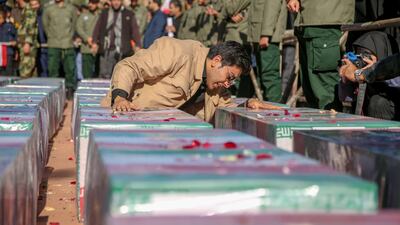

Last Thursday, ISIS claimed responsibility for the blasts that killed nearly a hundred people in the Iranian city of Kerman on the previous day. This is potentially a significant development for several reasons.
The terror group could be seeking to thwart any potential detente between Iran and the US. It might view the current events unfolding in the Middle East as an opportunity to reassert its itself. It may even be trying to diminish other extremist groups by reviving its own objectives, as rival outfits attempt to exploit the Palestinian cause to further their agendas.
If the Israel-Gaza war ends up helping resurrect ISIS, then this is no trivial matter.
Many will be worried about this development, especially the administration of US President Joe Biden, which is trying to prevent the Gaza conflict from escalating into a regional war – including through efforts to engage with Tehran.
Part of the problem is a focus on containment. It may be appropriate as a transitional solution similar to the truces that previous efforts have focused on, but by itself it is a fragile policy. For containment is one thing, and finding lasting solutions is another. Entities such as ISIS excel at exploiting this fragility, which contributes to the overall problem.
To be fair, the Biden administration is striving to achieve both: truces and containment as necessary short-term transitional goals, on the one hand; and on the other, working in parallel on available opportunities following the events of October 7 and their aftermath to secure a regional settlement and sustainable peace.
But the resurgence of ISIS on Mr Biden’s watch will provide ammunition for his critics. Some will hold his administration more broadly responsible, especially given its leniency towards Iran. This is particularly true if ISIS did carry out the Kerman attack, and with the objective of thwarting any understanding being forged between Washington and Tehran.
-
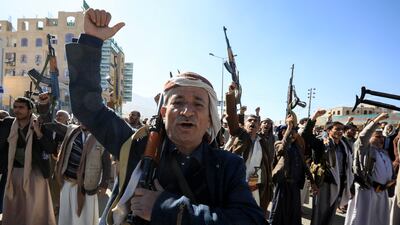
Houthi fighters shout gather in Sanaa. The rebels have launched attacks in the Red Sea in response to the Gaza war. EPA -

From left, Israeli Foreign Ministry adviser Tal Becker, lawyer Malcolm Shaw and Gilad Noam, deputy attorney general for international affairs, at the International Court of Justice in The Hague. AFP -

A Palestinian man injured in an Israeli strike receives treatment in Khan Younis, southern Gaza. AP -

Palestinian medics mourn after members of the Palestinian Red Crescent were killed in an Israeli strike in Deir Al Balah. Reuters -
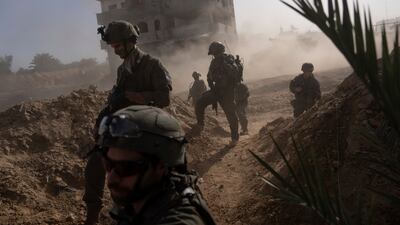
Israeli soldiers take up positions during a ground operation in Khan Younis. AP -
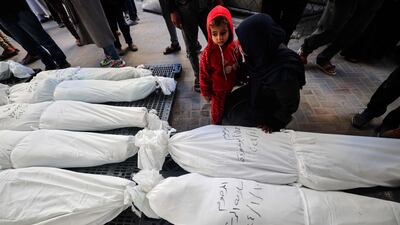
Mourners gather at Al Najar hospital in Rafah, after several relatives of a member of the Hamas general military council were killed in a strike. AFP -
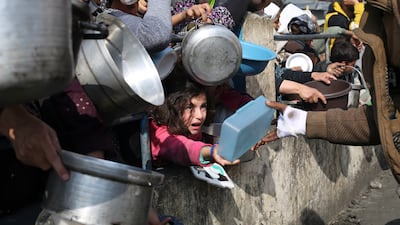
Palestinians wait to receive food aid in Rafah. AP -

A mass grave in Rafah. More than 23,000 people have been killed in Gaza since October 7. AFP -

Palestinians search the rubble of destroyed buildings after an Israeli attack on Rafah. AFP -
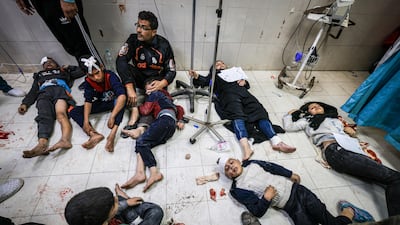
Injured Palestinians receive treatment at Nasser hospital in Khan Younis. AFP -
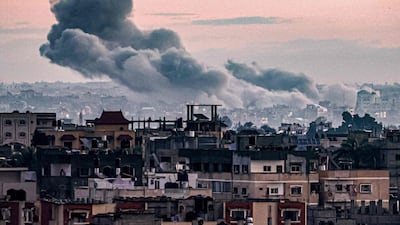
Smoke rises over Khan Younis in the southern Gaza Strip, as seen from Rafah, during sustained Israeli air strikes. AFP -
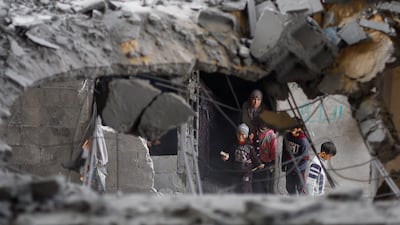
The destruction has spread throughout the Gaza Strip, from the north to Rafah in the south. Reuters -
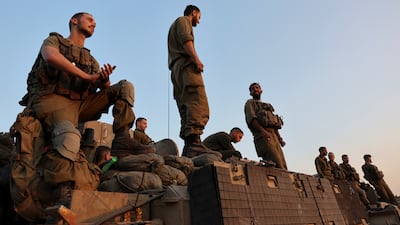
Israeli soldiers stand on an armoured personnel carrier near the Israel-Gaza border, in southern Israel. Reuters -
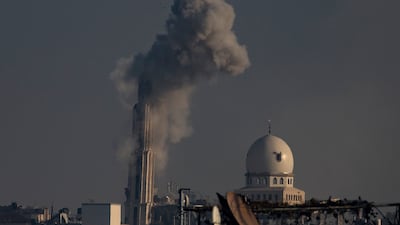
Smoke rises following Israeli air strikes in Khan Younis, the southern Gaza Strip. EPA -
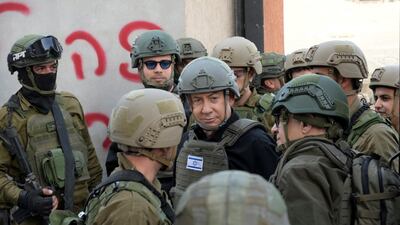
Israeli Prime Minister Benjamin Netanyahu receives a security briefing with commanders and soldiers in the northern Gaza Strip. AP -
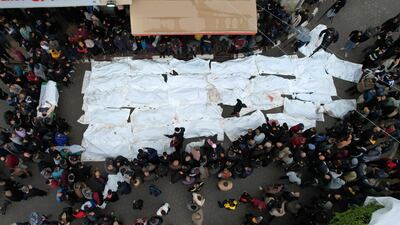
Palestinians mourn their relatives killed in an Israeli strike on the Al Maghazi refugee camp. AFP -
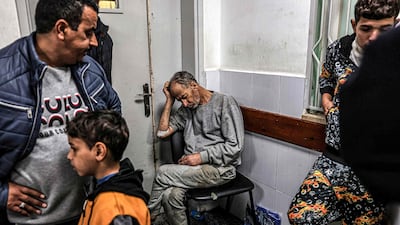
A Palestinian man detained by the Israeli military awaits treatment for his injuries in Rafah. AFP


This logic may sound flawed but in an election year, flawed logic is often useful during campaigning.
Mr Biden’s likely opponent, former president Donald Trump, strongly opposes any rapprochement with the Iranian regime, even if the goal remains to contain the expansion of the Gaza war. This is because the Trump team distrusts Iran and its ambitions in the Middle East.
The governing Democratic Party, arguably, is banking on Iran to prevent a regional war. The latter, in turn, prefers the Democrats to remain in the White House, particularly out of concern for what the Republican Party, especially Mr Trump, might have planned after he had repealed the nuclear agreement previously signed by Democratic predecessor Barack Obama with Tehran.
As the Iran nuclear weapons programme nears completion, its leaders are reluctant to take any risks, especially given the timing of Hamas’s attack three months ago. The Islamic Revolutionary Guard Corps is averse to a war between Israel and Hezbollah in Lebanon, not only because it wishes to avoid direct engagement with Israel but also because Hezbollah remains a valuable card for it and isn’t inclined to use it prematurely.
Further, there are tangible benefits for Iran to co-operate with the Biden administration, including unlocking billions of dollars, trying to lift sanctions, and leveraging the cautious opening to the Gulf countries.
All of these factors heighten the suspicions of Trump supporters, who argue that Iran’s ideology has not changed.
One of Mr Trump’s closest advisers told me that a US administration under the former president will not succumb to Iranian blackmail. He said a Trump administration won’t allow Tehran to hold Washington hostage by threatening that Israel’s conflict with Hezbollah would trigger Iran’s direct intervention that, in turn, could potentially escalate into a direct confrontation with the US.
In this adviser’s view, the Biden administration is falling victim to Iranian blackmail, leading to covert deals with Tehran. He believes that this will harm American interests, empower Tehran and its proxies, and even increase the risk of the US getting entangled in a war with Iran.
Whatever the merits of this line of thinking, the Biden administration must be credited for preventing, so far, an Israel-Lebanon war that could be a precursor to a regional conflict. Credit can partially be attributed to Tehran, too, for restraining Hezbollah.
Moreover, the Biden team, which assigned Amos Hochstein the Lebanon file, has worked towards a qualitative settlement between Israel and Hezbollah, leading to a breakthrough in Lebanon-Israel relations. After Mr Hochstein helped demarcate the Lebanon-Israel maritime border with the approval of Iran and Hezbollah, along with diligent work from Speaker Nabih Berri, the two countries began negotiations to delineate their land borders.

Today, following military clashes between Israel and Hezbollah and the assassination of Hamas deputy leader Saleh Al Arouri in Beirut earlier in the week, notable statements have been issued that warrant attention. For example, Hezbollah chief Hassan Nasrallah expectedly adopted an angry rhetoric full of promises of revenge.
In parallel, however, the US with European support continues to persuade Lebanon and Israel to go beyond truces and containment and address the remaining points of disagreement between the two countries before demarcating the land borders and implementing Resolution 1701 that aims to resolve the 2006 Lebanon War.
It is evident that a breakthrough will not occur before a ceasefire in Gaza is announced. But there are indications that this is possible independent of how the Israel-Gaza war ends and a roadmap for the “day after” is laid out. After all, Israel needs its citizens to return to its north, a scenario that will unfold peacefully once the Lebanon-Israel borders are demarcated and Resolution 1701 is implemented by both Lebanon and Israel.
For its part, Hezbollah is not interested in one-upping armed Palestinian factions and does not want the resurgence of ISIS. Its leadership understands Iran’s strategic ambitions.
The challenge for the Biden administration, though, is in dealing with the far-right Israeli government with which it has an awkward relationship. Indeed, while the Iranian regime is likely to prefer Mr Biden’s re-election this November, Israel’s governing politicians will probably hope for Mr Trump’s return to the White House.
Nevertheless, Mr Trump is not opposed to the demarcation of the Lebanon-Israel borders, and he does not desire a war involving Lebanon. This shared perspective of the US’s presidential rivals could well be key to Lebanon’s political future.

