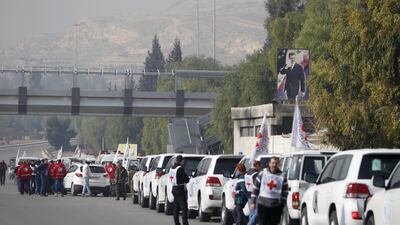

The US on Thursday announced $239 million in extra humanitarian funding for needy Syrians, including refugees who have fled their homeland, in a push to keep aid flowing into the war-torn country.
Speaking at the Bab Al Hawa checkpoint on the Turkish-Syrian border, Washington’s UN ambassador Linda Thomas-Greenfield said the funds would help Syrians who could soon be left without vital humanitarian deliveries.
The US wants the UN Security Council to increase cross-border aid deliveries into Syria when the mandate for such operations comes up for renewal on July 10.
Russia, which holds a right of veto in the council, says the convoys are no longer necessary.
“Four in five people in north-west Syria need humanitarian assistance,” Ms Thomas-Greenfield said.
“For millions of civilians in Idlib, this is their lifeline. Over the last year and a half, some members of the Security Council succeeded in shamefully closing two other crossings into Syria, just like this one.”
She said the 1,000 aid vehicles that deliver food, medicine and other supplies from Turkey into north-western Syria at the Bab Al Hawa crossing each month could soon stop running for good.
“When I get back to New York, I will be briefing members of the Security Council on what I’ve seen here and I will be appealing to my colleagues to support the continuation of this operation and to reopen the two other border crossings that were closed,” Ms Thomas-Greenfield said.
Samantha Power, administrator of the US Agency for International Development, said on social media that “needs are higher than ever before” in Syria, where two thirds of the population depend on aid.
The new funds would provide Syrians with food, water, sanitation, counselling and help to tackle the coronavirus pandemic.
Ms Power said there was “no viable alternative” to cross-border aid deliveries.
Ms Thomas-Greenfield met the Turkish president’s spokesman, Ibrahim Kalin, in Ankara on Wednesday, after which both sides said they would work to keep aid flowing into Syria.
Her four-day visit to Turkey comes before US President Joe Biden's first meeting with Turkish President Recep Tayyip Erdogan at the Nato summit in Brussels on June 14, amid strained ties between the two allies.
Cross-border aid operations into Syria were first authorised by the UN Security Council at four points in 2014.
Last year, it reduced that access to the Bab Al Hawa gate between Turkey and Idlib after opposition from Russia and China to renewing all four.
The US and other council members have pushed to expand cross-border operations.
A resolution to extend council approval needs nine votes in favour and no veto from any of the five permanent members – Russia, China, Britain, France and the US.
Russia says food, fuel, medicine and other aid should now be overseen from the capital, Damascus, with some of it passing across the front lines with rebel forces.
The UN’s top humanitarian officer, Mark Lowcock, has called cross-border aid deliveries a “lifeline” to about three million Syrians living in the country’s turbulent north, and said deliveries run by Damascus are not yet sufficient.
The north-western Idlib region is the last remaining rebel stronghold against President Bashar Al Assad, who has largely regained control of Syria after a decade of civil war that has left the country and its economy in ruins.
-
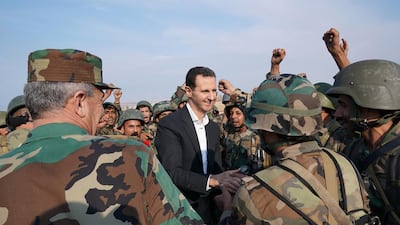
Syrian soldiers are seen cheering President Bashar Al Assad during his visit to Al Habit on the southern edges of the Idlib province, in a picture released on October 22, 2019. AFP / Syrian Presidency Facebook page -
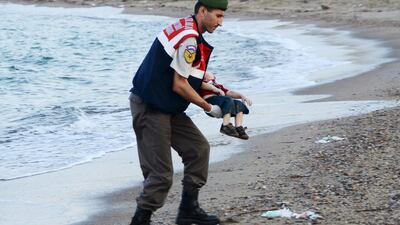
A Turkish gendarme retrieves the body of Syrian refugee Alan Kurdi from a beach in Turkey. Reuters -
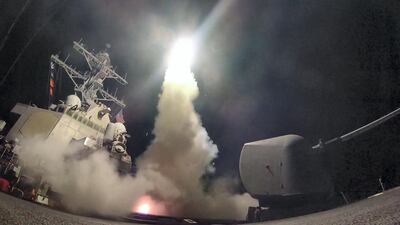
The guided-missile destroyer 'USS Porter' conducts strikes while in the Mediterranean Sea, on April 7, 2017. AFP / US NAVY -

A handout picture released by the official Syrian Arab News Agency on October 31, 2013, shows the remains of a mortar after an alleged mortar attack by rebel fighters on the Damascus mixed Christian-Druze suburb of Jaramana. AFP / Sana -
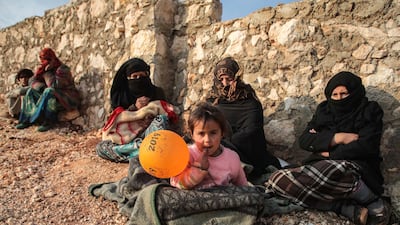
Displaced Syrians from the south of Idlib province sit out in the open in the countryside west of the town of Dana in the north-west Syrian region on December 23, 2019. AFP -
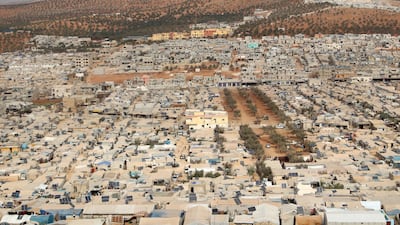
This picture shows a general view of an overcrowded displacement camp near the village of Qah near the Turkish border in Syria's north-west Idlib province, on October 28, 2020, during the coronavirus pandemic crisis. AFP -
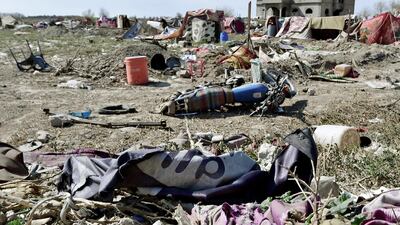
A picture taken on March 23, 2019, shows the last ISIS bastion in the eastern Syrian village of Baghuz after the defeat of the group. The Kurdish-led forces pronounced the end of ISIS regime on March 23, 2019, after flushing out the diehard militants from their very last bastion in eastern Syria. AFP -
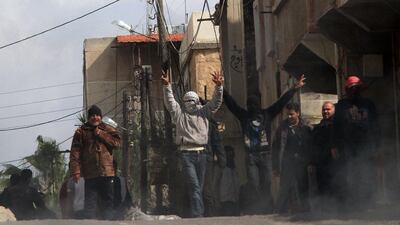
Anti-government activists gesture as they gather on the streets of Daraa, 100 kilometres south of the capital Damascus, on March 23, 2011. AFP -
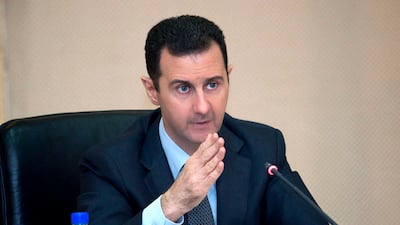
Syria's President Bashar Al Assad heading a cabinet meeting in the presidential palace in Damascus in 2013. Sana / AFP -
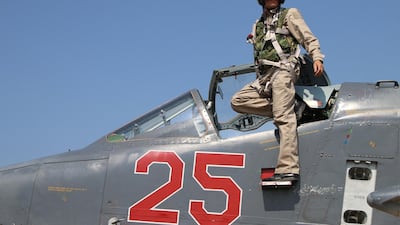
A picture taken on October 3, 2015 shows a Russian army pilot leaving the cockpit of a Russian Sukhoi Su-25 ground attack aircraft at the Hmeimim airbase in the Syrian province of Latakia. AFP -
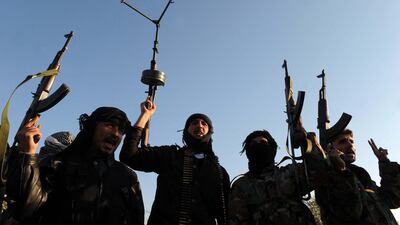
Members of the Free Syrian Army raise their weapons during a patrol in Idlib in north-west Syria on February 18, 2012. AFP -
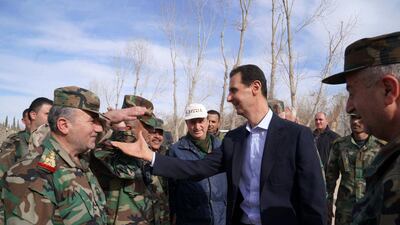
Syrian President Bashar Al Assad is shown shaking hands with government troops in Eastern Ghouta, in the leader's first trip to the former rebel enclave outside Damascus in years, in this handout picture released by the Syrian Presidency on March 18, 2018. Syrian Presidency Facebook page / AFP -
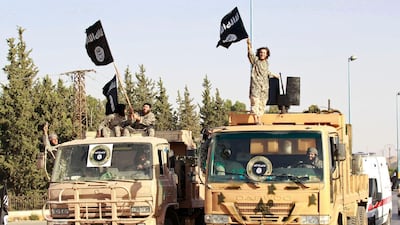
Militant fighters wave flags as they take part in a military parade along the streets of Syria's northern Raqqa province, on June 30, 2014. Reuters



