
Sitting in their East Jerusalem living room, twins Muna and Mohammed Al Kurd talk about the legal battle their family has fought for years to hold on to a home that could soon be taken from them.
With an eviction order from an Israeli court looming, they and dozens of other Palestinians may soon be forced out of their contested neighbourhood.
“We’re caught up in this decades-long legal procedure that’s drained us psychologically; it’s drained us of our childhood,” says Mohammed, 22, who lives in the bungalow with his parents and three siblings.
The Al Kurds are among a dozen Palestinian families in the Sheikh Jarrah neighbourhood facing legal proceedings. A third of them have been ordered to leave their homes this month.
Their street has become a flashpoint between Palestinian protesters and Israeli police, who this week have made multiple arrests as mounted officers and those in riot gear march through the neighbourhood.
-
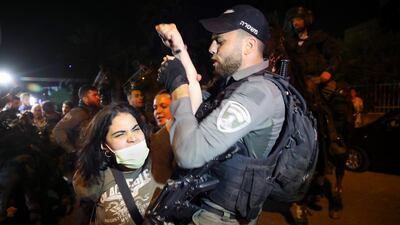
A Palestinian woman and an Israeli policeman scuffle during a protest against the planned evictions of Palestinian families from the Sheikh Jarrah neighborhood of East Jerusalem. AP -
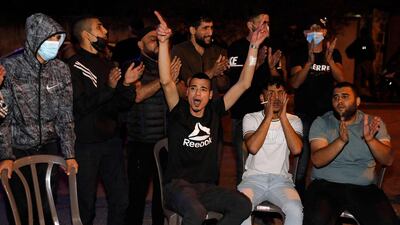
Palestinians protest about local families facing eviction from the Sheikh Jarrah neighbourhood of East Jerusalem. AFP -
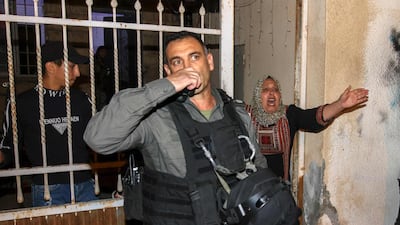
Palestinian families face eviction from the Sheikh Jarrah neighbourhood of East Jerusalem. AFP -
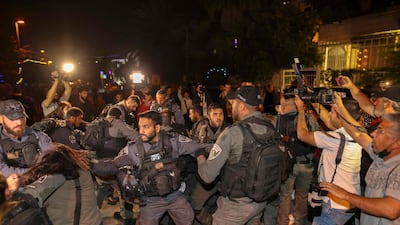
Israeli security forces detain a Palestinian during protests in the Sheikh Jarrah neighbourhood of East Jerusalem. AFP -

Fatah supporters and Archimandrite Abdullah Yulio, centre left, demonstrate in the West Bank city of Ramallah in solidarity with Palestinian families facing Israeli eviction orders in the Sheikh Jarrah neighbourhood of East Jerusalem. AFP -
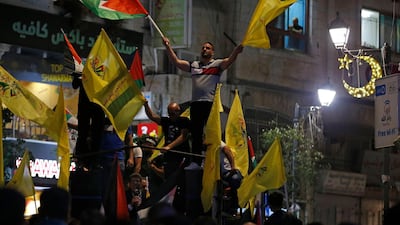
Fatah supporters demonstrate in the West Bank city of Ramallah in solidarity with Palestinian families facing Israeli eviction orders in the Sheikh Jarrah neighbourhood of East Jerusalem. AFP -
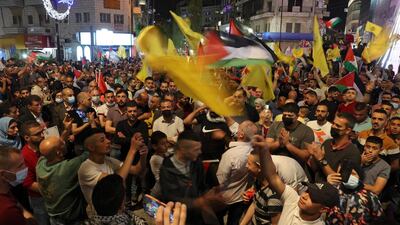
Fatah supporters demonstrate in the West Bank city of Ramallah in solidarity with Palestinian families facing Israeli eviction orders in the Sheikh Jarrah neighbourhood of East Jerusalem. AFP -
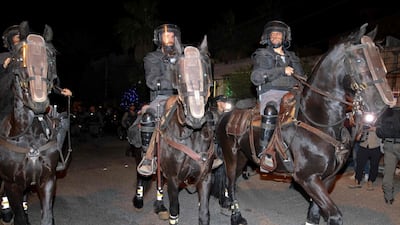
Israeli mounted police move to disperse Palestinian protesters amid ongoing confrontations as Palestinian families face eviction in the Sheikh Jarrah neighbourhood of East Jerusalem. AFP


The Al Kurd family has lived for generations in Sheikh Jarrah, which hosts European consulates and is a short walk from Jerusalem’s Old City, but the residents are up against legislation that privileges Jewish landowners from before the creation of Israel.
“My grandmother was made a refugee from Haifa and she came here, and I don’t think she was expecting another catastrophe,” says Muna, a freelance producer.
The siblings' grandparents were among 750,000 Palestinians who fled or were forced from their homes in 1948 when Israel was created. They reached East Jerusalem in the 1950s, which was then under Jordanian control, and were offered a newly built home as part of a state scheme for refugees.
Lying in a valley dotted with trees, the bungalow housed the family from Haifa, a northern coastal city, their six children and then grandchildren.
“It’s always been a very small and very full house,” says Mohammed, on a break from his master’s degree in New York.
Life in the neighbourhood was turned upside down by the 1967 war in which Israel took control of East Jerusalem and Jordan’s governance of the area come to an end.
Under Israel’s 1950 Absentees' Property Law, Palestinians who lost their homes during the 1948 conflict have no right to return to them.
“Around 2,000 Jews lost their homes in Jerusalem during that war, while around 35,000 Palestinians lost their homes in West Jerusalem,” says Hagit Ofran from Israeli NGO Peace Now.
The annexation of Palestinian land – in pictures
-
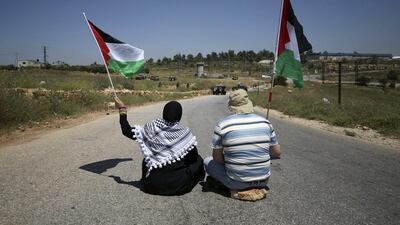
Palestinian protesters wave flags as Israeli troops take position during a protest against Jewish settlements in the West Bank village of Nabi Saleh, near Ramallah. Reuters -
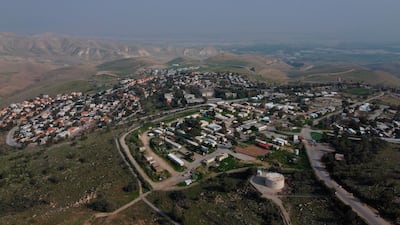
Now that Prime Minister Benjamin Netanyahu has secured a new term in office, there’s little to prevent him from annexing large parts of the West Bank as early as this summer. AP -
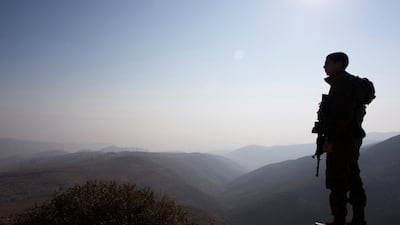
An Israeli soldier stands guard during a tour made by Israeli parliament members in the Jordan Valley near the Jewish settlement of Maale Efrayim. Reuters -
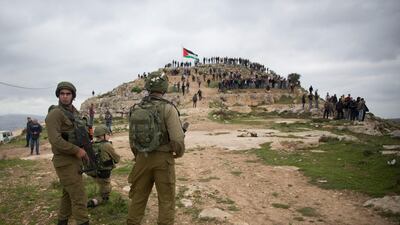
Israeli soldiers take position as Palestinian demonstrators gather during a protest against expansion of Israeli settlements in the West Bank. AP -
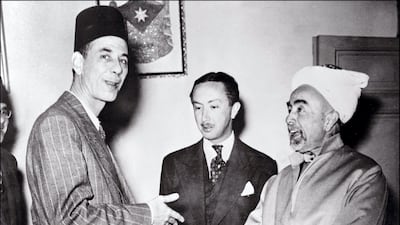
King Abdullah (r) of Transjordan on May 13, 1948 in Amman with Abed Al Rahman Azzam, the secretary general of the Arab League and Abd Al Elah Ibn Ali, the Prince Regent of Iraq, the day before the beginning of the first Arab-Israeli War. AFP -
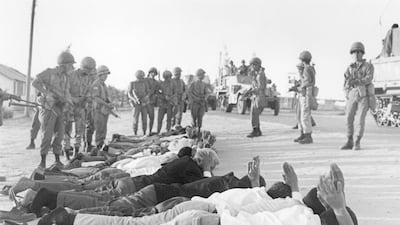
Palestinians surrender to Israeli soldiers in June 1967 in the occupied territory of the West Bank after Israel launched a pre-emptive attack on Egypt and Syria and seized the Gaza Strip, Sinai Peninsula and the Golan Heights in Syria as well as the West Bank and Arab East Jerusalem. AFP -
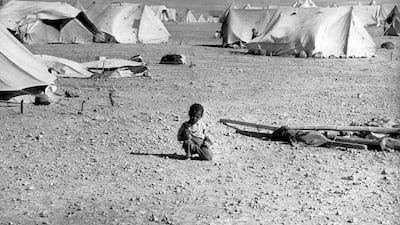
A Palestinian child plays in a refugee camp in Jordan on June 23, 1967. AFP -
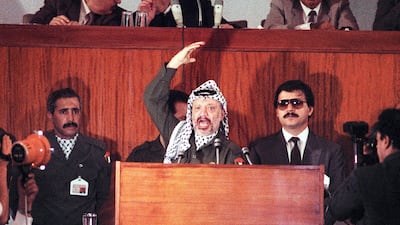
PLO chairman Yasser Arafat delivers a speech to the Palestine National Council meeting to make the historic proclamation of a Palestinian state in the Israeli-occupied territories and to recognize Israel in the Palace of Nations conference hall on November 12, 1988, in Algiers. AFP -

US President Bill Clinton stands between PLO leader Yasser Arafat and Israeli Prime Minister Yitzahk Rabin as they shake hands for the first time on September 13, 1993 at the White House. AFP -
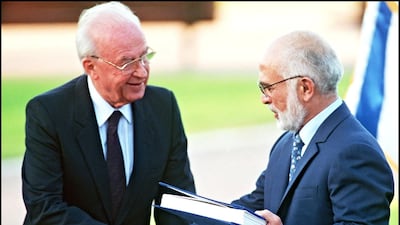
Hussein Ibn Talal, King of Jordan and Israeli Premier Yitzhak Rabin shake hands after they exchanged the documents of the Peace Treaty at Beit Gabriel conference centre on November 10, 1994 on the southern shore of the Sea of Galilee. AFP -
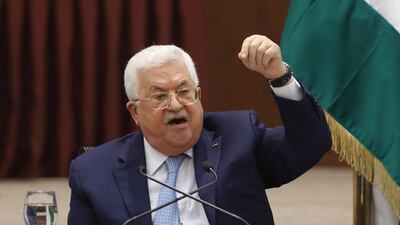
Palestinian President Mahmoud Abbas speaks during the Palestinian leadership meeting and threatened to end security coordination with Israel and the United States, saying Israeli annexation would ruin chances for peace. AFP -
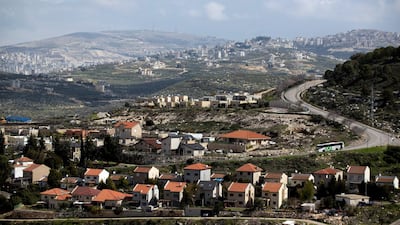
Houses in the Israeli settlement of settlement of Kedumim are seen in the foreground as part of the Palestinian city of Nablus is seen in the background (far left) in the Israeli-occupied West Bank. Reuters -
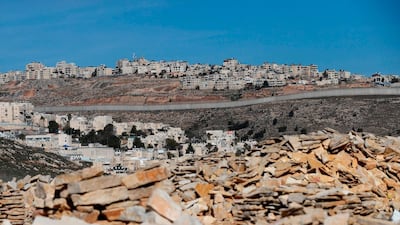
Israel's controversial concrete barrier (C) separating the Jewish settlement of Neve Yaakov (foreground) in the northern part of east Jerusalem and the Palestinian area of al-Ram (background) in the occupied West Bank. AFP -
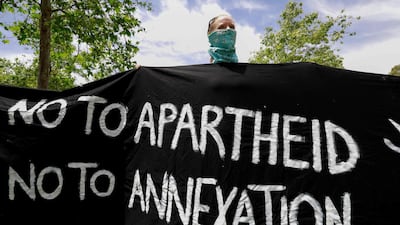
An Israeli activist holds a banner during a protest against the US peace plan for the Middle East, in front of the US ambassador's residence in Jerusalem, on May 15, 2020, as Palestinians commemorate the 72nd anniversary of the 1948 Nakba or "catastrophe". AFP -
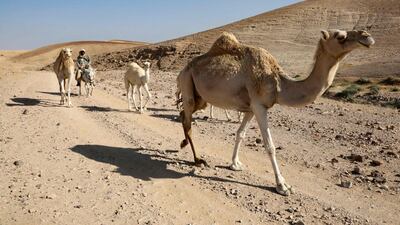
A Palestinian shepherd tends to his camels on arid land considered to be in "Area C" (under Israeli security and administrative control), southeast of Yatta town in the southern West Bank district of Hebron. AFP -
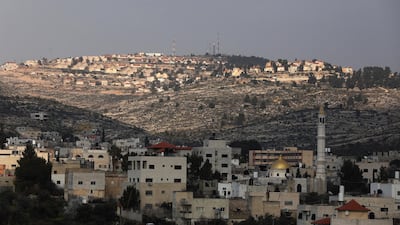
A general view of the Israeli settlement of Elon Moreh, as seen from the Palestinian village of Azmout near the West Bank City of Nablus. EPA -
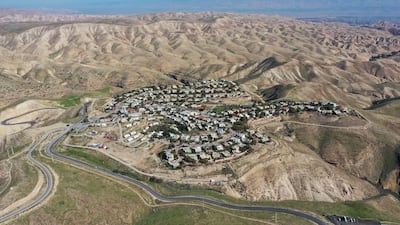
The West Bank Jewish settlement of Maale Michmash. AP


After Israeli forces took control of East Jerusalem nearly 20 years later, politicians enacted legislation that said Jews could reclaim properties in the city that they owned before the founding of Israel.
“That’s the discriminatory law,” says Ms Ofran, who specialises in Israeli settlement building in the Palestinian territories.
“We have a law from 1950 that says Palestinian refugees will not get their property, and we have a law from 1970, which says in East Jerusalem, Jews can get their property back."
With no legal right to return to the homes of their grandparents, Palestinians in Sheikh Jarrah and other East Jerusalem neighbourhoods such as Silwan faced numerous court cases in recent decades.
Sami Irsheid, a lawyer representing Sheikh Jarrah residents, said the latest legal challenge began in 2009.
"Every few years they initiate proceedings against several families in order to evict them, because they didn't want to do this at the same time," he tells The National.
The court case against the Al Kurds and their neighbours began shortly after the Israeli authorities evicted three other families from the neighbourhood, Mr Irsheid said.
Those supporting the residents say the cases are initiated by settler organisations who aim to Judaise East Jerusalem, using documents that they claim prove historic ownership by Jews of land or property in the city.
Lawyers representing clients seeking to evict the Al Kurd family and other residents did not respond to repeated requests for comment by The National.
The case has brought Israeli, Palestinian and foreign protesters to Sheikh Jarrah, chanting “freedom” and calling for an end to the occupation of East Jerusalem.
The rallies are regularly accompanied by a heavy police presence, whose officers often set off stun grenades as they disperse demonstrators.
In one high-profile incident last month, which was condemned by Israeli legislators across the political spectrum, MP Ofer Cassif was punched in the head and wrestled to the ground by officers.
Recently, the authorities have used mounted police and a skunk lorry, which sprays foul-smelling liquid that can stick to the skin and hang in the air for days.
The Sheikh Jarrah legal proceedings are being followed by the UN, whose human rights experts said last month: “Such forced evictions leading to population transfers are strictly prohibited under international law.”
The International Criminal Court confirmed it received a letter from the residents, requesting that their case be included in the court’s investigation into alleged war crimes in the Palestinian territories.
In Israeli courthouses, Palestinians have never won the right to home ownership in East Jerusalem, according to Peace Now.
Some have gained protected tenancy status, a temporary measure that allows them to stay put for a few more years.
“I think it’s good that we’re using the legal system because it buys us time in our homes, but I think ultimately this is a political thing. It’s a political game,” Mohammed says.
Four families, including the Al Kurds, were given a May 2 deadline to leave, but that date passed while the Supreme Court weighed up hearing the residents’ appeal.
“I want to be able to look back at this and say: 'If we were thrown out in the street, we were thrown out with our dignity',” Mohammed says, determined to continue campaigning against the eviction order.
With equal resolve, Muna says they will not walk away: “We always say that we won’t leave. Until the last moment, we will not leave.”

