

The Iraqi Parliament has approved a law that for the first time recognises the crimes committed by ISIS against Yazidi women and children, and other ethnic and religious groups, as genocide and crimes against humanity.
In June 2014, ISIS militants swept through large areas in northern and western Iraq, taking control of nearly a third of the country.
Thousands of Yazidi women and children were enslaved by the extremists along with others from Christian and Shiite Turkmen and Shabak communities.
Nobel Peace Prize-winner Nadia Murad, who endured enslavement under ISIS, described the law as “an important first step in acknowledging the gender-based trauma of sexual violence and need for tangible redress".
“Implementation of the law will need to be focused comprehensively, supporting and sustainably reintegrating survivors,” Ms Murad wrote on Twitter after Monday’s approval.
The law stipulates that the survivors will be entitled to financial compensation, pensions and salaries.
It calls for the establishment of a state-run department to look after the survivors, rehabilitate them and help them to reintegrate into society.
Parliamentary approval is “a victory for our daughters, the victims who endured ISIS ugliest violations and genocides", Iraqi President Barham Salih tweeted.
“Efforts to find out the fate of others who are still missing and kidnapped, and redress for the victims must be continued, and to hold perpetrators accountable."
During the ISIS blitz, the militants separated the women from their male relatives, selling them into sexual slavery and sending the men to their deaths.
-
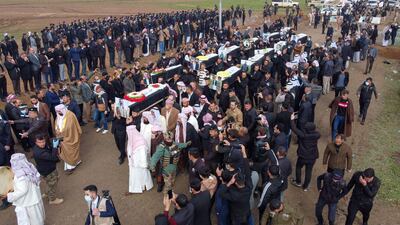
Mourners carry coffins wrapped in the Iraqi flag in a procession during a mass funeral for 104 Yazidi victims of ISIS in the northern Iraqi village of Kocho in Sinjar district. AFP -
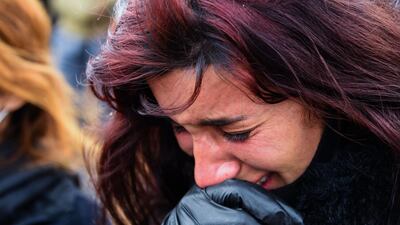
A woman weeps during a burial service for Yazidi victims of ISIS in the northern Iraqi village of Kocho. AFP -
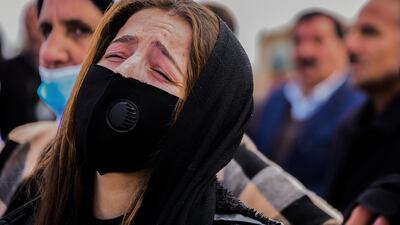
A woman reacts during a a mass funeral for Yazidi victims of the Islamic State (IS) group in the northern Iraqi village of Kojo in Sinjar district. AFP -

Iraqi soldiers carrying coffins arrive to start a mass funeral ceremony for Yazidi victims of the Islamic State (IS) group in the northern Iraqi village of Kojo in Sinjar district. AFP -
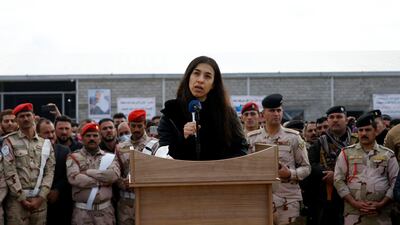
Nobel Peace Prize laureate and Yazidi activist Nadia Murad speaks during the funeral of people from the minority Yazidi sect who were killed by ISIS. Reuters -

Men play the ney and tambourines in a procession during a mass funeral for Yazidi victims of ISIS in the northern Iraqi village of Kocho in Sinjar district. AFP -
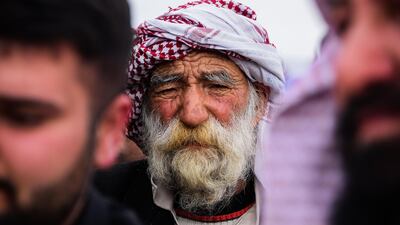
An elderly mourner attends a mass funeral for Yazidi victims of ISIS in the northern Iraqi village of Kocho in Sinjar district. AFP -
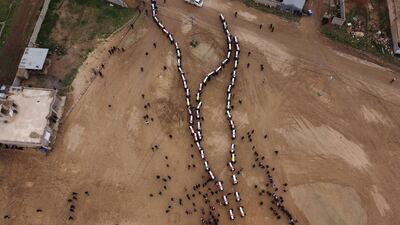
An aerial picture shows mourners carrying coffins wrapped in the Iraqi flag in a procession during a mass funeral for Yazidi victims of ISIS in the northern Iraqi village of Kocho. AFP -

An aerial picture shows mourners gathering around coffins wrapped with the Iraqi flag during a mass funeral for Yazidi victims of ISIS in the northern Iraqi village of Kocho. AFP -
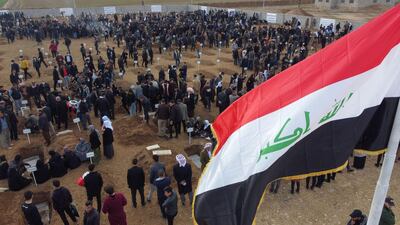
Mourners gather around graves during a mass funeral for Yazidi victims of ISIS in the northern Iraqi village of Kocho. AFP


About 7,000 women and girls were captured and sold into slavery, with nearly half eventually escaping.
Almost 2,800 are either still missing or in captivity.
For centuries the Yazidis, who follow an ancient monotheistic religion, lived in the mountains in north-west Iraq where their ancestral villages, temples and shrines are located.
There were about 700,000 Yazidis in Iraq before 2014, their leaders said.
Many of them are believed to have fled the country, mainly to the West.
Those still in the country live in camps or have returned to their areas despite the damage their property suffered.

