Iraqi Boy-King Faisal II’s drawings shed light on country’s past


Sinan Mahmoud
  • English
  • Arabic

In a display case in Iraq’s National Archives, a set of drawings on yellowish paper offers a window into the mind of the country’s last monarch, King Faisal II.

For decades the 143 pictures have been kept in the archives, with only a handful accessible to researchers and visitors curious about Iraq’s so-called boy-king, who ascended the throne at the age of three.

The National was given the chance to film the collection and the royal family archive for the first time.

The pictures shine a light on a tumultuous period in Iraq’s modern history, including the life – and gruesome death – of the king.

  • Sketches by Iraq's last monarch, King Faisal II, on display at the Iraqi National Library and Archives. Photo: Iraqi National Library and Archives
    Sketches by Iraq's last monarch, King Faisal II, on display at the Iraqi National Library and Archives. Photo: Iraqi National Library and Archives
  • For decades the 143 pictures were kept in the archives, with only a handful accessible to researchers and visitors. Photo: Iraqi National Library and Archives
    For decades the 143 pictures were kept in the archives, with only a handful accessible to researchers and visitors. Photo: Iraqi National Library and Archives
  • Some of the king's sketches on display. Photo: Iraqi National Library and Archives
    Some of the king's sketches on display. Photo: Iraqi National Library and Archives
  • The drawings reveal that King Faisal’s early life was dominated by the backdrop of war during the 1940s. Sinan Mahmoud / The National
    The drawings reveal that King Faisal’s early life was dominated by the backdrop of war during the 1940s. Sinan Mahmoud / The National
  • Some of the sketches on display at Iraqi National Library and Archives. Sinan Mahmoud / The National
    Some of the sketches on display at Iraqi National Library and Archives. Sinan Mahmoud / The National
  • Sketches by Iraq's last monarch, King Faisal II, on display at the Iraqi National Library and Archives. Sinan Mahmoud / The National
    Sketches by Iraq's last monarch, King Faisal II, on display at the Iraqi National Library and Archives. Sinan Mahmoud / The National
  • Some of the monarch's sketches on display. Photo: Iraqi National Library and Archives
    Some of the monarch's sketches on display. Photo: Iraqi National Library and Archives
  • Some of the sketches on display at the Iraqi National Library and Archives. Sinan Mahmoud / The National
    Some of the sketches on display at the Iraqi National Library and Archives. Sinan Mahmoud / The National
  • Most of the drawings, in pencil or crayon, depict fierce battles in open fields, at sea or in cities. Sinan Mahmoud / The National
    Most of the drawings, in pencil or crayon, depict fierce battles in open fields, at sea or in cities. Sinan Mahmoud / The National
  • Some of the sketches on display at the Iraqi National Library and Archives. Sinan Mahmoud / The National
    Some of the sketches on display at the Iraqi National Library and Archives. Sinan Mahmoud / The National
  • For decades the 143 pictures have been kept in the archives, with only a handful accessible to researchers and visitors. Sinan Mahmoud / The National
    For decades the 143 pictures have been kept in the archives, with only a handful accessible to researchers and visitors. Sinan Mahmoud / The National
  • The fighting in Iraq seems to have captured the young king’s imagination. Photo: Iraqi National Library and Archives
    The fighting in Iraq seems to have captured the young king’s imagination. Photo: Iraqi National Library and Archives
  • Some of the king's sketches on display. Photo: Iraqi National Library and Archives
    Some of the king's sketches on display. Photo: Iraqi National Library and Archives
  • Sketches by Iraq's last monarch, King Faisal II, on display at the Iraqi National Library and Archives. Sinan Mahmoud / The National
    Sketches by Iraq's last monarch, King Faisal II, on display at the Iraqi National Library and Archives. Sinan Mahmoud / The National
  • Sketches by Iraq's last monarch, King Faisal II, on display at the Iraqi National Library and Archives. Photo: Iraqi National Library and Archives
    Sketches by Iraq's last monarch, King Faisal II, on display at the Iraqi National Library and Archives. Photo: Iraqi National Library and Archives
  • Some of the drawings on display. Photo: Iraqi National Library and Archives
    Some of the drawings on display. Photo: Iraqi National Library and Archives

Born in 1935, Faisal II became the youngest reigning monarch in the world when he took the throne as an infant after the mysterious death of his father King Ghazi in a car accident in April 1939.

For nearly 20 years, the young king ruled Iraq through a period of extreme turmoil, including the Second World War.

But the king’s life was cut short when he was shot dead on July 14 1958 in a coup staged by a group of army officers to establish the first Iraqi Republic.

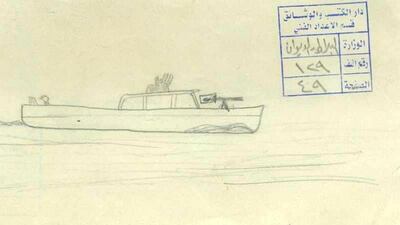
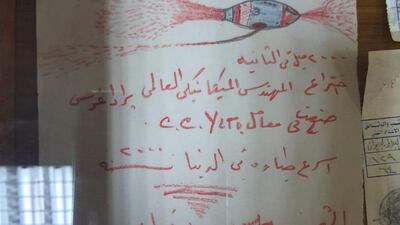
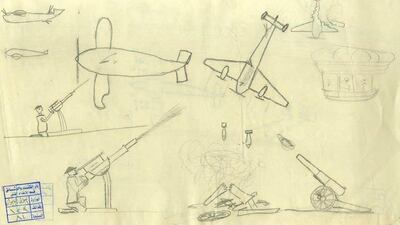
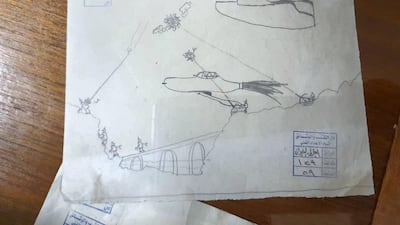
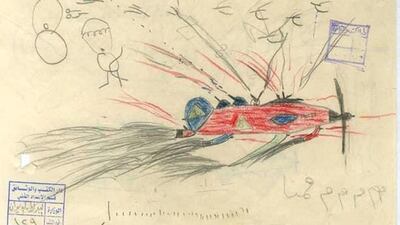
The drawings reveal that King Faisal’s early life was dominated by the backdrop of war during the 1940s.

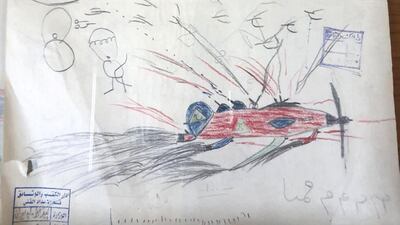
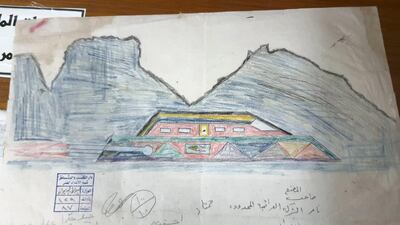
Most of the drawings, in pencil or crayon, depict fierce battles in open fields, at sea and in cities.

One shows an aircraft dropping bombs on a cannon, with two soldiers responding with anti-aircraft fire.

The fighting in Iraq seems to have captured the young king’s imagination.

The abandoned Surrey estate once home to an Iraqi king – in pictures

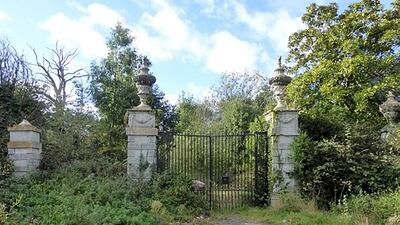
  • The gates of Stanwell Place in 2017.
    The gates of Stanwell Place in 2017.
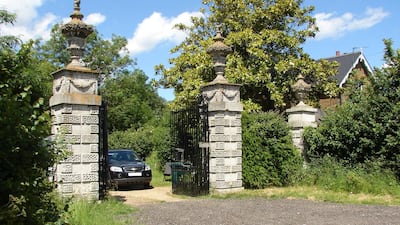
  • The gates of Stanwell Place in 2014.
    The gates of Stanwell Place in 2014.
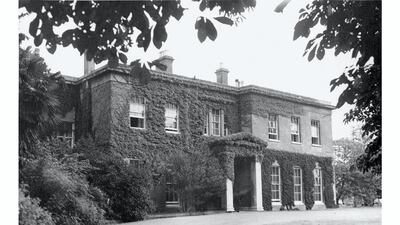
  • The front of Stanwell Place in a photograph taken by the US Signal Corps in 1944.
    The front of Stanwell Place in a photograph taken by the US Signal Corps in 1944.
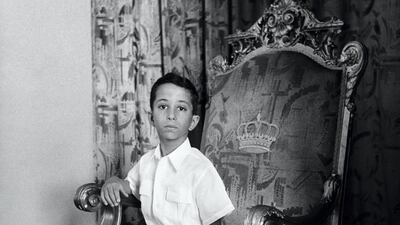
  • A young King Faisal II of Iraq pictured in 1945. Getty Images
    A young King Faisal II of Iraq pictured in 1945. Getty Images
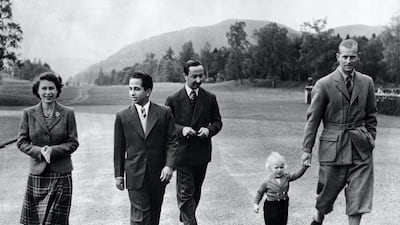
  • King Faisal II walks alongside Queen Elizabeth II, the Duke of Edinburgh, and Princess Anne at Balmoral Castle in 1952. Getty Images
    King Faisal II walks alongside Queen Elizabeth II, the Duke of Edinburgh, and Princess Anne at Balmoral Castle in 1952. Getty Images
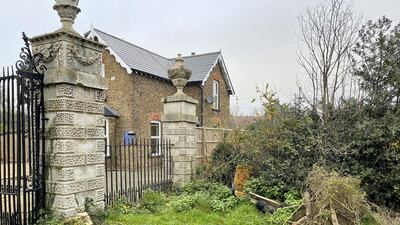
  • The gates and gatehouse of Stanwell Place. Paul Carey/The National
    The gates and gatehouse of Stanwell Place. Paul Carey/The National
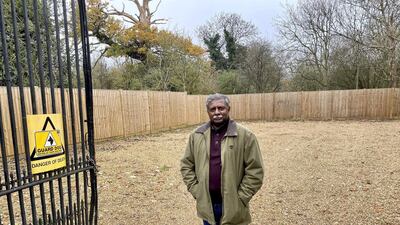
  • Agent Abe Razack stands outside Stanwell Place. "I’ve heard that people in the village remember the Iraqi king living here even though it was a long time ago. It’s a shame that a building that played a part in the war, and was home to a king, could be demolished.", he said. Paul Carey/The National
    Agent Abe Razack stands outside Stanwell Place. "I’ve heard that people in the village remember the Iraqi king living here even though it was a long time ago. It’s a shame that a building that played a part in the war, and was home to a king, could be demolished.", he said. Paul Carey/The National
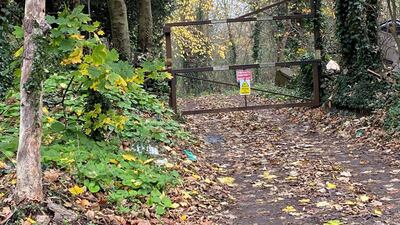
  • A gate blocks a pathway that leads to Stanwell Place. Paul Carey/The National
    A gate blocks a pathway that leads to Stanwell Place. Paul Carey/The National
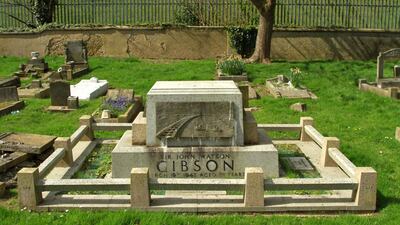
  • In 1933, Sir John Watson Gibson bought the estate from the Gibbons family. A monument is seen in Stanwell Burial Ground to Sir John Watson Gibson and members of his family. Wikimedia Commons
    In 1933, Sir John Watson Gibson bought the estate from the Gibbons family. A monument is seen in Stanwell Burial Ground to Sir John Watson Gibson and members of his family. Wikimedia Commons
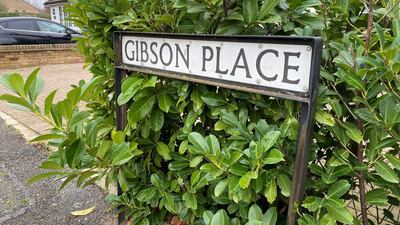
  • Gibson Place in Stanwell, named after Sir John Watson Gibson. Paul Carey/The National
    Gibson Place in Stanwell, named after Sir John Watson Gibson. Paul Carey/The National
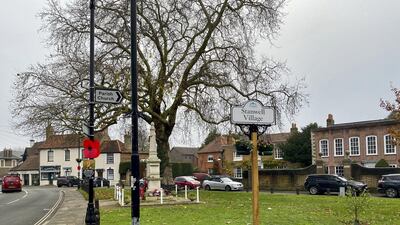
  • Stanwell Village. Paul Carey/The National
    Stanwell Village. Paul Carey/The National
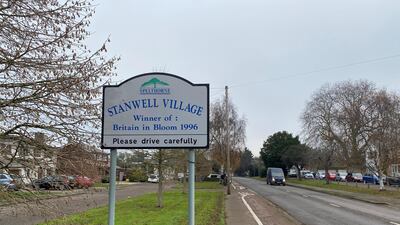
  • The Stanwell village sign. Paul Carey/The National
    The Stanwell village sign. Paul Carey/The National

In 1941, British forces invaded Iraq to oust the pro-Axis government, which had toppled King Faisal II’s uncle, Regent Abd Al Ilah.

In one image drawn by the king as a child, fires blaze from the windows of a two-storey building as three tanks with British flags pass by.

The subject of the drawings was the result of the period the king lived through, Director of the Iraqi National Library and Archives Alaa Abu Al Hassan Al Alak told The National.

“There was the Second World War and the presence of the British troops at the country’s airports and bases,” Mr Al Alak said.

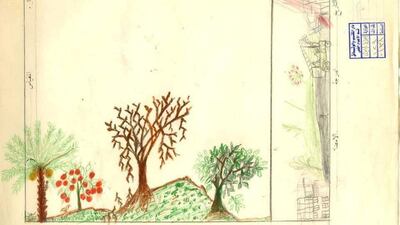
But some drawings depict more peaceful subjects, including landscapes, birds, buildings, as well as maps of Europe and North Africa.

During the war, the king went to Britain to live with his mother in Grove House, Berkshire, before returning to Baghdad to continue his education at the Royal Palace.

When he was a teenager, he studied at Harrow School in England with his second cousin and close friend, the future King Hussein of Jordan.

King Faisal II’s unusual upbringing in Iraq and Britain gave him a unique perspective on life, Mr Al Alak said.

“He lived his life as a king and a boy at the same time and that enabled him to think differently,” he said.

The royal family archive includes photographs, letters, films and maps for the Kingdom and the Rihab Palace that survived the 2003 US-led invasion that toppled Saddam Hussein. During the invasion and subsequent unrest, 40 per cent of the archives assets were destroyed or stolen, Mr Al Alak said.

As the world’s youngest royal ruler, Faisal II was famous in his lifetime.

Belgian cartoonist Herge based one of the characters in The Adventures of Tintin on Faisal II - the spoilt and mischievous Prince Abdullah of Khemed.

The fall of the pro-Axis government created a power vacuum, paving the way for the notorious Farhud, or pogrom, against the country’s Jewish community.

Hundreds of Jews were killed and their properties either looted or destroyed, marking the start of their emigration from the country.

By the time of King Faisal II’s 18th birthday in 1953, when the regency ended, the rise of Communism, popular unrest and pan-Arab nationalism had begun to threaten the region’s monarchies.

The overthrow of the pro-British Egyptian monarchy a year earlier had already undermined Faisal II’s claim to power.

The inexperienced king relied heavily on the advice of Crown Prince Abd Al Ilah and Prime Minister Al Said, both seen as closely allied with Britain.

Before dawn on July 14, 1958, army officers who opposed the monarchy, led by Brigadier Abdul-Karim Qassim and Colonel Abdul-Salam Arif, marched on Baghdad and attacked the Royal Palace.

"I heard an explosion at around 6-6.30 am and I jumped out of bed," King Faisal II's aunt, Princess Badiya bint Ali - the last surviving Iraqi princess - recalled in a 2012 interview with Al Sharqiya television. She died last year in London at the age of 100.

“I had a look at the Rihab Palace and saw smoke coming out of it,” she said.

King Faisal II, she said, offered to send guards to protect her but she refused.

Once inside the Palace, the officers ordered the king, his uncle and other family members into the garden, where they were all executed.

King Faisal II, then 23 years old, had planned to marry his fiancee Princess Fadila Ibrahim Sultan the next day.

She recalled how a member of the royal household rushed to her residence a few hours later, covered in blood and cried: “They killed them, they killed the king and his family.”

“I started crying and screaming,” she said. “When the kids’ English nanny asked me what was wrong, I said: They have killed my family.”


MATCH INFO

Uefa Champions League semi-final, first leg
Bayern Munich v Real Madrid

When: April 25, 10.45pm kick-off (UAE)
Where: Allianz Arena, Munich
Live: BeIN Sports HD
Second leg: May 1, Santiago Bernabeu, Madrid

Company%20profile
%3Cp%3E%3Cstrong%3ECompany%20name%3A%20%3C%2Fstrong%3EHakbah%0D%3Cbr%3E%3Cstrong%3EStarted%3A%20%3C%2Fstrong%3E2018%0D%3Cbr%3E%3Cstrong%3EFounder%3A%20%3C%2Fstrong%3ENaif%20AbuSaida%0D%3Cbr%3E%3Cstrong%3EBased%3A%20%3C%2Fstrong%3ESaudi%20Arabia%0D%3Cbr%3E%3Cstrong%3ESector%3A%20%3C%2Fstrong%3EFinTech%0D%3Cbr%3E%3Cstrong%3ECurrent%20number%20of%20staff%3A%20%3C%2Fstrong%3E22%20%0D%3Cbr%3E%3Cstrong%3EInitial%20investment%3A%20%3C%2Fstrong%3E%24200%2C000%0D%3Cbr%3E%3Cstrong%3EInvestment%20stage%3A%20%3C%2Fstrong%3Epre-Series%20A%0D%3Cbr%3E%3Cstrong%3EInvestors%3A%20%3C%2Fstrong%3EGlobal%20Ventures%20and%20Aditum%20Investment%20Management%0D%3Cbr%3E%3Cbr%3E%3C%2Fp%3E%0A
Avatar: Fire and Ash

Director: James Cameron

Starring: Sam Worthington, Sigourney Weaver, Zoe Saldana

Rating: 4.5/5

Trolls World Tour

Directed by: Walt Dohrn, David Smith

Starring: Anna Kendrick, Justin Timberlake

Rating: 4 stars

Glossary of a stock market revolution

Reddit

A discussion website

Redditor

The users of Reddit

Robinhood

A smartphone app for buying and selling shares

Short seller

Selling a stock today in the belief its price will fall in the future

Short squeeze

Traders forced to buy a stock they are shorting 

Naked short

An illegal practice  

UK’s AI plan
  • AI ambassadors such as MIT economist Simon Johnson, Monzo cofounder Tom Blomfield and Google DeepMind’s Raia Hadsell
  • £10bn AI growth zone in South Wales to create 5,000 jobs
  • £100m of government support for startups building AI hardware products
  • £250m to train new AI models
New Zealand 15 British & Irish Lions 15

New Zealand 15
Tries: Laumape, J Barrett
Conversions: B Barrett
Penalties: B Barrett

British & Irish Lions 15
Penalties: Farrell (4), Daly

Disability on screen

Empire — neuromuscular disease myasthenia gravis; bipolar disorder; post-traumatic stress disorder (PTSD)

Rosewood and Transparent — heart issues

24: Legacy — PTSD;

Superstore and NCIS: New Orleans — wheelchair-bound

Taken and This Is Us — cancer

Trial & Error — cognitive disorder prosopagnosia (facial blindness and dyslexia)

Grey’s Anatomy — prosthetic leg

Scorpion — obsessive compulsive disorder and anxiety

Switched at Birth — deafness

One Mississippi, Wentworth and Transparent — double mastectomy

Dragons — double amputee

Shipping%20and%20banking%20
%3Cp%3EThe%20sixth%20sanctions%20package%20will%20also%20see%20European%20insurers%20banned%20from%20covering%20Russian%20shipping%2C%20more%20individuals%20added%20to%20the%20EU's%20sanctions%20list%20and%20Russia's%20Sberbank%20cut%20off%20from%20international%20payments%20system%20Swift.%3C%2Fp%3E%0A
T20 World Cup Qualifier

Final: Netherlands beat PNG by seven wickets

Qualified teams

1. Netherlands
2. PNG
3. Ireland
4. Namibia
5. Scotland
6. Oman

T20 World Cup 2020, Australia

Group A: Sri Lanka, PNG, Ireland, Oman
Group B: Bangladesh, Netherlands, Namibia, Scotland

Mercer, the investment consulting arm of US services company Marsh & McLennan, expects its wealth division to at least double its assets under management (AUM) in the Middle East as wealth in the region continues to grow despite economic headwinds, a company official said.

Mercer Wealth, which globally has $160 billion in AUM, plans to boost its AUM in the region to $2-$3bn in the next 2-3 years from the present $1bn, said Yasir AbuShaban, a Dubai-based principal with Mercer Wealth.

Within the next two to three years, we are looking at reaching $2 to $3 billion as a conservative estimate and we do see an opportunity to do so,” said Mr AbuShaban.

Mercer does not directly make investments, but allocates clients’ money they have discretion to, to professional asset managers. They also provide advice to clients.

“We have buying power. We can negotiate on their (client’s) behalf with asset managers to provide them lower fees than they otherwise would have to get on their own,” he added.

Mercer Wealth’s clients include sovereign wealth funds, family offices, and insurance companies among others.

From its office in Dubai, Mercer also looks after Africa, India and Turkey, where they also see opportunity for growth.

Wealth creation in Middle East and Africa (MEA) grew 8.5 per cent to $8.1 trillion last year from $7.5tn in 2015, higher than last year’s global average of 6 per cent and the second-highest growth in a region after Asia-Pacific which grew 9.9 per cent, according to consultancy Boston Consulting Group (BCG). In the region, where wealth grew just 1.9 per cent in 2015 compared with 2014, a pickup in oil prices has helped in wealth generation.

BCG is forecasting MEA wealth will rise to $12tn by 2021, growing at an annual average of 8 per cent.

Drivers of wealth generation in the region will be split evenly between new wealth creation and growth of performance of existing assets, according to BCG.

Another general trend in the region is clients’ looking for a comprehensive approach to investing, according to Mr AbuShaban.

“Institutional investors or some of the families are seeing a slowdown in the available capital they have to invest and in that sense they are looking at optimizing the way they manage their portfolios and making sure they are not investing haphazardly and different parts of their investment are working together,” said Mr AbuShaban.

Some clients also have a higher appetite for risk, given the low interest-rate environment that does not provide enough yield for some institutional investors. These clients are keen to invest in illiquid assets, such as private equity and infrastructure.

“What we have seen is a desire for higher returns in what has been a low-return environment specifically in various fixed income or bonds,” he said.

“In this environment, we have seen a de facto increase in the risk that clients are taking in things like illiquid investments, private equity investments, infrastructure and private debt, those kind of investments were higher illiquidity results in incrementally higher returns.”

The Abu Dhabi Investment Authority, one of the largest sovereign wealth funds, said in its 2016 report that has gradually increased its exposure in direct private equity and private credit transactions, mainly in Asian markets and especially in China and India. The authority’s private equity department focused on structured equities owing to “their defensive characteristics.”