
Along Iraq's borders, a corrupt customs-evasion cartel is diverting billions of dollars away from state coffers to line the pockets of armed groups, political parties and crooked officials.
The prime beneficiaries are Iran-linked Shiite paramilitaries that intimidate federal officials who dare to obstruct them, sometimes through chillingly specific death threats, a six-month AFP investigation found.
The network is so well oiled and entrenched that revenue is parcelled out among rival groups with remarkably little friction, part of a parallel system that Iraq's finance minister described as "state plunder".
"It's indescribable," said one Iraqi customs worker. "Worse than a jungle. In a jungle, at least animals eat and get full. These guys are never satisfied."
Like most of the government officials, port workers and importers interviewed for this story, this worker cited threats to his life and asked to speak anonymously.
The network they described arises from Iraq's glacially slow bureaucracy, fractious politics, limited non-oil industry and endemic corruption that is itself largely a product of years of chaos after the 2003 US invasion to topple dictator Saddam Hussein.

Customs provide one of the few sources of state revenue, and to keep disparate groups and tribes happy, many of them close to Iran, entry points are divided up among them and federal duties largely supplanted by bribes.
"There's a kind of collusion between officials, political parties, gangs and corrupt businessmen," Iraq's Finance Minister Ali Allawi told AFP.
Iraq imports a vast majority of its goods – from food and electronics to natural gas – mostly from neighbours Iran and Turkey and from China.
-

A street vendor displays gemstone rings at a market in Tahrir Square, in the Iraqi capital Baghdad. AFP -
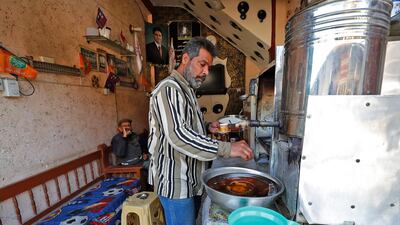
A coffee shop worker pours a drink for a customer at a market in Tahrir Square, Baghdad. AFP -
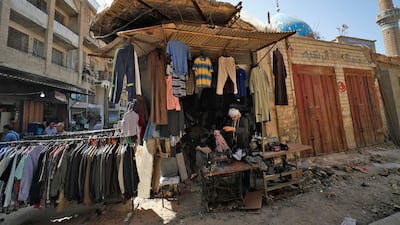
A tailor works in his shop at Tahrir Square, Baghdad. AFP -
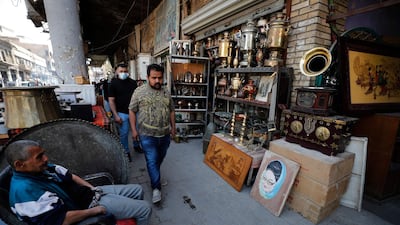
Staff at an antiques shop at Tahrir Square market, Baghdad. AFP -
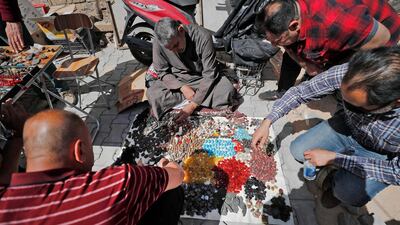
Customers buy loose gemstones from a street seller at Tahrir Square market, Baghdad. AFP -

A porter pulls a laden handcart at Tahrir Square market in Baghdad. AFP -
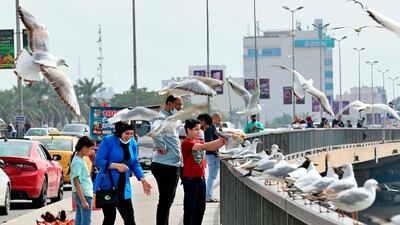
Gulls swoop as people feed the birds on a bridge over the Tigris river, in Baghdad. AP Photo -
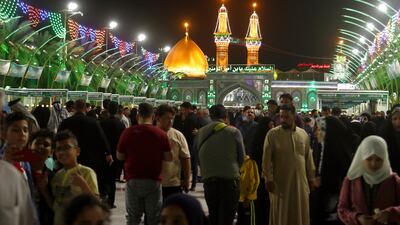
Shiite Muslim pilgrims visit the holy shrine of Imam Abbas, in the holy city of Karbala, Iraq. Abbas is highly revered for his loyalty. AP Photo -
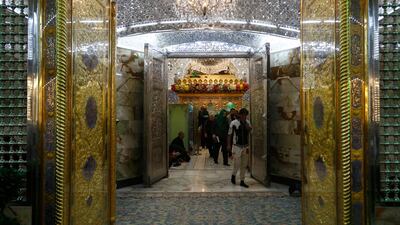
Shiite Muslim pilgrims gather in the tomb of Imam Abbas in Karbala, 100 kilometres south-west of Baghdad, Iraq. AP Photo -
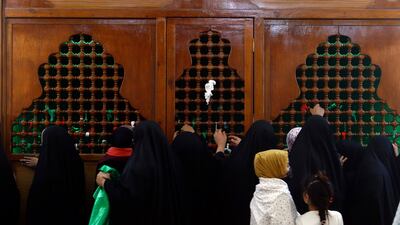
Shiite Muslim pilgrims touch the tomb of Imam Abbas in Karbala, Iraq. AP Photo -
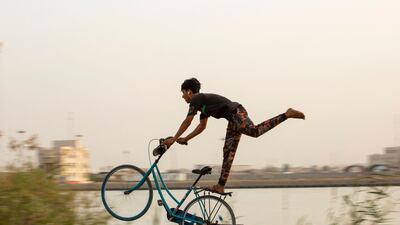
A youth shows off his balancing skills as he performs stunts on a bicycle, on the bank of the Shatt Al-Arab river at sunset, in the southern Iraqi city of Basra. AFP -
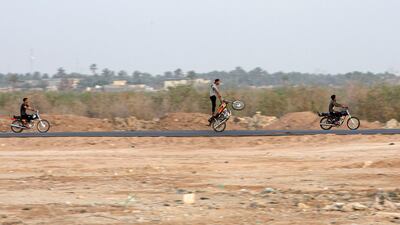
Iraqi youths show off their balancing skills as they perform stunts on motorbikes, on the bank of the Shatt Al-Arab river, Basra. AFP


Officially, the country of 40 million brought in non-oil goods worth $21 billion in 2019, the latest year for which full government data is available.
Iraq has five official crossings along its 1,600-kilometre border with Iran and one on the nearly 370km frontier with Turkey, while the single biggest and most lucrative gateway is the port of Umm Qasr in the southern province of Basra.
Duties on imports at these points of entry are meant to supplement state revenue from Iraq's huge oil sector – but that does not happen.
Iraq's import system is infamously outdated and cumbersome, with a 2020 World Bank report citing frustrating delays, high compliance fees and frequent exploitation.
"If you want to do it the right way, you end up paying sums in four figures for demurrage [docking fees] for a single month" in dollar terms, said an importer in the region.
"It's designed to fail," he said.

An informal parallel system rose in its stead, in which parties and paramilitary groups divided up Iraq's land and sea crossings, said officials, port workers, importers and analysts.
Many of Iraq's entry points are informally controlled by groups within the Hashed Al Shaabi or Popular Mobilisation Forces (PMF), a powerful state-sponsored armed network close to Iran, as well as other armed factions, officials told AFP.
-
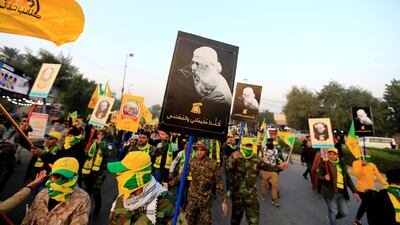
Members of the Kataib Hezbollah group gather ahead of the funeral of Iraqi militia commander Abu Mahdi Al Muhandis, who was killed in an air strike at Baghdad International Airport, Iraq, on January 4, 2020. Reuters / Thaier al-Sudani -
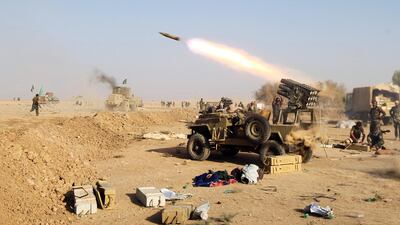
Hashed Al Shaabi fighters launch missiles on the village of Salmani, south of Mosul, on October 30, 2016. AFP -

Iraqi Shiite members of the Asaib Ahl Al Haq group gather in Basra on December 12, 2015, to demand the withdrawal of Turkish forces from Iraq. AFP -
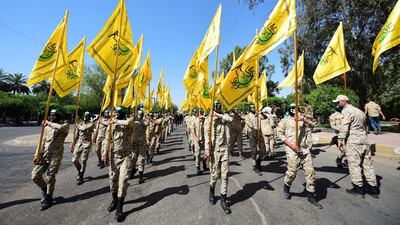
Al Nujaba militias carry flags during an anti-Israel rally to mark Jerusalem Day in Baghdad on May 31, 2019. EPA-EFE / Murtaja Lateef -
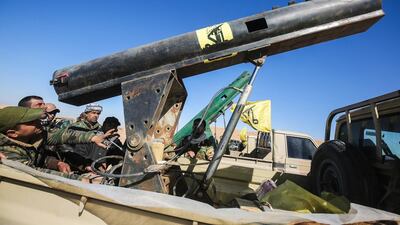
Hashed Al Shaabi fighters on the outskirts of Tal Afar, west of Mosul, prepare for the offensive retake of the western side of Mosul from Islamic State fighters on February 18, 2017. AFP -
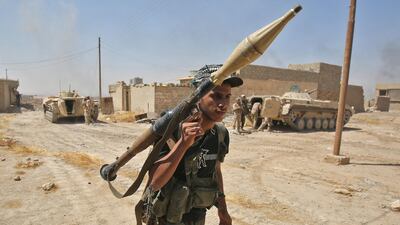
A vast network of Iran-backed militias in operation in Iraq. AFP -
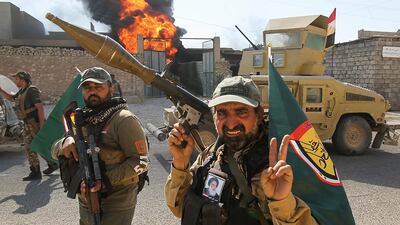
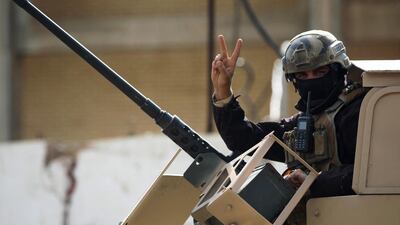
Hashed Al Shaabi fighters flash the victory gesture as they advance through the town of Tal Afar, west of Mosul, on August 26, 2017. AFP


The PMF members, their allies or their relatives work as border agents, inspectors or police and are paid by importers who want to skip the official process entirely or get discounts.
"If you want a shortcut, you go to the militias or parties," said an Iraqi intelligence agent who has investigated customs evasion.
He said importers effectively tell themselves: "I'd rather lose $100,000 [on a bribe] than lose my goods altogether."
The PMF publicly denies the claims.
But sources close to its hardline member groups Asaib Ahl Al Haq and Kataeb Hezbollah acknowledged that customs posts are indeed parcelled out in the manner alleged.
They cited specific harbour berths, land crossings and products that matched what customs officials and the intelligence agent told AFP.
Port workers, officials and analysts confirmed that the Mandali crossing on the Iranian border, for example, is run by the Badr Organisation, an Iraqi movement founded in Iran.
An official there boasted to AFP that a border operative can rake in $10,000 a day in bribes, the bulk of which is distributed to the overseeing armed group and complicit officials.
In other cases, an armed group controls a particular kind of trade.

"If I'm a cigarette trader," the official said, "I go to Kataeb Hezbollah's economic office in the Jadriyah neighbourhood [of Baghdad], knock on the door, and say: 'I want to co-ordinate with you'."
One key figure is always the "mukhalles" – the state customs agent assigned to an incoming shipment who often doubles as a middleman for an armed group.
"There's no such thing as a neutral mukhalles. They're all backed by parties," the intelligence agent said.
Once paid – in cash for smaller operations, and by bank wire for larger deals – the mukhalles tampers with paperwork.
By misrepresenting the type or amount of goods imported or their value, the customs fee is sharply reduced.
One importer told AFP that under-declaring quantities could score a trader discounts of up to 60 per cent.
For high-tariff goods, meanwhile, the favoured trick is to declare them as something else altogether.
Cigarette imports are taxed with a regular import tariff of 30 per cent, plus a further 100 per cent to encourage consumers to buy local brands.
To cut those fees, cigarettes are often recorded as tissues or plastic goods.
Facilitators also tamper with a shipment's estimated total value, which is first marked on the import licence but re-evaluated at the point of entry.
In one case described to AFP by an Umm Qasr official, metal reinforcements were valued by the customs agent so cheaply that the importer was charged $200,000 in duties, when he should have paid more than $1 million.
With the right connections, some cargo slips through with no inspection at all.
"I'm not corrupt, but even I have had to wave through cargo I didn't actually inspect because the shipment was linked to a powerful party," said the customs worker quoted earlier.
One importer told AFP he paid $30,000 to a customs agent at Umm Qasr to allow through prohibited refurbished electrical equipment.

He said he also regularly bribed port police to warn him of surprise inspections.
For an additional fee, the officer offered an extra service – to send patrols to hold up rival imports.
With points of entry seen as cash cows, public servants pay their superiors for postings, especially at Umm Qasr.
"Minor clerks' jobs in some outposts change hands for $50,000 to $100,000, and sometimes it goes up to multiples of that," Mr Allawi, the finance minister, said.
The subterfuge around the import system "contributes to state plunder", he told AFP.
To protect their pillaging, parties and armed groups use their political influence and threats of violence.
A worker at Mandali told AFP he once delayed a shipment from Iran because of missing paperwork, but then allowed it through, duty free, after the mukhalles handling the cargo brandished his credentials as a Hashed member.
The intelligence officer said an informant at Zerbatiya crossing, which likewise borders Iran and is managed by Asaib Ahl Al Haq, was repeatedly put on leave for blocking efforts to import Iranian produce customs-free. He eventually relented.
"We came back later to talk to him again and found he had joined Asaib," the intelligence officer said.

A senior member of Iraq's border commission told AFP he receives regular calls from private numbers threatening his relatives by name, in an effort to intimidate him into halting cargo inspections.
The customs worker was among others who also said they contended with death threats.
"We can't say anything because we'll be killed," he said. "People are afraid. This is a real mafia."
This parallel system has become the lifeblood of Iraqi parties and armed groups, including Iran-backed PMF factions, said Renad Mansour of the Chatham House think tank.
They professionalised this financing stream after Iraq's defeat of ISIS in 2017.
That victory ended the allocation of large defence budgets to the anti-ISIS military campaign, which included the PMF, sparking the need to find alternative funding sources.
They latched on tighter after Iran came under sanctions imposed by former US president Donald Trump.
In March 2020, the US blacklisted Al Khamael Maritime Services (AKMS), a shipping company in Umm Qasr, for using Shiite paramilitary groups to help the Iranian Revolutionary Guard Corps "evade Iraqi government inspection protocol".
It also sanctioned two Iraqis and two Iranians linked to AKMS for financing Kataeb and the Lebanese Shiite movement Hezbollah.
The sharing of spoils is surprisingly smooth, given the rivalries among parties and armed groups.
"One border point can make up to $120,000 a day," Mr Mansour said. "This doesn't go only to one group, but is shared by many, which at times may even seem to be enemies when you zoom out."
Turf wars are rare, but do happen. In February, the separate killings of two members of Asaib Ahl Al Haq were described to AFP by two PMF sources as "economically motivated".
But usually, the cartel operates smoothly.
"There's no competition," said the Iraqi intelligence agent. "They know if one of them goes down, they all will."
The parallel system starves the state of a funding resource for schools, hospitals and other public services at a time when the poverty rate in Iraq has reached 40 per cent.
"We should get $7 billion dollars [a year] from customs," Mr Allawi told AFP. "In fact, just 10 per cent to 12 per cent of the customs resources reach the finance ministry."
The cost of bribes ultimately also trickles down to the consumer, an Iraqi official said. "As a consumer, you're the one who ends up paying for that corruption in the store."
Prime Minister Mustafa Al Kadhemi, within weeks of taking office in May 2020, prioritised border reform to shore up government revenue hit hard by depressed oil prices.
-
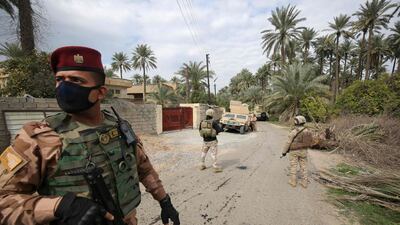
Iraqi forces search the area in Tarmiyah, 35 kilometres north of Baghdad, following clashes with ISIS fighters. Two security personnel and five insurgents died in the fighting. AFP -
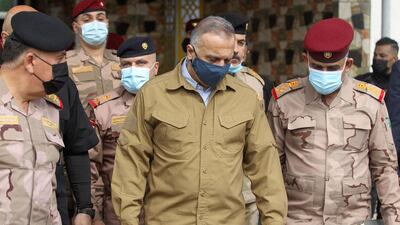
Prime Minister Mustafa Al Kadhimi visits the army headquarters in Tarmiyah, Iraq, following the clashes. AFP -

The prime minister met top military commanders as troops combed the fields around Tarmiyah. AFP -
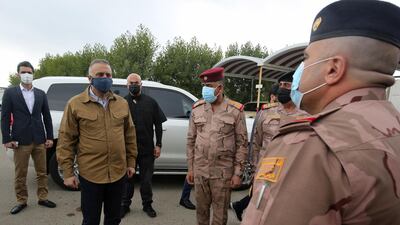
Security forces have intensified efforts to hunt ISIS sleeper cells in the area. AFP -
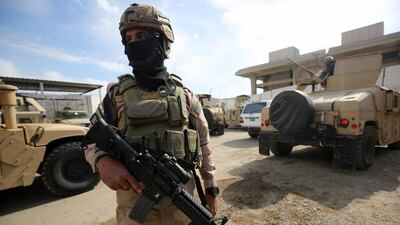
The latest confrontation occurred when a joint force of army troops and state-supported tribal fighters raided an ISIS hideout in the Tarmiyah plains. AFP -
ISIS attacks in urban areas have dropped, but Iraqi troops have continued to battle sleeper cells in the country's mountainous and desert areas. AFP


In highly publicised trips to Umm Qasr and Mandali, he vowed to send new troops to each entry point and regularly swap senior customs staff to break up corrupt circuits.
There were some modest victories. The border commission now reports daily seizures of cargo in cases where importers tried to evade customs fees.
Iraq collected $818 million in duties in 2020, the commission said, slightly higher than the previous year's $768 million, despite imports being hit by the coronavirus downturn.
But importers, facilitators and even officials laughed off the premier's measures.
They told AFP that while some importers were now paying government tariffs, they also still paid facilitators to stop goods being arbitrarily held up.
"In the end, we're paying double," said an Arab businessman, who has imported into Iraq for more than a decade.
The well connected, meanwhile, were not affected.
"Nothing changed," said an Iraqi importer, who admitted he brought in construction materials through Mandali without paying tariffs.
Security forces described chaos.
"The police there is all involved in the bribery," a soldier, whose unit was briefly stationed in Mandali, told AFP.
"The traders drop money like crazy. We arrested one guy but they got him out the next day."
The senior border commission official admitted some promised reinforcements never happened.
"Other times, it's a joke of a unit" consisting only of "about two dozen guys", he said.
But the main issue, importers and officials agreed, was that staff rotations did not extend to a crucial cog in the corruption machine: the mukhalles.
"The main facilitator of corruption is still there," the customs official said. "One rotten apple will spoil the rest."

A US defence official said Kataeb Hezbollah, accused recently of firing rockets at the US embassy, was ordered to close its office in Baghdad Airport's arrivals terminal to stop it from smuggling in high-value goods.
"Now they've got a position just outside the airport, but they can still drive up to the plane and do what they need to do," the official said. "Corruption still happens."
Instead of brazenly phoning each other, facilitators moved to WhatsApp and other encrypted messaging apps.
"Our work has actually become harder because they're taking more precautions," the intelligence agent said.
The cartel remains intact.
Officials said they expect traders to react by increasingly avoiding official border crossings, relying on smuggling instead, or importing goods unofficially through Iraq's northern Kurdish region.
Trying to dismantle the lucrative network completely, they said , would bring violence Mr Kadhemi may not be prepared for.
"A single berth at Umm Qasr is equivalent to a state budget," the intelligence agent said, using deliberate exaggeration to emphasise the point.
"They won't compromise easily."

