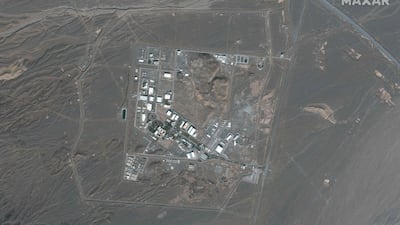
The underground Natanz uranium enrichment facility in which Iran intends to instal more of its advanced IR-2m centrifuges. AP

Iran’s move to produce uranium metal dims hopes of diplomatic breakthrough


  • English
  • Arabic

Iran's latest move to produce uranium metal has drawn condemnation from its partners in the 2015 nuclear deal, as Washington seems in no rush to re-enter the agreement — as long as Tehran doesn’t return to full compliance.

The UN nuclear watchdog said on Wednesday that Iran has started producing uranium metal, in a fresh breach of the limits laid out in the 2015 deal which aims to ensure Tehran cannot acquire a nuclear weapon.

  • An overview of Iran's Natanz nuclear facility, south of the capital Tehran. Maxar Technologies / AFP
    An overview of Iran's Natanz nuclear facility, south of the capital Tehran. Maxar Technologies / AFP
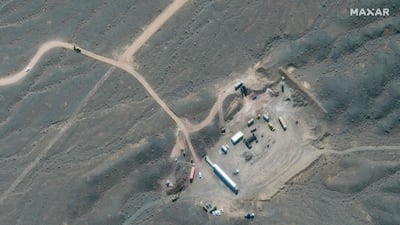
  • An overview of Iran's Natanz nuclear facility, south of the capital Tehran. Maxar Technologies / AFP
    An overview of Iran's Natanz nuclear facility, south of the capital Tehran. Maxar Technologies / AFP
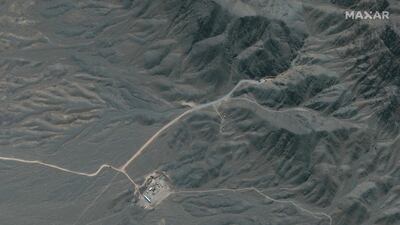
  • An overview of Iran's Natanz nuclear facility, south of the capital Tehran. Maxar Technologies / AFP
    An overview of Iran's Natanz nuclear facility, south of the capital Tehran. Maxar Technologies / AFP
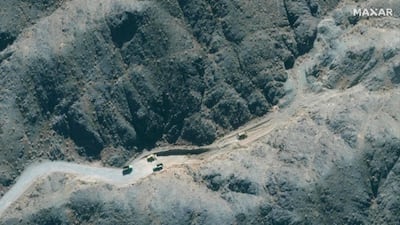
  • An overview of Iran's Natanz nuclear facility, south of the capital Tehran. Maxar Technologies / AFP
    An overview of Iran's Natanz nuclear facility, south of the capital Tehran. Maxar Technologies / AFP

This came amid hopes that the 2015 Joint Comprehensive Plan of Action (JCPOA) over Tehran's nuclear ambitions could be revived through new talks under the administration of US President Joe Biden, after his predecessor Donald Trump walked out of the deal in 2018.

But now "in escalating its non-compliance, Iran is undermining the opportunity for renewed diplomacy to fully realise the objectives of the JCPOA," Britain, France and Germany said in a statement on Friday.

"We reiterate that Iran has no credible civilian justification for these activities, which are a key step in the development of a nuclear weapon," the statement by the three countries said.

It said that under the nuclear deal, Iran committed not to engage in producing or acquiring uranium metal for 15 years.

"We strongly urge Iran to halt these activities without delay and not to take any new non-compliant steps on its nuclear programme," the statement said.

Reacting to Friday's statement, Iranian Foreign Minister Mohammad Javad Zarif said it was not up to Iran to make the first move after the US pullout and accused the three European countries of not doing enough to realise the nuclear deal.

"By what logic is the onus on IRAN to stop its remedial measures undertaken a full year after the US withdrew from – and continues to violate – the JCPOA? What have E3 done to fulfil their duties?" he asked on Twitter.

The nuclear deal aimed to provide a gradual lifting of international sanctions against Iran in exchange for safeguards Tehran would not seek a nuclear weapon.

But it has been essentially moribund since the US pulled out, with Tehran stepping up its nuclear work in violation of the accord as retaliation.


UK’s AI plan
  • AI ambassadors such as MIT economist Simon Johnson, Monzo cofounder Tom Blomfield and Google DeepMind’s Raia Hadsell
  • £10bn AI growth zone in South Wales to create 5,000 jobs
  • £100m of government support for startups building AI hardware products
  • £250m to train new AI models
COMPANY%20PROFILE
%3Cp%3E%3Cstrong%3EName%3A%20%3C%2Fstrong%3EKinetic%207%3Cbr%3E%3Cstrong%3EStarted%3A%3C%2Fstrong%3E%202018%3Cbr%3E%3Cstrong%3EFounder%3A%3C%2Fstrong%3E%20Rick%20Parish%3Cbr%3E%3Cstrong%3EBased%3A%3C%2Fstrong%3E%20Abu%20Dhabi%2C%20UAE%3Cbr%3E%3Cstrong%3EIndustry%3A%3C%2Fstrong%3E%20Clean%20cooking%3Cbr%3E%3Cstrong%3EFunding%3A%3C%2Fstrong%3E%20%2410%20million%3Cbr%3E%3Cstrong%3EInvestors%3A%3C%2Fstrong%3E%20Self-funded%3C%2Fp%3E%0A
The specs

Engine: 4.0-litre V8 twin-turbocharged and three electric motors

Power: Combined output 920hp

Torque: 730Nm at 4,000-7,000rpm

Transmission: 8-speed dual-clutch automatic

Fuel consumption: 11.2L/100km

On sale: Now, deliveries expected later in 2025

Price: expected to start at Dh1,432,000

Mercer, the investment consulting arm of US services company Marsh & McLennan, expects its wealth division to at least double its assets under management (AUM) in the Middle East as wealth in the region continues to grow despite economic headwinds, a company official said.

Mercer Wealth, which globally has $160 billion in AUM, plans to boost its AUM in the region to $2-$3bn in the next 2-3 years from the present $1bn, said Yasir AbuShaban, a Dubai-based principal with Mercer Wealth.

Within the next two to three years, we are looking at reaching $2 to $3 billion as a conservative estimate and we do see an opportunity to do so,” said Mr AbuShaban.

Mercer does not directly make investments, but allocates clients’ money they have discretion to, to professional asset managers. They also provide advice to clients.

“We have buying power. We can negotiate on their (client’s) behalf with asset managers to provide them lower fees than they otherwise would have to get on their own,” he added.

Mercer Wealth’s clients include sovereign wealth funds, family offices, and insurance companies among others.

From its office in Dubai, Mercer also looks after Africa, India and Turkey, where they also see opportunity for growth.

Wealth creation in Middle East and Africa (MEA) grew 8.5 per cent to $8.1 trillion last year from $7.5tn in 2015, higher than last year’s global average of 6 per cent and the second-highest growth in a region after Asia-Pacific which grew 9.9 per cent, according to consultancy Boston Consulting Group (BCG). In the region, where wealth grew just 1.9 per cent in 2015 compared with 2014, a pickup in oil prices has helped in wealth generation.

BCG is forecasting MEA wealth will rise to $12tn by 2021, growing at an annual average of 8 per cent.

Drivers of wealth generation in the region will be split evenly between new wealth creation and growth of performance of existing assets, according to BCG.

Another general trend in the region is clients’ looking for a comprehensive approach to investing, according to Mr AbuShaban.

“Institutional investors or some of the families are seeing a slowdown in the available capital they have to invest and in that sense they are looking at optimizing the way they manage their portfolios and making sure they are not investing haphazardly and different parts of their investment are working together,” said Mr AbuShaban.

Some clients also have a higher appetite for risk, given the low interest-rate environment that does not provide enough yield for some institutional investors. These clients are keen to invest in illiquid assets, such as private equity and infrastructure.

“What we have seen is a desire for higher returns in what has been a low-return environment specifically in various fixed income or bonds,” he said.

“In this environment, we have seen a de facto increase in the risk that clients are taking in things like illiquid investments, private equity investments, infrastructure and private debt, those kind of investments were higher illiquidity results in incrementally higher returns.”

The Abu Dhabi Investment Authority, one of the largest sovereign wealth funds, said in its 2016 report that has gradually increased its exposure in direct private equity and private credit transactions, mainly in Asian markets and especially in China and India. The authority’s private equity department focused on structured equities owing to “their defensive characteristics.”

T20 SQUADS

Australia: Aaron Finch (c), Mitchell Marsh, Alex Carey, Ashton Agar, Nathan Coulter-Nile, Chris Lynn, Nathan Lyon, Glenn Maxwell, Ben McDermott, D’Arcy Short, Billy Stanlake, Mitchell Starc, Andrew Tye, Adam Zampa.

Pakistan: Sarfraz Ahmed (c), Fakhar Zaman, Mohammad Hafeez, Sahibzada Farhan, Babar Azam, Shoaib Malik, Asif Ali, Hussain Talat, Shadab Khan, Shaheen Shah Afridi, Usman Khan Shinwari, Hassan Ali, Imad Wasim, Waqas Maqsood, Faheem Ashraf.

The years Ramadan fell in May

1987

1954

1921

1888