


Iranian president-elect Ebrahim Raisi said he would not meet US President Joe Biden, but called for a full return to the 2015 nuclear deal in his first comments since his election with a landslide.
The US, under Donald Trump, left the the Joint Comprehensive Plan of Action in 2018 and both it and Iran have undertaken weeks of indirect talks to try to find a way back.
But Mr Raisi said Iran’s foreign policy will be wider than the deal.
“Our foreign policy will not be limited to the nuclear deal,” he said in Tehran on Monday.
“We will have interaction with the world.”
“We will not tie the Iranian people’s interests to the nuclear deal.”
He said he would support the current talks but would not have “negotiations just for the sake of negotiations”.
When asked about meeting the US President in the future, he said, emphatically: “No.”
Mr Biden would be unlikely to seek a meeting with Mr Raisi, who is personally the subject of US sanctions for human rights abuses including a brutal crackdown on Iran’s Green Movement protests in 2009.
Although he has expressed anti-West sentiment throughout his career, Mr Raisi has softened his rhetoric in the past month.
Iran’s negotiations with the US and Europe have been approved by the supreme leader Ali Khamenei, meaning Iran is unlikely to depart from them under Mr Raisi.
The president-elect also said he would keep his predecessor, Hassan Rouhani’s negotiation team, although his own people are following the developments closely.
-
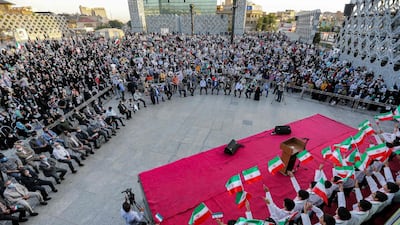
Supporters of Iran's newly elected president Ebrahim Raisi gather at a rally celebrating his victory, in Imam Hossein square, in the capital Tehran. AFP -
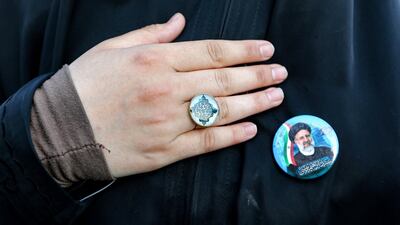
A woman wears a pin bearing the image of Iran's newly elected president Ebrahim Raisi during a rally in Imam Hossein square. AFP -
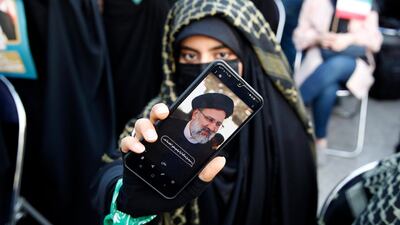
A woman shows an image of Iranian president-elect Ebrahim Raisi on her phone. He received 17.9 million votes in a landslide victory. EPA -
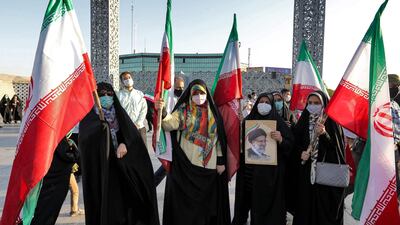
Women supporters of Ebrahim Raisi hold posters depicting him and national flags as they celebrate his presidential victory. More than 28 million Iranians out of 59 million eligible voters cast their ballots. AFP -
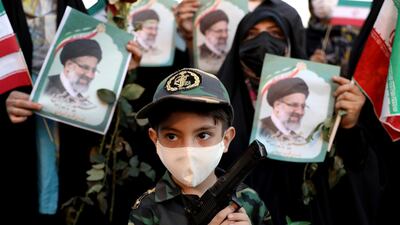
An Iranian child holds a toy gun at a celebration to mark the victory of Ebrahim Raisi in the presidential elections. The vote appeared to see the lowest turnout in the Islamic Republic’s history. AP Photo -
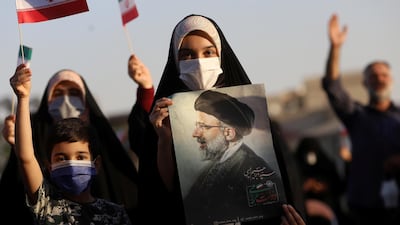
Ebrahim Raisi supporters display his portrait during a celebratory rally for his presidential election victory in Tehran. He will succeed President Hassan Rouhani, who is coming to the end of his second term in office. Reuters -
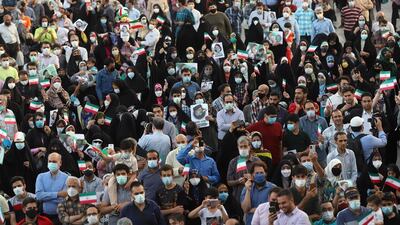
Supporters of Ebrahim Raisi gather to celebrate his presidential election victory in Tehran. He had the support of supreme leader Ayatollah Ali Khamenei and the backing of the powerful Guardian Council. Reuters -
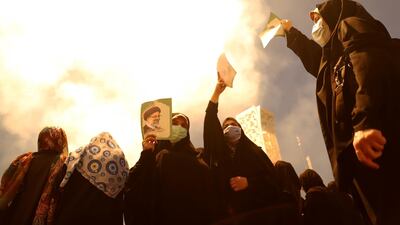
A conservative cleric and head of Iran’s judiciary, Ebrahim Raisi is expected to usher in hardline policies that will close Iran off from much of the world. Reuters -
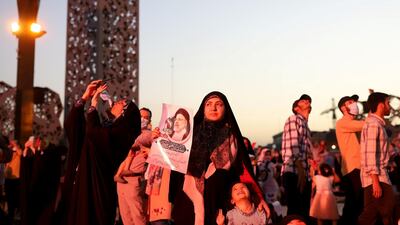
Ebrahim Raisi will be the first Iranian president to have had sanctions imposed against him by the US government before entering office. Reuters -
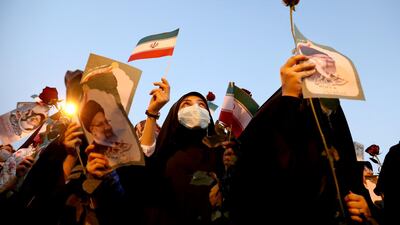
Although critical of the West, Ebrahim Raisi is keen to to revive the 2015 nuclear accord that lifted global sanctions on Tehran. AP Photo -

Other pressing issues Iran's president-elect Ebrahim Raisi faces include an economic downturn that has led to spiralling inflation and job losses and tackling the region's worst outbreak of Covid-19. Reuters -

Supporters of Ebrahim Raisi celebrate his presidential election victory in Tehran. Reuters


Mr Raisi was also asked about Iran’s relationship with other countries in the region.
He echoed a statement from Iranian Foreign Minister Javad Zarif last week that Iran was ready to send an ambassador to Saudi Arabia, saying there would be no obstacle to reopening embassies.
Mr Raisi said building relations with neighbouring countries would be a priority.
“I defended human rights as a prosecutor,” he said when asked about Iran’s human rights record.
“As a president, I’m also obliged to defend human rights.”
Mr Raisi’s first press conference ended with him reaching out to the Iranian diaspora.
“Our government is committed to the return of Iranians abroad in all areas. Iranians should be allowed to enter the country,” he said.
Many citizens outside the country are in self-imposed exile, often fearing arrest should they return.

