

Iran’s scientists have “solved one half of the ballistic missile puzzle” by developing a workable third-stage rocket booster, leading defence analysts said.
The stakes for a nuclear stand-off were raised after Tehran launched a satellite rocket that could easily be converted into a nuclear missile with a range of about 5,000 kilometres, bringing cities such as London within reach.
Missile experts believe it is now clear Iran is opting for “range over accuracy” in seeking to develop nuclear-tipped intermediate-range ballistic missiles, a strategy that has also been followed by Iran’s ally North Korea.
The worrying Iranian advances are likely to feature in negotiations over its nuclear programme with US President Joe Biden’s administration.
While Iran can claim it is sending civilian communications into space legitimately using its Zuljanah satellite delivery vehicles, security experts said the rocket’s motors could be used to test IRBMs.
"In theory, they could take those motors and use them to build a missile rather than a satellite launch vehicle, at which point it would be their most important solid-fuel propellant ballistic missile," Jeremy Binnie, Middle East editor of Jane's Defence Weekly, told The National.
The Zuljanah’s launch into the high atmosphere marks a crucial new stage in Tehran’s ballistic development, said Justin Bronk, an airpower expert at the Royal United Services Institute, a think tank.
“The Iranians seem to have got to a stage where they have solved one half of the IRBM puzzle, which is the boost phase in effect.”
This didn’t mean Iran had a missile capable of “high-velocity re-entry” through the Earth’s atmosphere, he said. But the use of space launch rockets and long-range ballistic missiles have been “relatively interchangeable for decades”, Mr Bronk said, with the 1960s and 1970s British Blue Streak project used as the basis for the European Space Agency’s Ariane space rocket.
Iran announced it had test-launched its first Zuljanah vehicle in late January after a defence ministry spokesman said the regime had achieved “its most powerful rocket engine”.
-

Troops leaving a helicopter on Makran logistics vessel during a navy drill. Iranian Army via AP -
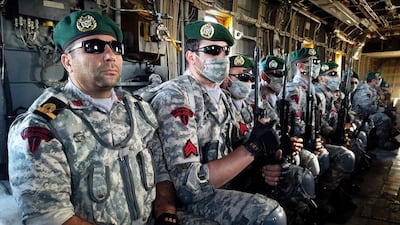
Iran's navy began a short-range missile drill in the Gulf of Oman on Wednesday, state TV reported, amid heightened regional tensions over Tehran's nuclear program and a US pressure campaign. Iranian Army via AP -
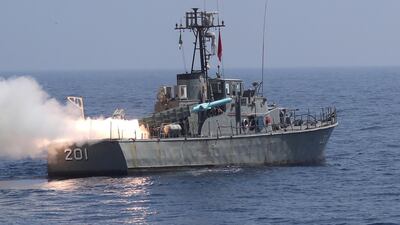
A missile being fired from an Iranian Navy warship during a navy military drill in the Gulf of Oman. Iranian Army/WANA via REUTERS -
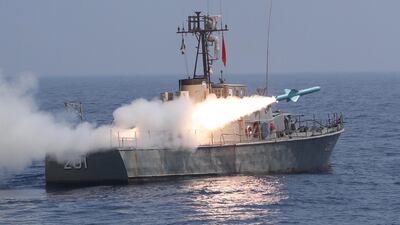
A missile being fired from an Iranian Navy warship during a navy military drill in the Gulf of Oman. EPA via Iranian military -
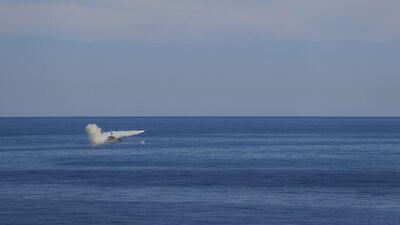
Iran's navy began a short-range missile drill in the Gulf of Oman on Wednesday, state TV reported, amid heightened regional tensions over Tehran's nuclear program and a US pressure campaign. Iranian Army via AFP -
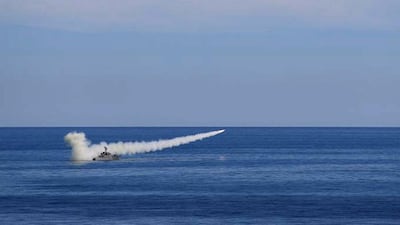
Iran's navy began a short-range missile drill in the Gulf of Oman on Wednesday, state TV reported, amid heightened regional tensions over Tehran's nuclear program and a US pressure campaign. Iranian Army via EPA -
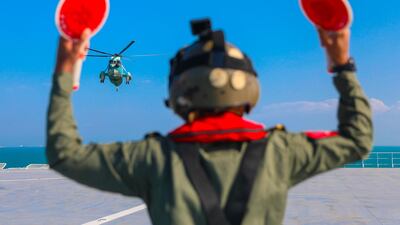
Iranian-made Makran logistics vessel during a short-range missile drill in the Gulf of Oman on Wednesday, state TV reported, amid heightened regional tensions over Tehran's nuclear program and a US pressure campaign. Iranian Army via AFP -
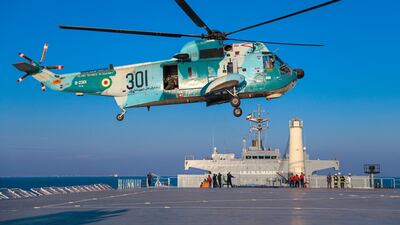
Iranian-made Makran logistics vessel during a short-range missile drill in the Gulf of Oman on Wednesday, state TV reported, amid heightened regional tensions over Tehran's nuclear program and a US pressure campaign. Iranian Army via AP -
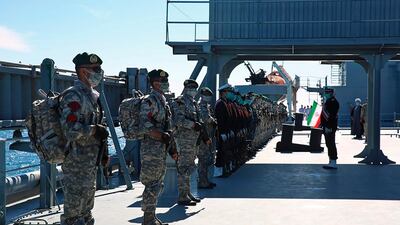
Iran's navy began a short-range missile drill in the Gulf of Oman on Wednesday, state TV reported, amid heightened regional tensions over Tehran's nuclear program and a US pressure campaign. Iranian Army via AP -
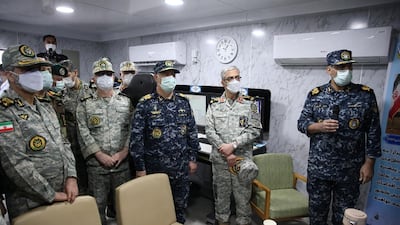
Iran's Army chief Major General Abdolrahim Mousavi visits the Iranian-made warship Makran during an exercise in the Gulf of Oman. Iranian Army/WANA via REUTERS -
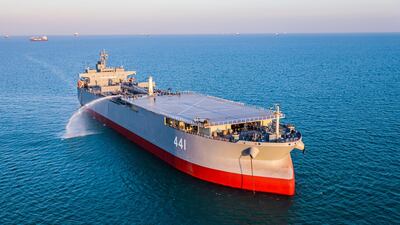
Iranian-made Makran logistics vessel during a short-range missile drill in the Gulf of Oman on Wednesday, state TV reported, amid heightened regional tensions over Tehran's nuclear program and a US pressure campaign. Iranian Army via EPA -
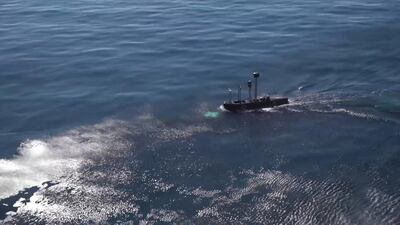
An Iranian submarine during a navy military drill in the Gulf of Oman, 14 January 2021. EPA/Iranian Army Office -
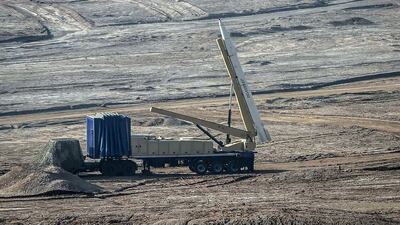
Iran's navy began a short-range missile drill in the Gulf of Oman on Wednesday, state TV reported, amid heightened regional tensions over Tehran's nuclear program and a US pressure campaign. Iranian Army via AFP -
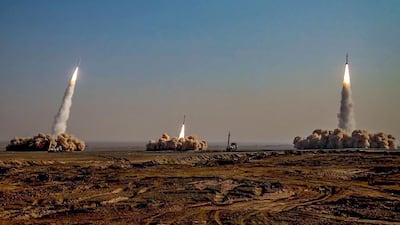
Iran's navy began a short-range missile drill in the Gulf of Oman on Wednesday, state TV reported, amid heightened regional tensions over Tehran's nuclear program and a US pressure campaign. Iranian Army via AFP -
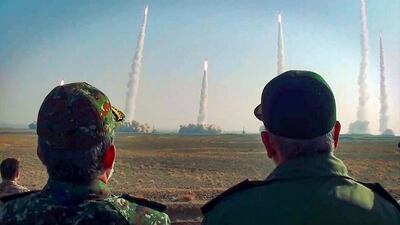
Iran's navy began a short-range missile drill in the Gulf of Oman on Wednesday, state TV reported, amid heightened regional tensions over Tehran's nuclear program and a US pressure campaign. Iranian Army via AFP -
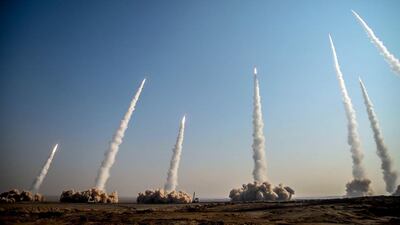
Iran's navy began a short-range missile drill in the Gulf of Oman on Wednesday, state TV reported, amid heightened regional tensions over Tehran's nuclear program and a US pressure campaign. Iranian Army via AFP -
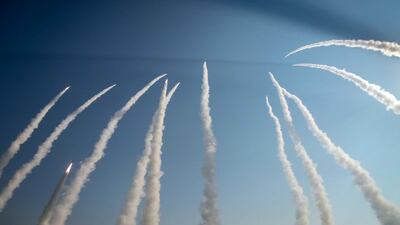
Iran's navy began a short-range missile drill in the Gulf of Oman on Wednesday, state TV reported, amid heightened regional tensions over Tehran's nuclear program and a US pressure campaign. Iranian Army via AFP -

Iran's navy began a short-range missile drill in the Gulf of Oman on Wednesday, state TV reported, amid heightened regional tensions over Tehran's nuclear program and a US pressure campaign. Iranian Army via EPA -
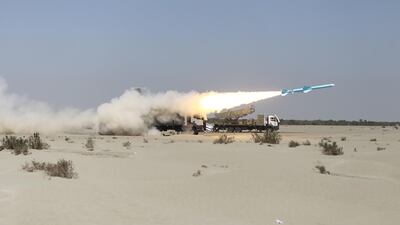
A missile is launched by Iran's military during a navy exercise in the Gulf of Oman. Iranian Army/WANA via REUTERS -

Head of Iran's Revolutionary Guard Corps Hossein Salami speaking to local journalists during a military drill in an unknown location in central Iran. XGTY via AFP -
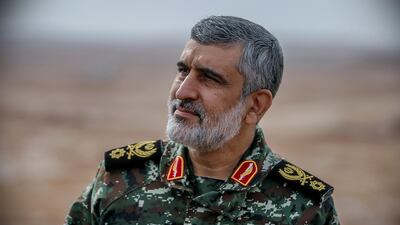
General Amir Ali Hajizadeh, the head of the Revolutionary Guard's aerospace division, during a military drill in an unknown location in central Iran. XGTY via AFP -
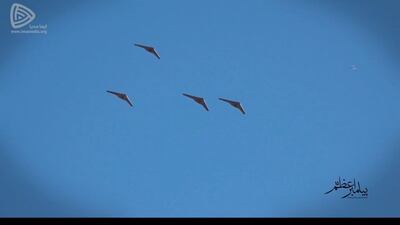
Drones fly as Iran's navy began a short-range missile drill in the Gulf of Oman on Wednesday, state TV reported, amid heightened regional tensions over Tehran's nuclear program and a US pressure campaign. Iranian Army via AP


The Zuljanah is a 25-metre, three-stage rocket with a solid-fuel engine that can send a 220kg payload up to a height of 500km to launch a satellite. But experts believe that if the scientists lowered its trajectory they could send a one-tonne warhead about 5,000km.
While the Iranians might be on course to launch a nuclear weapon on a sub-orbital trajectory, they still lack the capability to land the bomb with reasonable accuracy on a target such as London, 4,400km away.
But highly skilled Iranian scientists will now be seeking to overcome the technical obstacles of atmosphere re-entry at high speed.
“This requires a large amount of money as you need to test repeatedly both the missile telemetry and, crucially, the re-entry vehicle performance,” Mr Bronk said. “That’s why the many tests are very valuable for the North Koreans and highly disturbing to the Americans.”
It is understood that North Korea has provided significant technical assistance to Iran.
Dough Barrie, of the International Institute for Strategic Studies, believes that Iran previously focused on developing accurate cruise and medium-range missiles but has now opted for “range over accuracy”.
“One of the things we’ve seen them doing is to really push extending the ranges of their ballistic arsenal significantly,” he said.
In the past year, Iran has developed the Salman rocket motor, used for satellite launches, which is capable of moving its nozzle to vector its thruster, making it much more accurate.
“The Salman thrust vectoring engine produces improved accuracy in the final stage,” Mr Binnie said. “This is all part of investing heavily in ballistic missile technology and steadily improving what they’ve got.”
Another important aspect of the solid fuel propellant is that it allows missiles to be fuelled and stored in silos for long periods. Liquid fuel is less stable, so rockets require fuelling shortly before launch, delaying their use and giving spy satellites the opportunity to detect hostile intent.
“These missiles would be ready to go and a lot easier to bring into action,” Mr Binnie said. “It helps in terms of having a more credible deterrence to have missiles that are ready to launch when they need them.”
But Iran’s missile arsenal is having a destabilising impact on the region, with Gulf states buying increasingly sophisticated jets to maintain a technological edge.
“The Iranians have their missiles to counter that,” Mr Binnie said. “They cannot get state-of-the-art jets because of sanctions so they’ve invested in missiles to counter the air superiority arrayed against them.
“But now the ever-growing arsenal and improvements in the Iranian missiles does look incredibly threatening. There’s an arms race going on in the region and that is destabilising.”
The arms build-up is something that could be addressed in any future deal between Iran and the West, which is more likely with Mr Biden in power.
-
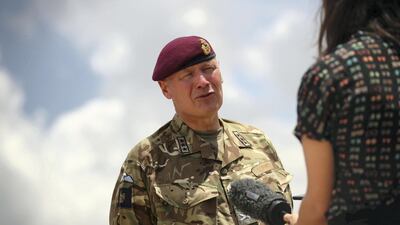
Lt Gen Sir John Lorimer speaks during an interview at Beirut's port in August 2020. Reuters -
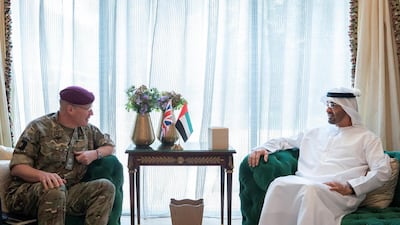
Sheikh Mohamed bin Zayed Al Nahyan, Crown Prince of Abu Dhabi and Deputy Supreme Commander of the UAE Armed Forces, meets with Lt Gen Sir John Lorimer in June 2019. Mohamed Al Hammadi/Ministry of Presidential Affairs -

Lt Gen Sir John Lorimer attends the commemorations of the Operation Market Garden 75th anniversary in Ede, the Netherlands, alongside Prince Charles. in 2019. Shutterstock -
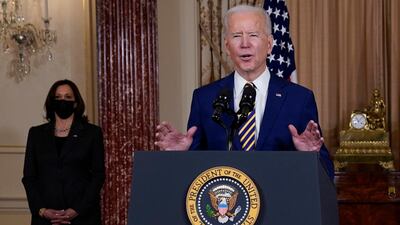
Vice President Kamala Harris looks on as President Joe Biden delivers a speech on foreign policy, at the State Department on February 4. AP Photo -

Iran's President Hassan Rouhani chairing a weekly Covid-19 taskforce meeting in the capital Tehran. AFP -
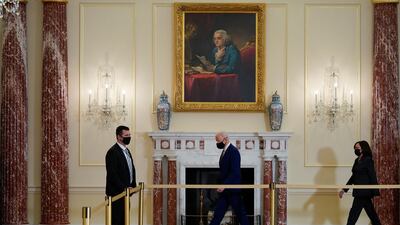
President Joe Biden arrives at the State Department. AP Photo -
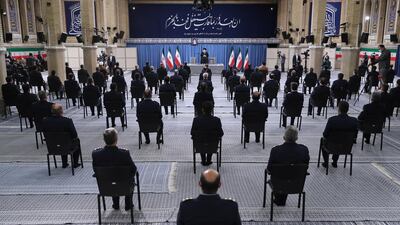
Ayatollah Ali Khamenei speaks during a meeting with a group of commanders of the Iranian Air Force and Army Air Defense. EPA -
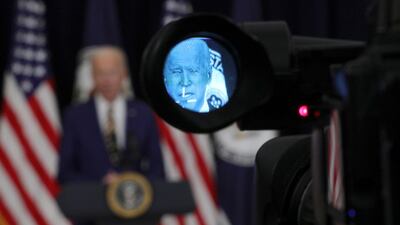
President Joe Biden is seen through a camera viewfinder while speaking to State Department staff. Reuters -
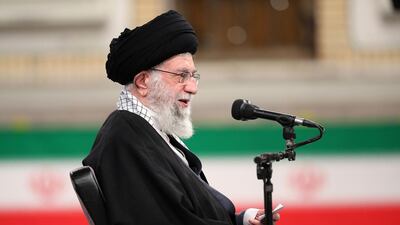
Ayatollah Ali Khamenei speaks during his meeting with the Iranian Air Force and Army Air Defense. EPA


In an interview with The National last week, Lt Gen John Lorimer, Britain's most senior commander in the Middle East, said Iran was building up its forces to strengthen its position in negotiations with America on the nuclear agreement.
“I agree entirely with Gen Lorimer in the sense that Iran is playing up to the potential of the Zuljanah test and it’s very much about strengthening Iran’s hand,” Mr Bronk said.
But he believes the deal is likely to concentrate solely on Iran’s nuclear programme rather that its missiles, which is why Tehran is talking up its uranium enrichment levels.
“If they overplay the nuclear missile capability it risks seriously blowing back on them,” he said.
“Frankly, most of the countries with whom they’re really interested in getting a deal have well-proven nuclear deterrence capabilities themselves. And it’s hardly a stretch that if the British were concerned about a threat to London then Iran would know that they would obviously get flattened by Trident missiles. Iran understands its strength is to operate below the threshold of explicit conflict.”
Experts believe there is a long way to go before Iran could have a nuclear-capable missile. The Iranians could speed up development by increasing missile test firing to make a viable re-entry vehicle, but this would send a clear signal of intent and likely lead to an armed response by America and its allies.
Instead, they are expected to test satellite rockets once every six months, perfecting them without drawing undue attention, potentially leading to Iran becoming a nuclear-capable nation.

