Of all the millions of tonnes of cargo that’s piled up in the Suez Canal, none is more delicate than the animals crammed into the hulls of several of the ships.
Little information is available, with neither canal officials nor shipping executives willing to talk, but data compiled by Bloomberg indicate as many as 14 vessels stuck in and around the canal could be carrying thousands of livestock.
Given the Europe-to-Middle East itineraries of many, they are most probably carrying sheep. Ships carrying 92,000 animals to Jordan are stranded, an official said.
-
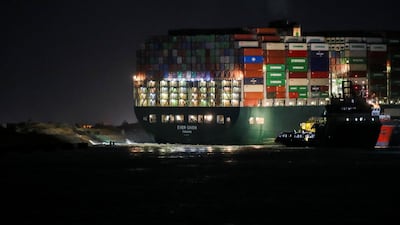
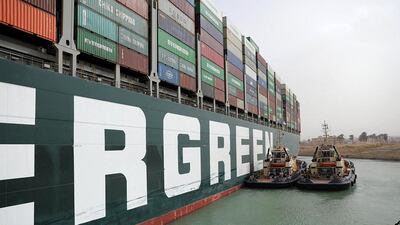
The stranded container ship Ever Given, one of the world's largest container ships, after it ran aground in Suez Canal, Egypt. Reuters -
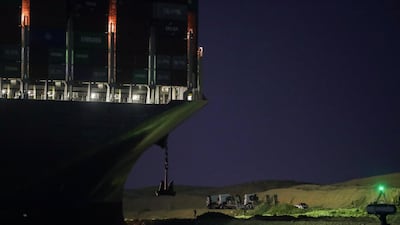
The stranded container ship Ever Given after it ran aground in Suez Canal. Reuters -
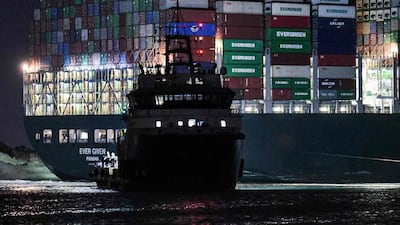
A tugboat by the Panama-flagged MV Ever Given container ship. AFP -
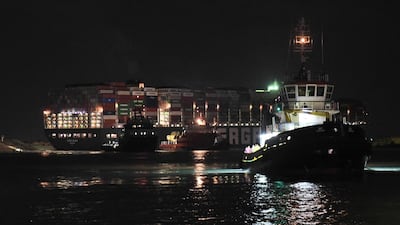
Tugboats by the Panama-flagged MV Ever Given. AFP -

Tugboats by the Panama-flagged MV Ever Given. AFP -
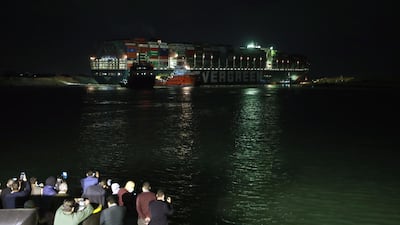
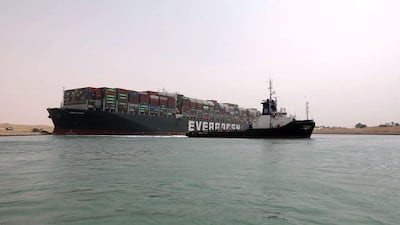
The Ever Given container ship which ran aground in the Suez Canal, Egypt. EPA -
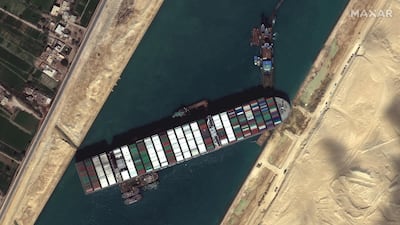
Ever Given container ship is pictured in Suez Canal in this Maxar Technologies satellite image. Reuters -
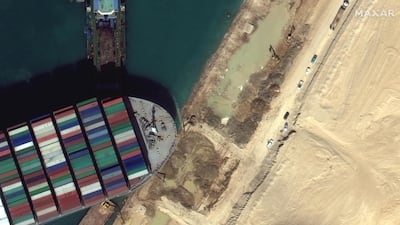
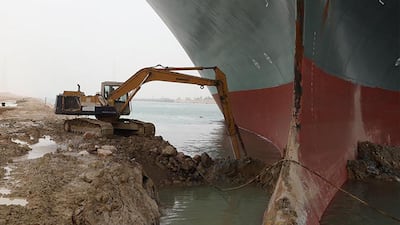
A view of the earth moving equipment excavating sand near the bow of the Ever Given container ship in Suez Canal in this Maxar Technologies satellite image. Reuters -
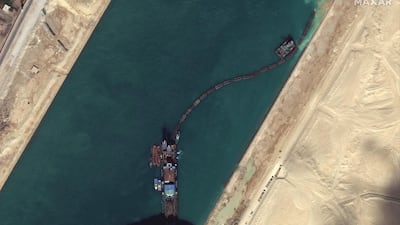
A view of the dredging operations which continue near the Ever Given container ship in Suez Canal in this Maxar Technologies satellite image. Reuters -
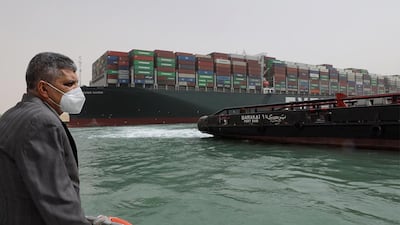
Egyptian officials oversee the operation to free Taiwan-owned cargo MV Ever Given after it become stuck in the Suez Canal. AFP -
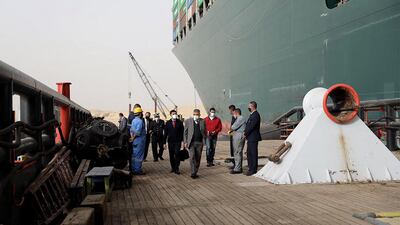
Egyptian officials oversee the operation to free Taiwan-owned cargo MV Ever Given after it become stuck in the Suez Canal. AFP -
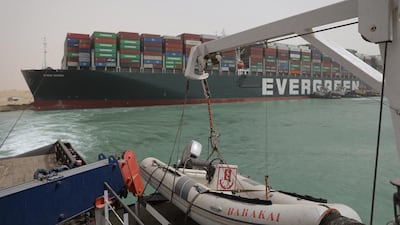
Egyptian tug boats try to free the ship. AFP -
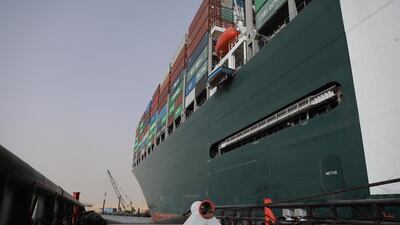
Egyptian tug boats try to free the ship. AFP -
Egyptian tug boats try to free the ship. AFP -
The ship is shown lodged sideways. AFP -
All movement in the canal comes to a standstill. AFP -
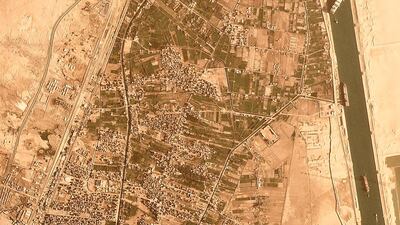
A satellite image of the Ever Given. AP -
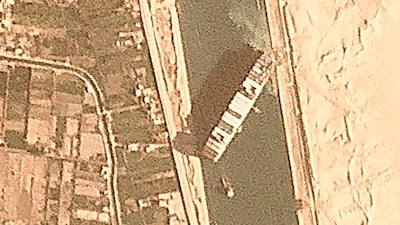
A satellite image of the Ever Given. AP -
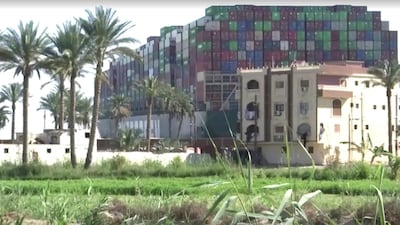
Stranded container ship Ever Given, one of the world's largest container ships, is seen after it ran aground, in Suez Canal, Egypt in this still image taken from a video. Reuters -
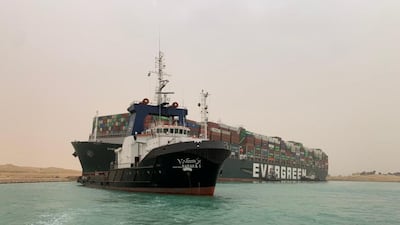
Egypt's Suez Canal authorities are redirecting shipping traffic on Wednesday after a 200,000-tonne container ship 'MV Ever Given' ran aground and blocked the canal's main channel. Reuters -
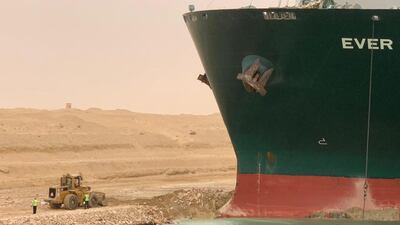
Recovery teams are surveying the 'MV Ever Given', which ran aground in the Suez Canal on Tuesday as it headed for the Mediterranean after leaving the Red Sea. Its destination is Rotterdam in the Netherlands. Reuters -
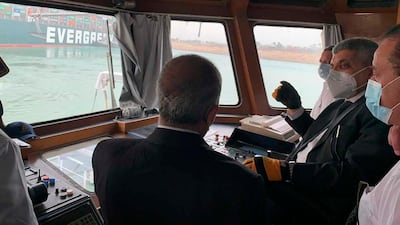
Lt Gen Osama Rabei, head of the Suez Canal Authority, second right, assesses the 'MV Ever Given' from the bridge of a cutter. AP Photo -
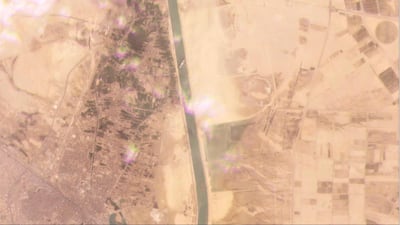
This satellite image from Planet Labs shows the cargo ship 'MV Ever Given', stuck in the Suez Canal. AP Photo -

This satellite image from Planet Labs shows the cargo ship 'MV Ever Given', grounded in the Suez Canal since Tuesday. AP


While much of the waylaid cargo is commodity products such as oil that can be stored on ships for long periods, livestock need food and water, and such deliveries usually carry only enough for a few extra days.
That could create a critical situation for ships to find feed supplies at a local port, or force them to turn around. Dislodging the vessel blocking the canal may take at least a week, longer than initially feared, people familiar with the matter said.
“I wouldn’t expect just after a two-day delay for a problem to have built up,” said Peter Stevenson, chief policy officer at animal-welfare group Compassion in World Farming, which has called for an end to the live-animal shipments.
“It’s as time goes by that the problems get worse. Occasionally, there are real scandals when things go wrong, but it’s a day-to-day horror.”
Cattle can also be transported by sea, and ships would generally have at least two or three days’ worth of extra hay or feed on board, said Bob Bishop, president of the Livestock Exporters Association of the USA. If the feed runs out, they could get more from a port while refueling. A ship that can’t get to dock could get feed from a barge in what’s known as “midstream loading", he said.
Seven livestock vessels that were due to arrive in Aqaba on March 21 are stranded near the Suez Canal, Capt George Dahdal, Representative of Jordan Navigation Syndicate, said.
Options to save livestock stranded at Suez Canal
“If you’re getting low on feed, I would look at coming into port and putting on extra feed,” Mr Bishop, who is in New York, said.
“If I was the owner of the sheep, I would try to find a country that needed sheep,” he said.
“The shorter route would be back to Romania.”
At least 14 vessels designed to ship animals are parked near the shuttered canal, and several appear to be en route between Romania and Saudi Arabia, according to ship data compiled by Bloomberg.
The ones departing the European country are likely carrying sheep, which Saudi Arabia purchases so that the animals can be slaughtered in a halal way. Those travelling in the other direction could be empty vessels.
The Middle Eastern nation is the world’s largest sheep importer by a wide margin, the UN data shows.
But the trade route has faced disaster at times. About 14,000 sheep being shipped from Romania to Saudi Arabia were killed when a vessel partly capsized in 2019, according to media reports. Rescuers were only able to save a little over 200 animals.
Risks en route
Vessels that crowd thousands of sheep and longer journeys raise the risk of disease and stress, said Mr Stevenson, of the animal welfare group. Some ships used to transport animals also have been converted from other purposes and aren’t ideally suited, he said. It can be difficult to reverse course after departure because of health rules.
Mr Bishop said mortality rates for livestock are generally no higher at sea than on land, with most ships having a veterinarian.
A US shipment of dairy cattle left the Texas port of Galveston late last year en route to Pakistan via the Suez, according to Mr Bishop.
Another recent shipment of US cattle sailed from the West Coast to Pakistan, avoiding the Suez because of tolls, he said.
“After this container ship, you might see more and more of that,” he said

